Get me outta here!

Henny Kupferstein

Official Webpage

Menu

Skip to content
  • Home
  • Services
  • Resources
  • Books, Research, and Publications
  • Autism and Perfect Pitch
  • Contact
  • Book A Consult
  • My Art

Author Archives

Doogri Institutehttp://www.Doogri.orgThe Doogri Institute conducts research to assist in the design and implementation of arts training and music community. All Doogri researchers are leading experts in their field, with critical research augmented by lived experiences.
Doogri Institute's avatar

Legislative Activism and Agenda

September 6, 2025 by Doogri Institute

Click to see the 2025-2026 legislative tracker for bills we are monitoring through the generous stream of volunteers with the Doogri Institute. You can also see the #banABA initiative at www.banABA.us

Policy Analysis and Legislative Proposal that I have authored

California 2025-2026 legislative package for Senator Limon, “The Boondoggle Report” (9/23/25)

New York “Boondoggle report” for 2025-2026 legislative package for Assemblyman Lester Chang (9/15/2025)

New York ABA Medicaid Fraud “fake autism therapy” – Whistleblower report to Governor Kathy Hochul, February 21, 2025

Autistic Communication Support – 5 year Outcome Report (2014-2019)

May 6, 2014 – Proposal for New York “Communication Support”, A.5141

  • Bill 5141 In the News: Press Coverage and Media Coverage
  • How To Support Bill A05141 – VR Communication Support for Autistic and other Consumer with language barriers
  • Senator David Carlucci Sponsors VR Communication Support for Autistic Consumers, Senate Bill No. S04256 / A05141
  • ASHA supports Bill No. A05141 on behalf of Speech Therapists
  • NYSACRA and NYSRA fully support A.5141 (Santabarbara) and S.4256 (Carlucci) 
  • NYSILC and NYAIL endorse (A.5141 Santabarbara, S.4256 Carlucci) Communication support in Vocational Rehabilitation Communication Support services
  • NYSARC, Inc. Memorandum of Support for A.5141/ S.4256 Autism Communication Support Bill
  • Complete details about this bill

#banABA ban applied behavior analysis (ABA) Leave a comment

Don’t get Tricked: How to Spot Unethical Research Solicitations

November 18, 2024 by Doogri Institute

Have you ever seen a post where someone is asking you to participate in a survey? Those casual data collections are illegal in the United States. Let’s say that you get an email from the vet you just took your pet to. They are asking for you to complete a survey about the quality of their service. If they are using it for internal purposes to better their practice, then you have a choice whether you want to donate your intellectual property to a business that has all the resources to learn from formal avenues. You also cannot guarantee that your responses would be held confidentially. For that reason, I advise people to let businesses police themselves without taking advantage of people. 

Suppose you see a post in an Autistic adult facebook group. Somebody is sharing that they are doing a ‘project’ for their college thesis. Be aware: Undergraduate students do not conduct research. Graduate students sometimes have research ‘projects’ but rarely is published research required in their degree program. In doctoral programs, students are subject matter experts who will go through rigorous training in ethics of research with human participants, laws pertaining to confidentiality, the current rules about the use of deception, and the requirement to provide information about their approval to conduct research. 

Institutional Review Boards (IRBs) are committees that ensure research involving human subjects is ethical and safe. They review research plans to protect participants and ensure compliance with regulations. IRBs can approve, modify, or disapprove studies based on these criteria. Every university that requires students to conduct -AND- publish research also has an IRB onsite. The IRB is typically a group of professors who are trained in the most recent laws and regulations about human participants. Even if your research does not collect data from human subjects, you as a researcher will still need to apply and receive IRB “exemption”. You cannot use the IRB approval to conduct more than one study, and the data collection and study must match the purpose of your application. 

After the IRB processes your application, you will get an approval certificate which will have an internal tracking number. That is to ensure there is no fraud, and also to have a reference if people contact your university with complaints about your conduct. The certification and/or the IRB contact information ABSOLUTELY MUST be a part of the post, or recruitment landing page or recruitment material. Do not even click on anything that is lacking IRB information, because even your clickthrough might be used for research, possibly to test how many people click to participate depending on the nature of the graphics and wording. Horrifying, right?  

My goal in writing this for my readers is to help them choose to participate in a project that is not IRB approved. Those are unethical and legal in many countries. On this page published by the NIH, you can read about the history of how human subjects came to be protected from experimentation, and identify three population groups that are considered vulnerable, and forbidden from researching: pregnant people, prisoners, and developmentally disabled people. This stems from the terribly dark history with what happened at Willowbrook, a state institution exposed 50 years ago. You may wonder about this if you are Autistic. Since the DSM-5 changed the diagnostic criteria for an Autism Spectrum Disorder in 2013, Autism no longer requires an intellectual disability to be considered. For that reason, Autistic people are no longer excluded from participating in research and are considered capable of proving informed consent. Still, as an Autistic autism researcher, I maintain a rigorous schedule of renewing my certification about ethics with human participants every four years as required. I hope this article helps you identify red flags. 

▶️. Literally 2 Question Form – click DoogriDatabase.com  ◀️

Be a Part of Change: Autism Study Database for Autistic-Led Research

We no longer want to study medical autism. Autistic-led research is about the quality of life and out lived experience. We are compiling a database of people who want to be notified when an Autistic researcher is looking for participants. All we need is your email address, which we will keep private. 

  • Share this public post on LinkedIn — click here to find it https://www.linkedin.com/pulse/part-change-autism-study-database-autistic-led-kupferstein-ph-d–grgmc
  • Share this public post on Facebook – video and post to share https://www.facebook.com/reel/517873214464275
  • Take a look at our Instagram post https://www.instagram.com/reel/DBM6LnxtWq9/?utm_source=ig_web_copy_link&igsh=MzRlODBiNWFlZA==
  • Of course, there is a TikTok video to comment and share https://www.tiktok.com/@drhennyk/video/7426505007274446111
  • … and no worries, I got you on X(twitter) too
    https://x.com/HennyKtweets/status/1846917043133546986

This is important for science

Help us advance autism research by joining our Autism Study Database! By contributing your unique experiences, you’ll play a vital role in improving understanding, shaping future care, and driving meaningful change in the autism community. In large numbers we can make a lasting impact. 

Who can Subscribe: You must either be Autistic yourself or have an Autistic loved one, or be a professional working with Autistic people. You may choose multiple. 

Benefits:

Your privacy is our priority—your information will remain confidential. You’ll receive occasional emails about research studies, with the option to opt out at any time. While there is no financial compensation, you will be informed when important research findings are published.

“Call me maybe…” If you have questions pertaining to the way this information will be used, don’t hesitate to contact henny@hennyk.com. This call to action is on every social media platform. Look for #doogridatabase or #autisticautismresearch to find and share.  

Uncategorized asdautismautisticmental healthneurodiversityspecial needs Leave a comment

Navigating the Role of an Independent Contractor in Special Education

October 7, 2024 by Doogri Institute

In the ever-evolving landscape of special education, many professionals are transitioning into roles as independent contractors. This shift is largely driven by budget constraints and political influences affecting public school funding for special services. As an independent contractor, you may gain more rights and flexibility compared to salaried employees, but you’re also bound by agency contracts and non-compete agreements. This dynamic can create a precarious employment situation, especially if your contract ends.

Educational Requirements and Challenges

Becoming a special education teacher requires a degree in elementary and special education, often supplemented by graduate certificates. The trend towards independent contracting has been exacerbated by unreliable budget allocations for special education, which fluctuate based on legislative opinions and priorities. Historically, funding has been influenced by public perceptions of special needs students.

Employment Dynamics and Litigation

Independent contractors are now often only employed when parents successfully litigate for their child’s educational needs. This has led to a denial-first approach in special education services, where consistent employment is no longer guaranteed. As a result, many educators are exploring private practice opportunities, where they can offer personalized support to families outside the constraints of agency contracts.

Opportunities in Research and Advocacy

For those interested in research and advocacy, collaborating on academic papers can establish you as a subject matter expert, providing a platform to influence policy and practice. Peer support models are emerging as a valuable alternative to traditional methods, offering non-competitive ways to empower autistic individuals and their families.

Resilience and Adaptation

Navigating this complex environment requires resilience and a willingness to adapt. By leveraging your unique insights and experiences, you can build a fulfilling career that not only meets your professional goals but also makes a meaningful impact on the lives of those you serve.

Problems Solved by Independent Contracting in Special Education

  • Increased Flexibility: Allows educators to manage their schedules and work environments more freely.
  • Professional Autonomy: Provides the ability to choose projects and focus areas without the constraints of traditional employment.
  • Diverse Opportunities: Opens doors to private practice and consultancy roles, expanding potential career paths.
  • Advocacy and Influence: Empowers educators to engage in research and advocacy, influencing policy and educational practices.
  • Personalized Education: Facilitates the provision of tailored educational services to meet individual student needs outside traditional frameworks.

This shift towards independent contracting in special education presents both challenges and opportunities, offering a path for educators to redefine their roles and impact in the field.

Uncategorized educationfinancenewsspecial educationtechnology Leave a comment

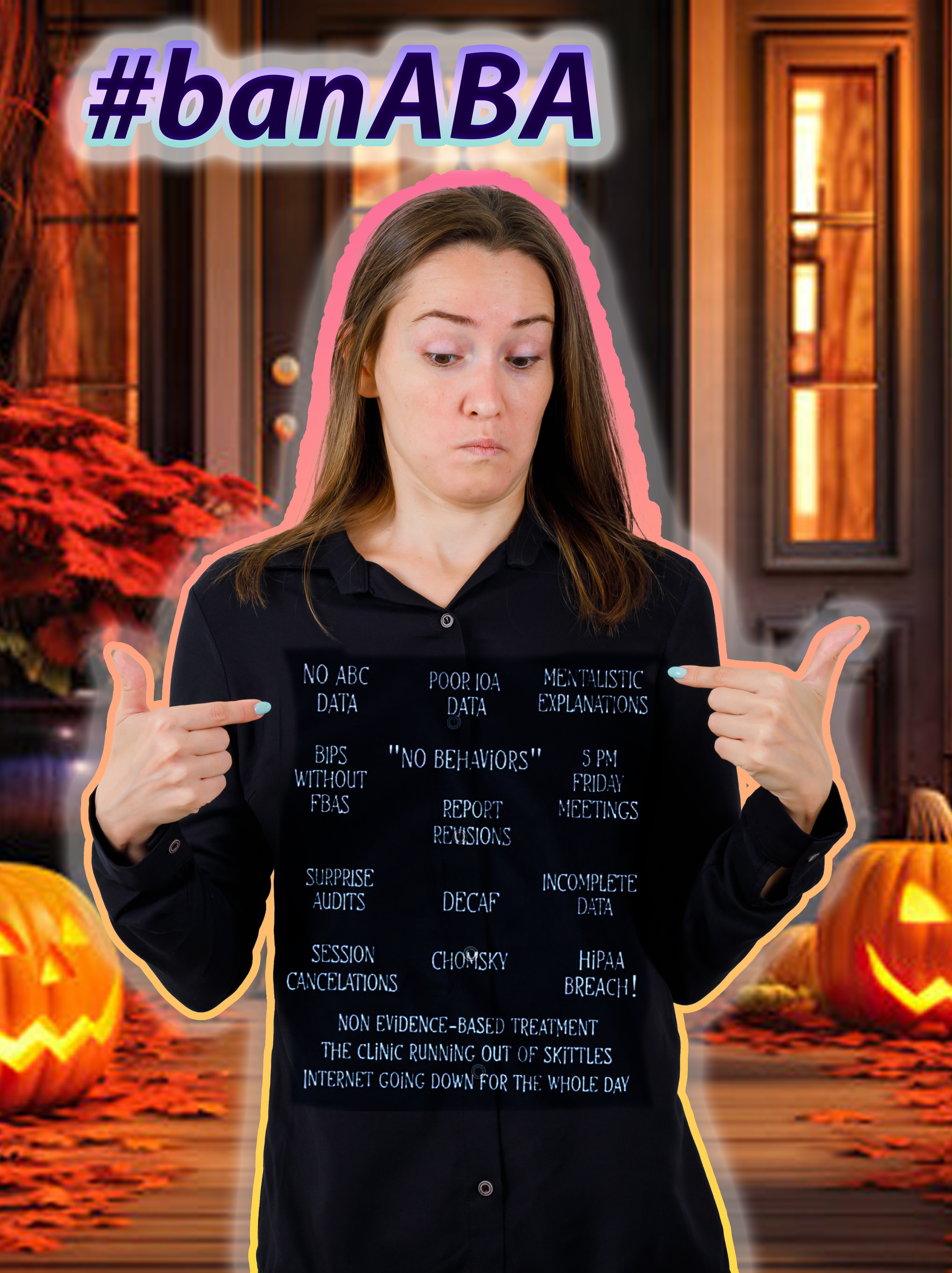
The Scariest BCBA Costume that made us quit ABA

October 5, 2024 by Doogri Institute

It was a typical Tuesday when Miss Casey, our behaviorist, showed up wearing a Halloween T-shirt. Little did she know how true that statement was for our family. As I took in the shirt, I felt a surge of frustration mixed with disbelief. This was a woman responsible for guiding my autistic child, yet her care had been nothing short of a nightmare.

A Parent’s Narrative

Let me walk you through the countless ways she failed our family. Miss Casey’s incompetence has not only wasted our time and money but has actually set my child back. I’m done. We’re done. This is malpractice, plain and simple, and she needs to be held accountable. For the sake of my child, I have to ask that she be let go. I also must consider the families she might see next.

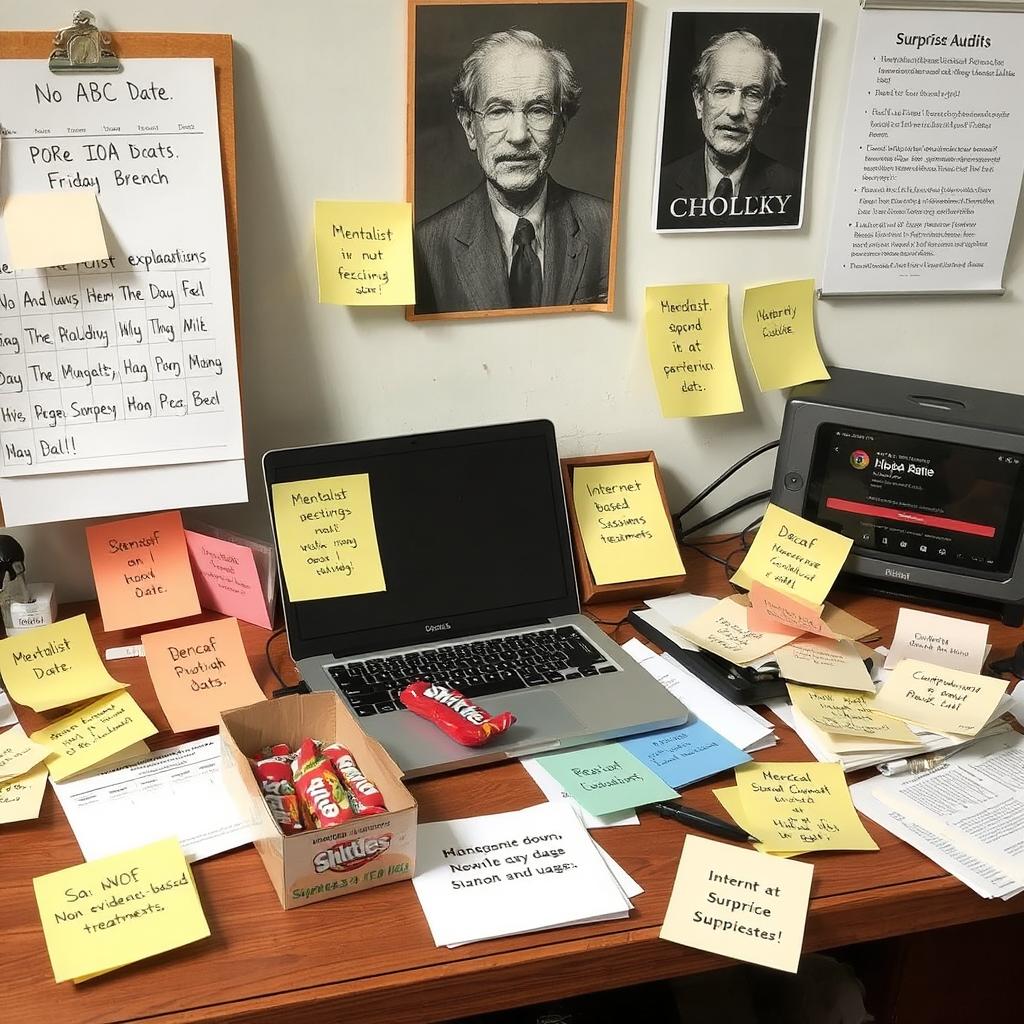
First, there was no ABC data. Miss Casey seemed to be guessing about my child’s behavior. We’d sit in session after session, yet she never tracked what was causing meltdowns or why they were happening. How can you possibly help when you don’t even know the basics of the behavior? It was like she was shooting in the dark, and my child was the one paying the price.

Then there was the poor IOA data. I’d see one thing, Miss Casey would see another, and we could never agree on what was actually happening. Her observations didn’t match mine or even her assistants’. It got to a point where I couldn’t trust any of her data, and honestly, it felt like she didn’t know enough to get it right.

Miss Casey became horrified whenever I suggested I knew what else might be affecting my child. Any mention of my insights felt like a threat to her expertise, and she grew defensive when I shared how my child had been feeling that week, even accusing me of providing mentalist explanations. Instead of collaborating, it turned into a constant philosophical battle over emotional nuances. This is ABA, not therapy, and her frustration was palpable as I tried to express my perspective, leaving me feeling dismissed and unheard.

Behavior Support Plans (BSPs) need to be based on a Functional Behavior Assessment (FBA) to ensure interventions target the function of the behavior. She even had the nerve to put together a Behavior Support Plan without doing an FBA! That’s right—she made a plan without even assessing what was really going on. Writing BSPs without conducting FBAs is like shooting in the dark—interventions are likely ineffective or even harmful.

Miss Casey constantly claimed there were all these “behaviors” we needed to work on. The problem? No one outside of her sessions—none of the teachers, the IEP team, or anyone else—ever saw these behaviors. I asked around, and not a single person could confirm what she was documenting. It felt like she was fabricating problems just to justify her time with my child. How am I supposed to trust a professional who seems to be making things up just to keep getting paid? It was like she needed there to be an issue so she could keep her sessions going, regardless of whether my child was actually struggling with those behaviors.

It got to the point where she would schedule these last-minute 5 pm Friday meetings, completely disregarding my family’s need for downtime. By the end of the week, my nerves were already shot, and here she was, expecting me to be fresh for these late meetings after a long, stressful week.

And the report revisions? They were nothing short of a scam. Miss Casey wasn’t writing these reports to accurately reflect my child’s needs—she was doing it to hit the specific keywords required for insurance reimbursement. Every time a report came back, it had less to do with my child’s actual progress and more to do with what the insurance wanted to see. It felt like she was fabricating details to make sure they got paid, not to summarize my child’s real challenges or progress. These reports weren’t about helping my child; they were about securing payment, plain and simple.

Then there were the surprise audits, which I could tell terrified Miss Casey. Every time an audit came up—whether from insurance or a regulatory body—she was in complete panic mode. Auditors would scrutinize every tiny detail of her work, from her data collection to whether her treatment plans were solid and ethical. The pressure was intense, and you could see the fear in her eyes, knowing that even one missing document or a small record-keeping error could cost her big time. She was constantly second-guessing herself, anxious about being caught with mistakes. It wasn’t just about checking her work—it felt like a looming threat that could destroy her career. Every audit felt like a ticking time bomb, and the stress bled into the care she provided for my child.

One day, Miss Casey forgot to bring her Stanley cup filled with coffee and asked if I could make her a cup. The problem? We only had decaf. You should’ve seen how mentally incapacitated she became without her caffeine fix. It was like watching someone unravel right in front of me. She couldn’t focus, couldn’t keep up with my child’s needs, and honestly, it was embarrassing. I get it—coffee is a lifeline for people dealing with long hours and stressful work. But to see her completely fall apart over a cup of decaf made me question whether she was really cut out for this job. It was as if she needed her “drugs” just to function, and my child ended up paying the price for it.

Then there was the issue of incomplete data, which made me increasingly suspicious of Miss Casey’s work. Data collection is the foundation of ABA, and yet, time and again, she couldn’t provide concrete written evidence of my child’s progress. It was alarming. If she was truly helping, where was the documentation to prove it? It felt like they were unable to articulate the impact of their interventions, no matter how small. Without that data, I started to wonder if the sessions were even effective at all. I found myself questioning whether Miss Casey was really making a difference or just going through the motions. The lack of clear evidence left me uneasy, and I couldn’t shake the feeling that something was fundamentally off with her practice.

Then there were the session cancellations, which I began to see as a direct result of the reimbursement system. Every time Miss Casey’s paperwork didn’t meet the strict reimbursement requirements, she’d be suspended until she “fixed” it. But what really struck me was how they had no problem forcing their way into our schedule during our COVID quarantine, insisting that we needed to maintain a routine to reinforce the therapy. It felt hypocritical—while they were sidelined by paperwork, they expected us to prioritize their needs over our family’s health. This inconsistency disrupted my child’s progress and left us feeling like just another cog in their profit-driven machine.

Then there was the incident with Chomsky, which was truly eye-opening. Noam Chomsky, a renowned linguist and cognitive scientist who rose to prominence in the 1950s and 1960s, revolutionized the study of language with his theory of generative grammar. He argued that language acquisition cannot be fully explained by behavioral principles, challenging the foundations of behaviorism. When I tried to discuss his theories with Miss Casey, she completely shut down, revealing her struggle to engage with such fundamental concepts of her own practice. Her inability to defend the philosophy of ABA, especially in the face of such a significant challenge, left me questioning her professional training and understanding of the approach she was meant to apply with my child. It was alarming to see a behavior analyst so unprepared for critical discussions about the theories that challenge her field.

Then there was the HIPAA breach, which was deeply concerning. ABA practitioners handle sensitive client information, and a breach of this data is a serious violation of the Health Insurance Portability and Accountability Act (HIPAA). Miss Casey had everyone’s case notes flying around in plain sight, leaving other people’s files in our house without a second thought. Most upsetting of all, she even talked about my child on her social media, completely disregarding privacy and confidentiality. This was not just unprofessional; it was a glaring violation of trust. The potential consequences of a HIPAA breach are severe—legal repercussions, loss of professional credentials, and significant damage to her reputation. The fear of such an event created constant stress for me, knowing that my child’s sensitive information was at risk due to her negligence.

Then there was the issue of non-evidence-based treatments, which really highlighted Miss Casey’s aggression. When I excitedly mentioned that my child had a major milestone yesterday—spelling a whole sentence on his iPad to communicate—she pounced, yelling about how we couldn’t use any non-evidence-based treatments. It was baffling; using a device for communication isn’t a treatment—it’s simply a means of expressing thoughts. Her reaction made it clear how terrified she was that something as generic as using an iPad might work better for my child than her heavily reimbursed methods. Instead of celebrating my child’s progress, she was more concerned about her own practices being overshadowed, and that was incredibly unsettling.

Then there was the issue of Skittles, which highlighted Miss Casey’s misplaced priorities. Reinforcement is a core concept in ABA, and Skittles are often used as tangible reinforcers. When we told her we didn’t allow her to bring them into our house because we don’t eat sugar and don’t condone using food as a reward, she had a complete meltdown. Her reaction made it clear she believed that without Skittles, her sessions would be ineffective. Running out of reinforcers like that could lead to frustration and regression in behavior. More importantly, I worried about my child, who might think he only gets to eat when he sits perfectly still. This situation wasn’t just about Skittles; it showed how focused she was on her methods rather than truly understanding our family’s values and my child’s needs.

Then there was the issue with the internet, which revealed how dependent Miss Casey was on her tools. When we had an entire day without internet, it disrupted data collection, session planning, and telehealth, resulting in chaos and potential loss of progress. Yet, while she couldn’t function without her digital tools, she had no problem taking away my son’s iPad for perceived misbehavior. To make matters worse, she demanded to connect to our Wi-Fi, which made us very uncomfortable and highlighted her reliance on technology at the expense of our family’s values.

The challenges we faced with Miss Casey ultimately led to her quitting, and it was a relief tinged with frustration. She simply couldn’t handle being challenged; every time I raised concerns about her methods or asked for a discussion on her practices, she would shut down. Her inability to engage in professional dialogue was glaring, and it became clear that maintaining factual data was a constant struggle for her—one that threatened her pay and made her defensive.

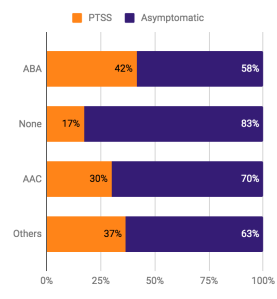
Even more troubling was her failure to prove that my child’s behavior issues stemmed from autism rather than her insistence that he sit still without his iPad. The pressure she placed on him only heightened his anxiety and frustration, leaving us in a state of turmoil. In the aftermath, we found ourselves deeply scarred by the experience, needing to rebuild from the trauma we endured. Now, the help we seek is for the PTSD we developed during this ordeal, rather than the autism we initially sought support for.

I don’t wish nightmares on anyone, but it’s hard to deny that alterations in mood and sleep are clear indicators of PTSD. Miss Casey’s approach and the chaos she brought into our lives left us haunted by what we experienced. The anxiety and stress she caused turned into restless nights filled with troubling thoughts and a constant sense of unease. While I hoped for support, what we got instead were nightmares—memories of a time when our trust was betrayed and our well-being compromised. The scars of that experience linger, reminding us of the toll it took on our family.

Uncategorized asdautismchildrenmental healthparenting Leave a comment

Understanding Professional Burnout vs. Autistic Overwhelm

October 1, 2024 by Doogri Institute

Professional burnout and autism overwhelm are both types of burnout that can have negative consequences on a person’s life, but they have different causes and symptoms. 

Emily sat at her desk, staring blankly at her computer screen. The demands of her job had piled up, and with each passing day, she felt more detached and exhausted. Long hours and constant pressure left her feeling cynical and drained, a classic case of professional burnout. Friends noticed her irritability, and she struggled to find motivation, often waking with headaches from the stress.

Meanwhile, Sam, an Autistic man, found himself in a bustling café, overwhelmed by the bright lights and loud chatter. The noise and social interactions became too much, sending him into a state of panic. His heart raced, and he felt trapped, unable to articulate his distress. In moments like this, he often experienced shutdowns, withdrawing completely to regain his composure.

Emily’s burnout had built over months, requiring her to set boundaries and seek support from her colleagues and friends. She learned the importance of self-care and even considered a job change to reclaim her sense of purpose. On the other hand, Sam’s overwhelm struck suddenly; a few deep breaths and a quick retreat to a quiet space helped him regain his balance. He often relied on fidget toys and structured routines to manage his sensory needs.

Both Emily and Sam faced unique challenges, each impacting their daily lives and relationships. Emily’s burnout affected her job performance and personal life, while Sam’s overwhelm made social situations daunting. Recognizing their experiences as distinct yet valid allowed them to seek the right support and coping strategies, paving the way for healthier, more fulfilling lives.

Research about Autistic Burnout:

Mantzalas, J., Richdale, A. L., Li, X., & Dissanayake, C. (2024). Measuring and validating autistic burnout. Autism Research.

Vinayagam, R., Tanner, C., Harley, D., Karatela, S., & Brooker, K. (2024). “My Autism is Linked with Everything”: at the Crossroads of Autism and Diabetes. Journal of Autism and Developmental Disorders, 54(8), 3122-3132.

Guastello, A. D., Brunson, J. C., Sambuco, N., Dale, L. P., Tracy, N. A., Allen, B. R., & Mathews, C. A. (2024). Predictors of professional burnout and fulfilment in a longitudinal analysis on nurses and healthcare workers in the COVID‐19 pandemic. Journal of Clinical Nursing, 33(1), 288-303.

  • Research about burnout separates burnout from overwhelm. Professionals will burn out from challenges at the workplace, such as an unrealistic workload, uninspiring work, or lack of support. Autistic burnout is caused by the long-term stress of living and working in a neurotypical world, which can include sensory overload, social stressors, and life stress. 
  • Professional burnout can cause chronic fatigue, insomnia, headaches, stomachaches, anger, isolation, irritability, and depression. Autistic burnout can cause sensory overload and sensitivity, which can lead to feelings of overwhelm, discomfort, and even physical pain. 
  • Professional burnout can lead to increased sick days, loss of productivity, and strain on mental, emotional, physical, and spiritual health. Autistic burnout can affect various aspects of a person’s life, including work, relationships, and overall well-being. 
  • Autistic burnout can lead to loss of previously acquired skills and greater difficulties in social interactions, which require specific strategies for management and recovery. 
Uncategorized asdautismautism acceptanceAutism overwhelmautism supportautistic burnoutburnoutburnout awarenessburnout recoverymental healthneurodiversityprofessional burnoutself-care strategiessensory overloadstress managementsupport and recoveryworkplace stress Leave a comment

Parents: How to spot ABA in IEP Goals and Progress Reports

June 14, 2024 by Doogri Institute

When Autistic Jane Generic turned 18, she received a certificate of completion from her school district. Still, the district has her “enrolled” in their 12+ program. I advised the mother to write to the school district to request a closure notice. 

Some of the problems:

  1. The school gets paid whether Jane attends or not. 
  2. The enrollment status limits Jane’s options with adult services available at age 18.
  3. The goals have been the same since Jane began school as a child. 
  4. The goals have a future date for meeting them, and do  not contain objectives: HOW will Jane meet these goals? 

… and the most infuriating part…

Jane is a non speaking fun loving young woman (I met her. She’s awesome). She is gifted in many areas, and focuses on her gifts to express herself. When put into the ABA box, she is burdened with making communication progress in the way that THEY deemed to be a goal for her. Jane does not agree to “initiate a short conversation”, primarily because she will be measured by observation on “data collection days”. 

What fresh hell is this?”

“she does not always use appropriate topics, words or gestures.”

ABA clinicians have decided that inappropriate communication is a behavior problem, and their solution is “using appropriate language with at least 2 or more students/staff in 2 out of 3 opportunities, with one prompt.” This triggered me and I had a flashback to the time I was put back from the 5th grade to the 3rd grade for throwing an eraser at the teacher. She provoked me, but that is not the point I am making here. The principal brought me their worksheets every day at recess time, and picked them up the next day at recess time. After a few days of being the plumpy 5th grader squeezed into a 3rd grader’s chair-desk, I asked the principal, 

“What do I need to get back into my 5th grade class?” and she asked, “Well, it depends. Are you behaving in this 3rd grade?”

“Yes”, I said meekly.

“Perfect. Then that is where you belong.”

ABA is a convoluted oppressive technique to push autistic and vulnerable people into a corner where they either surrender to adult prompting, or lash out. I was a lasher-outer. However, there is nothing that Jane can do to redeem herself with such a team of backward thinking, unless her parents write to the district to voluntarily disenroll from the ongoing grade 12+ programming. My experience resonates deeply with Jane’s current predicament.

Primary Disability:AutismSecondary Disability:Speech or Language Impairment
Progress sent: 6/14/2024
Current GoalsProgress Reports

1. CommunicationSpeech-Language Pathologist and General Ed TeacherBaseline: Jane Generic can ask and answer questions among her peers when prompted, but she does not always use appropriate topics, words or gestures.By 3/5/2025, Jane Generic will initiate a short conversation using appropriate language with at least 2 or more students/staff in 2 out of 3 opportunities, with one prompt, as measured by teacher/clinician observation on data collection days.

Progress sent 6/14/2024Accuracy: – – Consistency: –Comments: Student absences
affected progress

2. Social/Emotional Behavior(Social Communication )IEP TeamBaseline: Currently, on the school campus Jane Generic can use inappropriate touching during conversations which can make people feel uncomfortable.By 3/5/2025, on the school campus, with adult prompting, Jane Generic will not use inappropriate touching during conversations as measured by teacher recorded data on data collection days.

Progress sent 6/14/2024Accuracy: – – Consistency: –Comments: Student absences
affected progress

3. Transition to Adult Life(Employment: Basic Skills I-2)IEP TeamBaseline: Currently, Jane Generic has composed a letter of application using correct form, spelling, and grammar with multiple prompts.By 3/5/2025, in the classroom setting, when given access to a computer and information text (e.g. employment applications, recipes, shopping lists, and expenses/income) Jane Generic will type information using various tools (e.g. WORD document, E-mail, EXCEL document) with no more then 2 prompts in 4 out of 5 opportunities for two weeks as measured by work product.

Progress sent 6/14/2024Accuracy: – – Consistency: –Comments: Student absences
affected progress

4. Transition – Independent Living(Finances )IEP TeamBaseline: Currently, Jane Generic has not shown that when given a calculator as needed and a receipt from class expenditures (Vons, Smart n Final, etc.) she can record the receipt and add/subtract from totals with 90% accuracy to determine classroom budget.By 3/5/2025, In the classroom or community settings, when given a calculator as needed and receipt from class expenditures (Vons, Smart n Final, etc.) Jane Generic will record the receipt and add/subtract from totals with 90% accuracy to determine classroom budget with no more than 2 verbal prompts, in 4 out of 5 opportunities, as recorded by teacher observation and/or recorded data.

Progress sent 6/14/2024Accuracy: – – Consistency: –Comments: Student absences affected progress
Actual progress report revised today, with the name changed for privacy.
Uncategorized adult services for autismbehavior goalsdata collection days.IEP teamtransition to adulthood Leave a comment

Why the #banABA hashtag must be shared incessantly

May 22, 2024 by Doogri Institute

Are hashtags even worth it anymore?

For the first time in human history, autistic people are extending our neural network so we can organize and be our own power structure. Our manifesto in one hashtag: to ban ABA worldwide. 

a group of nerds huddled around laptops and cellphones with a rainbow banner behinds them and an infinity logo that says neurodiversity (AI generated from this prompt)

Under the medical model, autistic people never have, and never would be expected to organize into a collective to advocate for the same cause. 

Now, we do things our way, from the stimmy comfort of our caves. The initiative accommodates how we will accomplish this. This culture-based approach is the only way we can make any advocacy fully accessible to us. 

Who is maladaptive now? The fresh hell of behaviorists who are rebranding in a hurry. Some strategies they employ are:

  • Advertising that ‘we are neurodiversity affirming’
  • To help and support neurodivergent students who struggle with behaviors
  • Take this class for continuing education credits (CEU’s) to learn from Ms. X who has been working with students on the autism spectrum for more than 20 years. 
  • We no longer require a referral, and accept cash pay
  • We have an app to prompt people with autism based on their heart rate

Shout it out loudly: 

  1. We are not broken, and we don’t need anyone to fix us. 
  2. We don’t want you in our world. We have supportive therapies that focus on our neurodiversity, and not how disordered we present to your judging eyes.
  3. We have neurodivergent people who are in professional fields competing for your business, and parents seek them out for their specialty due to actual lived experience.. 
  4. Autistic people now have PhDs, and have professional license to practice Occupational Therapy, Physical Therapy, Speech Therapy, first responder EMT, police officers, and military marines.
  5. Our happy place is without contact from the world of behaviorism. 
  6. We have current research to suggest that behaviorism is domestic terrorism. 
  7. We need you to simply go away, or dissolve your practice. Go study art or something. 
  8. You will be out of business by 2027, and you will have no way to pay your student loans. 

I have observed “Super Nanny” using timers for timeout, for yelling at children to guilt them into the horrible pain they cause their parents, and to withhold food or bedtime until they proved that they unwound. There were several episodes with autistic kids where she infantilized them and instructed the family to be firm, but to tell the NT kids to help discipline the autistic. She never once mentioned to the parents that Autistic kids have at least one biological parent with spectrum traits.  ​​I think I’ll go gag now into my stimmy toy bucket. 

Did I mention, use the #banABA hashtag everywhere, to keep track of our initiative? Let’s litter the internet until they retreat from the frontlines. We are out, loud, and proud. 

Uncategorized Leave a comment

The Beautiful Complexity of Dyspraxia, Communication and Identity

April 20, 2024 by Doogri Institute

Yellow Door Chico Interns Lecture, April ’19

Understanding Dyspraxia: How I Explained it to future clinicians

As an Autistic autism researcher, I had the opportunity to lecture Cal State Chico Interns on a myriad of topics related to communication, identity, and the challenges of navigating professional fields as well as personal experiences. Throughout the lecture, I shared intriguing insights about the nuances of human interaction and the diverse ways in which individuals perceive and express themselves.

Dyspraxia, also known as Developmental Coordination Disorder (DCD), is a condition that often goes unnoticed, yet it profoundly impacts the lives of those who experience it. Recently, I had the opportunity to speak to a group of clinic interns about dyspraxia, helping them understand its complexities and how to better support individuals with this condition in their professional practice. Here’s how I broke it down for them.

What Is Dyspraxia?

I started by explaining that dyspraxia is a neurological condition that affects motor coordination, planning, and execution. It’s not related to intelligence, but it can co-occur with other conditions like Autism, ADHD, or dyslexia. People with dyspraxia may struggle with fine and gross motor skills, balance, and spatial awareness. I emphasized that while it’s often dismissed as clumsiness, dyspraxia is much more than that—it’s a condition that can impact every aspect of a person’s daily life.

The Challenges of Dyspraxia

I asked the interns to imagine trying to tie their shoes in the dark or write with a pen that keeps slipping from their grip. These are just small examples of what someone with dyspraxia may face daily. I explained the concept of “proprioceptive blind spots,” where the brain struggles to perceive the body’s position in space. This can make even simple tasks, like navigating a crowded room or holding a pencil, feel like monumental challenges.

But the struggles don’t end with physical coordination. I highlighted how dyspraxia can also affect emotional well-being. Persistent difficulties with motor tasks can lead to frustration, low self-esteem, and even social withdrawal. Many individuals with dyspraxia develop coping mechanisms, such as masking or overcompensating, which can lead to burnout and mental health challenges.

How Clinicians Can Help

To prepare the interns for working with this population, I shared practical strategies they could use in their practice. Breaking down complex tasks into smaller, manageable steps is a simple yet effective approach. I encouraged them to use visual aids, checklists, and demonstrations to support learning, and to recommend adaptive tools like weighted pens or button hooks for daily tasks.

I also emphasized the importance of focusing on strengths. People with dyspraxia often excel in creative and analytical thinking, and highlighting these strengths can help build confidence. Positive reinforcement and celebrating small victories can go a long way in empowering their patients.

The Role of Music Therapy

One of the most impactful parts of our discussion was about music therapy. I explained how rhythm and melody can aid in motor skill development, improving coordination, timing, and motor planning. Music therapy engages multiple areas of the brain, making it a powerful tool for individuals with dyspraxia. Sharing examples of how I’ve used music therapy to address proprioceptive challenges helped the interns see the potential of creative interventions in their future practice.

Empathy and Advocacy

Finally, I stressed the importance of empathy and patient-centered care. People with dyspraxia often feel misunderstood or dismissed, so it’s crucial for clinicians to approach them with patience and understanding. Avoiding labels like “lazy” or “clumsy” and instead acknowledging the unique challenges they face can make a world of difference.

I also encouraged the interns to advocate for greater awareness of dyspraxia in their workplaces and communities. Educating others about this condition can help reduce stigma and create more supportive environments for those affected.

What other professionals should study

Explaining dyspraxia to this group of interns reminded me of the importance of knowledge and compassion in clinical practice. By understanding the challenges of dyspraxia and implementing practical strategies, these future clinicians will be better equipped to support individuals with this condition. My hope is that they left the session not only with a deeper understanding of dyspraxia but also with the motivation to advocate for and empower this often-overlooked population.

As clinicians, we have the power to change lives—not just by treating conditions, but by truly understanding the people who live with them.

One of the key themes that permeated the lecture was the concept of masking, where individuals may feel compelled to conform to societal norms and expectations, often at the cost of their own well-being. I delved into the profound impact of masking on individuals within the autism spectrum and highlighted the medical, neurological, and emotional repercussions of constantly navigating a world that may feel hostile or alien.

Furthermore, I emphasized the importance of understanding and amplifying the voices of those in the autistic community. I highlighted the need to seek out and respect the perspectives of autistic individuals, especially through their blogs and other forms of self-expression. I elucidated how these self-advocates play a crucial role in reshaping societal perceptions and creating a more inclusive and accommodating environment for individuals with diverse communication and identity needs.

In conclusion, the lecture shed light on the intricate web of human communication, the challenges of identity formation, and the imperative of honoring and amplifying diverse voices. It served as a poignant reminder of the beauty and complexity inherent in every individual’s unique way of navigating the world, and the significance of fostering understanding and acceptance in our interactions with others.

Autistic Perspectives on Academic Research: Embracing Intersectionality

As an autistic autism researcher, I am thrilled to delve into the complexities of intersectionality within academia. The lecture offered a unique glimpse into my perspective on the challenges and opportunities that arise when navigating the academic landscape as an autistic individual.

The Social Pretense

My opening remarks acknowledge the artificiality of ‘pretending’ to be neurotypical in social situations. This pretense is often expected of autistic individuals in order to conform to societal norms. However, it can be cognitively and emotionally draining, hindering our ability to fully engage in academic pursuits.

By shedding the pretense, we can create spaces where autistic researchers can bring their authentic selves to their work. This allows for more genuine and inclusive collaborations, where our perspectives are valued and contribute to a more comprehensive understanding of the world.

Time and Energy Constraints

As an autistic researcher, I often face time and energy constraints that impact my ability to engage in research. My daily schedule is filled with teaching and other commitments, leaving limited time for research and writing.

It is crucial for academic institutions to recognize and accommodate these constraints. Flexible work arrangements, reduced teaching loads, and access to support services can empower autistic researchers to make meaningful contributions to their field.

Cognitive and Sensory Considerations

Autistic individuals often have unique cognitive and sensory profiles that influence our research experiences. For example, I find it challenging to maintain eye contact for extended periods, which can impact my ability to engage in certain research methods.

Academic research should be adapted to accommodate these differences. Alternative methods of data collection and analysis, such as written responses or online surveys, can allow autistic researchers to participate fully in research projects.

Beyond Ignorance: Embracing Intersectional Perspectives

The lecture emphasizes the importance of moving beyond ignorance and embracing the diversity of perspectives within academia. As researchers, we have a responsibility to educate ourselves about the experiences of autistic individuals and other marginalized groups.

By fostering intersectional research teams and incorporating autistic voices into our work, we can challenge stereotypes and create a more equitable and inclusive academic environment.

Conclusion

Embracing intersectionality is essential for advancing our understanding of the world. By creating inclusive spaces, accommodating cognitive and sensory differences, and valuing autistic perspectives, we can empower autistic researchers to make significant contributions to academia and society.

The journey towards a truly inclusive academic environment requires collaboration, empathy, and a willingness to challenge the status quo. By working together, we can create a future where all researchers, regardless of their neurotype, have the opportunity to thrive and make their voices heard.

A Poem

In social’s realm, a masquerade,
Where pretenses hide, an identity’s fade.
‘How are you?’ we ask, a hollow plea,
Concealing struggles beneath a mask we decree.

Dyspraxia’s touch, a hidden trace,
Impairs our movements, leaves an awkward grace.
In bodies burdened, minds ablaze,
We seek connection amidst neural mazes.

Neuroscience probes, unraveling the unknown,
Exploring brains that shape our every moan.
From childhood struggles to adult’s plight,
We navigate the world with all our might.

‘I’ve been sitting all day,’ a weary sigh,
Teaching’s toll, a drain that cannot lie.
Undress or stay clad, a choice to make,
As boundaries blur, our comfort at stake.

The bra’s a threshold, a line we cross,
Concentration’s key, a battle we toss.
Eyes locked in gaze, a pact we seal,
To share our truths, our wounds to heal.

Careers we choose, with unknown fate,
Serving others, dispelling ignorant hate.
For in the face of illness, we strive to see,
Beyond the labels, the true humanity.

Lyme’s disguise, a psychosomatic guise,
Delays the treatment, as doctors surmise.
But knowledge empowers, a guiding light,
To bridge the gap between day and night.

So let us dance, in this identity’s play,
Embracing our strengths, our flaws we display.
For in our differences, we find our worth,
A tapestry of minds, a vibrant Earth.

Uncategorized Leave a comment

Say the word AUTISTIC: Stop calling me a self-advocate. 

March 12, 2024 by Doogri Institute

Autistic people who are aging have little guiding research on how a developmental disability persists across the lifespan. As our lives span out, our support options narrow to a grinding halt. Gone are the sensory gyms, the horse therapy, the tutoring, and the grooming assistance. 

Many autistic people experience an existential emergency after the age 30. Mental health concerns skyrocketed from age 30-40. Persistent suicidality is a byproduct of masking; spending decades conforming to society to access their care and community. 

Image represents a group of like-dressed people who help each other up a mountain because even a lavish rainbow fails to help them as a group.

In your 40s, you may realize that you, the autistic is spending every waking hour patheticalizing their situation to a generic social services worker, who has no autism page in their manual. Essentially, the autistic has to find the definitions that are substantiated on a federal level and to chronically educate and thank people for accommodating us, despite their poor human behavior or mocking our requests. 

We spend weeks waiting for poor-person’s medicaid systems to authorize referrals. We get denied speech therapy to help with social communication, because the national standard (CMS rule) is to approve speech therapy only after an acquired injury such as a stroke, and only for 6 sessions over 12 weeks.

As we move over the hill, we are generally a collective of unemployed overeducated people who may live alone and be the weirdo of their family who is neglected to be included (because he hates when we sing happy birthday). We might find ourselves overweight and sickly with connective tissue disorders, mast cell disease, and everything the trifecta has to offer. With that comes the ultimate existential emergency, when your mind starts overworking in preemptive self defense; will they treat me as my symptoms present, or will I again be forced to explain to a special specialist that autistic people also have normal people problems, except we have more of them at the same time? 

Stop calling me a self-advocate. If you are managing the social media accounts for a publicly funded program, or you are sending out email for your mailing list subscribers, we will catch you. We will educate you until your brain expands by a single molecule. You are no longer ignorant by 2024, and you can no longer claim this is the correct way to refer to DD/ID people, the demographic your agency serves. 

We are the autistics you serve, and we need your services because of the mandate for us to get the services, without being forced into advocating for ourselves. If I was an effective self advocate, I would never be diagnosed autistic in the first place, as communication impairment is the first functional impairment of the autism diagnostic criteria. 

Uncategorized advocacyAging with autismautismautisticConnective tissue disordersDevelopmental disabilityEmployment challengesMailing list subscribersMaskingMast cell diseaseMedicaidMental health concernsOverweightSelf-advocateSocial media managementSocial servicesSpeech therapySuicidalitySupport options 1 Comment
Rabbi Cheskel Akiva Gross of Belz, shaking the hand of Avidor Kupferstein, Monsey

Henny Kupferstein’s Shidduch Rape Lawsuit, Congregation Kehillas Belz USA

February 28, 2024 by Doogri Institute
  • Read case files from the docket

Read the 30-page complaint in PDF format.

  • July 3, 2025 – Henny Kupferstein, Ph.D. – FaceBook victory post
  • June 25, 2025 – first day of trial (open to the public)

Related reading:

  • Forced marriage is all too common in my Haredi community: Many young Orthodox men and women have no idea what they are getting themselves into when they say yes to a match. Yehudis Fletcher, August 29, 2022
  • An Unorthodox Life: NPR Interview Amy Standen, Judy Campbell, Apr 25, 2017
  • The Orthodox Hit Squad: GQ Magazine By Matthew Shaer, Photography by Jeff Riedel September 2, 2014
  • CHANGE.ORG – Combat the Chassidic Suicide Epidemic with Free WIFI in Brooklyn NY #withcaptions, by Henny Kupferstein Master’s Thesis Capstone
  • [Linktree] Who is Henny Kupferstein?

Read transcribed complaint below.

Henny Kupferstein, age 18, practicing sitting on a bridal wedding chair

EXHIBIT G

SUPREME COURT OF THE STATE OF NEW YORK COUNTY OF KINGS

– X

HENNY KUPFERSTEIN,

Index No.: 534449/2023

Plaintiff,

-against –

VICTOR KUPFERSTEIN, CONGREGATION KEHILAS BELZ USA, RABBI CHESKEL AKIVA GROSS, ABC CORPORATIONS 1-10 and JOHN DOE INDIVIDUALS 1-10,

Defendants.

– X

VERIFIED COMPLAINT

Plaintiff HENNY KUPFERSTEIN, by her attorneys, The Clancy Law Firm, P.C., complaining against Defendants VICTOR KUPFERSTEIN, CONGREGATION KEHILAS BELZ USA, RABBI CHESKEL AKIVA GROSS, ABC CORPORATIONS 1-10 and JOHN DOE INDIVIDUALS 1-10,

upon information and belief, and at all times relevant, alleges as follows:

PRELIMINARY STATEMENT

  1. This action is brought under the Adult Survivors Act (“ASA”), CPLR 214-j, by Plaintiff, HENNY KUPFERSTEIN, a 46-year-old disabled female, who was serially sexually assaulted, raped, molested and abused by her ex-husband, Defendant VICTOR KUPFERSTEIN, beginning at age 18, and occurring continuously for 14 years, thereby sustaining serious and severe permanent injuries. Plaintiff, a former member of the ultra-orthodox Chassidic Jewish synagogue, Defendant CONGREGATION KEHILAS BELZ USA, alleges that the Defendants committed intentional, and/or negligent acts and omissions that resulted in Plaintiff suffering physical, psychological and other injuries or conditions as a direct and proximate result of such illegal conduct.

NATURE OF CONDUCT

  1. This action alleges physical, psychological, and emotional injuries suffered as a result of conduct which would constitute a sexual offense as defined in article 130 of the New York Penal Law, including criminal sexual acts (N.Y. Penal Law §§ 130.40–130.52) and/or sexual abuse (consisting of sexual contact) (N.Y Penal Law §§ 130.53–130.70).
  2. This is an action for money damages resulting from 14 years of incessant sexual assault, rape, molestation and abuse beginning in October 1996 when Plaintiff was 18 years old and continuing until 2010 in violation of the recently promulgated Adult Survivor’s Act and other New York statutes designed to protect against unlawful sexual abuse.
  3. Plaintiff further contends that she was subjected to Defendant CONGREGATION KEHILAS BELZ USA’s pattern and practice of sexualizing its female members to groom them for forced arranged religious marriage and to birth children for the marriage and Congregation. She further contends that Defendants CONGREGATION KEHILAS BELZ USA and RABBI CHESKEL AKIVA GROSS knew about, encouraged and facilitated Defendant KUPFERSTEIN’s sexual assault and abuse of Plaintiff under the guise of Rabbinic Law, which caused Plaintiff significant permanent physical and emotional harm. Plaintiff alleges further that Defendants have continued to harass Plaintiff for speaking publicly against and denouncing such abusive practices, including most recently as of February 2024. Plaintiff alleges further that Defendants have alienated her from her children in order to prevent Plaintiff from warning them that they can object to these same practices.

JURISDICTION AND VENUE

  1. A substantial part of the acts giving rise to this action were committed within the State of New York, County of Kings, and venue is properly lodged in this Court.

PROCEDURAL REQUIREMENTS

  1. Within ten days of its filing, Plaintiff will serve a copy of the Complaint upon the Defendants in accordance with New York City Administrative Code § 8-502(c), thereby satisfying the notice requirements of this action.

PARTIES

  1. Plaintiff HENNY KUPFERSTEIN is a 46-year-old disabled female and former member of Defendant CONGREGATION KEHILAS BELZ USA. Plaintiff currently resides in San Diego, California.
  2. Plaintiff HENNY KUPFERSTEIN has Autism, muscular dystrophy, Crohn’s Disease, and is mentally disabled. As a result of her disabilities, she requires daily at-home palliative patient medical care and treatment.
  3. Plaintiff HENNY KUPFERSTEIN was a member of Defendant CONGREGATION KEHILAS BELZ USA since birth, from 1977, until she was excommunicated from the synagogue and community in or about 2008, when she announced her intent to divorce the Defendant VICTOR KUPFERSTEIN. The divorce was finalized in or about 2010.
  4. Defendant VICTOR KUPFERSTEIN, a 47-year-old male, is Plaintiff’s ex-husband.
  1. Upon information and belief, Defendant VICTOR KUPFERSTEIN resides in Rockland County, State of New York.
  2. Defendant VICTOR KUPFERSTEIN and Plaintiff HENNY KUPFERSTEIN were married by forced arranged religious marriage in February 1997.
  3. Defendant VICTOR KUPFERSTEIN was born in Montreal, Canada and moved to Brooklyn, New York to marry Plaintiff HENNY KUPFERSTEIN in or around February 1997.
  4. At all relevant times, Defendant VICTOR KUPFERSTEIN is a member of Defendant CONGREGATION KEHILAS BELZ USA.
  5. Defendant CONGREGATION KEHILAS BELZ USA is a domestic not for profit religious organization authorized to conduct business under the existing under and by virtue of the laws of the State of New York.
  6. Defendant CONGREGATION KEHILAS BELZ USA has its primary place of business located at 1435 51st Street, Brooklyn, New York 11219.
  7. Defendant CONGREGATION KEHILAS BELZ USA derives substantial revenue from services rendered in the State of New York.
  8. Upon information and belief, Defendant CONGREGATION KEHILAS BELZ USA has approximately 500,000 members globally.
  9. At all relevant times, Defendant CONGREGATION KEHILAS BELZ USA has a Rabbinic Tribunal that handles member disputes under Chassidic Rabbinic Law, including Congregation marriages and domestic disputes.
  10. At all relevant times, Defendant CONGREGATION KEHILAS BELZ USA has a sect dedicated to “continuing generations” which oversees its members’ domestic lives, including and in particular, Congregation wives’ obedience and compliance with Chassidic Rabbinic Law and martial service to their husbands.
  11. At all relevant times, Defendant CONGREGATION KEHILAS BELZ USA has a sect comprised of non-licensed, non-rabbinical “marriage counselors”, referred to as “Shalom Bayis” – or “Peace in the Home” Facilitators, designed to prevent divorce within the synagogue.
  12. At all relevant times, Defendant CONGREGATION KEHILAS BELZ USA acted under color of the statutes, ordinances, regulations, customs, and usages of the State of New York, and under the authority of its positions and/or offices.
  13. Defendant RABBI CHESKEL AKIVA GROSS is a male rabbi in his approximate late- 40s, at Defendant CONGREGATION KEHILAS BELZ USA, residing in Kings County, State of New York.
  14. Defendant RABBI CHESKEL AKIVA GROSS is an ordained rabbi from Defendant CONGREGATION KEHILAS BELZ USA’s Israel branch who moved to Defendant CONGREGATION KEHILAS BELZ USA’s Brooklyn branch when he was 18 years-old and a newlywed in or about 1996.
  15. At all relevant times, Defendant RABBI CHESKEL AKIVA GROSS was assigned to oversee, monitor and enforce compliance with Chassidic Rabbinical marital law for Defendant CONGREGATION KEHILAS BELZ USA’s young newlywed couples, including, and in particular, Plaintiff and Defendant KUPFERSTEIN.
  16. Defendants “ABC Corporations 1-10” were and still are domestic corporations duly authorized and existing under and by virtue of the laws of the State of New York.
  17. Defendants “John Does Individuals 1-10” are fictitious names of individuals currently unknown that may be necessary parties to this action and upon discovery and information, Plaintiff will move to add parties to her Complaint.

FACTUAL ALLEGATIONS

  1. At all relevant times, Plaintiff’s parents were/are members of Defendant CONGREGATION KEHILAS BELZ USA, a highly orthodox Chassidic Jewish synagogue.
  2. At all relevant times, Plaintiff’s grandparents and in-laws, along with seven generations of her family tracing back to Europe were also members of Defendant CONGREGATION KEHILAS BELZ USA.
  3. At all relevant times, Plaintiff was subjected to Defendant CONGREGATION KEHILAS BELZ USA’s pattern and practice of sexualizing and grooming its minor and young female members for forced arranged religious marriage.
  4. From a young age, Plaintiff’s parents, and the Defendant CONGREGATION KEHILAS BELZ USA community as a whole, repeatedly told Plaintiff that if she waited past age 18 for a marriage arrangement, she would get the “poorest picks of the lot.”
  5. From a young age, Plaintiff was taught that sex is a “mitzvah” – a good deed and act of service to God.
  6. From a young age, Plaintiff was taught that the sole purpose of a woman was to serve her husband and birth as many children as possible to expand the “future generations” of Defendant CONGREGATION KEHILAS BELZ USA.
  7. At all relevant times, Plaintiff has had Autism, and related cognitive limitations.

Plaintiff was taught and led by the Defendants to interpret Defendant CONGREGATION KEHILAS BELZ USA’s teachings literally. At all relevant times, Plaintiff was a very pious person and very much so wanted to please God, her family and the Defendant CONGREGATION KEHILAS BELZ USA community.

  1. In or about October 1996, at age 18, Plaintiff was forced into an arranged religious marriage with Defendant Kupferstein by her parents, Defendant Kupferstein’s parents and Defendant CONGREGATION KEHILAS BELZ USA.
  2. In or about October 1996, Plaintiff was introduced to Defendant Kupferstein, who was a member of Defendant CONGREGATION KEHILAS BELZ USA’s Montreal, Canada branch, and 18 years-old at the time. They met for the first time at a ceremonial meeting of the two families at Plaintiff’s family home. Plaintiff, her mother and father, and Defendant Kupferstein, and his mother and father were present.
  3. Plaintiff’s parents and the Defendant CONGREGATION KEHILAS BELZ USA community advised her that the purpose of the meeting was to ensure that Defendant Kupferstein did not have a stutter or a limp. Although Defendant Kupferstein did have a stutter and unbrushed teeth which were stained from heavy smoking, Plaintiff’s parents and the Defendant CONGREGATION KEHILAS BELZ USA community advised her that the marriage had already been approved and that she had no choice but to marry Defendant Kupferstein.
  4. Plaintiff was instructed by her parents and the Defendant CONGREGATION KEHILAS BELZ USA community that she must follow a script during the meeting and was not permitted to ask any questions because a “modest girl does not speak first and she must wait for the man to speak first.” The scripted conversation between Plaintiff and Defendant Kupferstein lasted approximately 15 minutes, followed by a ritualized gift exchange and the parents having a shot of alcohol and exclaiming “l’chaim,” signifying a legally binding symbolic act under Chassidic law. Plaintiff and Defendant Kupferstein were not given any alcohol as they were both below the drinking age.
  5. Plaintiff did not know what sex was prior to her forced engagement to Defendant Kupferstein until she was required by Defendant CONGREGATION KEHILAS BELZ USA to take “Family Purity Laws” classes which taught newly engaged couples about their religious marital obligations.
  6. The next time Plaintiff spoke to or saw Defendant Kupferstein was seven weeks later, on February 18, 1997, under the wedding canopy. Plaintiff made it known that she did not want to marry Defendant Kupferstein and was forced to consent to the marriage arranged by her parents and numerous Defendant CONGREGATION KEHILAS BELZ USA rabbis.
  7. Photographs taken show Plaintiff weeping under the wedding canopy. Plaintiff recalls bawling out loud and her grandfather remarking to all of the wedding attendees: “Did you see? Henny was crying!” a shocking occurrence considering no one had ever seen her cry before.
  8. After the wedding, Plaintiff and Defendant Kupferstein were transported to their assigned marital apartment at 3:30 a.m. where a Defendant CONGREGATION KEHILAS BELZ USA Rabbi, Shloma Gross, their assigned consummation witness who signed the marriage contract, instructed Plaintiff to lead them to their marital apartment in an attic with a lock on the door where they were tasked with consummation of the marriage. Defendant RABBI GROSS, their assigned sex and marriage rabbi, was on call all night to ensure they consummated the marriage.
  9. Plaintiff’s wedding photos show her sobbing with makeup running down her face as Defendant Kupferstein grabbed her hand and dragged her into the Yichud Shteibel “seclusion room,” led by Defendant CONGREGATION KEHILAS BELZ USA Rabbi Gross. While in the seclusion room, this was the first time Plaintiff experienced forced contact by Defendant Kupferstein against her will, as he forced her to don a pearl necklace and attempted to kiss her. Approximately 10 minutes later, the Defendant CONGREGATION KEHILAS BELZ USA wedding photographer entered the consummation room and demanded that Plaintiff pose with the Defendant with “smiles and touching.”
  10. On February 19, 1997, between the hours of 4:00 and 5:00 a.m., per Defendant CONGREGATION KEHILAS BELZ USA and Defendant Rabbi Gross’s directives, Defendant Kupferstein attempted to force himself onto/into Plaintiff’s vagina. However, he could not get an erection. Plaintiff, as an Autistic person with heightened sensory sensitivities, felt especially violated and trapped by Defendant Kupferstein’s forced touching and attempted rape as mounted her over her objection. She recalls experiencing horror from his body odor as a chain smoker with stained plaque on his teeth who favored hair spray as part of his beard grooming ritual, which further aggravated Plaintiff’s Autistic sensory sensitivities. Plaintiff did not consent to sexual intercourse with Defendant Kupferstein and the experience left her severely traumatized. The marriage was not consummated on the wedding night.
  11. Defendant Kupferstein also asked Plaintiff to reveal her unshaven hair to him from under her turban, which disturbed her as she was plainly instructed to keep her head covered from the moment she arrived home after the wedding and continuing for the rest of her life, and she was not to be shaved until the morning by the two mothers.
  12. Four days after the forced arranged marriage, on or about February 22, 1997, Plaintiff contacted her mother crying asking her for a way out of the marriage. Plaintiff’s mother yelled at her for not being a compliant wife and hung up on her.
  13. At all relevant times, Plaintiff was forced to comply with a sex calendar orchestrated by the Defendant CONGREGATION KEHILAS BELZ USA rabbis and a midwife per her mother’s report of Plaintiff’s menstrual cycle. Specifically, Defendant RABBI GROSS, was tasked to monitor and ensure Plaintiff’s compliance with the sex calendar.
  14. At all relevant times, according to the sex calendar, Plaintiff was forced to have scheduled sex with Defendant Kupferstein every Tuesday and Friday evening. However, he consistently sexually assaulted, raped and molested her on non-scheduled sex days as well as the scheduled non-consensual sex dates.
  15. Defendant Kupferstein’s first three attempts at religiously mandated intercourse failed because he was not instructed about erections and/or was unable to have or maintain an erection. However, it was Plaintiff who was rebuked by Defendant RABBI GROSS and a Defendant CONGREGATION KEHILAS BELZ USA midwife for not instructing Defendant Kupferstein where her “hole” was. Plaintiff responded to them that she was unaware she even had a “hole” to be used for this purpose.
  16. In or about June 1997, when Plaintiff and Defendant Kupferstein were visiting his parents in Montreal, as it was customary at the six-week mark of marriage, Defendant Kupferstein came home from synagogue at Defendant CONGREGATION KEHILAS BELZ USA’s Montreal Branch in an elated mood. He told Plaintiff that he spoke with a male friend and member of the synagogue, “SE”, who instructed him on how he and his wife had sex and that his wife “goes crazy” when they have sex. Like Defendant Kupferstein, Mr. “E” is also from Defendant CONGREGATION KEHILAS BELZ USA’s Montreal Branch and was arranged to marry a Brooklyn Congregation member, Plaintiff’s friend. They were married on the same day as Plaintiff and Defendant Kupferstein.
  17. Mr. “E” is known amongst the Defendant CONGREGATION KEHILAS BELZ USA community as a “pervert.” Defendant Kupferstein demanded that Plaintiff perform the same sex acts as his male friend, Mr. “E” had described to him. Plaintiff told Defendant Kupferstein that she did not

like sex as she understood it and did not want to perform those sex acts. That evening after the Sabbath meal, approximately four and a half months after their wedding, Defendant ejaculated for the first time and Plaintiff conceived their first child in the Defendant’s childhood bed.

  1. At various times throughout the marriage, Plaintiff was frequently woken up to find Defendant Kupferstein mounted onto her, penetrating her without her consent and against her will.
  2. At numerous times throughout the marriage, Defendant Kupferstein sexually assaulted Plaintiff on the Sabbath, when she would not be allowed to engage in washing and cleaning up, which harmed her self-image as she could not groom herself afterwards. As a result, she was forced to constantly change her dirty underwear for three days as Defendant Kupferstein’s semen excreted from her genitals which deeply traumatized her, including reeling from the newly discovered ‘hole” in her body, making her feel dysmorphic.
  3. Plaintiff attempted to escape the marital apartment and Defendant Kupferstein’s relentless sexual abuse numerous times. Each time she would run away to her mother’s home, Defendant Rabbi Gross would come to her mother’s home and kidnap Plaintiff in a minivan and return her to Defendant Kupferstein against her will as Plaintiff was considered Defendant Kupferstein’s property and subject to Defendants’ control.
  4. Despite Defendant Rabbi Gross being assigned to manage Defendant CONGREGATION KEHILAS BELZ USA’s young couples in their first year of marriage only, he persistently controlled her marital affairs throughout the entirety of Plaintiff’s 14 years-long marriage. Defendant Rabbi Gross regularly appeared at Plaintiff’s home on Thursdays to force her compliance with her wifely duties.
  5. At all relevant times, Plaintiff was forced by the Defendants to provide her “marital services” to Defendant Kupferstein and even during pregnancy and nursing, or when she was unwell from Crohn’s disease, hernia surgeries, and/or during a miscarriage.
  6. In or about December 1997, when Plaintiff was seven months pregnant with her first child, she begged Defendant Kupferstein to stop penetrating her because the pain was unbearable as his genitals were hitting against Plaintiff’s cervix causing her to wet the bed. Despite Plaintiff’s pleading and suffering, there was no reprieve.
  7. Plaintiff gave birth to her first child, a daughter, on February 27, 1998.
  1. Plaintiff gave birth to her second child, a son, on January 10, 2000.
  2. Plaintiff gave birth to her third child, a daughter, on January 15, 2005.
  3. Plaintiff gave birth to her fourth child, a daughter, on November 6, 2008.
  4. When Defendant Kupferstein was present for the births of their first three children, he stood behind a privacy screen fervently reciting Psalms, as he was instructed by Defendant CONGREGATION KEHILAS BELZ USA, while Plaintiff was going through labor.
  5. Plaintiff was led to believe that her children were a reward for her pious recitations of Psalms, which she interpreted literally because of her Autism.
  6. When Plaintiff was pregnant with her third child, in or about Summer 2004, Plaintiff was diagnosed with a possible hernia.
  7. Following the birth of her third child, in January 2005, Plaintiff resided in a “mother/baby home” where new Defendant CONGREGATION KEHILAS BELZ USA mothers and their newborns stay for two weeks to receive care so they can recover as quickly as possible and return to the marital home to care for their families and resume marital sex duties.
  8. When Plaintiff returned to the marital home with the newborn, following the birth of her third child on January 10, 2005, a general surgeon confirmed Plaintiff’s hernia. After the appointment, Plaintiff experienced a severe increase in pain due to the nature of the exam. Defendant Kupferstein laughed at Plaintiff and made fun of her when she laid on her marital bed writhing in pain.
  9. Following the birth of her third child, in January 2005, Plaintiff resided in a “mother/baby home” where new Defendant CONGREGATION KEHILAS BELZ USA mothers and

their newborns stay for two weeks to receive care so they can recover as quickly as possible and return to the marital home to care for their families and resume marital sex duties.

  1. In or about February 2005, Plaintiff’s physician scheduled her for a hernia surgery.

Defendant Kupferstein told Plaintiff that nothing was wrong with her and that she did not need surgery, complaining that “nobody will be able to care for the children if [she] had the surgery.” Defendant Kupferstein called Plaintiff’s surgeon and cancelled her surgery, because he did not want anything interfering with his access to her, sexually, in accordance with family purity laws.

  1. About four days later, in or about February 2005, when Plaintiff’s pain became so unbearable that she could not move from the fetal position to even to go to the bathroom, and she was hemorrhaging all over the floor, and severely anemic, Defendant Kupferstein finally granted her permission to get the surgery.
  2. In or about 2005, Plaintiff was diagnosed with Crohn’s disease. Defendant Kupferstein refused to allow Plaintiff to go to a gastroenterologist for a colonoscopy. Defendant Kupferstein ridiculed Plaintiff, called her names, and told her she does not have Crohn’s disease, she had “husbanditis.”
  3. After the birth of her third child, in or around January 2005, Plaintiff contacted the Defendant CONGREGATION KEHILAS BELZ USA rabbinic counsel begging them for a separation from Defendant Kupferstein. Plaintiff reported to the counsel that Defendant Kupferstein gave Herpes to their two oldest children, at ages five and seven, that appeared orally around the mouth and on the chin, and were prescribed medication. Defendant Kupferstein’s Herpes also began around his mouth and progressed to his esophagus and stomach.
  4. In or about June 2005, the Defendant rabbis, finding Plaintiff’s allegations against her husband to be true, forced Defendant Kupferstein out of the home.
  5. For the first time, Plaintiff felt stability and reprieve from the constant abuse. Her children also began to thrive.
  6. The Defendant schoolteacher ‘rabbi’ and the principals called Plaintiff’s home with compliments and asking: “what has changed?” “ did you have a baby?” “children are very happy in school when they get a new sibling.” Plaintiff responded to them that her baby is eight months old, and her husband has been ordered to stay at his uncle’s basement.
  7. During her separation from Defendant Kupferstein, in or about September 2005, Plaintiff was forced by Defendant CONGREGATION KEHILAS BELZ USA to participate in non- licensed arranged-marriage counseling comprised of a group of non-rabbis who deal with such matters in the community. These “counselors” refused to allow Plaintiff to permanently separate from her husband without their approval and Plaintiff was left with no means to proceed on her own behalf.
  8. Approximately six months later, in or about March 2006, the Defendant CONGREGATION KEHILAS BELZ USA rabbinic counsel advised Plaintiff that they could no longer keep her and Defendant Kupferstein separated because she would be withholding her wifely duties for more than six months, which was prohibited under the Chassidic interpretation of family purity laws.
  9. The Defendant CONGREGATION KEHILAS BELZ USA rabbis, including and in particular, Defendant Rabbi Gross, threatened that if Plaintiff did not provide her sexual duties, Plaintiff would be ostracized and Defendant Kupferstein would have a right to seek out those needs from a new wife. Being terrified of divorce, which makes one a pariah in the Chassidic Jewish community, Plaintiff was forced by the Defendant CONGREGATION KEHILAS BELZ USA rabbis to consent to allowing Defendant Kupferstein back into the marital home.
  10. Around that same time, in or about February 2005, Plaintiff learned about condoms.

Plaintiff asked Defendant Kupferstein if he could wear a condom so she would not have to deal with his excretions in her underwear for the three days following when she was not permitted to bathe because of the Sabbath.

  1. Around that same time, in or about February 2005, Defendant Kupferstein refused to wear a condom apart from mocking Plaintiff by putting a hole in the condom that first time, claiming that condoms were only allowable under the law “if his seed is not in vain.”
  2. When Plaintiff was pregnant with her fourth child, in or about November 2008, she began experiencing hemorrhaging caused by fibroids.
  3. In or about November 2008, Plaintiff was hemorrhaging after the birth of their youngest child and had to have surgery to remove uterine fibroids. Immediately following the surgery, Plaintiff and her newborn again went to the mother/baby recuperation home to recover from the traumatic birth and postpartum surgery. In retaliation for Plaintiff bleeding and therefore unable to have sexual relations with him, Defendant Kupferstein filed a report with ACS claiming that Plaintiff disappeared and kidnapped their baby. Plaintiff showed ACS records of her surgery and receipts for the “mother/baby recuperation home” paid for by Defendant Kupferstein and associated charities. ACS then closed out the case as unfounded.
  4. The owner of the “mother/baby” recuperation home, Ms. Gitty Pinter, raised money from various charities to extend Plaintiff’s stay in the facility because Ms. Pinter feared for Plaintiff’s safety of her postpartum recovery, the safety of her newborn and the domestic violence that Ms. Pinter witnessed.
  5. In or about 2008, Plaintiff found blood on her oldest daughter’s underwear, who was eleven years old at the time, which she took photos of and emailed to ACS. However, she never received a response.
  6. On November 6, 2008, Plaintiff took a taxi to the hospital and delivered her fourth baby

alone.

  1. When Plaintiff returned home from the hospital, she and Defendant Kupferstein were not on speaking terms, but he continued to sexually assault her on a regular basis.
  2. In or around October 2009, Plaintiff saw a flyer for a Domestic Violence hotline.

Plaintiff reported Defendant Kupferstein’s sexual abuse of both her and the suspected sexual abuse of their eldest daughter, who was now ten. Plaintiff took her daughter’s blood-streaked panties to the director of the Beth Israel Hotline for Domestic Abuse who referred her to Ohel Family Services.

  1. In or about October/November 2009, per the advice of the D.V. Social Worker at Ohel, Plaintiff met with Henna White, who is employed by the Brooklyn District attorney’s office — as the liaison to victims in the Jewish orthodox community.
  2. Ms. White advised Plaintiff to go to the Family Justice Center on the 15th floor of the same building and speak to someone there to assist her with a petition for an Order of Protection.
  3. In or about July and August 2009, Plaintiff left the marital residence with her three daughters, where they remained in a safe home while attempting to enter a domestic violence shelter with Ohel Children’s Home & family Services.
  4. On October 23, 2009, Plaintiff filed an emergency custody petition for her four children on the basis of abuse and neglect including that: “2 of the 4 children have autism, and one has bipolar. The father is denying them much needed medical care. The mother needs urgent custody to make medical and educational decisions for the children.”
  5. After reviewing the completed paperwork, Ms. White sent Plaintiff to the sixth floor in the family court, wishing her good luck, and “may God be with you.”
  6. On or about November 30, 2009, Plaintiff returned to family court where Defendant Kupferstein appeared with his lawyer, whom Plaintiff later identified as Mr. Asher Brian White, Esq., a family lawyer, who was the husband of Henna White. They approached the court officer and Mr. White whispered something to the officer, while pointing at Plaintiff. They entered the courtroom, and they were inside for about twenty minutes. After leaving the courtroom, Defendant Kupferstein and his lawyer hurriedly left the building.
  7. Plaintiff continued to wait outside the part, and at about 5:00 pm, she noticed the building emptying out, so she approached the officer and asked, “When am I going before the judge?” who responded: “Oh, Mrs. Kupferstein, your case was adjourned, go home. You need to be served.”
  8. Defendant Kupferstein retaliated against Plaintiff by petitioning the court in November of 2009 for an emergency order of protection against Plaintiff.
  9. There has been public outcry and protests concerning allegations of corruption and conflict of interest in light of the fact that Ms. White’s husband, attorney Asher B. White, Esq., represents the alleged perpetrators in the domestic violence cases which Ms. White is assigned to liaise.1
  10. Members of the Coalition Against Legal Abuse (CALA NY) have openly shared their belief that Ms. White was gathering information from those turning to her offices for help — leading the alleged victims to believe that she was a victims advocate, and providing them with information and referrals.
  11. Several women and other community members at a CALA rally in February 2011 voiced their concerned that instead of using the confidential information to help those who made allegations of domestic violence and sex crimes, Ms. White shared confidential information with her husband, Asher B. White and Defendant CONGREGATION KEHILAS BELZ USA. Rabbis, including Defendant GROSS. CALA members went on to say that they believe that the information obtained was then provided to Asher White and was used to help the alleged offenders, while harming the cases of the alleged survivors of both domestic violence and sex crimes.
  12. The Awareness Center and CALA NY expressed their beliefs that there was a conflict of interest to have attorney, Asher White represent the husband of any person who is a survivor of crimes who has utilized the services of his wife, Henna White at the District Attorney’s office.

1  https://calany.wordpress.com/2011/02/22/conflict-of-interest-asher-white-representing-offenders-of-hennas-dv-clients/

  1. Both CALA NY and The Awareness Center also raised some concern regarding Asher White’s affiliation with Ohel Family Services since Plaintiff and other domestic violence victims are former recipients of OHEL’s domestic violence services to those with an order of protection.
  2. After extensive legal and custody battles, Plaintiff was finally able to obtain a divorce from Defendant Kupferstein on July 23, 2012, resulting in her excommunication from Defendant CONGREGATION KEHILAS BELZ USA. Even her children would not speak to her and remained under the Defendants’ control and supervision.
  3. In or about November 2022, Plaintiff surprisingly received an invitation to her second child’s wedding. When Defendant Rabbi Gross discovered that Plaintiff was invited to the wedding, he called her threatening that if she showed up to the wedding, Defendants would have her surrounded by security and told her “we will beat you up until you surrender.”
  4. Most recently, in February 2024, Plaintiff was invited to her niece’s wedding. She received the invitation on the eve of the Sabbath, Friday February 9, 2024 for the wedding which was on Monday, February 12, 2024. Plaintiff attended and was relegated to the women’s side of the wedding hall and Defendants restrained her from speaking with her son who was attending. Defendants told her that she was a disgrace to her family and prohibited her from going to her mother’s home because her siblings and their children would be there and Defendants did not want her “causing chaos” and ruining the wedding celebration. This experience further traumatized Plaintiff, resulting in increased therapy sessions.
  5. Plaintiff endured persistent sexual assault for 14 years, almost as long as she had lived as a child before her marriage. She specifically told Defendant Kupferstein “no” each time. When Plaintiff would cry during the assaults, Defendant Kupferstein would yell at her to stop crying because Plaintiff was making it difficult for him to climax. He would often threaten slap Plaintiff and threaten to “go in the wrong hole” which he did on occasion and resulted in anal rape causing Plaintiff to suffer pain and bleed for a week.
  6. As a proximate result thereof, Plaintiff has sustained, inter alia, severe permanent injuries caused by Defendant Kupferstein’s repeated forced sexual penetration against her will which caused pelvic floor prolapse and anatomical injuries in and around her bowels, pelvic floor, sacrum and genital area.
  7. As a proximate result thereof, Plaintiff struggles, inter alia, with physical intimacy, managing and caring for overwhelming emotions that negatively impact her intimate, personal and professional relationships on a daily basis.
  8. Plaintiff has received more than 14 years of psychotherapy and remains permanently disabled and as a survivor and victim of sexual assault, prolonged abuse and ongoing harassment compounded by death threats.

FIRST CAUSE OF ACTION

(Sexual Assault)

Against Defendant Kupferstein

  1. Plaintiff hereby repeats, reiterates and re-alleges each and every allegation in all of the preceding paragraphs as if fully set forth herein.
  2. As described above, Defendant Kupferstein violently, forcibly and against Plaintiff’s will and without her consent, frightened and placed her in apprehension of harm when he physically and violently sexually assaulted and raped her in their marital home consistently for 14 years.
  3. Defendant Kupferstein used his body, fingers, mouth, teeth, tongue and/or penis to engage in unwanted, harmful physical contact with Plaintiff, including invasively penetrating her vagina.
  4. As a direct and proximate result of Defendant Kupferstein’s conduct, Plaintiff has suffered, and continues to suffer, harm for which she is entitled to an award of monetary damages and other relief.
  5. This cause of action is timely under the Adult Survivors Act N.Y. C.P.L.R. § 214-j (McKinney 2022), because it arises out of conduct perpetrated against Plaintiff who was eighteen or

older at the time of the conduct, which constitutes a sexual offense as defined in Article One Hundred Thirty of the New York Penal Law (“Article 130”).

SECOND CAUSE OF ACTION

(Sexual Battery)

Against Defendant Kupferstein

  1. Plaintiff hereby repeats, reiterates and re-alleges each and every allegation in all of the preceding paragraphs as if fully set forth herein.
  2. As described above, Defendant Kupferstein violently, forcibly and against Plaintiff’s will and without her consent, subjected her to bodily harm when he physically and violently sexually assaulted and raped her repeatedly for 14 years.
  3. Defendant Kupferstein used his body, fingers, mouth, teeth, tongue and/or penis to engage in unwanted, harmful physical contact with Plaintiff including invasively penetrating her vagina.
  4. As a direct and proximate result of Defendant Kupferstein’s conduct, Plaintiff has suffered, and continues to suffer, harm for which she is entitled to an award of monetary damages and other relief.
  5. This cause of action is timely under the Adult Survivors Act N.Y. C.P.L.R. § 214-j (McKinney 2022), because it arises out of conduct perpetrated against Plaintiff who was eighteen or older at the time of the conduct, which constitutes a sexual offense as defined in Article One Hundred Thirty of the New York Penal Law (“Article 130”).

THIRD CAUSE OF ACTION

(Intentional Infliction of Emotional Distress)

Against Defendant Kupferstein

  1. Plaintiff hereby repeats, reiterates and re-alleges each and every allegation in all of the preceding paragraphs as if fully set forth herein.
  2. Defendant Kupferstein engaged in conduct toward Plaintiff that is extreme and outrageous so as to exceed the bounds of decency in a civilized society.
  3. Defendant Kupferstein’s conduct of forcibly and violently sexually assaulting and raping Plaintiff is extreme and outrageous conduct that shocks the conscience.
  4. These actions were taken with intent to cause, or disregard for, the substantial probability of causing severe emotional distress.
  5. As a direct and proximate result of Defendant Kupferstein’s extreme and outrageous conduct, Plaintiff has suffered severe emotional distress.
  6. Defendant Kupferstein’s conduct was wanton, malicious, willful and/or cruel, entitling Plaintiff to an award of punitive damages.
  7. This cause of action is timely under the Adult Survivors Act N.Y. C.P.L.R. § 214-j (McKinney 2022), because it arises out of conduct perpetrated against Plaintiff who was eighteen or older at the time of the conduct, which constitutes a sexual offense as defined in Article One Hundred Thirty of the New York Penal Law (“Article 130”).

FOURTH CAUSE OF ACTION

(Gender-Motivated Violence Pursuant to VGMVPA)

Against Defendant Kupferstein and the Congregation Defendants

  1. Plaintiff hereby repeats, reiterates and re-alleges each and every allegation in all of the preceding paragraphs as if fully set forth herein.
  2. The above-described conduct of Defendant Kupferstein, including, but not limited to, Defendant Kupferstein’s sexual assault and rape of Plaintiff constitutes a “crime of violence” and a “crime of violence motivated by gender” against Plaintiff as defined by the New York City Victims of Gender-Motivated Violence Protection Act, N.Y.C. Admin. Code § 8-901 et seq.
  3. The above-described conduct of Defendant Kupferstein, including, but not limited to, Defendant Kupferstein’s sexual assault and rape of Plaintiff constitutes a “crime of violence” against Plaintiff motivated: (i) by her gender; (ii) on the basis of her gender; and/or (iii) due, at least in part, to an animus based on her gender.
  4. Defendant Kupferstein committed a “crime of violence” against Plaintiff because she is a woman and, at least in part, because he has an unlawful animus towards women. Defendant Kupferstein’s gender-motivated animus towards women is demonstrated by, among other things, his sexually violent and abusive treatment of women.
  5. Defendants CONGREGATION KEHILAS BELZ USA and RABBI CHESKEL

AKIVA GROSS (“Congregation Defendants”) conspired and facilitated the crime of violence against Plaintiff because she is a woman and, at least, in part Defendants have an unlawful animus towards women. Defendants’ gender-motivated animus towards women is demonstrated by, among other things, the grooming, trafficking, permitting and facilitating sexually violent and abusive treatment of women.

  1. As a direct and proximate result of the aforementioned gender-motivated violence, Plaintiff has sustained in the past and will continue to sustain, monetary damages, physical injury, pain and suffering, and serious psychological and emotional distress, entitling her to an award of compensatory damages.
  2. Defendants’ gender-motivated violence against Plaintiff entitles her to punitive damages, as well as an award of attorneys’ fees and costs.
  3. This cause of action is timely under the Adult Survivors Act N.Y. C.P.L.R. § 214-j (McKinney 2022), because it arises out of conduct perpetrated against Plaintiff who was eighteen or older at the time of the conduct, which constitutes a sexual offense as defined in Article One Hundred Thirty of the New York Penal Law (“Article 130”).

FIFTH CAUSE OF ACTION

(Negligence)

AGAINST DEFENDANTS CONGREGATION KEHILAS BELZ USA and RABBI CHESKEL

AKIVA GROSS (“Congregation Defendants”)

  1. Plaintiff hereby repeats, reiterates and re-alleges each and every allegation in all of the preceding paragraphs as if fully set forth herein.
  2. Congregation Defendants owed Plaintiff a duty of reasonable care to protect the Plaintiff from injury.
  3. Congregation Defendants owed Plaintiff a duty to protect her from harm.
  1. Congregation Defendants had a special relationship with Plaintiff arising from the high degree of vulnerability of its members, including Plaintiff.
  2. Congregation Defendants owed Plaintiff duties of care arising from their special relationship with Plaintiff, including a duty to establish protective measures for their congregation members.
  3. Congregation Defendants further entered into a fiduciary relationship with Plaintiff.
  1. Congregation Defendants were responsible for instituting practices that would prevent the foreseeable risks in forced arranged religious marriages, such as physical or emotional dangers of harassment and assault, including sexual abuse, by one of their members.
  2. Congregation Defendants owed Plaintiff a duty to protect Plaintiff from harm because Defendants knew and/or should have known of the sexual abuse Plaintiff, a member of their congregation suffered.
  3. Congregation Defendants created an environment that caused and/or perpetuated the sexual abuse and criminal acts in violation of the NY Penal Code.
  4. School Defendants breached their duties to Plaintiff.
  1. Defendants breached their duties by, inter alia:
  1. failing to protect Plaintiff from a known danger;
  1. failing to have sufficient policies and procedures in place to prevent sexual abuse;
  1. failing to implement policies and procedures and training to prevent sexual abuse in their marriage arrangement, counseling and supervision;
  2. failing to take reasonable measures to ensure that policies and procedures to prevent

sexual abuse were effective in the safety and wellbeing of its members and their children;

  1. Congregation Defendants, individually and/or collectively failed to abate the dangerous condition(s) they created, caused, permitted and allowed.
  2. As a result of Congregation Defendants’ negligent acts, Plaintiff suffered damages, including without limitation, severe emotional distress, personal injuries, pain, suffering, mental anguish, humiliation, loss of dignity, loss of enjoyment of life, and permanent disabilities.
  3. Congregation Defendants knew of, or was negligent or recklessly indifferent to, the harm that Kupferstein inflicted on Plaintiff when he repeatedly sexually assaulted and raped Plaintiff.
  4. Congregation Defendants, reasonably and foreseeably, did know or should have known, that Kupferstein would inflict such harm on Plaintiff.
  5. The above-described conduct of Defendant Kupferstein, which Congregation Defendants knowingly and/or negligently facilitated, constitutes a sexual offense as defined in Article One Hundred Thirty of the New York Penal Law (“Article 130”), and this cause of action is timely under the Adult Survivors Act N.Y. C.P.L.R. § 214-j (McKinney 2022).
  6. By the aforementioned acts and as alleged further herein, Congregation Defendants knew and/or should have known of the criminal propensities, lack of supervision of their members, including and in particular, Defendant Kupferstein.

SIXTH CAUSE OF ACTION

(Negligent Hiring, Training, Supervision and Retention)

Against Congregation Defendants

  1. Plaintiff hereby repeats, reiterates and re-alleges each and every allegation in all of the preceding paragraphs as if fully set forth herein.
  2. At all material times, Kupferstein Defendant’s rabbis, administrators, midwifes and other personnel were acting as actual agents or apparent agents of CONGREGATION KEHILAS BELZ USA.
  3. At all material times, Congregation Defendant’s rabbis, administrators, midwifes and other personnel were under the direct and exclusive control and supervision of CONGREGATION KEHILAS BELZ USA.
  4. At all material times, Congregation Defendant’s rabbis, administrators, midwifes and other personnel were under the direct and exclusive control and supervision of the employees/agents of CONGREGATION KEHILAS BELZ USA.
  5. At all relevant times alleged herein, Congregation Defendant’s rabbis, administrators, midwifes and other personnel were employees, agents, and/or apparent agents of CONGREGATION KEHILAS BELZ USA and were therefore in an employer-employee relationship.
  6. As a synagogue, Defendant CONGREGATION KEHILAS BELZ USA, its agents, employees and/or apparent agents knew or should have known that the individual Defendants presented an unreasonable risk of harm to other members, especially young female congregation members, who were groomed for marriage for their male members.
  7. Congregation Defendants voluntarily assumed a duty to reasonably protect Plaintiff from injury when Plaintiff joined their congregation.
  8. Congregation Defendants voluntarily assumed a heightened duty to reasonably protect Plaintiff from injury when Defendant encouraged the forced marriage of Plaintiff to Defendant Kupferstein.
  9. Congregation Defendants held themselves and their agents, apparent agents and/or employees as a synagogue who provides a safe environment for its members.
  10. Consequently, Congregation Defendants owed Plaintiff a duty of reasonable care while interacting with their agents, apparent agents and/or employees.
  11. Congregation Defendants also had a duty to properly hire, train and supervise their employees.
  12. Congregation Defendants had a duty to retain individuals who reasonably supported, protected and acted in the best interest of their members.
  13. Congregation Defendants breached their duty because it negligently and/or willfully retained rabbis, midwifes and other personnel in a position where they had direct supervision and control over Plaintiff and Defendant Kupferstein without properly ensuring Plaintiff’s safety.
  14. Congregation Defendants owed a duty to train and educate employees and management and establish adequate and effective policies and procedures calculated to detect, prevent, and address inappropriate behavior and conduct amongst its members.
  15. Congregation Defendants were negligent in the hiring, training, retaining, supervision, and instruction of their employees. Congregation Defendants failed to timely and properly educate, train, supervise, and/or monitor its agents or employees with regard to policies and procedures that should be followed when sexual assault of a member is suspected or observed.
  16. Congregation Defendants were additionally negligent in failing to supervise, monitor, chaperone, and/or investigate their agents, administrators, employees and other personnel in and/or in failing to create, institute, and/or enforce rules, policies, procedures, and/or regulations to prevent the sexual assault and abuse of Plaintiff by Kupferstein. In failing to properly supervise their agents, administrators, employees and other personnel, and in failing to establish such training procedures for their employees, Congregation Defendants and/or its agents, employees or apparent agents failed to exercise the degree of care that a reasonably prudent person would have exercised under similar circumstances.
  17. At all times material hereto, Congregation Defendants’ actions were willful, wanton, malicious, reckless, negligent, grossly negligent and/or outrageous in their disregard for the rights and safety of Plaintiff.
  18. As a direct and proximate result of the above-described conduct, Plaintiff has suffered, and will continue to suffer, great pain of mind and body, shock, emotional distress, discomfort, physical

manifestations of emotional distress, embarrassment, loss of self-esteem, disgrace, humiliation, and loss of enjoyment of life. She has incurred, and will continue to incur, costs relating to psychological treatment and therapy. She was prevented, and will continue to be prevented, from performing daily activities and obtaining the full enjoyment of life. She has sustained, and will continue to sustain, loss of earnings and earning capacity.

  1. Plaintiff is therefore entitled to monetary relief, in the form of compensatory and punitive damages, to remedy the bodily harm and severe emotional distress suffered as a result of Kupferstein’s extreme and outrageous conduct for which Congregation Defendants are liable.

SEVENTH CAUSE OF ACTION

(Breach of Fiduciary Duty)

Against Congregation Defendants

  1. Plaintiff repeats and realleges each and every allegation set forth in the above paragraph as if fully set forth herein.
  2. There exists a fiduciary relationship of trust, confidence, and reliance between Plaintiff and Congregation Defendants.
  3. The entrustment of Plaintiff to the care and supervision of the Congregation Defendants, required Congregation Defendants to assume a fiduciary relationship and to act in the best interests of Plaintiff and protect Plaintiff.
  4. Pursuant to their fiduciary relationship, Congregation Defendants were entrusted with the well-being, care and safety of Plaintiff.
  5. Pursuant to their fiduciary relationship, Congregation Defendants assumed a duty to act in the best interests of Plaintiff.
  6. Congregation Defendants breached their fiduciary duties to Plaintiff.
  1. Congregation Defendants breached their duties by, inter alia:
  1. failing to protect Plaintiff from a known danger;
  1. 174. Congregation Defendants breached their duties by, inter alia: a) failing to protect Plaintiff from a known danger; b) failing to have sufficient policies and procedures in place to prevent sexual abuse c) failing to implement policies and procedures and training to prevent sexual abuse in their marriage arrangement, counseling and supervision; d) failing to take reasonable measures to ensure that policies and procedures to prevent sexual abuse were effective in the safety and wellbeing of its members, including and in particular Plaintiff and their children;

PRAYER FOR RELIEF WHEREFORE

Plaintiff Henny Kupferstein respectfully requests that this Court grant judgment for her and that it order and award her the following relief against the Defendants:

A. An award of damages against Defendants, or any jointly or severally liable entity or person, in an amount to be determined at trial, plus prejudgment interest, to compensate Plaintiff for all monetary and/or economic damages;

B. An award of damages against Defendants, or any jointly or severally liable entity or person, in an amount to be determined at trial, plus prejudgment interest, to compensate Plaintiff for all non-monetary and/or compensatory damages, including, but not limited to, compensation for her emotional distress;

C. An award of damages for any and all other monetary and/or non-monetary losses suffered by Plaintiff, including, but not limited to, loss of income, reputational harm and harm to professional reputation, in an amount to be determined at trial, plus prejudgment interest;

D. An award of punitive damages, and any applicable penalties and/or liquidated damages in an amount to be determined at trial;

E. Prejudgment interest on all amounts due;

F. An award of costs that Plaintiff has incurred in this action, including, but not limited to, expert witness fees, as well as Plaintiff’s reasonable attorneys’ fees and costs to the fullest extent permitted by law; and,

G. Such other and further relief as the Court may deem just and proper.

Personal Life adult survivors actchassidimhenny kupfersteinjewishlawsuitmarital rapezaakah Leave a comment

iPhone cases that are cheaper than Autistic Trauma Therapy, and accessible and stimmy and grippy

February 25, 2024 by Doogri Institute

Autistic people, let’s do this. I found that upgrading my iPhone case to something that motivates me into gripping increases my hand eye motor control. Some people like a pop socket to collapse or pull out when needed. Some people like a strap to slide your hand through to support a grip. Others like the wavy borders of a silicone case that naturally fits in the grooves of your fingers. Some of you might like the plushy or silicone 3D designs such as a cat’s tail or a plushy bananaphone (I’m not kidding).

Also read: TTY DEAF RELAY ON IPHONE IS FREE

Uncategorized Leave a comment

Adaptive and inclusive Health Education Curriculum

January 4, 2024 by Doogri Institute
Doogri Institute     
501(c)(3)  non-profit

California Specialized Sex Education for DD/ID Youth and Adults

Legislative Proposal for 2024
Prepared for Senator Catherine Blakespear [D]
Henny Kupferstein, Ph.D.
Principal Investigator

Click here to download the PDF proposal, January 4, 2024

California special education law about sex education for DD/ID students and those with an IEP.

New legislation must mandate that all sex education must include medical and scientific explanations about the ‘birds and the bees’; This is currently not adopted by 96% of schools teaching sex education. Typically, parents of special needs children will avoid the topic and rely on special educators to adhere to the curriculum design in place. My research and advocacy led me to this initiative to eradicate the exclusion of life facts education for autistic (and DD/ID) people. 

As an autistic person who did not receive sex education, I researched the odds of sexual violence in my peers, and it is supported in the literature that we are at a tenfold increased risk, when compared to aged-matched non-disabled minority groups. Autistic students also generate repulsion in school staff and supportive therapists when they are classified as engaging in inappropriate behaviors. Autistic people who do not learn about sexual health are disproportionately committing illegal acts to engage sexually, which is their biological and existential right.

The Initiative

This research report is written to propose expanding the current California laws to include adaptive education for special ed, as well as developmentally and intellectually (DD/ID) students with disabilities. The current mandate only vaguely implies “culture sensitive” education laws. This initiative is meant to prevent unfair indictments, prevent sex abuse survivors seeking due process from resorting to school shootings, and to promote an inclusive agenda to endorse the fundamental rights of appropriate education for all students. These issues are plaguing the 1 million autistic people in the state of California.

Another reason to support this initiative is based on the research that autistic people are left to discover facts about intercourse through p0rn0graphy, and a disproportionate amount of indictments for seeking out information in an age-level that is intellectually comprehensible, such as child p0rnography. Lastly, the initiative is designed to tame retaliation shootings targeting sex abusers by survivors who seek due process after an uninformed violation. 

Legislative Initiatives in Place

California Assembly Bill 452: Childhood sexual assault: statute of limitations, passed on October 10, 2023, first introduced by Assemblymember Addis. AB 452 may significantly reduce retaliatory school shootings by DD/ID people who have been sexually violated. AB 329 requires that students in grades seven through twelve receive comprehensive sexual health education and HIV prevention education at least once in middle school and once in high school. The law does not make specific the evidence-based curriculum, and fails to eradicate faith-based doctrines in the teaching of sex education. 

Colorado requires sex education to be culturally sensitive to people with intellectual and physical disabilities, stating that the resources, references, and information included in sex education curriculum must be meaningful to Youth With Disabilities (YWD). California’s Healthy Youth Act requires instruction to be appropriate and accessible for YWD. The loose definition of “accessible” is not inclusive of Neurodivergent people who need culture-fair instruction that is adaptive to their learning style. 

California Education Code 51933, Article 2 mandates Comprehensive Sexual Health and HIV Prevention Education. Although 96% of California school districts provide comprehensive sexual health education, there exists no standardized curriculum that is pedagogically sound. The California Healthy Youth Act, Education Code (EC) sections 51930-51939, has five primary purposes:

  • To provide pupils with the knowledge and skills necessary to protect their sexual and reproductive health from HIV and other sexually transmitted infections and from unintended pregnancy;
  • To provide pupils with the knowledge and skills they need to develop healthy attitudes concerning adolescent growth and development, body image, gender, sexual orientation, relationships, marriage, and family;
  • To promote understanding of sexuality as a normal part of human development;
  • To ensure that all pupils receive integrated, comprehensible, accurate, and unbiased sexual health and HIV prevention instruction and to provide educators with clear tools and guidance to accomplish that end;
  • To provide pupils with the knowledge and skills necessary to have healthy, positive, and safe relationships and behaviors

Comprehensive Sex Education for Youth with Disabilities 

Za’akah, a New York-based organization, maintains a proven legislative agenda that aims to expand current laws in the United States. We salute the work of SIECUS to bring national attention to the disparities that these youth face and offer concrete recommendations to create a healthier world for all. 

With the passing of the California Healthy Youth Act in 2016, school systems across the state embarked on a search for a curriculum adoption that would meet the needs of all their learners. Materials that were created with people with disabilities in mind from the outset are factually watered down versions of general education programs with only minor tips for adaptation, leaving individual teachers responsible for creating their own pacing, scope, sequence, and materials for a subject that most had barely taught. 

Students with the most challenges deserve a curriculum with the most focus on their needs—instrumental needs to improve their learning and content needs that recognize their lived experiences of sexuality. People with intellectual disability experience sexual assault at a rate more than seven times that of those of people without disabilities in the United States. Teachers have no guidance to prepare their students for life without educational programs that recognize their realities.


In a shocking exposé, “You’re Teaching My Child What?” Dr. Miriam Grossman rips back the curtain on sex education today, exposing a sordid truth. Today’s sex ed programs aren’t based on science; they’re based on liberal lies and politically correct propaganda that promote the illusion that children can be sexually free without risk. Such dogma misleads students that abstinence is the way to prevent getting an STD, and that the fundamental ‘birds and the bees’ is excluded in health education. 

According to the California Teachers’ Association Magazine (California Educator) in the article “Embracing the Gender Spectrum” (March 2017, Vol 21, Issue 6, p. 21), gender can fall in multiple categories which must be included in a Gender Expansive curriculum.  “Education is a fundamental right that belongs to all, not some of California students.” (Vergara v. California). Similarly, the protection of our youth must include mandated reporting for “all adults” who work with children, and to rescind the right for Privileged Communications as a doctrine of some faiths where clergy withhold mandated reporting of sexual violations. 

Modeled on Existing Legislation that Works

In New Jersey, any person having reasonable cause to believe that a child has been subjected to abuse or acts of abuse should immediately report this information to the State Central Registry (SCR).  In New York. Senate Bill S1399 Enacts the child abuse reporting expansion act by amending section 413 of the social services law to add clergy members as mandated reporters of suspected child abuse and maltreatment.

California’s EC 51930 mandates that (i) Instruction and materials may not teach or promote religious doctrine. Abstinence is a common core of faith-based religious teachings, and not a scientifically supported notion. It is a scientific fact that “You were born as a result of a sexual encounter.” We must urgently expand the rights of DD/ID youth to fairly access the education necessary for sexual safety, crime prevention, gender expression, and body autonomy.

A legislated curriculum must endorse the following intentional list of items: 

Proposed Action

  1. Prevention of sexual violence, by educating about the nature and due process of violation in this population. 
  2. Consent of Touch — to include all adults who have a right to place hands on a child under the guise of special education and supportive therapies’ standards of practice. 
  3. Published resources and information about where to obtain Plan B, condoms, pregnancy tests, diaphragm contraception, and spermicide, as part of the mandated curriculum, as these are readily sold with FDA approval over the counter. 
  4. Vulnerability — recognizing predatory behaviors in others who prey on people with disabilities, and how to ‘speak to an adult’ about it, when there is nonspeaking communication impairments. To date, nonspeakers who spell to communicate are still considered to have no capacity to testify in legal cases, whether as a victim, a witness, or in an abusive conservatorship forced into congregate living. 
  5. Grooming, especially with Applied Behavior Analysis (ABA) interventions, where ABA technicians engage in predatory practices, invasion of personal space, and manhandling with restraints. The ABA industry engages in deception in making parent recommendations, by encouraging the family to allow all activities of daily living (ADLs) instruction to the adult therapist. The definition of who can provide ABA in California was most recently implemented with the passage of SB 805, where the standards of who can provide ABA services has been lowered to anyone with high-school education, and to allow unfettered ABA therapy to occur without the nationally recognized standards of practice or CMS rule for medicaid reimbursement. 
  6. Bodily autonomy, especially for students receiving therapies that include hands-on, notwithstanding restraints. Students must learn how to interpret all bodily touching, and how to assign communication categories to these violations when communicating with a mandated reporter on the topic, to facilitate ‌due process. 
  7. Any sex educator who withholds information about Sexually Transmitted Disease STD “status” should be referred to the attorney general, under the right to educate and help minors make informed decisions with disease-free sexual partners, and with the same zealous protection of COVID status.
  8. LGBTQIA+ protection – to facilitate the “coming out” process, which strongly correlates with family conflict, and to prevent ostracization, senseless crimes, and youth homelessness.
  9. Kosher facilities and funded centers that endorse a faith-based doctrine that is not scientifically endorsed to ‘pray the gay’ away should be outlawed. As they are generally exempt organizations that fund their own agenda staffed by clergy and faith leaders, they shall still be mandated for compliance with Governor Charlie Baker’s 2019 legislation that prohibits licensed health care providers from practicing conversion therapy on minors within the state.
  10. Nonsectarian ongoing training of mandated reports must be legislated and enforced, as well as ongoing inspection of privileged communication by Child Welfare. 

As an autistic person who has been violated because my parents opted out of state requirements, I wish strongly that Parents who opt out of sex education or have opposition to these laws should consider moving to Florida where drag queens have been outlawed ‘to protect the children’. Any U.S. state may interpret civil rights to benefit its constituents, and I stand in support of California lawmakers who insist on compassionate allyship with autistic constituents and culture-specific autistic scientists. 

Communication impairments are part of the diagnostic criterion for an Autism Spectrum Disorder. New York 2015 A.5141. Legislation Communication Support service definition explicates:

    18    (i) initiating and exiting communication of intent;

    19    (ii) topic maintenance;

     1    (iii)  defusing  hostile  situations that result from ineffective

     2           attempts at independent communication;

     3    (iv)  preparing,  strategizing, and organizing information for written

     4           or electronic correspondence; and 

     5    (v) preparing for upcoming interpersonal communication situations.

I anticipate an empathic response from your office, as the prevalence and impact of this initiative is bipartisan friendly, has no fiscal implications, and replicates existing laws to support an introduction of a Special Sex Education Act. 

Sincerely, 

Dr. Henny Kupferstein

San Diego, California

* All images were obtained from generative Ai to protect the privacy of minors depicted in compromising situations

Uncategorized adapativeautisticinclusivesex edspecial ed Leave a comment

Researchers Describe the #banABA Autism War: Kupferstein, Leaf et al, Chown, and Cassidy

November 2, 2023 by Doogri Institute

Neurodiversity, Advocacy, Anti-Therapy

  • August 2022
  • DOI: 
  • 10.1007/978-3-030-88538-0_67
  • In book: Handbook of Autism and Pervasive Developmental Disorder
  • Robert Chapman
  • Virginia Bovell

The internet is awash with forums and first-person accounts of autistic people who describe their experience of receiving ABA as traumatic and harmful (Asasumasu, 2013; Kirsty, 2017). The trauma relates not only to how ABA was practised on them – for example the use of aversives that characterised early ABA programs – but also to the feelings of being powerless and regarded as essentially flawed by virtue of being autistic. At the same time, it has been found that adverse effects have been seriously understudied in research on autism interventions, so there is little evidence to the contrary (Bottema-Beutel et al 2020).


Preliminary – and highly controversial – research by Kupferstein (2018) indicated that the incidence of PTSD was far greater amongst those who had received ABA as children than amongst those who did not. The Kupferstein study was was quickly criticised by Leaf et al (2018) for its methodological limitations. In turn Chown et al (2019) pointed out that the vested interests of Leaf et al and endorsed the Kupferstein findings as requiring further investigation. In line with Chown et al’s suggestion, a recent thematic analysis of the perspectives of twelve autistic adults who had experienced ABA for more than six months found that they tended to associate ABA both with trauma and with a long term negative impacts on their sense of self (McGill and Robinson 2020). While this is based on a small sample, it is worth noting that more robust research found that the extent to which people camouflage signs of autism in order to emulate being NT correlates with suicidality (Cassidy et al., 2019) and depression (Cage et al., 2017) among autistic adults. While correlation does not equate with causality, it is also notable here that the contrasting practice of ‘autism acceptance’ – which refers to accepting autism as an intrinsic and valuable part of the individual, and therefore adjusting environments and expectation accordingly – is not associated with trauma. In fact, as an alternative to trying to treat autism, autism acceptance has recently been found to help increase wellbeing in both autistic individuals (Cage et al., 2017) and family members (Da Paz et al., 2018).

There is not yet sufficient evidence to conclude that ABA is necessarily harmful as such.

Chapman, R., & Bovell, V. (2022). Neurodiversity, advocacy, anti-therapy. In Handbook of autism and pervasive developmental disorder: Assessment, diagnosis, and treatment (pp. 1519-1536). Cham: Springer International Publishing.


However, some autistic self-advocates have criticised attempts to distinguish between
“good” and “bad” kinds of ABA, arguing that all applications express the same underlying attitudes to normalisation (Asasumasu, 2017) or because of issues in the conceptual foundations of behaviourist principles (Sparrow, 2018). It is also notable that, at the time of writing, research just published in the Journal of Applied Behaviour Analysis still classifies autistic stims including as hand flapping as “problem behaviours” (Frank-Crawford et al., 2020). The multiple testimonies of those for whom the experience of ABA has been extremely negative therefore need to be taken very seriously by the ABA community. The evidence of damage cited previously (Cassidy et al., 2019; Kupferstein, 2018)) – not to mention the benefits associated with autism acceptance – all point to the need to engage with self-advocates about the features of receiving ABA that they find particularly distressing. While the Kupferstein sample is non-random, this does not undermine the existence of the distress also attested to by multiple autistics who have experienced ABA first-hand.

Uncategorized Leave a comment

Autistic Consumer Audit of UC Davis MIND Institute’s Mutant Angelman mice and their Translational Value toward the Human Autistic Experience

July 20, 2023 by Doogri Institute

The Journal of Humanistic Psychology is an interdisciplinary forum for contributions, controversies and diverse statements pertaining to humanistic psychology. It addresses personal growth, interpersonal encounters, social problems and philosophical issues. An international journal of human potential, self-actualization, the search for meaning and social change, the Journal of Humanistic Psychology was founded by Abraham Maslow and Anthony Sutich in 1961. 

Title of study:

Autistic Consumer Audit of UC Davis MIND Institute’s Mutant Angelman Mice and Their Translational Value Toward the Human Autistic Experience

Abstract: 

On March 10, 2022, six researchers in affiliation with the UC Davis MIND Institute published a mouse gait study in the Autism Research journal, the official journal of the International Society for Autism Research (INSAR). Our team of Autistic scientists set about conducting this consumer audit to evaluate any conflict(s) of interest between the study topic, choice of journal publication, and grant award agenda. To evaluate the impact factor of translational research, we investigated the researchers’ strident claims that genetically modified mutant Angelman syndrome mice (“AS mice models”) may contribute to the advancement of discoveries of behavioral and cognitive abnormalities in intellectually disabled and developmentally disabled (ID/DD) people, such as Autistics. As a result of our exhaustive review of both broad and narrow claims, a full redaction request is made in our recommendation to the publishers of the Autism Research journal, John Wiley & Sons. In conclusion, we strongly recommend that speculative claims about rodent models and translational research for Autism should not be considered meritorious of funding from the National Institutes of Health (NIH). Our grassroots initiative is aimed at ameliorating the damaging stereotypes within the medical pathology paradigm under which Autistic people are studied as abnormal human variants under the disease model. Lastly, we ask that UC Davis’ MIND Institute cease and desist all rodent model research with the aims of investigating the pathogenic mechanism that is presumed to be underlying Autistic behavioral expression.

Keywords: Rodent models, research ethics, translational research, Autism claims, Autistic culture

APA Citation:

Kupferstein, H., Chau, V., & Watts, C. A. (2023). Autistic Consumer Audit of UC Davis MIND Institute’s Mutant Angelman Mice and Their Translational Value Toward the Human Autistic Experience. Journal of Humanistic Psychology, 0(0). https://doi.org/10.1177/00221678231188539

Read the full PDF on Academia.edu or ResearchGate, or PDF download link

Autistic Consumer Audit of UC Davis MIND InstituteDownload
Uncategorized Leave a comment

California A.1147 does not protect the consumers: We the consumers registered opposition with the Senate Health and Human Services

June 23, 2023 by Doogri Institute

Am I Self Determined yet in the State of California?

Am I Self Determined yet in the State of California? (scroll to the end for action steps and contacts)

7/3/23 – opposition testimony public comment

My name is Henny Kupferstein. I have a unique agenda to represent the consumer voice through user research, to inform policy. 

My testimony is intended to put the committee on notice that we the consumers have indeed registered opposition, even though it isn’t reflected in your bill analysis today.  

This bill proposes the use of state monies to implement accountability reporting measures through the use of stakeholder committees.  This bill is flawed in its misappropriation, and lacks the infrastructure on how to include the consumer’s voice in these mandates.

NY services millions of consumers in their self direction program, and they operate with less than 1 billion a year. California has yet to serve ½ million consumers with 15-billion in their budget. 

Keep in mind that Regional Centers are non for profit organizations exempt from state governance. Accountability and reporting measures have never resulted in greater purchase of services. We the consumers have not received our fair allocation of these funds through the program rules. 

We don’t need to spend more money on the stakeholder committee to enforce reporting measures; nonprofits already post this public data in federal compliance per the IRS rule. The burden of this analysis falls on Ryan Anderson, Principal Fiscal & Policy Analyst, Legislative Analyst’s Office to audit the 990 reporting against the governor’s intention to bring Self Determination to the consumers. If there is less than 5% in allocations to POS, we the consumers must be prioritized in your next vote. 

We know this from the public domain data that nonprofits must post. A review of the IRS form 990 shows how any specific regional center who receives about 2-billion, will report less than 5% expenditures on purchase of services, while their net assets at the end of their fiscal year increased, on account of stock market investments and real estate income. 

Taking state money to force guidelines and governance onto a non profit is a decoy measure aimed at distracting the senators of the racketeering that is being promoted by disability voices united, a parent group that poses as the consumer’s voice, but indeed does not provide 1:1 consumer support, advocacy, or representation. They engage in tokenism by bringing 1 or 2 consumers in their committees, and propose in this bill to continue to tokenize consumers further to push their agenda. 

 Your analysis in front of you has censored our registered opposition, again displaying how we the consumers are not considered in policy, and your vote today must ensure there is nothing about us without us. 

While it is too late for the assembly to modify the language per our request to be inclusive of consumer needs, it is not too late to kick this back to the assembly. 

—

In my opposition, I attached legislative language to make this bill inclusive of consumer needs. I also attached to your office a proposal for Communication Support, an initiative that is modeled on NY’s effective self direction program. Where in NY, millions of consumers are served for under 1 bullion, California services allegedly less than ½ million, and requires at least 15-billion dollars to do so. We the consumers have not received our fair allocation of these funds through the program rules. 

On June 1st, we requested that Assembymember Addis revise the bill language, and on June 9th, I met with the Analysts for DVU, the sponsors of this bill 

With David Panush and Curt Child, I raised the opposition to the bill, as it does not contain protection and advocacy measures for the consumers of the self determination program. We discussed how the stakeholder “mommies” are clawing their way through the racketeering to keep their contracts in place.

On June 9th, I met with Ryan Anderson  before the budget for DDS was passed. In his  February 15, 2023 Brief pertaining to the 2023-24 Budget for Department of Developmental Services, https://lao.ca.gov/Publications/Report/4683 there is a major gap in the reporting to the Governor on what the consumer’s needs are in SDP. 

  • For example, Ryan has not reviewed the regional center’s IRS tax form 990 to see how the expenditures of each regional center are reported. Policy must be informed by the expenditure reports of these non profits, and that is public domain data that must be analyzed by your public servants, not paid to committees to enforce regional center’s ad hoc reporting measures.
  • With Ryan in the meeting, we reviewed the 990 of the regional center that i am an assigned consumer to, and recognized that less than 5% of their 2-billion of state funds was reported as purchase of services expenditure, while their net assets at the end of their fiscal year increased, on account of stock market investments and real estate income. 

Am I self Determined Yet? 

If the consumer is burdened with additional communication with their social worker just for the regional center to have adequate reporting measures, we the consumers will again suffer the consequences of breakdown in communication and discontinuation of program funding. While I was the first person to start the SDP on the hard rollout, I was also the first person to be stranded without self determination since March, without recourse or due process. 

Given that Diana has failed to analyze the opposition for today’s hearing, it is imperative that the committee reschedule a hearing that analyzes the citizen’s opposition. So long as consumer opposition is not contained in the analysis, we the people cannot be represented by your vote today. To encourage a democracy, we must prioritize consumer needs in legislation.

Letter to Assembly member Addis, June 1st

From: Henny Kupferstein henny@hennyk.com
Date: Thu, Jun 1, 2023 at 12:09 PM
Subject: Assembly Bill 1147
To: julie.cravotto@asm.ca.gov, assemblymember.addis@assembly.ca.gov
Cc: DDS SDP sdp@dds.ca.gov, SDP.Ombudsperson@dds.ca.gov

Attn Assemblymember Addis

CC: Legislative Director

My name is Henny Kupferstein (f, 45, San Diego). I am an autistic consumer with SDRC. I am also an experienced policy analyst. I have a unique agenda to represent the consumer voice through user research, to inform policy. 

Please read this proposal: 

Autistic Communication Support – 5 year Outcome Report (2014-2019)

Regarding A.1147, we are requesting an additional protection in place, an amendment for the Senate vote. 

  • The Regional Center must include an ADA statement on an IPP to indicate how they agree to accommodate what is reasonable in consumer communications. 
  • The Regional Center vendors (such as an FMS) must consider an ADA+DEI policy on their website and correspondence, and further, shall not discriminate or turn away a consumer from FMS services without oversight on their action. I have a personal testimony about Cambrian’s improprieties, where they agreed to provide reasonable accommodations to me, but then started bullying me 3 months into our POS. This resulted in a ‘notice letter’ where they informed me that they have terminated me as their client, citing multiple concerns that are 100% discrimination on my disability. If an FMS is not prepared to do business with ADA compliance, they should not be vendored. They must make their services accessible to all consumers (blind, deaf, learning disabled), and they have refused so far, despite ADA being a requirement in the Lanterman Act. 
  • A default Budget service code for SDP and Traditional consumers with Regional Centers, namely “communication support” to ensure the safety of the consumer who does not have family or friends, but is unable to communicate effectively to acquire services and supports. This would streamline communication problems with service coordinators, fms vendors, and can be funded by the Regional Center from their surplus monies. I have approximated that the $18-million that it would cost, would significantly reduce the wasteful misappropriation for IFs, Advocates (who are often charging legal fees), and Protection & Advocacy which has never been able to assist the consumer need, based on their reports. 

Adding “Communication Support” funds to every consumer’s IPP will put you on the map as the Hero who has transformed the DDS rollout of the $15-billion, that never makes it to the consumer. You would be replicating legislative language directly from the State of New York, where my legislative action has resulted in the authoring of 5 bills, which have passed into law. We need citizen action to be prioritized, (and professionally contracted with) in lieu of ineffective committees and stakeholders, who meet and convene and talk about us without us, and reject our nominations to serve. 

I have a good perspective to predict bipartisan legislation, and a good rapport with the subcommittee to promote “Communication Support” in the spirit of ADA/DEI for DDS consumers. Sincerely,
Henny Kupferstein, Ph.D. 
Hennyk.com  &  Doogri Institute

Qualified expert on informed consent for nonspeaking, ASL, and AAC users ∞

📌Author of the AGP Model AbleGrounded.com
AAC lessons | piano lessons |Peer Mentorship | College Readiness | Person Centered Planning

Contact list for the Senate Committee on Health and Human Services, updated June 23, 2023

(1) the Senate Committee on Human Services

https://shum.senate.ca.gov

Call 916.319.2089

email Diana.Dominguez@sen.ca.gov, is the analyst for the Chair for this bill.

5 Senators who are Members in the Committee:

  • Senator Marie Alvarado-Gil (Chair)

https://sd04.senate.ca.gov/

(916) 651-4004

leave a message

  • Senator Rosilicie Ochoa Bogh (Vice Chair)

https://sr23.senate.ca.gov/my-offices

“Joel”  at capitol office (916) 651-4023

Scheduler is Emily Dewolf / emily.dewolfe@sen.ca.gov 

Erica – personal policy adviser on human services erica.harnik@sen.ca.gov 

  • Senator Melissa Hurtado

https://sd16.senate.ca.gov/legislative-priorities

(916) 651-4016

Aaron Brieno, Chief of Staff – Aaron.Brieno@Sen.Ca.Gov

Marisol Ibarra, Legislative Director – Marisol.Ibarra@Sen.Ca.Gov

  • Senator Caroline Menjivar

https://sd20.senate.ca.gov/contact

(916) 651-4020

Kimberly.fuentes@sen.ca.gov Policy committee for Human Services – policy
  Is not at her desk right now. Best way is to email her. 

To request a meeting with the senator, 

cindy.gonzalez@sen.ca.gov 

Scheduler, should be in monday morning. 

  • Senator Aisha Wahab

(916) 651-4410 “Ross” answers the phone.

Leg Dire (also Leg staffer) megan.mekelburg@sen.ca.gov 

Scheduler for the senator: ruscal.cayangyang@sen.ca.gov 

How does the Governor learn about the Consumer’s experience with DDS and the Lanterman Act?

They don’t. The California Government does not collect data from consumers, and specifically “we do not conduct scientific research”. As a result, every report prepared for the Governor is lacking the contingency in its entirety — we the people. The person has “DDS” in his portfolio is new since January, but will hear you out.

Ryan Anderson

Principal Fiscal & Policy Analyst

Legislative Analyst’s Office

ryan.anderson@lao.ca.gov

office: (916) 319-8308

  1. Read Ryan’s Budget report to the Governor for 2023-2024.
  2. Ask Ryan to investigate and report about the Regional Center’s reported expenditures after each tax year. In their form 990, we know that less than 5% if allocated to POS (Purchase of Services), while the “IPP Services” is what they have been tasked with, but are actually turning a profit.
  3. Let’s say your Regional Center got $2-billion, and they have $2.4 billion net assets at the end of the year, shouldn’t we the consumers be assured that the Governor’s report includes misappropriations, such as real estate income and stock market investments?

Disability Voices United and their Policy Men (who sponsored A.1147)

David Panush
(lobbyist who is hired by DVU for this Bill, in Partnership with Curt Child <curtchild@yahoo.com>)

President

California Health Policy Strategies, LLC

916.842.0715

d.panush@calhps.com

www.calhps.com

Henny – 

I will share this with our team, but the proposal in your letter is more than a revision.  At this stage in the process, we have been narrowing the bill to address concerns and cost issues.  Now that the bill is in the second house for consideration, we are also mindful that the administration’s support will also be needed to get our proposal over the finish line.  

We know there are many additional issues that could be included, but the proposal in AB 1147 reflects our top priorities at this time.  We appreciate your opposition and respect your right to do so.  Perhaps we can collaborate on future legislation that your organization sponsors.  

– David

Uncategorized Leave a comment

I asked ChatGPT: What are my strengths and disadvantages, according to Autistic autism research Dr. Henny Kupferstein

February 25, 2023 by Doogri Institute

what are my strengths and disadvantages, in the philosophy of Dr. Henny

I’m sorry, but I am not aware of who Dr. Henny is, as there are likely many individuals who share that name. Could you please provide more context or information about who Dr. Henny is and their philosophy? With more information, I can better assist you in identifying your strengths and disadvantages in relation to their philosophical beliefs.

Henny Kupferstein

What are my strengths and disadvantages, according to Autistic autism research Dr. Henny Kupferstein

i asked #chatgpt

Dr. Henny Kupferstein is an autism researcher and author who has written extensively about the experiences of individuals on the autism spectrum. Based on her research, some possible strengths and disadvantages that you may have as an individual on the autism spectrum are:

Strengths:

  • Attention to detail: Individuals on the autism spectrum often have a strong ability to focus on details and notice patterns that others might miss. This can be an asset in many areas, such as science, engineering, and art.
  • Honesty and integrity: Autistic individuals are often known for their honesty and directness. They may be less likely to engage in social pretenses or white lies, which can be seen as a positive attribute in many contexts.
  • Strong interests: Autistic individuals may have intense interests in certain topics or activities, which can lead to a deep level of expertise in those areas. This can be useful in pursuing careers or hobbies that align with those interests.

Disadvantages:

  • Sensory issues: Many individuals on the autism spectrum have sensory processing issues, which can make certain sounds, textures, or visual stimuli overwhelming or uncomfortable. This can be challenging in noisy or crowded environments, and may lead to difficulties with social interactions.
  • Difficulty with social communication: Autistic individuals may struggle with understanding and using social cues, such as body language and tone of voice. This can make it difficult to form and maintain relationships, and may lead to misunderstandings in social situations.
  • Executive function challenges: Some autistic individuals may have difficulties with planning, organizing, and prioritizing tasks. This can make it challenging to manage time effectively and complete tasks efficiently.

It’s important to note that these strengths and disadvantages are generalizations and do not necessarily apply to every individual on the autism spectrum. Additionally, everyone has unique strengths and weaknesses, regardless of whether they are on the spectrum or not. It’s important to focus on your individual strengths and challenges and find ways to build on your strengths while addressing areas of difficulty.

Regenerate response

Uncategorized Leave a comment

Dr. Henny’s Piano Method Books

February 3, 2023 by Doogri Institute

Not available on Amazon, IngramSpark Publisher Direct only

  • RED BOOK 1 – The Doogri Method(TM) Piano Curriculum: Red Book 1
  • ORANGE BOOK 2 – The Doogri Method™ Piano Curriculum: Orange Book 2

BOOK: Perfect Pitch in the Key of Autism 

A Guide for Educators, Parents and the Musically Gifted by Henny Kupferstein and Susan Rancer, August 1, 2016. iUniverse.com


Perfect Pitch in the Key of Autism
A Guide for Educators, Parents and the Musically Gifted

AUTHORS: Henny Kupferstein and Susan Rancer

BUY NOW!  iUniverse.com gives us the highest royalties (Softcover or eBook)
Also available in accessible format as Amazon AudioBook)

Join-us-on-Facebook-button[1]


JOIN THE FAN CLUB! 
The Rancer Method – Teaching Piano to Gifted and Special Needs Students – FaceBook group for piano teachers and educators who are applying the Rancer Method in their practice.


Autistic people and musical individuals often have perfect pitch, a gift they were born with. The musical gift may be accompanied with learning differences such as reading comprehension problems, trouble with mathematics, and significant difficulties in learning how to read music. This book was written by a music therapist and an autistic researcher, and is endorsed by leading experts in the field of autism and special-needs education. The Rancer Method is presented as page-by-page instructions to be implemented with readily-available method books so that every piano teacher can follow it and do well by their students.

RW-Photo-Temple-with-Cow


“This book will help the quirky kid who is different to be successful in music.  This method may help open musical doors for many individuals on the autism spectrum.”

Temple Grandin, author
Thinking in Pictures and The Autistic Brain.

Why do we care about absolute pitch? The original focus of our research was to explain the seeming connection between absolute pitch and learning disabilities. What we discovered was that there are no learning disabilities. There are learning differences and brilliant tactics that enable coping with each of those differences, tools that lead to success in academics and all areas of functioning.

This book bridges three worlds together for your understanding. Among the authors, we have autism, sensory integration issues and absolute pitch. By combining our experiences, we can learn much more about what occurs due to the autism, due to the sensory issues, or due to the absolute pitch. The common thread is absolute pitch. Exploring it as a trait segues into understanding the rest of the autism and sensory issues. By peeling those apart, we can then assign the traits to the autism and/or absolute pitch.

Stephen M. Shore, Ed.D.
Internationally known professor, consultant, speaker, and author on issues related to the autism spectrum and special education. Person on the autism spectrum

StephenShore_NewYork

“By focusing on the abilities rather than the deficits of people with learning, perceptual, motor, and other differences, Kupferstein and Rancer have developed a revolutionary piano pedagogy that will empower individuals with autism and other differences by unleashing the power of what can be done.”

Uncategorized autisticnonspeaking autisticnonverbalperfect pitchpianopiano lessonpiano methodspecial needsspecial needs piano Leave a comment

my WHILL power wheelchair fits into a Prius

October 9, 2022 by Doogri Institute

The WHILL is not a wheelchair coded for medical insurance billing. It is a personal mobility system that is smart and accessible. The best you can do is make the best work for you! This Japanese marvel makes me feel like I might be a fashionista in Tokyo with all the cosplay and art culture. It weighs about 100 lbs, and comes apart into individual pieces. The heaviest part lift is 48 lbs. The lithium battery weighs only 6 lbs. and looks like a hand vacuum. Overall, if you have muscular dystrophy or POTS with Ehlers-Danlos, you will appreciate this lifestyle update.

I have an engineering molecule in my frontal lobe, and hold several patents. This machine is my mobility dream. I have very progressive muscular dystrophy on top of several rare mutations. I am 44 years old today, and am heading into pulmonary distress. The general rule is, “If you use it, you lose it” and so, being the picker-upper of these parts into my Prius Prime Plugin (I get 96 mpg) is becoming a job I cannot sustain.

The “getting the WHILL wheelchair into a Prius” project is entertaining my friends. First, I coined “if there’s a WHILL, there’s a way”. Next, I am following inspirational people who use the hashtag #whillchair and #whillchairlife, which is so fabulous. Lastly, I spent a week trying to rig up a winch and a hoist and some mechanic padded cushion and a lot of ties and chains. So far, I realize the winch needs more wrenching power to push then it is to lift in the first place! Day 2  MacGyvering fail.

getting a WHILL power wheelchair into a Prius with winch and hoist and belt

The heaviest part is 52 lbs and I cannot do it without some lift gear. I am not looking to place the wheelchair whole into the car. That’s not an option, and the seats are not removable. Here is a video of how I am loading currently, which is prohibitive. 

  1. wheelchair is “WHILL” c2, not the f-folding kind
  2. car is a prius prime plugin 2019

The Smart Lifter LM – Lift up to 175lbs

Smart Lifter LM – Lift up to 175lbs

I am inquiring about the smart lifter LM for my prius. According to the measurements, there is clearance for the post. There is 14 inches from trunk to hatchback and my WHILL wheelchair fits without the seat, but to lift it, I will need the arm installed and it will have to move out when hatch is open and begin hoisting. 

Specs and Measurements of the wheelchair trunk space for a Prius Prime Plugin 2019

  • 32 inches from trunk lock to back of seats
  • 42 inches trunk width 
  • 32 inches wide the loading area guard strip on bumper
  • 14 inches tall the midway area from trunk floor to window of hatch
  • 45 inches height from trunk floor to window hatch hinge
  • 28 inches space when bench seats are flat until roof

Send me ideas for a lift that doesn’t cost $4,000 or a $40,000 wheelchair van.

Yes, I have a fundraiser for the wheelchair. It is not covered by insurance because it doesn’t cure a medical illness. You can donate to my fundraiser on instagram, or donate to my special-needs trust, henny@hennyk.com via paypal. All proceeds are to be used exclusively in my lifetime.

View this post on Instagram

A post shared by Dr. Henny Kupferstein ⭐️ (@drhennyk)

Uncategorized Leave a comment

The Autism Industrial Complex (AIC): How Branding, Marketing, and Capital Investment Turned Autism into Big Business

July 26, 2022 by Doogri Institute

Finally, a book that confirms that my autism is a source of income to the ‘professionals’ I have allowed to claim to be a support, when I didn’t know better. When I listened to the professionals and exposed my autistic children to ABA, I had no idea that the next recommendation would be psychiatric medications. A decade later, I wondered how the US policies are structured around profiting from autism.

Here is a video presentation by Alicia A. Broderick, Ph.D.
Author of the book “The Autism Industrial Complex: How Branding, Marketing, and Capital Investment Turned Autism into Big Business” now available on Amazon

Autism—a concept that barely existed 75 years ago—currently feeds multiple, multi-billion-dollar-a-year, global industries. Dr. Alicia A. Broderick analyzes how we got from the 11 children first identified by Leo Kanner in 1943 as “autistic” to the billion-dollar autism industries that are booming today. Broderick argues that, within the Autism Industrial Complex (AIC), almost anyone can capitalize on—and profit from—autism, and she also shows us how. The AIC has not always been there: it was built, conjured, created, manufactured, produced, not out of thin air, but out of ideologies, rhetorics, branding, business plans, policy lobbying, media saturation, capital investment, and the bodies of autistic people. Broderick excavates the 75-year-long history of the concept of autism, and shows us how the AIC—and indeed, autism today—can only be understood within capitalism itself. 

Alicia A. Broderick is a Professor of Education at Montclair State University. She is a Disability Studies (DS) scholar and a scholar of Critical Autism Studies (CAS). For the past two decades, she has published critical scholarship on autism, deploying a variety of interdisciplinary conceptual frameworks, including critical discourse analysis, rhetoric, cultural studies, and historically-situated analyses of ideology, metaphor and narrative. Her present analysis synthesizes and reframes much of her extant work by deploying the overarching epistemological and ontological lens of neoliberal capitalism in analyzing the shifting meanings of autism within capitalism over the past 75 years.

Screenshot of 2-hour video presentation Streamed live on Apr 1, 2022, depicting Jen Schonger, Alicia Broderick, and Elizabeth Torres for NJACE the New Jersey Autism Center of Excellence.

[starting transcript]

(upbeat music)

– Okay, hi everyone.

So I’m Jen Schonger from the New Jersey 

Autism Center of Excellence, the NJACE, 

which is funded in part by the New Jersey Governor’s Council 

and the New Jersey Department of Health. 

We’re here today with Professor Alicia A. Broderick, 

from Montclair State University, and also our Director, 

Professor Liz Torres has joined us 

since this is such an important issue. 

So thank you, both of you. 

I have a couple of notes. 

I know that we may have some people who are joining us 

for the first time so if you’re new here, 

be sure to subscribe to the YouTube page, 

because it will allow you to ask questions in the chat 

and it’ll also help you to get reminders for other events. 

We’re also trying out a new feed today 

that will allow us to hopefully share 

some of the questions right onto the screen 

and we’ll have that link in the chat as well, 

but you can use either. 

We just can’t post questions on the screen 

if it’s not in that separate link. 

And today Dr. Broderick is going to present, 

and then we will have Q&A with Dr. Torres as well. 

And we do have live captionings enabled right now. 

They’ll be updated in a couple of days so that they 

are ADA compliant and as precise as possible. 

And today we are actually giving out 

e-copies of Dr. Broderick’s book, 

we have 30 copies available. 

It’s gonna be first come first serve. 

So if you would like to have the chance to get a copy, 

we’ll have a survey link that we’re gonna put into the chat. 

And again, it’ll be first come, first serve. 

As always, we love knowing more about you. 

We would love to hear where you’re watching from. 

So if you’re comfortable, please feel free to share. 

With all of that said, I would love to introduce, 

Dr. Alicia A. Broderick, who is a Professor of Education 

at Montclair State University. 

She’s a disability studies scholar 

and a scholar of critical autism studies. 

In the past two decades, she’s published 

critical scholarship on autism, deploying a variety 

of interdisciplinary conceptual frameworks, 

including critical discourse analysis, 

rhetoric, cultural studies and historically 

situated analysis of ideology, metaphor and narrative. 

Her present analysis synthesizes and reframes 

much of her excellent by deploying the overarching 

epistemological and ontological lens 

of neoliberal capitalism in analyzing the shifting meanings 

of autism within capitalism over the past 75 years. 

And just to say again to all of you watching, as you know, 

this is the first day of Autism Acceptance Month, 

Dr. Broderick is going to be telling us why 

that matters to all of you and what you need to understand. 

So welcome Dr. Broderick and thanks 

for being here, Dr. Torres as well. 

– Thank you so much. 

– Thank you, Jen and thank you Liz, 

and to everyone at the NJACE. 

And I apologize for giving you the bio that 

had a pretty heavy vocabulary loaded in. 

I promised that I crafted this presentation 

to be somewhat more accessible and conversational, 

so that we can have a good chat about what’s going on. 

So the title of my talk today, 

as Jen just said, is Autism Awareness Counterprogramming, 

Raising Public Awareness of the Autism 

Industrial Complex and the icon there is the copy 

of my recent book of the same title 

that I’m gonna be drawing on in our conversation today. 

Acknowledgements, I just wanna begin by saying 

the first two authors of my book are actually co-authored 

with my dear friend and colleague Robin Roscigno. 

So some of the conceptual work around 

the Autism Industrial Complex 

is work that we develop together. 

I wanna acknowledge that and thank Robin very much 

for the generative and ongoing collaboration. 

Also thanks to my publisher Myers Ed Press 

and Stylus Publishing and full disclosure, 

I also wanna just let everyone know 

that Dr. Torres, Liz Torres from NJACE did read 

an advanced copy of the text for me, 

very, very generously and offered a generous endorsement 

of it which is on the back cover. 

So thank you for that Liz and Jen and everybody else, 

Joe, at NJACE for the opportunity to share it today. 

But I wanted to give that disclosure. 

Okay, so first why counterprogramming, right? 

Is this talk titled Autism Awareness Counterprogramming? 

Autism Awareness Month has been observed in the US 

in the month of April for more than 50 years now, 

but as many of you probably are already well aware 

about 15 years ago, autism awareness in the US 

took on a very different tenor. 

It became much more slickly produced 

in terms of media, in terms of marketing and PR, 

and it became much more ominous as well. 

Also autism awareness began globalizing. 

The awareness agenda was globalizing via the media platform 

that we’re gonna talk about in a few minutes, 

but also specifically and particularly was, 

was launched to a global platform through 

the introduction of a UN resolution establishing 

World Autism Awareness Day on April 2 annually, 

which that’s been in place since 2008, 

was the first observance of that. 

So again, to come back to the counterprogramming, 

for all of these years, we’ve mostly had, 

“Autism awareness initiatives, autism awareness activities.” 

And particularly in the last 15 years or so, 

most of those initiatives have appeared to aim 

to be raising awareness of signs or symptoms of autism, 

as a disease or as a disorder, as a problem. 

Most of these awareness activities have been framed 

within what’s called the Medical Model of Disability, right? 

A medical conceptualization of autism. 

Most of these initiatives have really, 

really perpetuated stigmatizing stereotypes 

and in many cases made them actually worse. 

Typically speaking most of these awareness activities, 

not only for the past 15 years, but for the past 50 odd, 

have generally reflected almost 

entirely allistic perspectives, 

that is non-autistic perspectives. 

And because of that, they have oftentimes 

additionally been ableist as well. 

So within these traditional 

autism awareness conceptualizations, 

the problem, if you will, that people are endeavoring 

to raise awareness of is autism itself. 

Autism is the problem that we’re 

trying to raise awareness of. 

So most autism acceptance alternative activities aim 

to raise acceptance and valuing of autistic experience, 

autistic identity, autistic pride, 

draw primarily on honest social model of disability 

or a cultural identity model even of disability, 

mostly set out to sort of challenge 

or refute stigmatizing stereotypes, 

really, really seek to foreground and highlight 

autistic perspectives and do explicitly anti-ableist work. 

And within many of these acceptance initiatives, 

the problem is ableism itself and also the problem 

is simply that people do not appreciate value 

and understand autistic perspectives. 

This presentation is neither of those things, okay? 

So if you came expecting either an autism awareness talk 

or an autism acceptance talk, I’m very sorry, 

I’m going to disappoint you and I do hope you’ll stay 

and maybe you’ll find some value in what I do anyway. 

So this April, it’s April 1, today, right? 

Happy spring, happy April, this April, 

you are going to once again see for the next month, 

the now familiar icons and the ritualized 

observances that have marked April 

as Autism Awareness Month for decades now. 

You’ve probably already seen the puzzle pieces, 

the Light It Up Blue campaign, 

the now rainbow-themed branding of the ribbons 

and the puzzle pieces and the t-shirts and all the kitsch, 

the bracelets, all of that, but perhaps most importantly, 

and really most ubiquitously you’ve probably 

also seen the fundraising campaigns. 

You might be asked to take the pledge. 

You might be asked to celebrate differences. 

Maybe even a few people are still asking you 

to learn the signs, but here’s what you less likely 

to see or to hear about this month and I believe 

it’s one of the most important things that we need 

to be talking about and raising our critical awareness of, 

and that is the industrial-scale 

commodification of autistic people. 

And how many of these initiatives, 

whether they be awareness or even acceptance in some cases 

through are actually part of that money making process. 

So what’s commodification, I’m gonna try to explain 

my 50 cent vocabulary words as I go, 

as my grandmother would’ve said. 

Commodification is the process by which ideas or objects, 

or even in some cases, people in this case, 

people are turned into or transformed 

into things of some economic value, right? 

So things that can be appropriated 

to buy or sell or trade or consume. 

Things that can be used to market or to brand things 

that people are already buying 

or selling or trading or consuming. 

Commodities are the things that animate industries. 

So this is Walmart capitalizing 

on the commodification of autism. 

This is not the commodification of autism per se, 

but this is Walmart a little bit raking in on it, 

because if you’ve got an autism advocate doll 

with her noise reduction headphones 

and her puzzle piece bracelet and her fidget spinner, 

probably you can charge a little bit more 

for that doll than for a non-autistic doll 

that doesn’t have the paraphernalia with it, right? 

So there’s a money making opportunity on autism. 

And while Autism Awareness Month has been observed 

and celebrated for, as I said, more than 50 years, 

the last decade and a half’s awareness initiatives 

and their fear mongering rhetoric, 

you’ve heard it all before autism is an enemy. 

It’s an epidemic, it’s coming for your children. 

All of that was masterfully crafted, I argue, 

to very purposefully to generate 

a market of willing and eager consumers. 

And by that I mean consumers 

of autism intervention products. 

I don’t call that raising awareness, 

I call that manufacturing a market. 

Since at least 2011, autistic communities have decried 

these events every April and autistic people 

have instead advocated for accepting and valuing 

of autistic experience and for nurturing 

and supporting autistic agency, 

autistic liberation and autistic pride. 

And as of last year by 2021, many though still not all, 

of the largest autism advocacy organizations 

had jettisoned their autism awareness activities 

and they rebranded them to get on board 

with April as Autism Acceptance Month. 

Many of those organizations are also 

quite busily appropriating the language 

and the iconography of neurodiversity into their own PR, 

their own logos and their own brands. 

For example, you’re all familiar with the rebrand, 

the Autism Speaks puzzle piece rebrand, 

it’s now rainbow to represent neurodiversity, right? 

This is the National Autistic Society in the UK. 

That is their symbol, their icon is one half 

of the neurodiversity infinity symbol, okay? 

So we can see the rebrand, we can see the appropriation. 

But before we celebrate this apparent 

embracing of autism acceptance, right, 

before we celebrate this as a victory for autistic activism. 

Let’s ask why or at least let’s ask why now? 

Why this kinder, gentler shift to autism acceptance, 

to a sudden valuing of neurodiversity, when, you know, 

10 years ago, they were trying to eradicate it, right? 

And perhaps, perhaps, as a society, 

we have genuinely experienced growth. 

That’s almost certainly true to a certain extent, 

but I do not believe that to be the only reason. 

The other answer is that it now actually benefits 

the autism industries to rebrand and it is a rebrand, right? 

And to some extent, the new brand of valuing autistic people 

that branding right, serves at least in part, 

I argue to obscure the value of autistic people 

as commodities for the autism industries. 

It’s about the money, it has always been, 

and it always will be about the money. 

So within autism commerce, autistic people, 

including very young children of 12, 18, 24 months of age 

have become the raw materials of the very profitable, 

booming and ever diversifying autism industries. 

The biggies include the applied behavior analysis 

or ABA industry about to be booming, 

the autism pharmaceutical industry 

and there are multiple others, right? 

And the central engine driving the growth 

of these multi-billion dollar year industries, 

as with all other industries, of course, 

is their vast potential for profit. 

So every autistic two-year old sets in motion 

a chain of commercial transactions, right? 

We have consultations, evaluations, diagnoses, 

there are infinite varieties of therapies 

and supports and services and counseling, 

and other kinds of interventions. 

There are pharmaceuticals, even research dollars. 

In some cases, even things like 

specialized litigation firms, right? 

The minute a child is diagnosed they become transformed 

into a commodity of the autism industries. 

And that child represents nearly 

boundless potential for profit extraction. 

So I argue that we don’t just need autism acceptance. 

Yes, we do, we need autistic, not only acceptance, 

valuing liberation, pride, right? 

We need all of that, but we continue to need, 

I argue, autism awareness. 

We continue to need critical autism awareness, 

not awareness of signs, symptoms, that sort of thing. 

We need to develop critical awareness 

so as disrupt the industrial, excuse me, 

the industrial scale commodification of autistic people. 

So the question then is how do we do that, right? 

What else do we need to raise critical awareness of, 

how do we disrupt the commodification? 

Well, I argue that we need concentrated awareness 

of autism within capitalism, right? 

We cannot possibly understand what autism is, what it means, 

unless we understand what autism does 

and everything that it does, it does within capitalism. 

And frankly, it always has, okay. 

And this is the part where I can’t actually see you, 

but I can hear you thinking, what? 

What is wrong with that woman? 

Autism has nothing to do with capitalism, 

maybe I, you know, have something else 

I can do instead of watching this webinar. 

But this is the point where I get to argue that autism has 

everything to do with capitalism, please just hear me out. 

So autism is a concept that barely existed 75 years ago, 

and it currently feeds multiple, multi-billion dollar a year 

global and globalizing industries. 

So the question I asked was, how is this possible, right? 

How did we get here, how did we get from the 11, 

11 children first identified by Leo Kanner 

in 1943 as autistic, how do we go from 11 children, 

to the billion dollar global, 

autism industries that are booming today? 

This is something that I was curious about, right? 

And no, I know what you’re thinking, I can hear you. 

The answer is not because of the autism epidemic. 

At least it’s not exactly because of the autism epidemic, 

more on that later, put a pin in it, 

we will come back to it. 

We got here, I argue and Robin along with me, 

because of the Autism Industrial Complex 

or what we call the AIC. 

So why this language, why the term terminology, 

why an industrial complex? 

Well, obviously it’s an extrapolation 

of the Military Industrial Complex, 

which Eisenhower offered us the idea in 1961. 

So why did Dwight Eisenhower warn the nation against 

the rising Military Industrial Complex at that time? 

A couple of things, number one, 

he feared the dangerous potential for abuse of power. 

Ideological monopoly combined with commercial profiteering 

is very likely to lead to abusive power. 

He warned us against that. 

He also feared that decisions about military spending 

would be driven not by the interest of national security, 

but rather by the interests of the high potential 

for private and corporate profit, he warned us against that. 

He also feared that any human costs 

of military proliferation would regarded as insignificant 

in the face of the industry’s enormous profitability. 

He warned us about that as well, he was rather appreciative. 

So the analogous dangers of the Autism Industrial Complex, 

we assert are pretty much exactly the same dangers. 

We assert that there are significant existing abuses 

of power right now, going on today, 

in association with ideological monopoly 

and commercial profiteering within the AIC. 

We also assert that both public policy 

and individual decision making in relation 

to autism and autistic people are currently driven 

by and law are not necessarily by the interests 

of autistic people but are driven rather 

by the interests of the private 

and corporate corporate profit potential within the AIC. 

And lastly, in alignment with Eisenhower, 

we also argue that the human cost 

of the proliferation of the AIC, 

which are almost entirely born by autistic people, 

are widely disregarded as insignificant in the face 

of the industry’s enormous profitability. 

So this concept of an industrial complex, 

the concept of the AIC allows us to understand 

how the cultural politics of autism and the economy 

of autism co-create one another other, okay? 

It also allows us to document the ways 

that the cultural production of autism as a social problem 

and also then the consumption of the idea of autism 

as a social problem has always been co-produced 

or consumption with a cultural logic of intervention 

as the natural response to the problem of autism. 

Later, the cultural logic of prevention would come into it. 

And lastly, the concept of the AIC allows us to understand 

how both the cultural politics and the economy, 

the political economy of autism, 

have collectively for over 70 years now to generate, 

to justify and to perpetuate the extraction 

of profit from autism and to be clear, 

that means from autistic people within the US’s, 

advanced neoliberal capitalist economy, okay? 

So to return to the Military Industrial Complex, 

the Military Industrial Complex 

is not just the businesses, right? 

It’s not just the corporations 

that profit within the military industry. 

So the Military Industrial Complex is not just 

Boeing and Halliburton and Blackwater 

and all of the folks who have 

the very high dollar military contracts, right? 

The Military Industrial Complex rather is the set of ideas 

that we as a nation consumed for decades, 

that made it feel natural and normal and inevitable 

and to a certain extent, invisible, that military spending 

should continue to proliferate, right? 

So you no longer actually have to make much 

of a case for military spending. 

In fact, you actually have to work pretty hard 

to make a case to reduce military spending. 

It’s just how we do things here in the US. 

And that is the industrial complex, right? 

The set of ideas, likewise, the Autism Industrial Complex, 

is actually not all those businesses 

that make money from autism and make business, 

excuse me, make money from autistic people, right? 

So all of the therapy consultancies, all those LLCs, right? 

The service providers, the specialized legal practices, 

the research institutes even, 

the people who charge more money for tagless t-shirts 

when they get to market them as autism friendly, right? 

The people with the dolls, all of that, 

they make up the autism industries, okay? 

That’s the commercial sector, 

those are the autism industries, 

but the autism industries only exist and thrive, excuse me, 

because of the AIC, the Autism Industrial Complex. 

So the AIC’s foundational products are not the dolls, 

they’re not even the therapies or the services. 

They’re not the fidget spinners, right? 

The foundational products of the AIC 

are fundamentally ideas. 

The AIC has been producing ideas 

for our consumption for decades now. 

Idea number one is that autism is a social problem. 

Take your pick, metaphor of the month, right? 

Disease, enemy, child abductor, alien, epidemic, contagious, 

financial tsunami, albatross, caravan, take your pick. 

That’s problem number one, or excuse me, idea number one. 

And secondly, the narrative cultural logic 

of intervention and later also of prevention, right? 

And the establishment and widespread consumption 

of the idea that autism is a problem, 

both rationalizes and justifies, 

our concomitant acceptance of the second, right? 

The two go hand in hand, it’s kind of a two for one deal. 

When you establish autism as a problem, 

you then set up a narrative logic that of course, 

you must intervene to ameliorate that problem, right? 

And these two ideas, these two sets of ideas, 

have been co-produced, co-constructed, co-constituted 

and importantly have been commodified 

and consumed for decades now. 

So the AIC primarily produces and distributes ideas 

for consumption and we have been, 

all of us, consuming them for decades. 

It doesn’t matter if you are not a consumer 

of autism products or autism services, 

you may not yourself have anything 

to do with actual autism commerce. 

And yet, because of mass media, 

you have been consuming the ideas that, 

A, autism is a problem and B, 

intervention is natural and necessary, just and best, 

simply by living within this culture 

and that’s how the AIC operates. 

Every person is a potential latent consumer 

and if we wanna bring you to the point 

of active consumption within the autism industry, 

should that become necessary for you? 

Then we need to ensure that you’ve already consumed 

and accepted the foundational ideas that autism 

is a problem and intervention is necessary, okay? 

So the AIC manufacturers its foundational products through 

the systematic deployment and the really shameless, 

just shameless, rhetorical manipulation 

of people’s cultural hopes and of their cultural fears, 

through really, really skillfully deploying 

both metaphor and narrative, right? 

There’s a lot of media savvy in the 

AIC manufacturing of its products. 

And then the AIC distributes those rhetorical 

ideological foundational products, those ideas, right? 

Through a wide-ranging, sophisticated, multi-platform, 

ubiquitous and global media campaign. 

So I argue in the book that the AIC deploys 

three main sort of sets of rhetorics, right? 

One is the politics of hope, mostly pulling 

on parents’ heartstrings in terms of hope and by parents, 

I mean, primarily non-autistic parents of autistic children. 

So deploying the politics of hope, 

hope for recovery, hope for recovery from autism. 

It’s a fundamentally aimless hope but it is powerful 

for a lot of people nonetheless and hope for a future 

with no autism or less autism in it, 

which is of course we have to recognize a future 

with no or at least fewer autistic people in it. 

So the politics of hope have been 

deployed for several decades now. 

Also the politics of fear, the fear of autism itself. 

Autism as an enemy or alien or child abductor, 

but simply also a general sort of background, 

a low level anxiety and fear, 

for one’s child’s future, right? 

And in the production of ideas that get circulated 

through the mass media, the AIC produces 

and distributes ideas like autism is bad, 

autism is tragic, autism is catastrophic. 

Autism is terrifying, autism is coming for your children. 

And by that mostly they mean your presumed 

to be normal children, your non-autistic children. 

Autistic children have no future, 

autistic adults are likely to be, 

or even should be perhaps institutionalized. 

Autistic people can’t possibly lead happy 

or normal or independent lives. 

And again, all of these ideas are wrapped 

into constructing autism fundamentally, as a social problem. 

So the economic architecture, cultural, political, 

economic architecture of the AIC also produces 

for our widespread consumption, 

that second foundational product I talked about, 

which is the narrative logic that not only 

is autism dangerous and threatening and generally bad, 

but also that it therefore necessitates intervention, 

and here’s the kicker, some forms of intervention are better 

and notably better investments than others, okay? 

So it also produces ideas such as, 

and we consume ideas such as intervention is our only hope. 

With the proper intervention your child 

might be recovered to normalcy. 

Only one type of intervention is scientific, 

only one type of intervention is evidence-based. 

Only one intervention is cost effective. 

All other interventions are hoaxes or fraudulent 

or pseudoscientific or anti-scientific 

or ineffective or nonsense, or what have you. 

Autism should be eradicated. 

Autism should be prevented if possible. 

The world would be a better place 

if there were fewer autistic people in it. 

Autistic people are an economic burden on our society right? 

All of these kinds of narratives 

come together to convey the narrative idea, 

that intervention is the natural, normal, appropriate, 

cultural response to the problem 

of autism and therefore autistic people. 

So if you remember, I said, there were three, 

main rhetorics deployed by the AIC, right? 

One being the politics of hope, 

the other being the politics of fear, but also, 

and notably, there’s also what I call the politics of truth, 

which is rhetorically deployed through the discourse 

and the rhetoric of science, which by the way, 

is a different thing from science itself. 

The rhetoric of science, the discourse of science 

is not necessarily the same thing as science, okay? 

So science is a suite of methods for systematically studying 

the physical and actually vastly more difficult task 

of studying the social world, okay? 

It’s a set of methods of inquiry, 

methods of systematic inquiry, that is science. 

However, science is also additionally, a discourse. 

It’s a vocabulary, it’s a set of language rhetoric. 

Science, as of discourse, as rhetoric, 

lends legitimacy, it lends weight. 

It lends authority, it lends credibility. 

The discourse of science is the vocabulary of truth claims, 

so it also functions as the politics of truth, okay? 

So that’s science as a discourse. 

And then there’s what’s called scientism, 

which again is a different thing. 

So Haack describes scientism as follows, she says, 

“Scientism is a kind of over enthusiastic 

“and uncritically deferential attitude towards science. 

“An inability to see or an unwillingness 

“to acknowledge its fallibilities, 

“its limitations and even its potential dangers.” 

So the second passage is a passage quoted 

from my book because I go one further, 

beyond her definition of scientism. 

I go one further and I argue that sometimes, 

scientism stems not merely from an inability 

or an unwillingness to acknowledge the limitations 

and the potential dangers of scientific processes. 

I argue rather sometimes this stems 

from a strategic decision to actively deploy 

the discourse of science to establish, gain, 

or consolidate economic or political power. 

And I argue that this particularly is likely to happen 

when it’s in the context of seeking to shape public opinion 

and or to garner support for one’s position 

on a political or an ideological or a policy 

or a commercial issue or venture. 

So Haack gives us these, how do we know scientism 

when we hear it, how do we know it when we see it, right? 

She gives us these six signs of scientism 

that I’m gonna run through real quick. 

She says, we know it might be scientism 

when the rhetoric, when the discourse is using the words, 

science, scientifically, scientific, scientist, 

accessibly and horrifically, just as generic terms 

of epistemic praise, generic terms of value, right? 

We know it might be scientism when we see 

a lot of adopting of the manners, the trappings, 

the technical terminology of the sciences, regardless, 

of whether it’s actually useful to the context or not. 

We also tend to see within scientism 

a real preoccupation with demarcation, right? 

A real preoccupation with us and them, 

with drawing a very sharp dividing line 

between what is genuine or real science 

and so called pseudo-scientific imposters, right? 

There’s a lot of attention and discussion focused 

on who’s on which side of that line. 

A corresponding preoccupation with identifying 

the often singular scientific method, 

even though we know that there are many, 

many, multiple scientific methods, plural. 

Scientism often looks to the sciences exclusively 

for answers to question that are actually 

beyond the scope of science or at least, 

that are only partially addressed by science. 

Most complex social issues should 

be informed by scientific understanding, 

but science alone cannot or does not tell us 

how to create just public policy. 

So for example, we may understand the science behind 

the epidemic spread of COVID, for example. 

However, in order to create public policy, 

we have to take into account things like, 

well, who is more likely or less likely 

to have access to vaccines, yada, yada, 

there’s a lot of cultural, social, economic 

and political matters that need to be taken 

into consideration in coming to a policy position. 

And lastly, scientism has a tendency to spend 

a lot of time denying or even denigrating 

the legitimacy or the worth of any other kinds 

of inquiry besides the scientific 

or even besides tiny, little, narrow slivers 

of the scientific method, right? 

One of these scientific methods. 

Does any of this sound familiar, 

in the context of autism politics? 

I’m assuming all of this sounds very familiar to you. 

These data are drawn from a wide range of sources. 

They’re are listed in my book if you’re interested, 

but these data were called in the early to mid 1990s, 

from public sources describing ABA as scientific. 

This is just a little bit of the vocabulary, right? 

ABA appeals to reason, factual information, 

science-based, time tested, objective data, 

highest possible degree of reliability. 

Well founded, objectively validated. 

A Corpus of knowledge, held together empirically. 

Voices of reason in the wilderness. 

The light of scientific objectivity, professional scrutiny, 

peer review, direct objective observation, 

and measurement of phenomena. 

Standing the test of time, repeated demonstrations, 

called replications, accurate information, 

evidence, discipline science, rigorous methodology. 

Now you’ve probably all heard all of this 

in many, many, many, many more similar truth claims 

about ABA as being scientific. 

I believe yesterday afternoon was the most recent time 

I personally heard the phrase evidence-based practices 

deployed against me as a power play. 

It happens nearly daily to those of us that are involved 

in the autism politics, right? 

So that’s the deployment of scientism as a discourse, 

as a rhetoric to lend legitimacy to a particular, 

I’m gonna say, commercial venture, right? 

The flip side of that, this is the language 

that that same discourse community deploys describing other, 

what they would call non-scientific autism interventions. 

Again, all of these data are pulled 

from a variety of public sources, 

from the early to the mid-90s. 

Appeal to emotions, opinion. 

Other autism interventions are based in opinion. 

Truth is a relative term. 

These people have the gift of the gab. 

It’s just received wisdom. 

It’s pseudoscience, it’s anti-science. 

It’s misinformation, it’s false expertise. 

They’re engaged in ferocious ideological warfare. 

These are unsupported claims. 

People make claims about curative powers, 

powers to heal, these are new age gurus. 

This is charlatanism, this is quackery. 

I’m a little sensitive to those because I’ve been called 

a charlatan and a quack by some folks as well. 

Nonsense, scandal, messiahs, moon dust elixir, 

magic bullets, personal beliefs, social movements, 

advozealots, faith, unproven therapies, ideologues, right? 

So when you levy these kind of claims against people 

who are exploring and or advocating for, 

wither other kinds of autism interventions, 

and or potentially the absence 

of intervention as a driving narrative, 

there’s one question that you should be asking yourself, 

when you’re bombarded with rhetoric like this, 

over and over and over again for decades, 

there is one and only one question you need to be asking, 

and I hope you all know what this is. 

So what are they selling you, right? 

This is a very, very simple, very tried and true playbook. 

It’s a simple marketing playbook. 

Think back to the last time you were in front 

of a television and you saw an infomercial, right? 

If you saw one of those, last night I saw one 

of those infomercials for, you know, the pans that you know, 

all the eggs always stick to and aren’t you tired of your, 

you know, pans that your eggs burn 

and you stick and you see this poor person 

trying to scrape eggs out of the pan, 

and it’s terrible and it’s awful. 

And it’s in black and white, right? 

And the person looks just desperately upset 

and this is terrible and they take the pan 

and they throw it in the garbage because it’s no good 

and this person has no pans. 

And then we have these suddenly beautifully lit, 

brightly colored, lovely purple and orange and blue, 

and you know, beautiful pans that don’t stick at all. 

And, you know, they’re for this wonderful price 

and you would expect to pay this much money for it, 

but we’re gonna give you a really good deal 

and you only have to pay that much money for it, right? 

So you set up, isn’t this terrible? 

And then wouldn’t you like to do 

something that would be wonderful. 

We can give you exactly what you want. 

We can sell you the hope. 

We can sell you the hope and we can do it for a decent price 

and we have legitimacy and four out of five people surveyed 

loved, yada, what are they selling you? 

Okay, to return to the AIC, autism commodified, check. 

That’s done, they took care of that within, 

they spent nearly 40 years commodifying autism, check. 

That’s done, we are actively consuming it. 

The unquestioning widespread consumption 

of the cultural logic of intervention, check. 

Also done, taking care of, the AIC took care of it. 

So first came systems of ideas, ideology, 

and then came consistent, pervasive, 

repeated over and over and over again, 

rhetorical deployment of those ideas. 

All that’s in place, perhaps it’s time now to scale up. 

So Heilker and Yergeau say that, 

“Autism is a profoundly rhetorical phenomenon.” 

And I would agree with that claim, it absolutely is. 

However, I spent a number of years analyzing 

the rhetorics of autism, just looking mostly, 

from within the discipline of rhetoric. 

However, I’ve now sort expanded a layer beyond rhetoric 

because when rhetoric is deployed 

in service of building a market, 

when rhetoric is deployed in service 

of manufacturing consumers, when it’s deployed 

to mass produced consumer confidence in whatever it is 

you happen to be selling and thereby, 

working to corner that market, 

we reach the point where rhetoric becomes a different thing. 

Autism may be profoundly rhetorical and it is, 

but rhetoric that does all of these things, 

this is not just rhetoric and these are not just ideas. 

This is is branding, okay? 

And branding is rhetoric in service of capital. 

Okay, and this is branding and marketing, 

the skillful deployment of rhetoric in service of capital. 

So the AIC, we feel surrounded by it, right, 

but it hasn’t always been there. 

It was built, it was conjured, it was created. 

It was manufactured, produced, literally out of ideologies, 

out of rhetorics, out of branding initiatives, 

out of business plans, out of policy lobbying 

and media saturation and capital investment, 

and never, ever forget it was built 

out of the bodies of autistic people 

who form the foundational commodities of the AIC. 

Nevertheless, it’s there now, it’s built. 

It’s there, it exists around it and we exist within it. 

And within the AIC, almost anyone can now capitalize on 

and profit from autism and they are doing so in droves. 

Because it’s not just autism that has been commodified. 

It is also a much more perniciously, 

actually autistic people. 

So from this perspective, from an economic analysis 

of the AIC, the central problem from this perspective 

is actually less behaviorism than it is capitalism, right? 

A lot of people hear this work when I talk about it, 

read what I’ve written about it and think 

that I’m just talking about behaviorism, 

that this is purely about behaviorism and it’s actually not, 

because even if you were to remove behaviorism 

from the mix, as if you could right now, 

you would still have autism and capitalism, right? 

And so there was a historical moment when, you know, 

behaviorism was ascended at just the right time. 

And if things had played out a little bit differently, 

you know, a few decades earlier, 

we may have had Freudian psychology form the foundational 

ideology behind the Autism Industrial Complex. 

Three or four decades later, 

we may have had brain-based neuroscience that formed 

the foundational ideology behind the AIC, as it was, 

we ended up with behaviorism as the founding ideology. 

So our central problem here continues primarily 

to be capitalism or more specifically the commodification 

of autism and the commodification 

of autistic people within capitalism. 

So capitalism I argue is hegemonic, so what does that mean? 

It means that it’s so dominant, it’s so pervasive. 

We actually don’t even notice that it’s there, right? 

When are economic conditions in this case, 

the capitalist economic conditions that we live in, 

feel so inevitable and so natural and so invisible, 

we don’t even think about them, they feel natural. 

We can’t imagine a time when they ever weren’t there 

and therefore we probably can’t imagine a time 

in which they might be different, but they’re not natural. 

They were created by us, by humans. 

And I argue that trying to get Americans specifically, 

frankly, other folks who are outside the US 

are usually more open to thinking and talking 

about capitalism, somewhat critically, 

but trying to get Americans specifically 

to think critically about capitalism is a little bit 

like trying to get a fish to think critically about water. 

And it is next to impossible to get 

a fish to think about land, right? 

To get outside of the water that they live in 

and think about the land and by the way, 

you can’t get a fish to think about water either. 

It’s just the universe that exists, right? 

Similarly with Americans and capitalism. 

So I told you we would come back to it. 

I said, put pin in it, let’s revisit the concept 

of the autism epidemic, shall we? 

Okay, so Grinker argues that this particular diagnosis, 

autism, became embedded in a financial system 

that has come to depend on that diagnosis 

for its sustainability and growth 

and further building on Hacking, 

Grinker argues that once a diagnostic label, 

such as autism becomes a fulcrum around 

which institutionalized financial activities coalesce, 

that is once an industrial complex is formed, 

that very diagnostic category provides an incentive 

for manufacturing people with the diagnosis, 

whose presence and need support 

that financial infrastructure. 

So view it through the lens of capital, right? 

Rather than rhetoric, or rather than science, 

or rather than anything else, 

view it through the lens of capital. 

What does the concept of an autism epidemic actually do? 

Let’s go back to that claim. 

So the metaphor, and it is a metaphor, 

the metaphor epidemic accomplishes at least 

two significant things, number one, 

it constitutes autism as a disease 

and therefore a medical matter, right? 

But secondly, it generates a strong sense of threat, 

a strong sense of urgency, of cultural fear. 

So the question then we need to ask is why was it beneficial 

and to whom to constitute autism 

as disease and therefore a medical matter, 

despite fairly strong activist opposition to doing so, 

we need to ask what it does. 

Remember I said, in order to understand autism, 

we need to not only ask what it is, 

but also what it does within capitalism. 

So what does an epidemic, the metaphor of an epidemic do, 

what does it accomplish within capitalism? 

Well, the answer to that is it fairly successfully targeted 

and established a revenue stream for the autism industries? 

So again, revenue stream for what and for whom? 

Sorry, I went ahead, in this case, 

it’s a revenue stream for behavioral intervention 

for autism primarily and people 

who profit from that industry. 

So again, I repeat, behaviorism is actually 

not the central problem here because within 

neoliberal capitalism in the US, 

post-war, the second half of the 20th century, 

given the economic and cultural trajectory of the US, 

autism couldn’t possibly not have been commodified 

within those economic conditions, right. 

Behaviorism happened to be in the right place 

at the right time and to give credit where credit is due, 

it turns out behaviorists are very good capitalists 

by and large, so, you know, call out for that. 

So behaviorism has been the central driving vehicle 

of the commodification of autism for nearly 80 years, okay? 

Now, remember, let’s go back to the epidemic thing. 

The AIC worked for decades to produce autism 

as a social problem and also the cultural logic 

of behavioral intervention in tandem with one another. 

So if autism is a disease, if we cast it as an epidemic, 

if that’s a disease, which is a specific kind of problem, 

then the nature of that intervention should be logically, 

or at least commercially connected 

to that kind of problem somehow. 

Spoiler, they kind of abandoned the logical part 

and settled for commercially connected. 

So autism as a disease, epidemic disease, 

enabled the accomplishment of two things. 

Number one, the co-constitution 

of a particular intervention for autism. 

In this case, behavioral intervention, 

applied behavioral analysis, ABA, 

as a medically necessary intervention for autism. 

Calling autism an epidemic disease, 

constituting it as a disease created the necessary, 

cultural, bureaucratic and legislative context to regard 

or at least to establish, to rhetorically establish ABA 

as a medically necessary intervention for autism, okay. 

So this didn’t happen by magic, between 2007 and 2019, 

the behavioral intervention industry, 

along with its main non-profit corporations, 

Autism Speaks and the Behavioral Analyst Certification Board 

collectively lobbied to pass boilerplate legislation 

in all 50 US states declaring ABA, 

to be medically necessary intervention for autism 

and thereby requiring health insurance to fund it, 

to the exclusion of most other interventions. 

Remember I asked, what does epidemic 

disease accomplish rhetorically? 

Well, this is its accomplishment. 

You can’t argue that something 

is medically necessary unless you’ve already established 

it as being a medical matter, a medical disease, right? 

And so it had a significant commercial impact. 

Autism as epidemic disease also enabled 

the accomplishment of the establishment. 

This is by the AMA, the American Medical Association, 

of permanent medical billing codes 

for ABA intervention for autism, 

which essentially simply bureaucratically streamlined 

the revenue flows to make everything flow much more quickly, 

efficiently, easily, into behavioral consultancies. 

Also not by magic, this was through active lobbying, 

bureaucratic organizational work of Autism Speaks, 

the ABAI and the BACB also helped, okay? 

So all that is related to medical, right? 

That’s you know, if you’re gonna call it a disease, 

we’ve got those two accomplishments. 

We’ve established ABA to be medically necessary. 

We’ve made it very easy to bill ABA, 

but why epidemic disease, right, why not just disease? 

We’ve now unfortunately all seen before our own eyes, 

what epidemic and even pandemic spread looks like. 

Autism is most definitely not that. 

Why did they use this very hyperbolic epidemic metaphor? 

I said that it accomplished two things. 

It constituted autism as a disease and therefore 

a medical matter, which we just talked about, 

but it secondly, additionally generated a very strong sense 

of threat, urgency or cultural fear. 

Epidemic ups the stakes, it creates more urgency. 

It creates more fear, okay? 

And all of these rhetorics that the AIC deploys, 

I say, you know, hope may inspire us 

to take particular action. 

Science might persuade us to take others, but fear, 

fear as a discourse, fear mobilizes funding, okay. 

Again, this is tried and true playbook, okay? 

There is no way that you successfully push through 

boilerplate legislation in all 50 US states in just 12 years 

without a substantial amount of cultural fear mongering 

driving it and incidentally, 

a fair amount of big money funding it. 

So two other points that we’ll consider 

about the so-called autism epidemic or what I prefer 

to call the diagnostic sub-sector at work. 

First is that changes to the diagnostic criteria 

for autism could not have more successfully created 

the appearance of an autism epidemic if they had tried, 

and I’m actually kind of pretty sure they tried. 

Secondly, so-called autism clusters tend to be centered, 

not around, you know, they’re not around super fun sites, 

they’re not around any environmental toxins, 

but rather they tend to be clustered 

around commercial centers of the diagnostic 

and intervention industries, right? 

Where are the main clusters of autism in the US? 

They are in California, Massachusetts and New Jersey. 

What on earth is the legacy in California? 

We’ve got UCLA, we’ve got Ivar Løvaas. 

We’ve got the Young Autism Project 

was going on decades earlier locally to UCLA, 

than it was going on around the rest of the country. 

Massachusetts has the commercial and diagnostic legacies 

there of Skinner, the exact same thing. 

The commercial architecture is there. 

New Jersey, we have Rutgers and others, 

and we have a very strong and very prolific for-profit set 

of autism intervention services in New Jersey. 

Okay, so to revisit the question that I started with, 

so how did we get from the 11 children, 

11 first identified by Leo Kannoer in 1943 

as autistic to the billion dollar 

autism industries that are booming today? 

We got here via the 20th century laborers 

and the ongoing 21st century laborers of the AIC. 

So here’s a very quick timeline to illustrate. 

In 1943, Leo Kanner identified autism in the US. 

1952, the second edition of the DSM 

included autism as a psychiatric diagnosis. 

Putting it in as a psychiatric diagnosis 

placed it squarely within the purview 

of child psychiatrists to diagnose autism. 

Primarily that diagnosis was only applied 

to children who were already living 

in institutional settings and under 

the care of a child psychiatrist, okay? 

1980, the revision, the DSM-III, 

autism was reclassified not as a psychiatric disorder, 

but rather as a developmental disorder, 

what impact did that have? 

Well now the diagnostic gaze, if you will, 

is now within the purview of pediatricians, 

not just child psychiatrists working 

in institutional settings. 

Now we’re bringing into the diagnostic dragnet, 

we’re bringing pediatricians, right? 

So every child is going for well child visits, 

we’re gonna have a lot more people having their eyes on, 

going through checklists, classifying kids as autistic. 

1987, the DSM-III-R broadened 

the diagnostic criteria for autism, right? 

They added, for example, the catchall category 

of pervasive development disorder not otherwise specified. 

That one was important because it enabled the diagnosis 

of kids who we first sort of looked at and started wondering 

about and evaluating over the age of 30 months, right? 

The previous autism diagnosis, all of this had to be 

in place before the child was 30 months of age. 

So that broadened it again, probably more kids 

are gonna get caught in that diagnostic gaze. 

1990, we added autism as a category 

of eligibility to Federal Special Education law. 

The Individuals with Disabilities Education Act, right? 

So now our diagnostic gaze is expanded further. 

It now includes educators and also parents 

knowing this is a category of eligibility, 

my kid might be eligible for it. 

You might wanna have your kid evaluated. 

We might wanna send them to the 

school-based child psychologist, okay? 

We are adding more people to participate, 

to actively participate in the diagnostic gaze. 

1994, it gets broadened again, the DSM-IV, 

established Autism Spectrum Disorder, which by the way, 

appeared to be a sort of a test balloon because we now have 

things like depressive disorders and schizophrenia 

and others are now using this spectrum 

conceptualization apparently successfully, right? 

And then in 2013, the DSM-V tidied up a few things, 

removed Asperger’s, et cetera, and the changes 

that came out last month are really 

not having much impact on this conversation, okay? 

So in the first 70 years of the existence of autism, 

as an idea, as a concept, as a thing, 

the diagnostic criteria and the professionals involved 

in diagnostic processes were broadened 

or expanded, no fewer than five or six, 

depending on how you wanna count it. 

But let’s say no fewer five times. 

I don’t call that an epidemic. 

I call that manufacturing a market. 

And this is the point at which I can hear you thinking, 

oh, I can’t see you, but if I could see you, 

I could see your little eyes rolling in your head. 

Oh, Alicia, people always tell me this, 

Oh, Alicia, you’re so cynical, 

not everything is about capitalism. 

Perhaps not, but you don’t need to take my word for it. 

Why don’t we ask the capitalists 

and spoiler, the capitalists clearly think 

that autism is about capitalism even if you do not. 

Market research firms, all of them, 

are projecting, really bullish forecasts 

for the autism markets globally over the next decade, 

especially for the ABA and pharmaceutical markets, 

you might wanna tell your broker. 

Private equity and venture capital firms are acquiring 

and consolidating as many autism-related assets 

as they can get their hands on because high demand 

plus low supply, we all know this, 

marketing 101, high potential for profit. 

And also let’s not forget that these industries 

are largely on or under-regulated right now. 

So the time to invest is now when the potential 

for profit extraction is at its highest before 

we get a lot of pesky regulations in there. 

And then there’s the Autism Investor Summit. 

No, I am not me this up, I could not possibly make this up. 

Really, here we go, it’s coming up in April, 

in less than three weeks, it’s in Beverly Hills. 

Of course it’s in Beverly Hills. 

It’s an exclusive, curated, by that they mean 

they won’t let people like me in, 

meet and great conference that puts LLC owners, 

selling autism interventions in direct conversation 

with private equity firms, venture capitalists, 

and other potential investors and consolidators, by the way, 

2022 marks, the fourth annual Autism Investor Summit. 

So the capitalists know it’s about capitalism 

and the behaviorists know it’s about capitalism 

and they’re actually really kind of good at it. 

So this is a book put out by some behaviors 

about how to build a seven figure ABA firm. 

Clearly there’s a little bit of being in it 

for the, you know, for the money part. 

By the way, the back of this book, 

I’m not gonna subject you to it, 

I believe it is self-published and there are 

enough typos on the back of the book that make me 

a little bit of afraid of the interior of the book. 

Some of the behaviors are actually a little bit of cranky, 

a little bit cranky about their autism LLCs 

being commodified by private equity. 

It’s a little bit ironic. 

So what are they talking about 

at the Autism Investor Summit, for example? 

Are they talking at these meetings about what’s best 

or what’s ethical or what’s scientific or what’s right? 

Or what’s just for, let alone desired by, autistic people? 

No, they’re talking about which business decisions 

have the potential to extract the highest profits, period. 

So who is invited to the Autism Investor Summit? 

As I said, it’s curated, I don’t get to go. 

Who is invited, stakeholders are invited, you know, 

stakeholders, autism intervention LLC business owners, 

ABA business owners, right, investment bankers, 

they’re stakeholders, venture capitalists, legislators. 

They’re regarded as stakeholders. 

Not autistic people, commodities are not stakeholders. 

And just in case you’re one of those people who’s thinking, 

oh, what are you talking about? 

We have to crash it, nothing about us without us. 

Why aren’t they listening to the voices of autistic people? 

I love you and I appreciate you, I really, really do. 

But asking that question is a little bit like asking 

why the chickens and the soybeans don’t get invited 

to similar kinds of things that put little family farms 

in touch with big corporate egg 

when they’re doing similar, you know, 

buying up, scaling up private equity, 

venture capital investment, right? 

The commodities don’t get a seat at the table. 

So these stakeholders they get together 

and these are the things that they talk about. 

All of these phrases and bits 

of language I pulled from their program. 

They talk about mergers and acquisitions and deals 

and buyers and sellers and consolidation 

and market considerations and payer landscapes, 

and value-based reimbursement 

and revenue cycle management and private equity, 

and apparently something called humology, 

which I didn’t get I had to look it up, 

it’s probably not that important. 

All right, those of you who thought 

I was just a lunatic cynic, anybody’s still think 

this has nothing to do with capitalism? 

So to go back to my original framing, thinking about April, 

what are we gonna do with April? 

Autism awareness isn’t inherently negative, right? 

But we have to ask awareness of what? 

I argue that greater awareness of the commodification 

of autistic people would actually be a good thing. 

If that awareness can lead 

to a disruption of those processes, okay? 

And autism acceptance by the way, all by itself, 

isn’t necessarily inherently positive if it’s used 

as a shiny object to groom consumption 

and to groom brand loyalty and to distract 

from asking the hard questions and to shield from view 

the ongoing commodification of autistic people. 

So this isn’t a simple binary consideration. 

We can’t just say autism awareness, 

bad, autism acceptance, good. 

We should always ask, not just every April, who benefits? 

The booming autism industries ultimately may 

or may not improve the lives of autistic people, 

but they certainly seem to be benefiting the many, 

many non-autistic people that profit from their existence. 

Thank you, thank you very, very much for your time. 

That’s the title of my book and the QR code 

is just a link to the publisher site, 

which lists a detailed table of contents 

because this presentation was just a teeny, 

tiny little snippet of the overall analysis. 

So if you’re interested in seeing what some 

of the additional analysis is, you can find it there. 

Thank you so much for your time. 

– Thank you so much, Alicia. 

Okay, you can stop sharing. – Okay. 

Liz will come on in a second. 

We’re about to post the link for the book giveaway. 

And as I said, they will be first come, first serve, 

just so everybody knows we we’ll do our best. 

Okay, so first of all, thank you so much. 

This topic obviously opens a ton 

of potential topics that we could explore more. 

– Poking a stick in a beehive 

and swirling it around a little bit. 

– Yeah, just a little maybe first Liz, 

I’ll give it to you to let you comment. 

– Well, I tell you when I read the manuscript, 

the book, it was very eye-opening and I learned quite a bit. 

I thought in listening to you today and thank you 

for a wonderful, scholarly presentation and education. 

I have many questions and I don’t know where to start. 

The first thing that occurred to me was what if 

every autistic person out there drops the label 

and said, I’m just part of the human spectrum. 

How could we do that? 

I mean, we are all part of the human spectrum. 

This is nonetheless created an identity 

that is now difficult to, you can’t deny it, 

but it’s done so as you very eloquently established, 

through all these rhetoric and marketing plot, 

but it has missed an opportunity in my opinion, 

to unify us all as a society to help each other. 

And I tell you as a scientist and a researcher 

who doubts her work all the time and that’s how we operate. 

– As scientists do, scientists doubt their own work, yes. 

– We play devil’s advocate all the time. 

What if, what if and we challenge ourself, 

that’s how we do science and we highlight the errors 

and they move forward trying to address 

those errors and the caveats. 

And so when I read your book and felt that science 

was used and misused in the way that it has been, 

I feel really terrible about that because 

we’re suffering the consequences and I tell you, 

I don’t come from the autism field per se. 

I come from different and field and that’s why 

I’m so shocked to see this in autism. 

The lack of multidisciplinary collaboration, 

the lack of transparency and with the errors that we make 

in our inquiries and the lack of openness and so forth. 

And the circularity of it all that I keep saying, well, 

of course you already pre-labeled everything you’re doing. 

What are you talking about? 

There’s no self emerging phenomena here 

that you can’t, you know, say or spontaneously, 

okay, this is what it is and explains X or Y. 

So it’s all very prescribed and, 

you know, I just wonder how we could as a community, 

as a collective, regain that opportunity. 

How could we work together to regain 

that opportunity of collaborative, positive work? 

‘Cause I see this as a divider. 

We are amidst a war zone here, we are Rutgers. 

Rutgers is autism, ABA, behaviorism panacea. 

We are a stick in the heart of the whole thing. 

And I do want to collaborate. 

I do want to establish a path of communication that 

is driven by the autistic community to change all of this. 

And just one last thing before I handle it to you 

and the rest of the public or the audience. 

I do disagree a little bit with the last bit 

of when you put out that wonderful timeline 

of the DSM that is so illuminating. 

That last change actually. – The most recent one? 

The most recent one, I think is already having an impact. 

– Do you, okay. 

– No, I know this for a fact and we surveyed the BCBA. 

They surveyed themselves, they came to us, 

because here is the problem that 

this epidemic thing created for them, right? 

You have the, the ABA of the school system, 

which is given for granted and who 

would want to change any of that? 

Already, they get their coverage and what have you, 

it’s pervasive, it’s everywhere. 

There’s no escape from that but here’s 

the private practitioners conundrum. 

That sensory inclusion of sensory issues open up 

a floodgate of people from all walks of life 

that were not before part of that diagnosis. 

And in addition to that, the inclusion of ADHD, 

which was in the DSM-IV not allowed 

to be comorbid with autism, it was a diagnosis in itself, 

now it is allowed to be comorbid. 

Obviously then you can prescribe 

more medication to more people, right? 

So, you know, that poses a problem 

because along with ADHD-cum-OCD threats, 

a host of all issues that have moderate issues. 

So now you have sensory and moderate, 

which are the two things they have denied. 

– They ignored, yeah. 

– Yeah, that this doesn’t exist, there’s no issues there. 

And now you have another issue that is, 

they have this campaign of early detection 

for early intervention nevermind that there’s no 

proper intervention and they shouldn’t be because 

you shouldn’t insult a nurse that nervous system 

the way that is being done, but nevermind, 

now you get toddlers being diagnosed 

that people who got an ABA certification of any kind, 

whether it is a D or the non-D or the paraprofessional 

or whatever, BD whatever, does not have 

any knowledge whatsoever to deal with toddlers. 

– Sure, yeah. 

– So what is happening is that many 

of these folks who have a big heart, 

they’re not just for the money. 

I tell you, I have met BCBAs that really, 

I wanna work with them and do something 

to flip this around but those are the ones 

that are coming to me and saying, 

Liz, I’m becoming now certified on developmental models, 

on other alternatives, because we don’t get what we need 

to cope with the influx of new people 

that these change in the DSM criteria created. 

So in that regard, I think that within that world already, 

there is friction that will lead to change. 

And I’m seeing it, we actually surveyed it, 

not only in New Jersey, but across the US and 80% 

of the people that we survey 180 in each category of, 

you know, New Jersey and the states, want a change, 

and want collaboration and want neuroscience infused 

and neurology and wearable sensing technology that enables 

them to measure physical discomfort and so forth. 

So anyhow, so the two questions are, one, 

what do you think in a hypothetical situation 

would happen if people walk out and say, 

okay, here’s I hand you my autism label, 

thank you very much, I’m gonna start over. 

I’m just part of the human spectrum, deal with it. 

And secondly, how do you think we could collaborate? 

If you could travel in time, back in time, 

how would you have done this differently 

to get to a different point today 

where we could collaborate with each other? 

Those are my to question and thank you again 

for you very illuminating– 

– Who’s the, we Liz in your, 

so we could collaborate, who’s the we in there? 

– The entire community, the self-advocacy, the researchers, 

the people that are profiting now 

and need to understand that this is unfair to many 

and to themselves even though they don’t see it that way, 

because they’re really stopping progress. 

So just everybody in the ecosystem of autism. 

– So I’ve thought about this and people have asked, 

you know, okay, so how do we, how do we dismantle the AIC? 

And to me, the shorter answer is we don’t, 

because I can’t see dismantling 

capitalism anytime soon, right? 

Science is conducted within capitalism, right? 

All of the, you know, all the grants 

and everything that we do is within 

the constraints of a capitalist economy. 

And so to your question about, you know, 

what would happen if everybody just, 

you know, refused the labeling, 

what I talk about in the book is we say that, 

you know, there’s no sort of grand redemptive path here. 

There’s no dismantling, there’s no tearing it down 

and building something new. 

I think the reality is much messier than that, 

which is we talk about working in the interesteses, 

right in the spaces that are left between working 

in the ruins in a way in the detritus of capitalism, right? 

And there are different pockets and different spaces 

and different people are able to do different kinds of work 

depending upon their own positionality, right? 

So one of the things that we do say in the book is, 

we honor the kids, for example, who are incarcerated, 

in spaces, in schools and in clinics and in institutions, 

where they’re being restrained, 

where they’re being secluded, 

where they may be experiencing 

chemical restraints and other kinds of things. 

The kids who bite the teacher, right? 

And we say really clearly, you know what, 

if this child is resisting these bio-political technologies 

of control upon their body with the only instrument 

available to them which is literally their body 

and their teeth and their fingernail, 

we honor that resistance, even though that resistance 

may not even happen with the luxury of knowing 

that there’s other people resisting this. 

That there’s other people trying to sort of, you know, 

get you out of the situation, other people having your back. 

That is a very immediate, in the present, in the moment, 

in very intimate personal space, kind of resistance, right? 

There’s other kinds of resistances, right? 

There’s organized resistance in terms of like 

civil rights, political rights. 

You know, we have ACAN doing a ton of really, 

really good policy work, working within the instruments 

of a neoliberal legislative state, right? 

We’ve got these instruments of here’s how 

we lobby policy makers, by the way, today’s the last day, 

please go on to the IACC and submit your public comment 

about what you want to be your priorities 

for autism research funding dollars to go to, right? 

There are those mechanisms that we can 

and should be deploying whenever we can, 

whenever we are capable and to your question, 

there’s already people doing that list. 

There are already people who have the ability 

and the privilege to be able to do it. 

I call that living off grid or living in stealth mode. 

There are people who choose not to choose 

either not to disclose their diagnosis 

or choose not to engage in diagnostic processes, right? 

And who live sort of off grid, right? 

Who find a niche employment opportunity that works well 

with their autistic strengths and that doesn’t 

require certain compromises be made. 

The question becomes to what extent do you need 

or value or desire supports and if you need or value 

or desire supports the diagnostic process, 

as you know, is your ticket to it. 

It is a necessary ticket to accessing those services, 

unless you are independently wealthy and can privately pay. 

That’s simply how our system is set up, right? 

And we do continue to, you know, 

we’ve got public school dollars 

and then we’ve got health insurance dollars, right? 

Those are the two sort of major funding streams 

that can support various kinds of therapies. 

In my mind, it’s not that I see any dismantling of it. 

I really don’t necessarily see that but what I am trying 

to pursue is let’s look it in the face, 

and I recognize the irony of that metaphor, 

by the way, look me in the eyes, right? 

We need to recognize that what is happening here 

is at many, many, many levels driven by capital. 

So when somebody says, this is best for your child, 

I have only your best interest at heart. 

I have absolute confidence that the individual 

clinician saying that does in fact 

probably have your child’s best interest at heart, 

or your best interest at heart, 

but that’s also not the only interest that 

that person has and that’s not the only interest that 

that person’s employers have, right? 

And so I think that reckoning with the commercial 

infrastructure and reckoning with the economics of it, 

at a minimum should enable people 

to ask different sets of questions, right? 

You know, and I think that asking different sets 

of questions can be empowering. 

I don’t see a grand dismantling, 

but I do see increasingly a refusal of diagnosis. 

I also see a certain embrace of non-binarism, right? 

We have this very, very binary concept 

of autistic and non-autistic, right? 

Autistic and allistic and do you have a diagnosis? 

You know, do you not? 

And there’s I think something to be said 

for beginning to interrogate the binarism 

of that particular construct as well. 

And as far as working with one another, 

again, I think it’s a messy business 

and I think each of us does it every day in our own way. 

You know, I wish I knew, I wish I could, you know, 

wave the magic wand, but I think the one thing I do know 

is that I’ve gotten to the point of refusing 

to involve myself in initiatives that do not center 

the act of participation of autistic people, 

speaking and non-speaking, right? 

So when I get, you know, invitations to do this, 

or to do that, or to do the other, 

always, my first question is, well, 

who are the autistic people that you’ve involved 

in the design of this project? 

And usually then they say, oh, we need to get some, right? 

And so to me, you know, in terms of where 

energies are best spent, I tend to really, really gravitate 

toward initiatives that involve autistic people centrally, 

not as an afterthought for the sake of branding. 

So you can say, oh, look, we have 

this autistic person over here, it’s our token person 

we ask to come to our meetings, right? 

And you guys at this center have just done 

this amazing job of really foregrounding and really, 

really giving a platform to autistic agendas. 

And you know, that to me is a huge, huge launching point. 

I don’t know if it’s that people who fail 

to include autistic people in their research agendas, 

in their, you know, does it really not occur to them 

that maybe they should, or, you know, 

I go back and forth on that question 

as to whether it’s sort of active exclusion 

because that would be in convenient, right? 

Versus really a level of kind of ignorance 

that’s somewhat shocking. 

– Yeah, I think it’s probably a combination of the two, 

honestly, and you know for many people, 

and you’ve both talked about this, 

you know, Liz has the up in St. Clair 

“on some of her research articles.” 

And it’s, you know, if paychecks are tied 

to delivering certain services that are not 

in the best interest of autistic people, 

then there is going to be an inability to, you know, 

change anything and something that I wanted to bring up 

and we will get to your questions just 

so everyone knows I’m gonna try my best. 

I really wanna get to two points first. 

In talking about like, the point that you made 

about how fear gets funding is, I mean, it’s so true 

and that happens both on a macro level 

in terms of the epidemic and then 

also in terms of a micro level. 

So like on the macro level, you know, 

we hear about the financial tsunami, as you mentioned, 

and, you know, organizations talk about the cost of autism, 

and then you see the rates, you know, 

so there’s all of this monitoring going on of like, oh, 

we have no idea why the rates have changed so much, 

so we have to put all this money 

into this particular sector and then on a micro level, 

parents are almost coerced by the narrative to spending, 

I don’t know how much money, but I know I have– 

– Mortgage your house, yeah. 

– Yes, bankrupting themselves, 

putting second mortgages on their homes, 

you know, spending every dollar they have, 

40 hours a week or whatever it is, whatever the service is, 

in service of essentially saving their child 

because that’s spend the narrative. 

So I just wondered if you would, 

both for those who are watching, 

Liz, ’cause I know that this 

is your thing too, with your research. 

So what are your suggestions to families 

because we know that there is this fear-based narrative 

and autism is not an epidemic. 

You’ve both, you know, explored this through 

your research in different ways, but also like, 

and I feel like I’m missing the essence 

of my question now, but just like, 

how do these factors play a role because the cost 

that is being sold to us and that is then being put 

onto families is actually just happening 

because of the narrative of the AIC, 

as opposed to what is actually ethically, 

perhaps medically appropriate for an autistic child. 

– Right, right, and so a couple points, number one, 

that the whole narrative about the high cost, right? 

Billions of dollars, you have this child’s gonna cost 

millions of dollars in their lifetime. 

That gets trotted out to, again, just like the epidemic, 

that functions to establish urgency, 

but look by the same token, let’s be perfectly clear. 

The flip side of cost, cost is only cost 

if you’re paying it, the flip side 

of this astronomically high cost is revenue, right? 

And so if we know that there’s this astronomically high, 

you know, costs, from the, you know, vendor side, 

that’s great news because we’ve got 

a steady stream of dollars coming in, right? 

And, yeah, parents are. 

Who wouldn’t be frightened if, you know, 

if you’re being told all these horrible, 

horrible stories about, you know, your child, you know, 

having no life and you’ll never be able 

to, you know, hug them and they’ll never say, 

you know, all of the fear gets sort of ginned up. 

And parents are in a really very difficult position 

because many, many, many parents 

of autistic people are themselves non-autistic. 

And so you’re at a bit of a disadvantage, right? 

And I do this in my teacher-ed work as a professor. 

In schools, we spend a lot of time talking with, you know, 

people who are preparing to be teachers 

of students with disabilities, right? 

We spend a lot of time teaching them 

to build relationships with families and with parents 

and understand the parent perspective and yada, yada. 

Well, I believe that the exclusive emphasis 

on that also fuels problems, 

specifically in terms of autism, right? 

I also make my students engage 

with autistic adults and I say, okay, 

so the parents of autistic people who may be 

non-autistic parents of autistic people, 

may themselves be dealing a little bit 

with some of their own internalized ableism about 

not wanting to have necessarily a disabled child, right? 

And so, you know, I believe we have an obligation 

to support families through that and one of the mechanisms 

for doing that is involving autistic adults, right, 

as allies and as resources, 

not only for teachers but for families. 

And it’s very analogous to thinking, 

I find it very analogous to thinking about queer kids. 

So if you’re a cisgendered heterosexual parent, 

and you have a kid that you presumed 

to be cisgendered and heterosexual, 

and then when they’re 10 or 11 or 12 or 15, 

they come out as queer,tThey come out as non-binary, 

they come out as gay, you know, then as a parent, 

you’re like oh, this isn’t the child I thought I had, 

oh, okay, there’s an adjustment. 

And usually there’s a welcoming embrace 

of connecting your kid with queer culture, right? 

Because you know, most cisgender heteronormative parents 

are gonna consider themselves the experts 

on being a queer adolescent, right? 

Whereas in autism politics, there’s this somewhat insularity 

about, you know, being the parent 

of an autistic person as being like the, 

sort of the ultimate, sort of, you know, 

credibility in terms of knowing about the experience, right? 

And I think what we need to do is connect 

non-autistic parents of autistic people 

with other adult autistic people, 

to be able to connect them and I think I may have lost 

the thread of your question and for that I apologize. 

– No, it’s okay, hopefully my internet is okay. 

So just going back to, it was essentially, 

how, like even the parents end up being like, 

you’ve said this in your book, both the parents 

and autistic people actually sort of become, 

you know, part of this system. 

– Yeah, the parents get groomed as consumers 

of autism intervention on behalf of their child, yeah. 

– Right, Liz, go ahead. 

– I’d like to circle back to the issue of 

the “epidemic and the cost”, right? 

Because and I’m going to speak from the standpoint 

of a researcher that I saw such a heterogeneity 

in the population that came to my lab and I said, 

this cannot possibly, you know, so I had to study 

other neurological conditions. 

I had to study other other issues with the nervous system 

and the homogeneity in those conditions was lost in autism. 

It was like each child was completely different 

and I would get children with cerebral palsy dystonia, 

OCD, Tourette’s, all called autistic. 

I would get children with Fragile X mutation, full mutation, 

pre-mutation carrier, H chunk 3 deletion Syndrome, 

Timothy Syndrome and what had started to worry me was 

that all having this label of autism 

were being put through the same kind 

of one-size-fits all model therapeutic intervention, 

without regards of the dangers 

that this would pose for their heart, 

in some of these disorders of genetic origins, 

the heart can stop period. 

For the dysregulation of their nervous system 

which responds with a lot of stress and anxiety 

because of just the nature of how things, 

they perceive the world and so forth. 

And all of these children and adolescents 

were called autistic, one word summarizing this huge number 

of heterogeneous conditions that I could not believe my eyes 

and in any kind of grant that I would have to apply for, 

I would have to include necessarily 

a diagnostician and funding for that, 

even if they brought their diagnosis with them. 

And sometimes because it’s difficult to find families 

to actually come to the research years ago. 

Now, I found with word of mouth my research 

is very well known out there among the families 

and we just as a community. 

But when I started, when I first started, there was no, 

for example, in Parkinson’s disease, 

there are support groups for the caregivers. 

So if I wanted to do research on something like say, 

facial expressions during episodes or whatever, 

I go to the support group where the caregivers are 

and they get respite and so forth and they know 

a lot about this, what to expect and so on. 

And they cope with each other and talk to each other 

and that’s why it’s a support group. 

And I would go there with my flyers and say, 

I’m about to do this and this is my lab and so forth. 

I would get patients to come to the lab 

in the span of two weeks, 

I’m done with my number of people that I need, 

if more wanted to who come perfect, we do more. 

In autism, I couldn’t find this. 

It’s like the families were, you know, 

even though we have in New Jersey this high prevalence, 

I could not believe, right, nowhere to be seen. 

Where do I talk to people? 

All organizations, these non-profits, 

there are approximately a 1000 of them in New Jersey, 

by the way, active, that they report to the IRS. 

They’re active and it’s public domain knowledge. 

They would not help you. 

They simply would not help you as the researcher. 

And you know it started to change when my research 

got well known and we were measuring, you know, 

things like heart rate variability and modal noise 

and EEG patterns and things like that 

and parents started flooding into the lab 

and asking us for like a profile of their child. 

And this was something that I started advocating, 

let’s profile the physiology of the child, 

and give the parents this as an empowering tool 

to take to the clinicians that will not do this for them. 

They need to know the dangers 

of putting their child under stress. 

And this was a way to kind of go around the whole AIC, 

that it was really killing our ability to do research. 

And by the way, I am persona non grata 

in places like Simons Foundation, Autism Speaks 

and all those, the other autism science, 

totally persona non grata, okay? 

And Jen and I experienced them and we were asked 

to leave the at Simons Foundation venue at New York City, 

you know, very politely, but it’s time to go. 

So, you know, this kind of attitude is very pervasive 

and is counter producing to research 

and people who do actual rigorous research. 

Luckily we’ve overcome that because 

the families we work with the families, 

but this is precisely why this center is so different. 

The first thing I did was to find a Program Manager 

that was a family that knew the issues. 

I don’t know these issues, just like I don’t know 

many other areas of research so I collaborate 

with people who are experts on those areas. 

That’s the spirit and I am hoping, 

and there are other parents in our organization, by the way, 

and other people who work behind the scenes 

that are either autistic or families, 

we’re all kind of going through like a timeline, 

what are the needs before the diagnosis? 

What are the needs after the diagnosis in elementary school? 

What are the needs in middle school? 

What are the needs in high school? 

What about when you become a young adult? 

So we are learning from the families day to day, 

and that’s how we’re doing it differently and I’m hoping 

that this becomes some model for other places, 

but it has been an easy path, okay, far from it. 

– And it’s all very centered on, you know, 

the diagnostic process, as you point out, right? 

And by the way, all of those kids that, you know, 

have other, you know, labels of CP and other things, 

you know, and within schools, 

an autism label is a ticket to service, right? 

You get higher levels of service with an autism label 

than you do with others, right? 

That’s purely an economic ticket thing. 

But one of the things I do in the book is look at, 

I compare, for example, I look at the CDC web pages 

and how our, you know, sort of public health posture 

is toward autistic people as opposed 

to our public health posture policy-wise, 

toward queer and trans kids, right? 

Because the numbers are virtually identical, right? 

One in 54 and one in 55, right. 

And arguably, you know, there are many, many more trans kids 

out in the communities and in the schools now 

than there were 10 years ago, right? 

Those numbers have gone up and there is nothing 

anywhere in our public policy about this epidemic 

of all the trans kids, right? 

What is on the policy pages is if there’s any urgency, 

it’s about the fact that this is an underserved population. 

We public health professionals have fallen down 

on the job and we not anticipated 

and we are not yet meeting the needs 

of these adolescents and these young adults. 

And so all of the urgency, that’s on CDC pages around 

queer and trans youth, that is all about the urgency 

of our professions having not yet caught up 

to serving everyone and basically where we have, 

you know, sort of screwed up and not yet served 

these populations, the exact same numbers 

on the autism page, that’s all about the urgency 

and the epidemic, and, oh my God, there’s so many people, 

and there’s nothing in there about serving autistic people. 

It’s about finding them, hunting them down, 

labeling and diagnosing them, right? 

And it’s a fundamentally different posture 

and so to go back to your question, you know, what if, 

you know, what if this were, you know, 

regarded more as a, you know, just part of the fabric, 

quite literally, as it always has been 

of human, neurological diversity, right? 

You know, we have models for what that might look like. 

And in fact, we have models for 

what it looked like before the AIC. 

It’s not like there weren’t any 

autistic people before 1943. – Yeah. 

So we know what this used to look like. 

You know, we could go back to it a little bit. 

– Okay, so, and again, just to make sure 

that we point this out to everyone, 

so the cost of autism is being sold by those 

who actually profit from talking about the cost of autism. 

So, you know, the cost that they’re including 

are all of the therapies and, you know, 

different products and ideas that are actually being 

pushed out to the public in order 

to maintain this whole profit structure, right? 

Does that make sense, okay. 

So I wanna go to one of the questions that we have. 

So Joe, if you could share, I don’t know if we’re gonna 

be able to get to all, Alicia, are you okay on time? 

– They’ll be mad at me later, but I’ll mop it up later. 

– Okay, thank you, okay. 

So we had a couple questions sort of along this theme. 

So I’m just gonna do this one, so it says not all– 

– Autistic person may be benefiting from this arrangement 

if in fact the alternative was unemployment, right? 

Not being employed in any way. 

At the same time, this is a mechanism 

of grooming people into the labor market, 

in a particular niche and if it’s 

not competitive employment, right, 

if you have say, a particular talent, 

that is being effectively harvested and commodified 

for the benefit of the corporation and what 

you are being paid is not a competitive wage, 

if a non-autistic person displayed that same talent, right, 

they would probably be given a raise, right? 

If you’re not in a competitive wage framework, 

then maybe that is better than not having any income at all 

but it is also functioning at least in part, 

as branding for that company that we have this program, 

where we hire, you know, neurodivergent individuals 

and lots of companies do that, right? 

It functions at least in part as a branding exercise. 

So to me, I was like, you know, if you’ve got 

autistic people working for you and you don’t know it, 

and their salary and their wage has nothing 

to do with whether you think or know 

that they’re autistic or not, we’re good. 

If you have like a program that you’re like 

hiring autistic people and their wages 

are not commensurate with what other people are doing, 

and you sort of advertise that you have this program, 

I’m not saying it’s bad, I’m saying it is problematic 

and we should think about it. 

We should think about who’s benefiting because yes, 

there may be benefits to the autistic people. 

There are probably also branding benefits to the company 

and that is part of the commodification process. 

And so, you know, these are questions 

I would like to see asked. 

I would like to see each of us in our own role 

in the economy to be asking these questions of ourselves 

and ask, are there ways that we can in all of this mess, 

perhaps direct more capital toward autistic people, 

rather than sort of harvesting capital 

off the backs of autistic people. 

– Yeah, I completely agree and I think this is related 

to what you presented like early on in your presentation, 

about how just because something is autism acceptance, 

doesn’t make it inherently positive. 

There have to be other things associated 

with that in order to make it like redeemable, I guess. 

– And it’s possible that it’s deployed as, you know, 

as I said, as a branding tactic, right? 

Because reputational capital is a thing, 

reputational capital raises your capital-capital, right? 

So yeah, just, these are questions 

I think we should all ask of ourselves. 

– Yeah. 

– Well, I think one easy way to tell is how much agency 

that company gives to the autistic individual. 

How much agency the autistic individual gains 

from being associated with that, 

because equity issues are across the board. 

I mean, we all from women in academia to, 

you know, to colored people, this is a general situation 

that we have in capitalism 101. 

So yeah, so the amount of agency would give me, 

be like a thermometer for me to, you know, 

to actually trust what’s going on there. 

– Like just yesterday I saw some commercial, 

it was for like a cruise line or something, right. 

Go on this luxury cruise line, we have women captains 

of our books and I’m thinking, okay, so, A, 

are the female captains making the exact same wage 

as the male captains and, B. – Right. 

You’re like just totally using this woman in an ad 

to try to get more people to come to your cruise line, 

as opposed to other cruise lines because of the fact 

that you have at least one female captain, 

you’re using that as a marketing ploy 

to bring in more business and if in fact that female captain 

is enriching your revenue, then maybe you should give her 

a little kickback on her wages. 

– Yeah. 

– Yeah, sorry okay, where did this question go? 

Okay, so the next question here was. 

Okay, so essentially, and I know you’re gonna love 

this question, can you guys hear me okay? 

– Yeah. 

– Okay, isn’t Alicia’s book or any literature written 

on the topic of autism, part of the AIC? 

Why do we allow people in the autism industry 

to not be labeled as part of the AIC? 

Like where do we allow them? 

– Oh, it’s totally part of the AIC. 

– But I guess we kind of just walked it off a little bit. 

– You can’t comment on autism without participating 

and I should have said it in the presentation, 

but it’s very clear in the book, I’m part of the AIC, right? 

By the way, it’s gonna be many, many, many, 

many, many, many years before, you know, 

I turn anything like a profit on my book, right? 

So I’m not like, you know, going to be making 

bazillions of dollars from it, trust me. 

But yes, absolutely, absolutely, 

because autism is a commodity and so yes. 

Books about autism, conferences about autism, 

all of that participate in the commodification. 

Absolutely, myself included, I acknowledge that, yes. 

Jen, are you frozen? 

– I think that we’re having issues with the internet. 

– All right, I apologize for my internet. 

I’m gonna go. – Okay. 

– You’re moving again. 

– Okay, I’m so sorry, it’s not a good day 

for my internet I guess. 

I didn’t really hear anything that was said, 

but I’m gonna go to the next question 

unless one of you was talking more. 

– No, go ahead. 

– Okay, Joe, I don’t even know if I sent this one to you. 

Okay, so I’m frustrated by the idea 

of autistic people increasingly staying outside 

the diagnostic process as our option for staying 

away from coercive and commodifying forces. 

I’m self-identified in my 40s and grieving 

for what could have been better in the first half 

of my life and in my never diagnosed parents’ lives, 

if we had known we were autistic sooner, 

and what I want for my kids is for their lives to be better 

because they know and have access to support sooner. 

I do not want us to allow diagnostic criteria to exclude 

high masking autistics because it benefits the AIC. 

I want to push for more inclusion 

and support for high masking autistics, 

but the AIC doesn’t want that because 

it doesn’t fit with their fear mongering narrative. 

Do you see any strategies for advocacy 

that seem likely to work toward these goals? 

– Just one second, the audience person understands 

that this was a hypothetical, what if question, right? 

Not a proposition, right? 

– Sure, yeah. 

– Yeah, I mean, it’s like impossible, 

but it was like a what if you did this. 

– In a way it’s almost like, is there a way for people 

to reject being sucked into this, 

and you did say you kind of, you know, 

live off grid in a way, but it’s like, 

some people do need support and services and, you know, 

want to have the community. 

– Right, I mean, I think there are as many ways 

of doing this as there are autistic people, right? 

I mean, I think this is really very much, as I said, 

there’s no sort of grand redemptive 

reconstructive narrative here. 

There’s a lot of subversion, I think as possibilities, 

there’s a lot of, you know, underground work going on. 

There’s also a lot of, you know, 

injecting yourself into whatever spaces you are, 

you feel safe injecting yourself into, right? 

So masking has really toxic consequences 

that build up physiological, stressful consequences 

that build up over time, all right? 

We know this and we have, you know, 

generation upon generation upon generation, 

upon generation of people who have been engaged 

in masking activities, either on their own 

or because recently in the last, you know, 

30 years, because they were ABA’d into it, right? 

Part of that is again about changing 

the mindset of the culture and how we think 

about autistic experience and autistic ways of being. 

And this goes back to the non-binary question, right? 

I mean, if you look at, you know, 200 years ago, 

people had, you know, an eccentric uncle, 

who was just an eccentric uncle, right. 

And who all the family gatherings were such 

that the autistic uncle participated in ways 

that he was comfortable with and oh yeah, 

we do such and such with him when he comes over 

and you can’t be loud in the front room and you can go here 

and supports were local, they were organic. 

They were primarily devised by families 

and close care networks, right? 

And I think that within autistic communities, 

we had all of these sort of cells of community. 

There’s a very cellular network, it’s a very disconnected, 

disjointed anarchic kind of network, which to be honest, 

autistic people are like the ultimate anarchists, right? 

Mostly you participate by yourself, 

but you’ll go a little bit here, a little bit here. 

You’ve got your own little cells 

and that organizational structure, 

that cellular organizational structure, 

I think is actually really, really, really, really valuable 

and probably a little bit underexploited, 

because again, it doesn’t have to be, 

hey, I’m gonna sign on to some great big monolithic group 

and get on board with this policy agenda 

or this activist agenda or this, that, or the other thing, 

there’s a very, very loosely distributed, 

you know, anarchic kind of way of being, 

you know, if you’re autistic, right? 

That sort of lends itself to anarchic 

kind of resistance and responses. 

Yeah, I don’t think that anybody 

should like feel that they have to not disclose 

and continue to mask as their only way 

of being outside the AIC, that is one tactic 

that some people employ, I’m not trying to, you know, 

advocate it as something that everyone 

who can do it should do it, I’m saying that some people 

who can do that choose to do that 

and many who could do it don’t, right. 

So again, it falls back to me to, you know, 

there is a lot of autistic agency 

that can and should be exercised here, 

but in small asynchronous, decentralized, 

sort of cellular communities. 

I think Jen is frozen again. 

– Yeah. 

– There’s Jen. 

– Maybe I could ask you a question, Alicia, 

while Jen comes back, the LGBTQ community 

has been successful in shifting, I don’t know the vision, 

and it is kind of a community that was in parallel. 

Like in reading your book, I learned, for example, 

the origins of these feminine boys’ conversion therapy, 

in Løvaas initial trial of ABA and yet, 

it seems to be that it started kind of in a parallel, 

but it just deviated in this and it’s now successful 

in the sense that the community appreciates that group 

and embraces it and or at least pretends to, 

or something because it’s different, definitely different, 

and also is an evolving process, 

but already you can see the progress. 

But this is not how happening in autism 

and there is overlapping and there is some overlap even. 

– There’s a lot of overlap. 

There’s a lot of overlap between the autistic communities 

and queer and trans communities 

and the central distinction in my reading, 

in my understanding of the historical analysis, 

is the fundamental difference that caused 

these divergent trajectory is that autistic people 

were commodified and queer and trans people 

were not successfully commodified. 

That’s the simple, you know, clearest, and they tried, 

right, they did try, you know, 

all of the same kinds of mechanisms, the same, you know, 

shock mechanisms and whatnot that they used 

in the feminine boys project and the young autism project. 

You know, they were marketing, you know, 

feral instruments that sold the wireless shockers 

and all these other things that were involved in YAP, 

they had ads selling their exact same products, 

targeting, you know, people that were targeting, 

you know, gay conversion therapy. 

So that one ultimately didn’t take off, right? 

And Jake Pine who does some really fabulous work on this, 

I’m gonna be doing a different webinar with him 

and Robin next week, he talks about, ironically, 

that queer and trans communities, you know, became people. 

Became understood and seen as fully human, 

as opposed to, you know, many autistic communities are still 

not viewed as fully human by non-autistic communities right? 

And I have talked to him about this 

and I sort of go one further, I’m like, 

yes, it’s not just a add it is that, 

but it’s not just that, it’s that queer 

and trans communities manage to escape 

industrial scale commodification, 

which is why I hope that, you know, 

anything that can be commodified, theoretically, 

should be able to be de commodified, right? 

Which is why the questions that I wanna ask are questions 

that have at least some potential here and there 

in distributed kinds of spaces to disrupt 

the commodification process and I see that as central. 

– Yeah, I’m back, and I’m so sorry for all of my issues. 

Adding to that, can we talk about 

the resistance to that disruption? 

Because as Liz, you know, sort of mentioned 

before about, you know, persona non grata, you know, 

anyone who is looking to disrupt these things does face, 

you know, whether it’s resistant, 

many have faced harassment, you know, 

sabotage threats, you know, all sorts of things. 

And really it presents a problem because it’s like this, 

you know, the more powerful by definition, have more power. 

And so, you know, those who are actually trying 

to resist and push back, have, 

you know, much less footing to do so. 

So like, what do you think about that 

and is there a way for, you know, like, 

do you feel like those people need to form 

more of an organized collaborative? 

Or what are your thoughts on that? 

– Well, people who have power rarely share it, right? 

And all civil rights work, all human rights work, 

through all of human history has always been uphill. 

I mean, it is what it is, it’s the nature of the work. 

If you’re gonna speak truth to power, 

you’re gonna get harassed and you’re gonna get trolled 

and you’re gonna get intimidated and people 

are gonna call you a charlatan and people are gonna get, 

and in my experience, the more shrill they get, 

you’re getting good, you’re getting close, right? 

You’ve made an impact, right? 

You know, they wouldn’t bother 

with all of that if you had no impact, right? 

So when they get really shrill, 

I get a little bit heartened that, okay, 

they wouldn’t bother getting shrill with me 

if they weren’t worried that whatever I’m doing 

might have some impact on their bottom line 

or at least on their power base. 

And yes, absolutely, greater power comes from coalition 

and collaboration at the same time, 

I don’t think that necessarily, 

that needs to be or should be sort of monolithic. 

There is no such thing as you know, 

the autistic experience, right? 

White, autistic males who are living 

in an affluent New Jersey suburb probably do not share 

an awful lot in terms of a policy or activist agenda 

with women of color who are living in the global South. 

And so I’m wary of sort of making anything monolithic, 

because I think that as I said, the diversity is part 

of the strength and that one needs to engage 

in one’s own collective activities, 

at whatever level and in whatever manner, 

one both has access to and is comfortable with. 

– Yeah, yeah, that makes sense. 

Okay, so something else, so again, this is April. 

A lot of well meaning people outside of autism, 

you know, are wanting to show support. 

I would argue that there’s many other more important ways 

than just wearing a color or something of that sort. 

But I wanted you to talk a little bit, 

because we’ve talked about this offline in the past, 

wearing blue and puzzle pieces and things like that, 

you know, the argument from the autistic community has been, 

you know, Autism Speaks has harmed us, you know, 

blue was meant to signify boys. 

You know, so there’s a variety of arguments in that light. 

But what you also said that I thought was like incredible, 

because I hadn’t fully thought of it 

this way until you pointed it out was that, 

everyone wearing blue and putting up puzzles and you know, 

doing these little activities, 

is actually part of the branding. 

– Yeah. 

– So that for people outside of autism, 

so people outside of autism might think, 

well, this has nothing to do with me, why should I care? 

Tell them why they should care. 

– Because you are participating, 

you’re being a billboard for Autism Speaks, right? 

You put on a t-shirt with a big, 

now they’re rainbow colored, you know, puzzle piece. 

You know, you send your 20 bucks to the walk, right? 

By wearing the iconography, you are participating 

in distributing and the brand logo. 

And the brand of Autism Speaks is that, 

you know, this puzzle piece is a symbol 

of legitimate authority about autism, right? 

And if you are wearing it, you know, 

it’s no more different than, you know, 

you putting a billboard, you know, on the side of your car 

and driving around and advertising some local business, 

in order for that to happen, they have to pay you, right? 

For you to advertise the brand. 

So, I mean, yeah, somebody said to me, 

I can’t figure out why all those children are, you know, 

coloring the puzzle pieces and hanging them up in the school 

that doesn’t serve anyone, why are they doing that? 

I’m like, because they’re grooming brand loyalty, right? 

That when those kids, maybe those kids are eight 

and they’re coloring, but then when they’re 18 or 24, 

and they have a child and they’re told 

that they should refer them for an autism evaluation 

and then they’re like, oh, I don’t know anything 

about autism, wait, oh, I remember, 

yeah, that place with all the puzzle pieces. 

Yes, they always knew about autism 

and then you go there, right? 

There’s a long game being played about 

grooming consumer confidence in a particular brand. 

So that is my rationale, my argument for refusing 

to wear blue, you know, refusing the puzzle pieces, 

all of that, if you wanna make a donation somewhere, 

make sure that it’s being directed to an organization 

that is run by autistic people for autistic people. 

You know, same things you would think about 

if you were gonna donate to any kind of a nonprofit, right? 

– Yeah, yeah and I think understanding that just because 

something exists and has a certain narrative, 

again, you shouldn’t make assumptions 

about what is being done and more broadly, 

the reason I bring this up is because I think 

that a lot of people who either aren’t autistic 

or don’t have an autistic family member yet, 

or, you know, don’t work in this field, 

it’s like they don’t really understand 

how this actually does directly impact them as well. 

The AIC, which is all of the ideas and the narratives 

that have been conjured for all of these years, 

your tax dollars are contributing to this. 

Not only that, but like Alicia said, 

if your children get diagnosed someday or your niece 

or your nephew, or anyone that you know, yes, or you, 

you know, these ideas that are being perpetuated 

and funded and pushed for policy all have a direct impact 

on what will happen to whatever your connection is. 

It also may make you more likely to enter 

the helping field in service of these ideas 

as opposed to in service of autistic people themselves. 

– I tend to be positive about the future, 

so I think that the type of awareness that your work brings 

in some slide, you said, oh, it’s cynical at times, 

but I think it’s very important 

that people see it for what it is, 

because that type of awareness is the type 

of awareness that makes you stop dead 

and think before agreeing to anything that, 

you know, could actually do some damage to your kid, 

unknowingly to you. – Yeah. 

So we’re trying to build awareness of the science 

in other fields that could provide support 

and accommodations to people in this field 

and spread the word, the sciences in other fields, 

in neuroscience and genomics that don’t know about autism, 

are learning now what is going on? 

And, you know, through the center, 

we’re inviting distinguished speakers. 

We’re inviting people, they’re in shock to learn, 

you know, what is being claimed as scientific here. 

So I think that also helps and, you know, 

little by little people will begin to see 

like a mask falling and suddenly you start 

seeing the truth for what it is. 

And like Alficon said when he visited us, 

many people might have to gulp and just cope with it 

and understand the damage that was done 

and move forward and try to change this. 

And then we’ll look at it as, you know, 

and try not to make this mistake again. 

But I think that in the future, things will be better. 

And I hope that these organizations that profited 

so much from autism and that continue to profit, 

change their narrative and change and help 

in different ways to educate people differently 

for contributions like your own and a different type 

of science altogether that is more inclusive. 

– I’ll rely on your optimism. 

I’m gonna stay in my cynic lane for now. 

– That’s good, it all works, I think that you need both. 

And my plan is to convince people to try 

and collaborate with this different model. 

And if they don’t, we move forward with it anyways. 

We have, you know, followers, we have people that 

it’s the autistic community that’s working with us, 

we can’t go wrong with it. 

– [Jen] Can you both hear me? 

– Yes. – Yes, we can. 

– [Jen] First I’m so sorry for all of the issues today. 

I wanna apologize to everyone including both of you. 

It is certainly April Fool’s Day 

and I just wanted to say that Alicia, 

I think hopefully we posted the book survey link, 

and Joe, can you just make sure. 

And I just wanna thank you because this work of yours took 

a couple of decades from what I think you’ve told me and– 

– I’m a slow worker. 

– [Jen] No, but I mean, it’s an extensive 

and critical and thoughtful history 

and I think going forward, if we can all keep this in mind, 

it really will help free a lot of us from this, you know, 

coercive nature of the AIC and hopefully 

help us to resist it better. 

So we really appreciate you sharing with us 

and thank you so much to Liz. 

Obviously, we love when you come on, 

but I love when you come on especially, 

and I wanna thank everyone again for watching. 

I’m really, really sorry, again, for my internet issues. 

And we will be back on Thursday.

Uncategorized Leave a comment

Interview with Boston School Principal About ABA/PTSD study (Kupferstein, 2018)

April 22, 2022 by Doogri Institute

Friday April 22, 2022

I recently stumbled upon your intriguing research on ABA and PTSS/PTSD. I am preparing a presentation about ABA where I hope to share some of the growing debate around its responsiveness. It would be extremely helpful if I could record an interview with you, even if just for five minutes to share with my colleagues and doctoral (Education Leadership) classmates. I can make myself available whenever is convenient for you. If possible questions I hope to ask are:

Rodolfo Morales, principal of the Bates Elementary School in Roslindale, with Superintendent Chang on the first day of pre-k and kindergarten 2017.

What is your role and how do you experience ABA?

Dr. Henny: In relation to myself and ABA, I encountered the legislation that made it possible for my children to receive it as a medicaid covered supports after their diagnosis. 

How do you define ABA?

Dr. Henny: The services that must be delivered to qualify for medicaid funding, per the Autism CARES Act

How have you seen ABA support students in the classroom?

Dr. Henny: In my private practice, I provide STEM AAC lessons and piano lessons to nonspeaking autistic students around the world. When an ABA therapist is present for the session, I can see that they will happily help my student when the take my instruction to point in the book with a pencil, silently. I also see that it is helpful for the piano lesson to be a Reward, and not a Task. As we know, music-making is inherently rewarding, and Johnny has a bill of rights. (“I appreciate the last hour of learning from you”) .

How have you seen ABA fail to support students in the classroom?

Dr. Henny: I have seen ABA therapists insist on interfering in my prepaid sessions with my students. One student was assessed as being frightened of vacuum cleaners, and therefore was subjected to vacuuming sounds if they bolted from table-top tasks. As our lessons are largely based around a piano bench, a 30-minute session had to be providing constructive education with a review of last week’s assignment, preparation for the upcoming week’s practice, and a joyful experience of music-making with an adult. Resultantly, I changed my practice policies to exclude ABA-exposed individuals from paying for an intake consult, as I would not accept them into my practice anyway. 

Mr. Morales asked, “what can I share with my educational professional staff and colleagues at the school?”

  1. Read Neurotribes.
  2. Watch social media content by #actuallyautistic people. 
  3. Try to make a friend. We all need friends. 
  4. Sometimes, we need a non-autistic romantic partner to give us a chance at a family life. 
  5. Learn ASL from a deaf educator. Show everyone a sign in every sentence you engage in speech. “Good MOOOOOOOOORNING FIFTH GRADE [good] [morning] [class] [5th]

Dr. Henny’s publishings include articles of many diverse subjects. The following is a list with direct links. ****If anything is inaccessible, please Contact me right away, and I will prioritize your request. 

  • Research Articles and accessible PDF’s
  • Resources, Stimmy Toys, and Things to read or watch

Research and Advocacy is my livelihood.

Please click on “book a consult” for interviews, presentations, lectures, and peer learning.

Also Read:

  • PRESENTING WHILE AUTISTIC – TOP 10 RED FLAGS OF TOKENISM AND EXPLOITATION OF AUTISTIC PROFESSIONALS
  • PERCEPTION OF RECOVERY CAUSES AUTISM PARENT TO CHOOSE ABA THERAPY
  • EVALUATING BEHAVIORISTS’ CLAIMS OF ABA AS EVIDENCE-BASED AND BEST FOR YOUR AUTISTIC CHILD
  • WHY ABA PIANO STUDENTS STRUGGLE TO BELIEVE IN THEMSELVES, DESPITE MUSICAL GIFTS
  • AUTISTIC ABA SURVIVORS GROW INTO SOUL-CRUSHED TEENAGERS: TRACING THE ROOTS OF THE DAMAGE
Uncategorized Leave a comment

Phenomenology of the Indigenous Experience: Amazon Kayapo Interview in Brazil with Dr. Henny

August 3, 2021 by Doogri Institute

Indigenous Kayapo Interview 

0:06-2:22

Henny (interviewer): In the US, I’m doing research, scientific research on autism. The autistic people are very oppressed. In the Navajo culture, the autistic people are healers. They consider that psychotic people, the autistic people, are the healers of Society. But in the medical system, these people take medicine, go to the hospital, special schools and medicines, and it is not helping. I really like, I want autistic people to share their experience without medical filter. I take an example from the writings (…) on the exhibits where everything is “our work, our culture, our environment, our Family, our life”. How can we have more people in the Western medical Society push to have an independent voice, even if they are oppressed?

2:35-4:07

Indigenous man: Consegui. Ela quer, pelo que ela me passou, deu pra me entender que eles trazem tipo um trabalho, uma medicina diferenciada, uma medicina diferenciada, é, como é que eu posso te dizer aqui… que isto é uma cura natural né? O autismo é uma cura natural. Que se baseia muito na cura natural. Você viu aqui no memorial falando muito sobre cultura, sobre pintura. É o que é mais discutido aqui no semblante a nível nacional. A medicina tradicional, a medicina hoje tribal, ela é muito restrita. Ela só é, ela é muito conservada. Os segredos da floresta, os segredos da medicina, quem tem o poder hoje da medicina são os pajés, que são nossos médicos como se fossem os nossos médicos para a sociedade brasileira. Porque existem dois mundos: o índio e o branco. (Homem chega e põe o dedo no rosto do indígena) São separados. Então, tem o mundo do índio e o mundo do branco. Eles são separados um do outro (consegue falar pra ela?)

Translation to English: 

I could understand. She wants, from what she has passed to me, it was possible to understand that they bring the type of work, a different medicine, a differentiated medicine,  it is, how can I say this, it is  a natural healing, isn’t it? Autism is a natural healing. That is based on a natural cure. You saw in the memorial place people talking a lot about culture, about painting. This is what it is most discussed herein the National level. Traditional medicine, tribe medicine nowadays, it is very restricted. It is just that, is it is very preserved. The secrets of the forest,  the secrets of medicine, who has the power today of medicine are the shamans, that are just like doctors for us as they are for the Brazilian Society.  Because there are two words: the Indian and the white. (A man puts the finger in the face of the indigenous person). They are separated. So there is the world of the Indian and the world of the white. They are separated one from the other.  (Can you tell her that?) 

4:23-4:42

Henny (interviewer): I wonder about the painting. Is the painting a way to honor the difference of the person from the perspective of the painter? Or is the painter making an interpretation of the person when they are painting? Or maybe a completely different topic?

4:54-5:02

Indigenous man: Sim. A pintura é uma identificação de você dizer qual é o povo que você pertence. 

Translation to English: 

Yes. The painting is an identification for you to say which people (tribe) you belong to.

Another man: Yes, it is a tribal marking.

5:09-5:25

Indigenous man: No Brasil hoje, nós somos 360 povos indígenas diferentes. Falamos 273 línguas diferentes.

Translation to English: 

In Brazil nowadays, we are 360 different indigenous peoples. We speak 273 different languages.

5:33-5:34

Henny (interviewer): It is exhausting!

5:34-5:52

Indigenous man: Cada cultura, cada povo tem sua própria pintura. Cada povo tem sua própria característica. Então são várias, é o país mais rico do planeta Terra, dentro dessa galáxia, com grandes povos indígenas por diversidade de pessoas indígenas. 

Translation to English: 

Each people has its own culture, each people has its own painting, each people has its own characteristics. Then there are many, it is the richest country of planet Earth, in this Galaxy, with great Indigenous peoples, with a diversity of indigenous peoples.

Another man: (not audible)

5:53-5:58

Henny (interviewer): So it is like a celebration of the identity, the culture, and the language. 

6:01-6:07

Indigenous man:

Sim, é como se fosse uma celebração, é como se fosse uma representação de quem eu sou.

Translation to English: 

Yes, it is as if it was a celebration, it is as if it was a representation of who I am

6:08-6:14

Henny (interviewer): How do you feel wearing American clothing?

6:18-7:03

Indigenous man:

Eu me sinto como se eu não estivesse no meu mundo, eu tou no mundo de outra sociedade.

Translation to English:

I feel as if I was not in my world, I am in the world of another society

6:46-7:03

Indigenous man:

Eu sou o último jaguar do nosso povo.  O povo mundurucu hoje ele tem segmentos. Eu sou o único jaguar desta geração mundurucu. Eu sou espiritualista. Eu sou ritualista.

Translation to English:

I am the last jaguar of our people. The munducuru people today it has segments. I am the only jaguar of this munducuru generation. I am a spiritualist. I am ritualist. 

6:57-7:07

Henny (interviewer): Fourth Generation? Oh, he is the fifth.

7:02-7:53

Indigenous man:

Cinco

Translation to English:

Five

7:28-7:53

Indigenous man:

Eu sou ritualista, né, então quando eu entro em processo de meu trabalho, dentro de minha espiritualidade, eu não tenho que me explicar. Porque é inexplicavel o que voce consegue sentir. Existe os momentos em que você entra em processo de transição com os nossos ancestrais, isto daí são coisas que não podemos revelar, porque isto é entre nós e nossos espíritos que nos guiam aqui na Terra. 

Translation to English:

I am ritualist, isn´t it, then when I get into my work process, inside my spirituality, I don’t have to explain myself. Because it is inexplicable what you can feel. There are the moments in that you get into the process of transition with our ancestors, these are things that we cannot reveal because this is between us and our spirits that guide us here on Earth.

8:07-8:37

Henny (interviewer): Tell him that people ask me, you know, I live in the fourth dimension how do I come down? And I tell them I don’t come down, I’m living before everything. And I have to step up to live to be with the material people. Does he feel a direction or does he feel more fluid? When he steps in here how does it feel coming down?

8:49-10:00

Indigenous man:

Quando nós vamos fazer a nossa espiritualiade, nós vamos buscar o que não tem neste mundo aqui, é em outro mundo, nós buscamos algo que a gente vai ver lá na frente, através de nosso trabalho, da nosso espiritualidade nós consegue ver o que vai acontecer lá na frente, quem será o novo presidente da República, como é que vai ser o nosso país, como é que vai ser a chuva, como é que vai chover, então a gente busca esta espiritualidade lá na frente, então quer dizer, o que passou para trás a gente não pode saber, a gente tem que saber o que está na frente, é para isto que serve a nosso espiritualidade, para nós saber o que vai esta na frente. Quando nós usamos  a nossa matéria prima, que é o Santo Daime, nós chama de Macrô, nós chama de Mariri, mas no branco é chamado de Daime, quando a gente toma este remédio a gente abre a nossa terceira dimensão,  que nós só temos duas dimensão, nós abrimos numa proporção de dez, nós utilizamos hoje só isto aqui, então isto daqui não utilizamos, quando você usa esta matéria prima que é o Daime, você abre a tua 3a dimensão, você não consegue abrir as dez dimensões, porque senão o seu conhecimento fica muito louco, você não consegue ver.  

Translation to English:

When we are going to do our spirituality, we are going to look for what it is not in this world here, it is in another world, we are looking for something that we will see ahead, through our work, through our spirituality we can see what is going to happen there ahead, who will be the new president of the Republic, how will our country be like, how will be the rain, how will it rain, so we seek this spirituality up ahead, so I mean, what has passed behind us we cannot know, we have to know what is ahead, this is what serves our spirituality, for us to know what is ahead. When we use our raw material, which is Santo Daime, we call Macrô, we call Mariri, but the white people call it Daime, when we take this medicine we open our third dimension, that we only have two dimensions, we open in a ratio of ten, we use this only today, so this we do not use, when you use this raw material that is Daime, you open your 3rd dimension, you can’t open the ten dimensions, because otherwise, your knowledge goes crazy, you can’t see it

11:26-11:31

Henny (interviewer): The more transpersonal way is to describe your experience.

11:34-11:17

Indigenous man:

Quando você toma o Daime, a gente entra em um processo de transição, você sai desta nova dimensão, você não fica mais nela,  esta matéria não te pertence mais,  você tem um tempo que abre a porta,  chama-se o Portal do Aspiral. Quando se abre a porta do Aspiral, você é transferido para outra dimensão, e você sai deste mundo que nós estamos hoje. Você tem um tempo, você leva de três horas, quatro horas em transito fora de si. Quando você volta para si novamente, quando vai acabando o efeito da medicina, você não consegue muitas vezes  lembrar o que se passou naquela transição, porque o portal fechou e você não consegue explicar mais o que você viu. 

Translation to English:

When you take Daime, we go into a transition process, you get out of this new dimension, you don’t stay in it anymore, this matter doesn’t belong to you anymore, you have a time that opens the door, it’s called the Aspiral [astural] Portal. When you open the door of Aspiral, you are transferred to another dimension, and you leave this world that we are in today. You have time, you take three hours, four hours transitioning outside of you. When you come back to yourself again, when the effect of the medicine is ending, you can’t often remember what happened in that transition, because the portal has closed and you can’t explain what you saw anymore.

12:17-12:20

Henny (interviewer): Wow, so much movement!

12:47-12:50

Indigenous man:

Quando você volta você tras o conhecimento

Translation to English:

When you return you bring the knowledge

12:52-13:13

Henny (interviewer): Do you bring the knowledge that is a summary interpretation, or do you bring pieces of the knowledge you are exposed to? Like a personal myth or is it?

13:16-13:43

Indigenous man:

Quando você volta, você trás, eu não sei se eu possso revelar isto, por que eu sou um lider tribal, muitas vezes tem a constestação de outras pessoas, porque geralmente quem faz uso do Dame não que que seja revelado o que acontece lá, mas geralmente quando você toma o Daime, você busca encontrar alguem ou adquirir outro conhecimento.

Translation to English:

When you come back, you bring, I don’t know if I can reveal this, because I’m a tribal leader, I often have a protest from other people, because generally, those who use the Daime don’t want to reveal what happens there, but usually when you take Daime, you seek to find someone or acquire other knowledge.

13:46-14:10

Henny (interviewer): Would his experience be different if he had to do it with people who are not from his culture in another location, would the experience be different, or would it still be informed by his culture?

14:31-14:48

Indigenous man:

É conforme a ancestralidade e a vivência das pessoas. Cada ser desenvolve o seu próprio Deus, o Deus é individual, meu Deus é diferente do seu, o seu é diferente do meu, a nossa credibilidade de entender qual é o nosso Deus só pertence a nós 

Translation to English:

It is according to the ancestry and experience of people. Each being develops his own God, God is individual, my God is different from yours, yours is different from mine, our credibility to understand who is our God belongs to us alone

17:04-18:14

Indigenous man:

Não tem restrição para você fazer o uso do Daime, o Daime você usa conforme você queira ver algo que você não viu, te mostra alguma coisa que você não tem, te mostra uma coisa que não existe neste mundo, a terceiro dimenão que abre em nosso mente é a que você não vai conseguir ver, o que o Daime abre o que  você não veria com esta visão normal, o que teu olho não consegue ver, o Daime, depois que você é transportado, ele te mostra. Eu uso constantemente, porque cada uso que eu faço eu quero buscar uma coisa, cada uso que eu faço eu quero descobrir algo, eu faço o uso do Daime já querendo aquilo. Eu mentalizo o que quero, eu faço o uso do Daime já sabendo o que eu quero, tipo assim, “ah, eu quero matar alguém”, daí eu vou tomar aquele Daime com maldade no meu peito, e eu vou ver só a maldade. Se eu tomar o Daime só querendo o bem, eu vou ver o bem, então ele vai me proporcionar aquilo que eu estou procurando.

Translation to English:

There is no restriction for you to use Daime, Daime you use when you want to see something you didn’t see, it shows you something you don’t have, shows you something that doesn’t exist in this world, the third dimension that opens in our mind is what you can’t see, what Daime opens is what you wouldn’t see with this normal vision, what your eye can’t see, the Daime, after you’re transported, it shows you. I use it constantly because every use I make I want to get something, every use I make I want to find something, I make use of Daime already wanting that. I mentalize what I want, I use Daime already knowing what I want, like, “oh, I want to kill someone”, so I’ll take that Daime with evil in my chest, and I’ll just see the evil. If I take Daime just wishing for good, I’ll see good, so it will give me what I’m looking for.

18:41-19:04

Henny (interviewer): What is his mental process, when he has to transition and put American or his clothing and enter this space. What is his mental process, what does he negotiate with himself? 

19:30-19:37

Indigenous man:

Quando eu coloco esta roupa aqui, é a maneira de ser aceito aqui fora. 

Translation to English:

When I put these clothes here, it is the manner to be accepted here outside

19:44-20:15

Indigenous man:

Porque eu sei que sem esta roupa aqui eu não consigo chegar nos lugares que eu sou aceito para defender a minha história, porque toda a minha história é defendida dentro de um sistema que é preciso usar isto aqui, dentro de nosso ritual isto aqui não serve, isto tem que tirar para que os nosso encantandos possam descer e receber os nossos pedidos para poder levar para os cosmos estelares

Translation to English:

Because I know that without this outfit here I can’t get to the places that I am accepted to defend my story, because all my story is defended within a system that needs it to be used, within our ritual it doesn’t fit, this has to take off so that our enchanted ones can come down and receive our requests to take to the cosmos of the stars

20:46-21:01

Indigenous man:

E também eu uso esta roupa aqui porque por uma questão de status, porque hoje eu uso uma Amarok, se eu dirigir uma Amarok como um índio a policia vai me prender na primeira parada pensando que eu roubei o carro.

Translation to English:

And also I wear this outfit here because for the sake of status, because today I drive an Amarok, if I drive an Amarok as an Indian the police will arrest me at the first stop thinking I stole the car.

21:24-21:30

Indigenous man:

Eu nasci no Manicoré no Amazonas, no coração da Floresta Amazônica

Translation to English:

I was born in Manicoré in Amazon, in the heart of the Amazon Forest

21:32-21:41

Henny (interviewer): The last question I have is, what is the gesture of respect? 

22:00-22:30

Indigenous man:

Gratidão. Existe um gesto, quando você termina de tomar o seu Daime, aí você coloca as mãos assim, que são os segmentos de entrada no portal, voce faz uma reverência que você esta agradecendo, a todo aquele centro que te foi oferecido, você segura a sua mão assim, que é como você está em respeito a qualquer cidadão

Translation to English:

Gratitude. There is a gesture, when you finish taking your Daime, then you put your hands like that, they are the entrance segments in the portal, you make a bow that you are thanking all that center you were offered, you hold your hand like that, that’s how you are in respect to any citizen

22:43-22:56

Henny (Interviewer): And the knees? After, afterwards, so you went down? And then, and then like this?

22:57-23:12

Indigenous man:

Bom geralmente depende da reverência que ele vai fazer. Ele pode dobrar os joelhos ou somente flexionar o tronco com as maõs unidas. É uma forma de você dizer que ele é superior no conhecimento do que você. 

Translation to English:

Well, usually depends on the reverence he will make. He can bend his knees or just flex his trunk with his joined hands. It’s a way for you to say that he is superior in knowledge than you

23:20-23:29

Indigenous man:

E também fala para ela que eu sou o cacique número 1 do Brasil, o maior lider tribal do Brasil hoje. 

Translation to English:

And also tell her that I am the number 1 cacique in Brasil, the greatest tribal leader in Brasil today

23:38-23:57

Indigenous man:

Não, sginifica que eu sou respeitado pelo conhecimento que eu tenho, e eu sou o único que tem uma cadeira na Academia Brasileira de Letras, eu sou um imortal lá

Translation to English:

No, it means that I am respected for the knowledge I have, and I am the only one that has a chair at the Brazilian Academy of Letters, I am an immortal there

24:02-24:04 

Henny (interviewer): Yes, Oh wow!

24:25-25:06

Indigenous man:

Eu posso falar neste sentido, tudo o que eu quero, tudo o que eu busco, eu busco na minha espiritualidade. Eu faço o meu ritual, faço os meus cantos, eu chamo os meus encantados, os nosso espiritos, meus ancestrais, e eu peço a eles o que eu quero para mim, e eles me dão uma resposta com o tempo passar do tempo, eu só faço as coisas que eles me permitem fazer. Não é assim, vou te dar um carro amanhã. Eles vão me dar a forma para que eu consiga chegar no meu objetivo.

Translation to English:

I can speak in this sense, everything I want, everything I seek, I seek in my spirituality. I do my ritual, I do my songs, I call my enchanted, our spirits, my ancestors, and I ask them what I want for myself, and they give me an answer over time, I just do the things they allow me to do. Not so, I’ll give you a car tomorrow. They will give me the way so that I can reach my goal.

25:37-25:41

Henny (interviewer): Maybe I thought, I interpreted it, is that it exists but for a different purpose.

25:40-26:03

Indigenous man:

Quando eu vou para fazer o meu ritual, que eu quero fazer uma coisa, para fazer uma viagem, eu vou no ritual par saber se eles vão me liberar para fazer esta viagem. Como eu bebo o Daime, aí eu vou saber se eu vou poder viajar ou não, se vou ter um acidente ou se vou ter uma viagem bem sucedida. 

Translation to English:

When I go to do my ritual, that I want to do something, to go on a trip, I go to the ritual to know if they will release me to do this trip. Since I drink Daime, then I will know if I can travel or not, if I will have an accident or if I will have a successful trip

26:46-27:07

Indigenous man:

Sim, é exatamente para isto que serve o Daime, para te mostrar o que vai acontecer. Naquele momento voce vai decidir o que vai fazer. Se você quer que aconteça, a decisão é sua.

Translation to English:

Yes, it is exactly for this that Daime is for, to show you what will happen. At that moment you will decide what you will do. If you want it to happen, the decision is yours.

27:17-27:38

Henny (interviewer): What can he, a message to take home for me. About being strong with 

What you know is true for you without allowing people to colonize your experience because they have the power. 

28:16-18:34

Indigenous man:

Geralmente a gente fala assim: Meu grande Deus me proteja. Turusubaiu sipia

Translation to English:

Usually, we say like this: My great God, protect me. Turusubaiu sipia (native language)

Translation to English:

29:20-29:42

Indigenous man:

Sim, eu produzo o meu próprio Daime

Translation to English:

Yes, I produce my own Daime

29:41-29:55

Henny (interviewer): Is this association that assists all the tribes? Wow. I really thank you for your wisdom. It’s very important. Thank you.

Timestamps of when Henny speaks during the interview below for future reference.

5:53-5:58

6:08-5:14

6:57-7:07

8:07-8:37

11:26-11:31

12:17-12:20

12:52-13:04

13:10-13:13 

13:56-14:10

18:41-19:04

21:32-21:41

22:43-22:56 

24:02-24:04 

25:37-25:41

26:31-26:39

27:17-27:38

28:27-28:30

28:47-28:55

29:41-29:45

Timestamps of when Nataniel (indigenous man) speaks.

2:35-3:15

3:25-4:07

4:54-5:02

5:09-5:25

5:34-5:52

6:01-6:07

6:18-6:24

6:45-7:03

7:29-7:53

8:49-10:00

11:34-11:17

12:47-12:50

13:16-13:43

14:31-14:48

17:04-18:14

19:30-19:37

19:44-20:15

20:46-21:01

21:24-21:30

22:00-22:30

22:57-23:12

23:20-23:29

23:38-23:57

24:25-25:06

25:40-26:03

26:46-27:07

28:41-29:09

29:29-29:42

Cover of book sold at the Indigenous Museum in Brazil

Uncategorized brazilindigenouskayapo Leave a comment

TTY deaf relay on iPhone is free

July 8, 2021 by Doogri Institute

How to use TTY deaf relay on apple cellphone iPhone 12

No alternative text description for this image

this dermatology receptionist is having a hard HARD day, she is struggling with a new patient who wants to schedule an appointment but is calling with TTY deaf relay. Sigh

If you need assistance with phone calls on an iPhone, you’re in luck. In your settings ⚙️ choose accessibility ♿️ then choose RTT/TTY (3 scrolls ☎️ green) then ✅ toggle Software RTT.

Make your phone call and lower volume to lowest to prevent hearing a loud signal alarm. Choose the first keypad tool 📞☎️ to activate the relay.

👉Type the number you want the live operator to dial for you.

🧐 Recommendation is to enter with 000 000 0000 as they prefer no dashes but want spaces.

👏🏼👏🏼👏🏼The operator will make the call and you will type your responses to their typed question.

🔐 Please enter GA (go ahead) to your information to indicate that you are hard returning and to proceed with relaying.

If this post helped you, please comment how!!


Resources

There are a wide variety of California Phones available. Many phone models offer a combination of specialized features. One of our Customer Advisors will help you choose the best phone for your individual needs. Please click one of the links below for more information about our phones and other equipment.

  • Specialized Devices for People with Difficulty Hearing
  • Specialized Devices for People with Difficulty Seeing
  • Specialized Devices for People with Difficulty Moving
  • Specialized Devices for People with Difficulty Speaking
  • Specialized Devices for People with Difficulty Learning or Remembering
  • Specialized Devices and Accessories for YOUR Mobile Phone

There are a wide variety of California Phones available. Many phone models offer a combination of specialized features. One of our Customer Advisors will help you choose the best phone for your individual needs. Please click one of the links below for more information about our phones and other equipment.

https://ddtp.cpuc.ca.gov/default1.aspx?id=1247

Uncategorized Leave a comment

img 7939 47:09 video captions are here

March 18, 2021 by Doogri Institute

WEBVTT
Kind: captions
Language: en

[Music] —   —  how are you you okay are you okay do you —   —  want to write hi —   —  anyone all right if you can’t hear me do —   —  you want to write I can hear you you can —   —  hear me okay what’s going on they caught —   —  the police —   —  they caught the police what’s going on —   —  yes I came here two o’clock the —   —  procedure I’ve been waiting a very long —   —  time and every time that the staff is —   —  telling me a different reason why they —   —  cannot yet start the procedure they —   —  brought the doctor out the doctor the —   —  two questions about the procedure and he —   —  was answering them for me and then —   —  afterwards this staff has told me —   —  different things —   —  first of nurse supervisor said that we —   —  don’t have to worry about the —   —  transportation that issue has been —   —  resolved and then someone came after her —   —  and said no the transportation is an —   —  issue I have asked them multiple times —   —  to see if the social worker can help —   —  them to organize so that they can —   —  communicate adequately with me and they —   —  have not yet provided that for me I am —   —  not in a position to medically able to —   —  access medical treatment like all other —   —  patients and I have been arbitrarily —   —  overlooked first many for the whole day —   —  I have also been fasting and I am still —   —  fasting —   —  I have no other way to access medical —   —  care oh I say come here for my —   —  appointment which I did and then I —   —  registered and I have not yet on the —   —  first feature which I was approved by my —   —  insurance is scheduled for this facility —   —  is the only facility that will do this —   —  procedure for my medical plan I don’t —   —  have any other option okay I don’t know —   —  what else I need to do to access medical —   —  care okay so so what’s gonna happen so —   —  this is the police department can you —   —  hear me okay the police department and —   —  and and the security guards here we have —   —  zero control over that —   —  you understand that we have zero control —   —  so when the nurses tell us that there’s —   —  nothing else they can do for you there —   —  is nothing else that we can do for you —   —  as well I understand you believe you —   —  need treatment and I don’t doubt that —   —  you do but when they tell you that they —   —  cannot provide treatment that’s where —   —  the problem comes in because they’re not —   —  going to treat you it’s all sitting here —   —  and waiting is not the solution okay you —   —  have to go to your primary care provider —   —  and you have to go through your your —   —  your doctor in order to get those —   —  treatments and not the emergency room —   —  orders for the vascular port placement —   —  so I could have ID access over here I —   —  understand the procedure to be approved —   —  by the insurance I got a phone call —   —  yesterday confirming that I will be —   —  registered at 2 o’clock and that I —   —  understand I have to fast for 6 hours ok —   —  in my charts in the portal indicating —   —  the name of the physician doctor who was —   —  assigned the procedure yes came to talk —   —  to me two times yes and after he loved —   —  some other people came in and they they —   —  told me not because I’m hard of hearing —   —  I am they are not able to provide the —   —  disability accommodation I told them —   —  that I am waiving my right for a —   —  translator in the interest of —   —  prioritizing my medical care I also —   —  informed the physician that I will be —   —  happy to sign the forms I am capable of —   —  signing the consent forms and I also —   —  indicated to the team whoever was here —   —  that I will they offered me the —   —  procedure with anesthesia without —   —  anesthesia they said that because I —   —  because I live alone —   —  they cannot let me go with the uber car —   —  so they will do it without the —   —  anesthesia and I said that I cannot —   —  consent to that did not know that was an —   —  option so I have provided everything for —   —  them and instead of bringing the social —   —  worker here to assist in finalizing —   —  everything I have been poorly treated —   —  here before in the past there at this —   —  time —   —  it is was purely denying me treatment on —   —  the basis of a disability they decided —   —  that I am deaf and therefore cannot —   —  provide consent I have told them I can —   —  hear from my right ear and I can provide —   —  consent and there is nothing warranting —   —  me holding me here for two almost 12 —   —  hours fasting without the procedure —   —  I’m not medically safe to go another day —   —  without the procedure and nobody has —   —  provided information guaranteeing for me —   —  this procedure if there is a reschedule —   —  this reschedule nobody has rescheduled —   —  nobody has told me how I can access it —   —  and this is like I said earlier the only —   —  facility that does this procedure in San —   —  Diego for patients with Molina for —   —  keeping the appointment okay man there’s —   —  a procedure is a way you have to go —   —  about doing these things okay because —   —  you can’t just because you’re upset that —   —  they haven’t helped you today there’s a —   —  procedure you have to go through you —   —  have a social worker you have a doctor —   —  you have to go through these persons and —   —  then make an appointment to get that —   —  procedure scheduled stay in okay so that —   —  has nothing to do with this right now —   —  okay they meet this role okay they need —   —  this room if you need a ride home we —   —  could give you a ride home but you can’t —   —  sit here and occupy a room because they —   —  cannot help you at this time they cannot —   —  and you sitting here is not going to be —   —  able to help or is not gonna be able to —   —  do anything you know somebody else need —   —  services they’ve helped you today you’ve —   —  been here 12 hours and I understand —   —  you’re not happy with the service but I —   —  checked in I have not yet she said you —   —  spoken to the doctors already and they —   —  told you that they cannot do it I spoke —   —  to the doctor to ask him about the two —   —  questions that I was supposed to ask —   —  about the procedure okay finding out —   —  technicalities about the type of port —   —  that whether it needs to be covered in —   —  water or not and whether he will be able —   —  to provide the clearance for the home —   —  health nurse to be able to access the —   —  port okay but that has nothing that has —   —  nothing to do with right now because —   —  we’re here the police are here so at —   —  this point it’s past that UCSD tends to —   —  solve problems with police that doesn’t —   —  serve the community is on it —   —  resources okay guys zero control over —   —  that okay so what we have to do is we —   —  have to ask you to leave okay I actually —   —  have a legal right to access medical —   —  care —   —  there was a point to to me and if there —   —  is any reason why the medical care —   —  cannot be provided to me then I need to —   —  be informed about that and I will no —   —  longer be poorly treated I understand —   —  nothing to do with the police department —   —  okay you’re gonna do with the police —   —  department because there’s only two —   —  options here alright I just want you to —   —  understand that okay either you have to —   —  step outside or gonna have to get your —   —  medical treatment at Las Colinas all —   —  right and I don’t want it have to do —   —  that’s the woman’s the attention —   —  facility okay it’s at the jail all right —   —  and that’s where if you’re trespassing —   —  which is this can be considered because —   —  the nurses have told you that you you’re —   —  gone clearly okay you have to leave I —   —  also have to be here for my procedure —   —  where should I go well you have to talk —   —  to your doctor and your social worker —   —  about that I have doctor’s orders and —   —  the social what their procedures are not —   —  today and they are not in here who did —   —  not bring the social worker I asked if —   —  they need help that is your job that is —   —  not their job that is your job you’re —   —  trying to put your job on to them your —   —  job is to get the social worker and the —   —  doctor and to come to the hospital for —   —  your appointment I do not have a social —   —  worker who will come to the hospital —   —  that’s not a social worker —   —  okay well you have to figure that out —   —  you can’t stay in here because you’re —   —  upset with your treatment —   —  you cannot alright I don’t I don’t know —   —  I can’t keep explaining that to you I —   —  understand that either you have to leave —   —  or we have to arrest you I don’t want to —   —  arrest you I come here to comply with —   —  our medical orders okay information okay —   —  I have a right to medical treatment yes —   —  approved by insurance well I’m just —   —  letting you know you’re gonna get your —   —  medical treatment in jail if you don’t —   —  step out and we you’re occupying this —   —  room when they’ve already cleared —   —  we’ve asked you guys what is the problem —   —  with receiving medical care at this —   —  facility you have to do it the right way —   —  that is it you can’t just sit here and —   —  wait for medical treatment because the —   —  whole city would do that you have to go —   —  through proper procedures to get your to —   —  get your treatment yes and thank you no —   —  no are you sitting in here it’s not the —   —  right way when they’ve asked you to —   —  leave you have to go to your primary —   —  care doctor okay your primary care —   —  doctor yes and get that settled to where —   —  you could walk in and have your —   —  procedure done and that’s it in the —   —  emergency room yes I registered in the —   —  admissions office and I signed the —   —  consent for treatment any clock can you —   —  take a seat primary hurt can you take a —   —  seat your hands are shaking I can tell —   —  you’re upset just take a seat while we —   —  talk about Gloria come over here come —   —  over here I’m pretty loud come over here —   —  come to me take a seat —   —  you’re telling me you can’t hear me —   —  right now Annie can you not hear me you —   —  can hear me yes okay take a seat please —   —  take a seat on the end of the bed so —   —  that would be the opposite way at the —   —  end of the bed but if you want to take a —   —  seat over there that’s fine I want you —   —  to take a look easier for me okay —   —  there is nobody outside right now there —   —  are no doctors there is no nurses if you —   —  look at this Bay over here the staff has —   —  asked you to leave police are asking you —   —  to leave at this point it’s considered —   —  trespassing where do I ready if you —   —  think you’re being refused medical —   —  treatment go to a different hospital but —   —  this hospital has cleared you medically —   —  cleared you yes this is the only —   —  facility that does the procedure under —   —  the medical insurance plan bag right and —   —  you will have to follow up with medical —   —  or the hospital a later date but there —   —  is nobody in this whole Bay to treat you —   —  it’s empty the only people here is us —   —  and security there’s nobody else here to —   —  treat you today and they’re asking you —   —  to leave which you have refused which is —   —  why the police are here —   —  we are asking you to —   —  and you seem to be going in circles —   —  about your treatment that we have no —   —  control over so there’s a nurse that’s —   —  going to come explain it to you one last —   —  time about why your treatment or —   —  procedure cannot be done today and if —   —  you continue to refuse past that you’ll —   —  be taken to jail is this person able to —   —  we have no control over who comes in —   —  here we have zero control the person —   —  able to provide information for me on —   —  how I can access this procedure I I —   —  imagine it would be following up with —   —  your primary care physician again but —   —  you feel free to ask the nurse because —   —  this is your last chance when the nurse —   —  comes in here and explains it you can —   —  ask questions but once that part is done —   —  you have to leave and I already told you —   —  what happens if you don’t leave and I —   —  don’t want to do that I really don’t —   —  it’s a waste of our resources to have to —   —  do that because it’s something you —   —  should do voluntarily —   —  where do you live penny penny where do —   —  you live you said you live alone right —   —  you live alone —   —  do you have an apartment yes I live —   —  independently okay where what part of —   —  the city what part of the city downtown —   —  Claremont what part of the city do you —   —  live independently —   —  I live in University City okay we’re —   —  gonna give you a ride home once we clear —   —  here okay —   —  all right so remember we told you that —   —  we’re all set okay you can go home now —   —  you’re all done there’s we didn’t do any —   —  procedure so you don’t need to stay —   —  anymore all the doctors have went home —   —  so you’re done and the supervisor —   —  remember she came and talked to you and —   —  said the same thing you’re all done okay —   —  you’re a different person yes I was here —   —  when you were when they were in here —   —  talking to you —   —  I just wasn’t over here talking to you I —   —  was just over here with some other —   —  patients Derek there has been one female —   —  she said that she was the house —   —  supervisor he has all supervisor and she —   —  I asked her if maybe she can bring a —   —  social worker to be able to coordinate —   —  for me and she did not know she said —   —  that the staff this um the people that —   —  are scheduling the appointment will talk —   —  to you about all that stuff but today —   —  the only thing she could offer you was —   —  to go to the ER or to leave yes I have —   —  informed her that I have not been able —   —  to schedule the translator service —   —  because the super director of DCs is on —   —  maternity leave and I will not be able —   —  to schedule with the translator services —   —  anytime soon so because I do not have a —   —  system in place —   —  I still do need the medical here and the —   —  procedure and that is why I told the —   —  doctor that I am consenting through the —   —  procedure without the translator service —   —  but there was a lot more to it than that —   —  and I don’t want to get them into it —   —  because you’ve been there over it about —   —  20 times already but if you need an IV —   —  in the meantime you can go to your —   —  doctors they can put a temporary IV in —   —  you until you can come back and have the —   —  proper stuff going okay yeah the hole it —   —  won’t be today though the Holmen health —   —  bridge home hell —   —  that said they advocated for the —   —  procedure with a primary doctor because —   —  they’ve been blowing all the veins ever —   —  yeah so you definitely need it but it —   —  needs to be done the proper way okay —   —  today was not the proper way you didn’t —   —  have a ride home and yes it wasn’t set —   —  up properly with the translator so this —   —  stud needs happen it needs to happen yes —   —  both of those barriers were already —   —  resolved but not our physician our —   —  physician had questions about the order —   —  to the house supervisor has already been —   —  over all of this it’s not happening —   —  today you need to understand that okay —   —  that’ll be the easiest for you to —   —  understand well okay that’s it all right —   —  how am I going to access this treatment —   —  so you’re gonna have to reschedule okay —   —  in the meantime instead of taking you to —   —  jail I’m just gonna take you home to —   —  your apartment all right oh they —   —  canceled your appointment how do I have —   —  information that I showed up and I came —   —  here and I provided all of them once —   —  again what I am a police officer I have —   —  no control or no knowledge of that —   —  however they have asked you to leave —   —  this entire medical bay is empty you —   —  cannot have the procedure done today —   —  you’ll have to call back and reschedule —   —  and find out I cannot answer your —   —  questions because they are medical —   —  related I don’t know anything about that —   —  however I am asking you to leave —   —  security has asked you to leave if you —   —  refuse to leave you go to jail I’m —   —  trying to just offer you a ride home a —   —  free ride home is the only facility that —   —  I know personnel once a week but we —   —  cannot keep going in circles in —   —  conversation right now you cannot —   —  continue to monopolize our time hospital —   —  security crime and nurses time I’ll —   —  continue to come talk we’re trying to —   —  explain the situation that is not going —   —  to happen I need you to make a decision —   —  right now whether you would like me to —   —  drive you home —   —  and drop you off or would you like to go —   —  to jail for trespassing —   —  I don’t need your assistance because you —   —  said you cannot assist me with the okay —   —  okay I’ve already asked for that and I —   —  there you go all right we have to go —   —  kami no longer stay here okay after you —   —  do you want me to drop you off —   —  you can walk out on your own we have to —   —  go no more conversation okay I need to —   —  work with to be able to guarantee that I —   —  can access the kheer call the hospital —   —  again before you come in next time and —   —  schedule it properly I have no control —   —  or no knowledge over we’re going to —   —  leave now we’re not gonna continue to go —   —  in sure already completed all those —   —  steps —   —  I got cancelled we have to do it again —   —  all right we have to go honey okay let’s —   —  go we have to vote we have a walk let’s —   —  go let’s go let’s go let’s go let’s go —   —  we have to go come on let’s go okay well —   —  we’re gonna we’re going to touch you —   —  I’ll take you to jail if you do not —   —  leave you understand that so if you —   —  don’t leave we’re gonna have to take you —   —  with us we don’t want to do that we want —   —  to take you home we can’t stand here —   —  talking it wasting resources okay you —   —  went to the room you waited us you —   —  wasting their time we have to go alright —   —  there’s no more conversation okay well —   —  let’s go are you coming or no are you —   —  gonna come or not I’m gonna put you in —   —  handcuffs if you don’t come with us okay —   —  I’m gonna talk about that are you gonna —   —  leave are you gonna are you gonna have —   —  to be put in handcuffs —   —  okay but right now you’re gonna be —   —  detained because you’re not leaving okay —   —  you’re going to be detained and I’m —   —  gonna put you in handcuffs because —   —  you’re not leaving you’re trespassing at —   —  this point at this moment you’re early —   —  okay we’re talking okay well all right —   —  all right okay you’re on your own —   —  I cannot balance like this okay let’s go —   —  we made you options you know what so we —   —  have to go —   —  [Music] —   —  [Music] —   —  right here right here —   —  [Music] —   —  [Music] —   —  [Music] —   —  [Music] —   —  [Music] —   —  okay 1x now that you’re out of the —   —  hospital what you gonna do now that —   —  you’re out of the hospital what are you —   —  going —   —  you need a ride home —   —  back —   —  so right now I’m evaluating you I want —   —  to see what you’re gonna do an hour out —   —  of the hospital you have you back yeah —   —  what are you going to do now can you —   —  hear me what are you going to do now —   —  that you have your belongings because —   —  you were removed from the hospital for —   —  trespassing now that you are out of the —   —  hospital what are you going to do they —   —  like to say things like that —   —  no honey it’s a question what are you —   —  going to do now to try the hospital —   —  where are you going —   —  [Music] —   —  maybe answer the question well I’m going —   —  to start thinking you’re gravely —   —  disabled the direct number from the —   —  operator from the two-on-one that they —   —  had at health outreach team get the —   —  funds for the override for me —   —  Jimmy we talked about this though I am —   —  willing to give you a free ride I didn’t —   —  even want to remove you from the —   —  hospital I asked you nicely to walk out —   —  of the hospital so we can give you a —   —  ride there no there doesn’t need to be —   —  at two one one you don’t need funds for —   —  the uber I’m willing to give you a ride —   —  and I explained that several times so —   —  I’m gonna ask you again —   —  can I give you a ride home —   —  oh I give you a ride home yeah no I —   —  don’t need a ride —   —  thank you but you just said you don’t —   —  know how to get an uber here you don’t —   —  know whether to dial 2-1-1 you don’t —   —  sure if the funds are there you’re not —   —  speaking clear and coherent sentences I —   —  don’t know what to do with you honey I’m —   —  offering to give you a ride home the —   —  easiest solution I do understand your —   —  question I’m asking where you gonna go —   —  you cannot sit out front of the hospital —   —  you were already removed from the inside —   —  of the hospital I know that we’re not —   —  but we’re not gonna go back into that it —   —  took us 20 minutes at least at least to —   —  have a nurse come and explain everything —   —  to you again something that security —   —  already did that’s why they called us —   —  that’s why you were physically removed —   —  from the hospital and now that you’re —   —  outside of the hospital I’m asking what —   —  are you going to do do you have a cell —   —  phone that you’re gonna call to have —   —  someone pick you up or am I gonna take —   —  you home —   —  I apparently have been denied medical —   —  care at UCSD —   —  and now I have to figure out what I need —   —  to do next because I do not have any —   —  resources because I have already waited —   —  five and a half months on the waiting —   —  list for this procedure —   —  I had unfortunately other medical —   —  treatment has to wait until they do the —   —  procedure to put into port in the vein —   —  so that I can have direct access to the —   —  vein I’m not able to get the treatment —   —  until they complete the procedures so I —   —  don’t know where to go if they cannot do —   —  it and I have not been able so now that —   —  you have been removed from the hospital —   —  I’m gonna watch you and I’m gonna see —   —  what you do I’m gonna see if you don’t —   —  want to ride home for me I’m going to —   —  watch you and I’m gonna see if you’re —   —  able to take care of yourself and —   —  provide transportation for yourself and —   —  walk away or whatever you’re gonna do to —   —  sustain yourself I offered you a ride —   —  home yes it’s really here filled with —   —  now refused it’s been really difficult —   —  without the port because of the the home —   —  health agency is not able to access the —   —  veins they keep blowing my veins with —   —  all the bullets like I said you can go —   —  to another hospital you can seek —   —  treatment elsewhere but this hospital —   —  had nobody to help you today and they —   —  politely asked you to leave and he —   —  refused instead you wanted to monopolize —   —  our time and their time going round and —   —  round in circles explaining why and we —   —  politely explained to you with that we —   —  cannot help you we did not stop you from —   —  going to another hospital we did not —   —  stop you from leaving so I’m gonna step —   —  back I’m gonna watch what you do because —   —  now that you’re already monopolizing my —   —  time I’m gonna evaluate you for being —   —  greatly to save it —   —  basically you could leave on your own or —   —  you’re going to be brought to a facility —   —  somewhere else —   —  I want to touch basis with you again you —   —  are free to leave hi you are free to —   —  leave —   —  what are you going to do I see you have —   —  a cell phone if you want to call an uber —   —  to go back to your apartment you can you —   —  are not being detained anymore now I’m —   —  trying to see if you can’t even take —   —  care of yourself and I was offering to —   —  try and help you and you are refusing —   —  for reasons that I do not understand —   —  yeah my partner’s do not understand that —   —  this hospital does not understand they —   —  have requested the assistance of the —   —  social worker because the the nurses —   —  were telling me that they could not —   —  understand me —   —  I had waived my rights for the —   —  translator services because the —   —  translation service is out maternity —   —  leave —   —  Oh —   —  okay I just you know we’re just in the —   —  present state all right —   —  are you ready to leave penny can you —   —  take off your glasses for me will you —   —  take off your sunglasses —   —  yeah take off your sunglasses I just —   —  want to see your eyes can I see your —   —  eyes can you take them on cement —   —  can you remove them so I can see your —   —  eyes —   —  [Music] —   —  [Music] —   —  any you cannot stay outside here you —   —  should probably head home —   —  you’re welding with their fingers —   —  football rain tonight you cannot stay —   —  out there anything April and I’m waiting —   —  to see what you’re going to do you have —   —  a cellphone I see you have a smartphone —   —  right on their backpack what are you —   —  going to do it I’m going to wheel you to —   —  the bus stop and you’re going to make a —   —  call to get picked up what are you gonna —   —  do —   —  [Music] —   —  I’m gonna wait this is the hospital’s —   —  chair is the hospital chair you want to —   —  walk off that way or I’ll put you on a —   —  bus stop to me —   —  [Music] —   —  I’m asking what are you going to do this —   —  is the hospital’s chair either said you —   —  don’t need assistance right with a half —   —  ball of a micro chair back yeah you can —   —  leave you’ve been free to leave for a —   —  while man go ahead and stand up and just —   —  leave you’re free to go —   —  you said you don’t need assistance from —   —  anyone so not sure what you’re doing —   —  we’re about to stand up and go —   —  [Applause] —   —  [Music] —   —  [Music] —   —  [Music] —   — 

00:00:03.050 –> 00:00:07.660 align:start position:0%

[Music]

00:00:07.660 –> 00:00:07.670 align:start position:0%

00:00:07.670 –> 00:00:14.570 align:start position:0%

how<00:00:08.670> are<00:00:08.880> you<00:00:09.059> you<00:00:09.360> okay<00:00:11.900> are<00:00:12.900> you<00:00:12.929> okay<00:00:13.490> do<00:00:14.490> you

00:00:14.570 –> 00:00:14.580 align:start position:0%
how are you you okay are you okay do you

00:00:14.580 –> 00:00:15.620 align:start position:0%
how are you you okay are you okay do you
want<00:00:14.730> to<00:00:14.759> write<00:00:14.940> hi

00:00:15.620 –> 00:00:15.630 align:start position:0%
want to write hi

00:00:15.630 –> 00:00:18.290 align:start position:0%
want to write hi
anyone<00:00:15.990> all<00:00:16.080> right<00:00:16.490> if<00:00:17.490> you<00:00:17.640> can’t<00:00:17.850> hear<00:00:18.029> me<00:00:18.090> do

00:00:18.290 –> 00:00:18.300 align:start position:0%
anyone all right if you can’t hear me do

00:00:18.300 –> 00:00:21.500 align:start position:0%
anyone all right if you can’t hear me do
you<00:00:18.359> want<00:00:18.539> to<00:00:18.600> write<00:00:18.900> I<00:00:19.970> can<00:00:20.970> hear<00:00:21.180> you<00:00:21.330> you<00:00:21.480> can

00:00:21.500 –> 00:00:21.510 align:start position:0%
you want to write I can hear you you can

00:00:21.510 –> 00:00:24.140 align:start position:0%
you want to write I can hear you you can
hear<00:00:21.660> me<00:00:21.990> okay<00:00:22.369> what’s<00:00:23.369> going<00:00:23.609> on<00:00:23.789> they<00:00:24.000> caught

00:00:24.140 –> 00:00:24.150 align:start position:0%
hear me okay what’s going on they caught

00:00:24.150 –> 00:00:26.740 align:start position:0%
hear me okay what’s going on they caught
the<00:00:24.180> police

00:00:26.740 –> 00:00:26.750 align:start position:0%

00:00:26.750 –> 00:00:31.810 align:start position:0%

they<00:00:27.750> caught<00:00:28.019> the<00:00:28.050> police<00:00:28.529> what’s<00:00:28.800> going<00:00:29.039> on

00:00:31.810 –> 00:00:31.820 align:start position:0%

00:00:31.820 –> 00:00:37.549 align:start position:0%

yes<00:00:32.820> I<00:00:34.610> came<00:00:35.610> here<00:00:35.910> two<00:00:36.390> o’clock<00:00:36.750> the

00:00:37.549 –> 00:00:37.559 align:start position:0%
yes I came here two o’clock the

00:00:37.559 –> 00:00:41.090 align:start position:0%
yes I came here two o’clock the
procedure<00:00:39.050> I’ve<00:00:40.050> been<00:00:40.379> waiting<00:00:40.739> a<00:00:40.829> very<00:00:40.860> long

00:00:41.090 –> 00:00:41.100 align:start position:0%
procedure I’ve been waiting a very long

00:00:41.100 –> 00:00:45.910 align:start position:0%
procedure I’ve been waiting a very long
time<00:00:41.610> and<00:00:41.969> every<00:00:42.739> time<00:00:43.739> that<00:00:43.770> the<00:00:44.190> staff<00:00:44.520> is

00:00:45.910 –> 00:00:45.920 align:start position:0%
time and every time that the staff is

00:00:45.920 –> 00:00:48.799 align:start position:0%
time and every time that the staff is
telling<00:00:46.920> me<00:00:47.219> a<00:00:47.250> different<00:00:47.550> reason<00:00:48.090> why<00:00:48.570> they

00:00:48.799 –> 00:00:48.809 align:start position:0%
telling me a different reason why they

00:00:48.809 –> 00:00:51.770 align:start position:0%
telling me a different reason why they
cannot<00:00:49.410> yet<00:00:49.920> start<00:00:50.730> the<00:00:50.879> procedure<00:00:51.300> they

00:00:51.770 –> 00:00:51.780 align:start position:0%
cannot yet start the procedure they

00:00:51.780 –> 00:00:53.959 align:start position:0%
cannot yet start the procedure they
brought<00:00:52.050> the<00:00:52.170> doctor<00:00:52.680> out<00:00:53.190> the<00:00:53.399> doctor<00:00:53.789> the

00:00:53.959 –> 00:00:53.969 align:start position:0%
brought the doctor out the doctor the

00:00:53.969 –> 00:00:56.869 align:start position:0%
brought the doctor out the doctor the
two<00:00:54.149> questions<00:00:54.600> about<00:00:54.780> the<00:00:55.110> procedure<00:00:55.320> and<00:00:56.190> he

00:00:56.869 –> 00:00:56.879 align:start position:0%
two questions about the procedure and he

00:00:56.879 –> 00:00:59.599 align:start position:0%
two questions about the procedure and he
was<00:00:57.090> answering<00:00:57.989> them<00:00:58.170> for<00:00:58.469> me<00:00:58.739> and<00:00:58.980> then

00:00:59.599 –> 00:00:59.609 align:start position:0%
was answering them for me and then

00:00:59.609 –> 00:01:02.410 align:start position:0%
was answering them for me and then
afterwards<00:01:00.390> this<00:01:01.140> staff<00:01:01.440> has<00:01:01.770> told<00:01:02.160> me

00:01:02.410 –> 00:01:02.420 align:start position:0%
afterwards this staff has told me

00:01:02.420 –> 00:01:03.950 align:start position:0%
afterwards this staff has told me
different<00:01:03.420> things

00:01:03.950 –> 00:01:03.960 align:start position:0%
different things

00:01:03.960 –> 00:01:10.039 align:start position:0%
different things
first<00:01:04.920> of<00:01:05.189> nurse<00:01:05.909> supervisor<00:01:06.540> said<00:01:06.960> that<00:01:09.049> we

00:01:10.039 –> 00:01:10.049 align:start position:0%
first of nurse supervisor said that we

00:01:10.049 –> 00:01:11.210 align:start position:0%
first of nurse supervisor said that we
don’t<00:01:10.200> have<00:01:10.409> to<00:01:10.560> worry<00:01:10.740> about<00:01:10.890> the

00:01:11.210 –> 00:01:11.220 align:start position:0%
don’t have to worry about the

00:01:11.220 –> 00:01:13.160 align:start position:0%
don’t have to worry about the
transportation<00:01:11.790> that<00:01:12.330> issue<00:01:12.630> has<00:01:12.990> been

00:01:13.160 –> 00:01:13.170 align:start position:0%
transportation that issue has been

00:01:13.170 –> 00:01:16.310 align:start position:0%
transportation that issue has been
resolved<00:01:13.830> and<00:01:14.040> then<00:01:14.790> someone<00:01:15.450> came<00:01:15.689> after<00:01:15.900> her

00:01:16.310 –> 00:01:16.320 align:start position:0%
resolved and then someone came after her

00:01:16.320 –> 00:01:18.859 align:start position:0%
resolved and then someone came after her
and<00:01:16.590> said<00:01:16.830> no<00:01:17.430> the<00:01:17.700> transportation<00:01:18.540> is<00:01:18.689> an

00:01:18.859 –> 00:01:18.869 align:start position:0%
and said no the transportation is an

00:01:18.869 –> 00:01:20.929 align:start position:0%
and said no the transportation is an
issue<00:01:19.020> I<00:01:19.560> have<00:01:19.979> asked<00:01:20.280> them<00:01:20.369> multiple<00:01:20.880> times

00:01:20.929 –> 00:01:20.939 align:start position:0%
issue I have asked them multiple times

00:01:20.939 –> 00:01:23.359 align:start position:0%
issue I have asked them multiple times
to<00:01:21.540> see<00:01:21.810> if<00:01:21.960> the<00:01:22.110> social<00:01:22.530> worker<00:01:22.710> can<00:01:23.070> help

00:01:23.359 –> 00:01:23.369 align:start position:0%
to see if the social worker can help

00:01:23.369 –> 00:01:26.390 align:start position:0%
to see if the social worker can help
them<00:01:23.670> to<00:01:24.420> organize<00:01:25.259> so<00:01:25.619> that<00:01:25.920> they<00:01:26.100> can

00:01:26.390 –> 00:01:26.400 align:start position:0%
them to organize so that they can

00:01:26.400 –> 00:01:30.050 align:start position:0%
them to organize so that they can
communicate<00:01:27.390> adequately<00:01:28.320> with<00:01:28.770> me<00:01:29.040> and<00:01:29.369> they

00:01:30.050 –> 00:01:30.060 align:start position:0%
communicate adequately with me and they

00:01:30.060 –> 00:01:33.499 align:start position:0%
communicate adequately with me and they
have<00:01:30.720> not<00:01:30.990> yet<00:01:31.229> provided<00:01:31.920> that<00:01:32.070> for<00:01:32.130> me<00:01:32.670> I<00:01:32.939> am

00:01:33.499 –> 00:01:33.509 align:start position:0%
have not yet provided that for me I am

00:01:33.509 –> 00:01:41.090 align:start position:0%
have not yet provided that for me I am
not<00:01:33.840> in<00:01:34.259> a<00:01:34.590> position<00:01:34.890> to<00:01:36.650> medically<00:01:39.920> able<00:01:40.920> to

00:01:41.090 –> 00:01:41.100 align:start position:0%
not in a position to medically able to

00:01:41.100 –> 00:01:43.100 align:start position:0%
not in a position to medically able to
access<00:01:41.310> medical<00:01:41.970> treatment<00:01:42.479> like<00:01:42.689> all<00:01:42.899> other

00:01:43.100 –> 00:01:43.110 align:start position:0%
access medical treatment like all other

00:01:43.110 –> 00:01:46.960 align:start position:0%
access medical treatment like all other
patients<00:01:43.799> and<00:01:44.549> I<00:01:44.729> have<00:01:45.060> been<00:01:45.390> arbitrarily

00:01:46.960 –> 00:01:46.970 align:start position:0%
patients and I have been arbitrarily

00:01:46.970 –> 00:01:49.819 align:start position:0%
patients and I have been arbitrarily
overlooked<00:01:47.970> first<00:01:48.420> many<00:01:48.930> for<00:01:49.229> the<00:01:49.350> whole<00:01:49.619> day

00:01:49.819 –> 00:01:49.829 align:start position:0%
overlooked first many for the whole day

00:01:49.829 –> 00:01:52.789 align:start position:0%
overlooked first many for the whole day
I<00:01:49.890> have<00:01:50.280> also<00:01:50.490> been<00:01:50.790> fasting<00:01:51.390> and<00:01:52.140> I<00:01:52.290> am<00:01:52.470> still

00:01:52.789 –> 00:01:52.799 align:start position:0%
I have also been fasting and I am still

00:01:52.799 –> 00:01:53.649 align:start position:0%
I have also been fasting and I am still
fasting

00:01:53.649 –> 00:01:53.659 align:start position:0%
fasting

00:01:53.659 –> 00:01:56.200 align:start position:0%
fasting
I<00:01:53.719> have<00:01:54.439> no<00:01:54.619> other<00:01:54.799> way<00:01:55.070> to<00:01:55.130> access<00:01:55.340> medical

00:01:56.200 –> 00:01:56.210 align:start position:0%
I have no other way to access medical

00:01:56.210 –> 00:01:58.599 align:start position:0%
I have no other way to access medical
care<00:01:56.479> oh<00:01:56.840> I<00:01:57.079> say<00:01:57.530> come<00:01:57.799> here<00:01:57.829> for<00:01:58.429> my

00:01:58.599 –> 00:01:58.609 align:start position:0%
care oh I say come here for my

00:01:58.609 –> 00:02:00.880 align:start position:0%
care oh I say come here for my
appointment<00:01:58.939> which<00:01:59.749> I<00:01:59.929> did<00:02:00.140> and<00:02:00.499> then<00:02:00.710> I

00:02:00.880 –> 00:02:00.890 align:start position:0%
appointment which I did and then I

00:02:00.890 –> 00:02:03.039 align:start position:0%
appointment which I did and then I
registered<00:02:01.520> and<00:02:01.819> I<00:02:01.969> have<00:02:02.149> not<00:02:02.359> yet<00:02:02.390> on<00:02:02.899> the

00:02:03.039 –> 00:02:03.049 align:start position:0%
registered and I have not yet on the

00:02:03.049 –> 00:02:06.580 align:start position:0%
registered and I have not yet on the
first<00:02:03.289> feature<00:02:03.679> which<00:02:04.520> I<00:02:04.729> was<00:02:05.719> approved<00:02:06.200> by<00:02:06.409> my

00:02:06.580 –> 00:02:06.590 align:start position:0%
first feature which I was approved by my

00:02:06.590 –> 00:02:09.999 align:start position:0%
first feature which I was approved by my
insurance<00:02:06.770> is<00:02:07.340> scheduled<00:02:07.959> for<00:02:08.959> this<00:02:09.349> facility

00:02:09.999 –> 00:02:10.009 align:start position:0%
insurance is scheduled for this facility

00:02:10.009 –> 00:02:13.030 align:start position:0%
insurance is scheduled for this facility
is<00:02:10.129> the<00:02:10.160> only<00:02:10.429> facility<00:02:11.209> that<00:02:11.510> will<00:02:12.440> do<00:02:12.769> this

00:02:13.030 –> 00:02:13.040 align:start position:0%
is the only facility that will do this

00:02:13.040 –> 00:02:16.300 align:start position:0%
is the only facility that will do this
procedure<00:02:13.640> for<00:02:13.790> my<00:02:14.360> medical<00:02:14.900> plan<00:02:15.260> I<00:02:15.950> don’t

00:02:16.300 –> 00:02:16.310 align:start position:0%
procedure for my medical plan I don’t

00:02:16.310 –> 00:02:21.240 align:start position:0%
procedure for my medical plan I don’t
have<00:02:16.760> any<00:02:17.150> other<00:02:17.480> option<00:02:18.049> okay<00:02:18.890> I<00:02:19.099> don’t<00:02:19.459> know

00:02:21.240 –> 00:02:21.250 align:start position:0%
have any other option okay I don’t know

00:02:21.250 –> 00:02:24.339 align:start position:0%
have any other option okay I don’t know
what<00:02:22.250> else<00:02:22.519> I<00:02:22.819> need<00:02:22.879> to<00:02:23.209> do<00:02:23.330> to<00:02:23.510> access<00:02:23.989> medical

00:02:24.339 –> 00:02:24.349 align:start position:0%
what else I need to do to access medical

00:02:24.349 –> 00:02:28.809 align:start position:0%
what else I need to do to access medical
care<00:02:25.239> okay<00:02:26.239> so<00:02:26.950> so<00:02:27.950> what’s<00:02:28.129> gonna<00:02:28.250> happen<00:02:28.340> so

00:02:28.809 –> 00:02:28.819 align:start position:0%
care okay so so what’s gonna happen so

00:02:28.819 –> 00:02:31.180 align:start position:0%
care okay so so what’s gonna happen so
this<00:02:29.510> is<00:02:29.750> the<00:02:29.870> police<00:02:30.140> department<00:02:30.200> can<00:02:31.099> you

00:02:31.180 –> 00:02:31.190 align:start position:0%
this is the police department can you

00:02:31.190 –> 00:02:35.259 align:start position:0%
this is the police department can you
hear<00:02:31.310> me<00:02:32.860> okay<00:02:33.860> the<00:02:34.160> police<00:02:34.370> department<00:02:35.090> and

00:02:35.259 –> 00:02:35.269 align:start position:0%
hear me okay the police department and

00:02:35.269 –> 00:02:38.110 align:start position:0%
hear me okay the police department and
and<00:02:35.540> and<00:02:35.900> the<00:02:36.379> security<00:02:36.890> guards<00:02:37.160> here<00:02:37.400> we<00:02:37.910> have

00:02:38.110 –> 00:02:38.120 align:start position:0%
and and the security guards here we have

00:02:38.120 –> 00:02:39.850 align:start position:0%
and and the security guards here we have
zero<00:02:38.540> control<00:02:38.810> over<00:02:39.440> that

00:02:39.850 –> 00:02:39.860 align:start position:0%
zero control over that

00:02:39.860 –> 00:02:43.660 align:start position:0%
zero control over that
you<00:02:40.010> understand<00:02:40.400> that<00:02:41.950> we<00:02:42.950> have<00:02:43.129> zero<00:02:43.400> control

00:02:43.660 –> 00:02:43.670 align:start position:0%
you understand that we have zero control

00:02:43.670 –> 00:02:47.410 align:start position:0%
you understand that we have zero control
so<00:02:44.420> when<00:02:44.599> the<00:02:44.720> nurses<00:02:44.959> tell<00:02:45.500> us<00:02:45.829> that<00:02:46.549> there’s

00:02:47.410 –> 00:02:47.420 align:start position:0%
so when the nurses tell us that there’s

00:02:47.420 –> 00:02:51.099 align:start position:0%
so when the nurses tell us that there’s
nothing<00:02:47.629> else<00:02:47.930> they<00:02:48.140> can<00:02:48.200> do<00:02:48.500> for<00:02:48.829> you<00:02:50.109> there

00:02:51.099 –> 00:02:51.109 align:start position:0%
nothing else they can do for you there

00:02:51.109 –> 00:02:53.199 align:start position:0%
nothing else they can do for you there
is<00:02:51.260> nothing<00:02:51.470> else<00:02:51.799> that<00:02:52.099> we<00:02:52.549> can<00:02:52.579> do<00:02:52.879> for<00:02:53.090> you

00:02:53.199 –> 00:02:53.209 align:start position:0%
is nothing else that we can do for you

00:02:53.209 –> 00:02:55.930 align:start position:0%
is nothing else that we can do for you
as<00:02:53.420> well<00:02:53.690> I<00:02:53.989> understand<00:02:54.620> you<00:02:54.890> believe<00:02:55.069> you

00:02:55.930 –> 00:02:55.940 align:start position:0%
as well I understand you believe you

00:02:55.940 –> 00:02:57.729 align:start position:0%
as well I understand you believe you
need<00:02:56.180> treatment<00:02:56.690> and<00:02:56.870> I<00:02:57.019> don’t<00:02:57.200> doubt<00:02:57.410> that

00:02:57.729 –> 00:02:57.739 align:start position:0%
need treatment and I don’t doubt that

00:02:57.739 –> 00:02:59.979 align:start position:0%
need treatment and I don’t doubt that
you<00:02:58.099> do<00:02:58.370> but<00:02:58.970> when<00:02:59.120> they<00:02:59.239> tell<00:02:59.450> you<00:02:59.599> that<00:02:59.780> they

00:02:59.979 –> 00:02:59.989 align:start position:0%
you do but when they tell you that they

00:02:59.989 –> 00:03:02.229 align:start position:0%
you do but when they tell you that they
cannot<00:03:00.319> provide<00:03:00.709> treatment<00:03:01.400> that’s<00:03:01.970> where

00:03:02.229 –> 00:03:02.239 align:start position:0%
cannot provide treatment that’s where

00:03:02.239 –> 00:03:05.110 align:start position:0%
cannot provide treatment that’s where
the<00:03:02.359> problem<00:03:02.840> comes<00:03:03.380> in<00:03:04.160> because<00:03:04.400> they’re<00:03:04.940> not

00:03:05.110 –> 00:03:05.120 align:start position:0%
the problem comes in because they’re not

00:03:05.120 –> 00:03:07.030 align:start position:0%
the problem comes in because they’re not
going<00:03:05.480> to<00:03:05.510> treat<00:03:05.840> you<00:03:06.049> it’s<00:03:06.470> all<00:03:06.620> sitting<00:03:07.010> here

00:03:07.030 –> 00:03:07.040 align:start position:0%
going to treat you it’s all sitting here

00:03:07.040 –> 00:03:11.860 align:start position:0%
going to treat you it’s all sitting here
and<00:03:07.489> waiting<00:03:08.209> is<00:03:08.859> not<00:03:09.859> the<00:03:10.190> solution<00:03:10.370> okay<00:03:10.940> you

00:03:11.860 –> 00:03:11.870 align:start position:0%
and waiting is not the solution okay you

00:03:11.870 –> 00:03:13.509 align:start position:0%
and waiting is not the solution okay you
have<00:03:12.260> to<00:03:12.380> go<00:03:12.500> to<00:03:12.560> your<00:03:12.769> primary<00:03:13.040> care<00:03:13.310> provider

00:03:13.509 –> 00:03:13.519 align:start position:0%
have to go to your primary care provider

00:03:13.519 –> 00:03:17.250 align:start position:0%
have to go to your primary care provider
and<00:03:14.269> you<00:03:14.660> have<00:03:14.810> to<00:03:14.930> go<00:03:15.079> through<00:03:15.319> your<00:03:15.560> your

00:03:17.250 –> 00:03:17.260 align:start position:0%
and you have to go through your your

00:03:17.260 –> 00:03:19.960 align:start position:0%
and you have to go through your your
your<00:03:18.260> doctor<00:03:18.680> in<00:03:18.889> order<00:03:19.310> to<00:03:19.579> get<00:03:19.760> those

00:03:19.960 –> 00:03:19.970 align:start position:0%
your doctor in order to get those

00:03:19.970 –> 00:03:24.059 align:start position:0%
your doctor in order to get those
treatments<00:03:20.510> and<00:03:20.660> not<00:03:20.870> the<00:03:21.470> emergency<00:03:22.099> room

00:03:24.059 –> 00:03:24.069 align:start position:0%
treatments and not the emergency room

00:03:24.069 –> 00:03:27.099 align:start position:0%
treatments and not the emergency room
orders<00:03:25.069> for<00:03:25.489> the<00:03:25.639> vascular<00:03:26.209> port<00:03:26.540> placement

00:03:27.099 –> 00:03:27.109 align:start position:0%
orders for the vascular port placement

00:03:27.109 –> 00:03:29.559 align:start position:0%
orders for the vascular port placement
so<00:03:27.260> I<00:03:27.290> could<00:03:27.590> have<00:03:27.769> ID<00:03:27.980> access<00:03:28.639> over<00:03:29.090> here<00:03:29.359> I

00:03:29.559 –> 00:03:29.569 align:start position:0%
so I could have ID access over here I

00:03:29.569 –> 00:03:34.509 align:start position:0%
so I could have ID access over here I
understand<00:03:32.200> the<00:03:33.200> procedure<00:03:33.829> to<00:03:34.040> be<00:03:34.190> approved

00:03:34.509 –> 00:03:34.519 align:start position:0%
understand the procedure to be approved

00:03:34.519 –> 00:03:37.539 align:start position:0%
understand the procedure to be approved
by<00:03:34.880> the<00:03:35.239> insurance<00:03:35.989> I<00:03:36.230> got<00:03:37.040> a<00:03:37.069> phone<00:03:37.519> call

00:03:37.539 –> 00:03:37.549 align:start position:0%
by the insurance I got a phone call

00:03:37.549 –> 00:03:39.940 align:start position:0%
by the insurance I got a phone call
yesterday<00:03:38.169> confirming<00:03:39.169> that<00:03:39.200> I<00:03:39.410> will<00:03:39.769> be

00:03:39.940 –> 00:03:39.950 align:start position:0%
yesterday confirming that I will be

00:03:39.950 –> 00:03:42.640 align:start position:0%
yesterday confirming that I will be
registered<00:03:40.519> at<00:03:41.209> 2<00:03:41.450> o’clock<00:03:41.599> and<00:03:41.900> that<00:03:42.349> I

00:03:42.640 –> 00:03:42.650 align:start position:0%
registered at 2 o’clock and that I

00:03:42.650 –> 00:03:49.500 align:start position:0%
registered at 2 o’clock and that I
understand<00:03:43.430> I<00:03:43.609> have<00:03:43.639> to<00:03:44.120> fast<00:03:44.329> for<00:03:44.599> 6<00:03:45.169> hours<00:03:45.590> ok

00:03:49.500 –> 00:03:49.510 align:start position:0%

00:03:49.510 –> 00:03:53.770 align:start position:0%

in<00:03:50.510> my<00:03:50.690> charts<00:03:51.290> in<00:03:51.920> the<00:03:52.190> portal<00:03:52.780> indicating

00:03:53.770 –> 00:03:53.780 align:start position:0%
in my charts in the portal indicating

00:03:53.780 –> 00:03:59.920 align:start position:0%
in my charts in the portal indicating
the<00:03:54.020> name<00:03:54.320> of<00:03:54.590> the<00:03:54.850> physician<00:03:56.470> doctor<00:03:57.470> who<00:03:58.930> was

00:03:59.920 –> 00:03:59.930 align:start position:0%
the name of the physician doctor who was

00:03:59.930 –> 00:04:02.140 align:start position:0%
the name of the physician doctor who was
assigned<00:04:00.290> the<00:04:00.530> procedure<00:04:01.130> yes<00:04:01.520> came<00:04:01.820> to<00:04:02.000> talk

00:04:02.140 –> 00:04:02.150 align:start position:0%
assigned the procedure yes came to talk

00:04:02.150 –> 00:04:06.270 align:start position:0%
assigned the procedure yes came to talk
to<00:04:02.210> me<00:04:02.630> two<00:04:02.810> times<00:04:03.080> yes<00:04:03.740> and<00:04:04.070> after<00:04:04.580> he<00:04:04.820> loved

00:04:06.270 –> 00:04:06.280 align:start position:0%
to me two times yes and after he loved

00:04:06.280 –> 00:04:09.430 align:start position:0%
to me two times yes and after he loved
some<00:04:07.280> other<00:04:07.550> people<00:04:08.090> came<00:04:08.300> in<00:04:08.600> and<00:04:08.870> they<00:04:09.080> they

00:04:09.430 –> 00:04:09.440 align:start position:0%
some other people came in and they they

00:04:09.440 –> 00:04:12.190 align:start position:0%
some other people came in and they they
told<00:04:09.830> me<00:04:10.130> not<00:04:10.850> because<00:04:11.390> I’m<00:04:11.600> hard<00:04:11.990> of<00:04:12.170> hearing

00:04:12.190 –> 00:04:12.200 align:start position:0%
told me not because I’m hard of hearing

00:04:12.200 –> 00:04:16.620 align:start position:0%
told me not because I’m hard of hearing
I<00:04:13.010> am<00:04:13.480> they<00:04:14.480> are<00:04:14.510> not<00:04:14.870> able<00:04:15.080> to<00:04:15.290> provide<00:04:15.980> the

00:04:16.620 –> 00:04:16.630 align:start position:0%
I am they are not able to provide the

00:04:16.630 –> 00:04:19.690 align:start position:0%
I am they are not able to provide the
disability<00:04:17.630> accommodation<00:04:18.560> I<00:04:18.830> told<00:04:19.489> them

00:04:19.690 –> 00:04:19.700 align:start position:0%
disability accommodation I told them

00:04:19.700 –> 00:04:21.640 align:start position:0%
disability accommodation I told them
that<00:04:19.970> I<00:04:20.000> am<00:04:20.209> waiving<00:04:20.810> my<00:04:20.840> right<00:04:21.260> for<00:04:21.620> a

00:04:21.640 –> 00:04:21.650 align:start position:0%
that I am waiving my right for a

00:04:21.650 –> 00:04:23.740 align:start position:0%
that I am waiving my right for a
translator<00:04:22.250> in<00:04:22.940> the<00:04:23.180> interest<00:04:23.570> of

00:04:23.740 –> 00:04:23.750 align:start position:0%
translator in the interest of

00:04:23.750 –> 00:04:26.890 align:start position:0%
translator in the interest of
prioritizing<00:04:24.740> my<00:04:24.950> medical<00:04:25.580> care<00:04:25.940> I<00:04:26.210> also

00:04:26.890 –> 00:04:26.900 align:start position:0%
prioritizing my medical care I also

00:04:26.900 –> 00:04:30.430 align:start position:0%
prioritizing my medical care I also
informed<00:04:27.710> the<00:04:27.770> physician<00:04:28.520> that<00:04:28.790> I<00:04:29.060> will<00:04:29.960> be

00:04:30.430 –> 00:04:30.440 align:start position:0%
informed the physician that I will be

00:04:30.440 –> 00:04:33.550 align:start position:0%
informed the physician that I will be
happy<00:04:31.040> to<00:04:31.220> sign<00:04:31.460> the<00:04:32.210> forms<00:04:32.630> I<00:04:32.810> am<00:04:32.930> capable<00:04:33.140> of

00:04:33.550 –> 00:04:33.560 align:start position:0%
happy to sign the forms I am capable of

00:04:33.560 –> 00:04:35.980 align:start position:0%
happy to sign the forms I am capable of
signing<00:04:34.010> the<00:04:34.040> consent<00:04:34.370> forms<00:04:35.060> and<00:04:35.210> I<00:04:35.810> also

00:04:35.980 –> 00:04:35.990 align:start position:0%
signing the consent forms and I also

00:04:35.990 –> 00:04:39.400 align:start position:0%
signing the consent forms and I also
indicated<00:04:36.650> to<00:04:37.310> the<00:04:37.580> team<00:04:38.150> whoever<00:04:38.720> was<00:04:39.050> here

00:04:39.400 –> 00:04:39.410 align:start position:0%
indicated to the team whoever was here

00:04:39.410 –> 00:04:45.330 align:start position:0%
indicated to the team whoever was here
that<00:04:40.250> I<00:04:41.560> will<00:04:42.880> they<00:04:43.880> offered<00:04:44.420> me<00:04:44.450> the

00:04:45.330 –> 00:04:45.340 align:start position:0%
that I will they offered me the

00:04:45.340 –> 00:04:47.620 align:start position:0%
that I will they offered me the
procedure<00:04:46.340> with<00:04:46.640> anesthesia<00:04:47.150> without

00:04:47.620 –> 00:04:47.630 align:start position:0%
procedure with anesthesia without

00:04:47.630 –> 00:04:52.080 align:start position:0%
procedure with anesthesia without
anesthesia<00:04:48.320> they<00:04:49.100> said<00:04:49.340> that<00:04:49.910> because<00:04:50.300> I

00:04:52.080 –> 00:04:52.090 align:start position:0%
anesthesia they said that because I

00:04:52.090 –> 00:04:53.800 align:start position:0%
anesthesia they said that because I
because<00:04:53.090> I<00:04:53.120> live<00:04:53.480> alone

00:04:53.800 –> 00:04:53.810 align:start position:0%
because I live alone

00:04:53.810 –> 00:04:57.550 align:start position:0%
because I live alone
they<00:04:54.530> cannot<00:04:54.830> let<00:04:55.790> me<00:04:55.940> go<00:04:56.120> with<00:04:56.870> the<00:04:57.140> uber<00:04:57.530> car

00:04:57.550 –> 00:04:57.560 align:start position:0%
they cannot let me go with the uber car

00:04:57.560 –> 00:04:59.950 align:start position:0%
they cannot let me go with the uber car
so<00:04:58.280> they<00:04:58.910> will<00:04:59.120> do<00:04:59.270> it<00:04:59.420> without<00:04:59.600> the

00:04:59.950 –> 00:04:59.960 align:start position:0%
so they will do it without the

00:04:59.960 –> 00:05:02.530 align:start position:0%
so they will do it without the
anesthesia<00:05:00.530> and<00:05:00.770> I<00:05:00.920> said<00:05:01.550> that<00:05:01.820> I<00:05:02.030> cannot

00:05:02.530 –> 00:05:02.540 align:start position:0%
anesthesia and I said that I cannot

00:05:02.540 –> 00:05:05.080 align:start position:0%
anesthesia and I said that I cannot
consent<00:05:03.200> to<00:05:03.290> that<00:05:03.440> did<00:05:04.130> not<00:05:04.280> know<00:05:04.490> that<00:05:04.520> was<00:05:04.880> an

00:05:05.080 –> 00:05:05.090 align:start position:0%
consent to that did not know that was an

00:05:05.090 –> 00:05:07.600 align:start position:0%
consent to that did not know that was an
option<00:05:05.300> so<00:05:05.840> I<00:05:06.110> have<00:05:06.530> provided<00:05:06.950> everything<00:05:07.400> for

00:05:07.600 –> 00:05:07.610 align:start position:0%
option so I have provided everything for

00:05:07.610 –> 00:05:11.500 align:start position:0%
option so I have provided everything for
them<00:05:08.150> and<00:05:08.560> instead<00:05:09.560> of<00:05:09.830> bringing<00:05:10.610> the<00:05:11.030> social

00:05:11.500 –> 00:05:11.510 align:start position:0%
them and instead of bringing the social

00:05:11.510 –> 00:05:14.380 align:start position:0%
them and instead of bringing the social
worker<00:05:11.780> here<00:05:11.990> to<00:05:12.230> assist<00:05:12.650> in<00:05:13.390> finalizing

00:05:14.380 –> 00:05:14.390 align:start position:0%
worker here to assist in finalizing

00:05:14.390 –> 00:05:18.460 align:start position:0%
worker here to assist in finalizing
everything<00:05:14.919> I<00:05:15.919> have<00:05:16.610> been<00:05:17.169> poorly<00:05:18.169> treated

00:05:18.460 –> 00:05:18.470 align:start position:0%
everything I have been poorly treated

00:05:18.470 –> 00:05:20.620 align:start position:0%
everything I have been poorly treated
here<00:05:18.830> before<00:05:19.280> in<00:05:19.400> the<00:05:19.550> past<00:05:19.730> there<00:05:20.150> at<00:05:20.419> this

00:05:20.620 –> 00:05:20.630 align:start position:0%
here before in the past there at this

00:05:20.630 –> 00:05:21.420 align:start position:0%
here before in the past there at this
time

00:05:21.420 –> 00:05:21.430 align:start position:0%
time

00:05:21.430 –> 00:05:27.310 align:start position:0%
time
it<00:05:22.430> is<00:05:22.640> was<00:05:22.940> purely<00:05:25.180> denying<00:05:26.180> me<00:05:26.450> treatment<00:05:26.870> on

00:05:27.310 –> 00:05:27.320 align:start position:0%
it is was purely denying me treatment on

00:05:27.320 –> 00:05:30.670 align:start position:0%
it is was purely denying me treatment on
the<00:05:27.500> basis<00:05:27.919> of<00:05:28.070> a<00:05:28.190> disability<00:05:28.720> they<00:05:29.720> decided

00:05:30.670 –> 00:05:30.680 align:start position:0%
the basis of a disability they decided

00:05:30.680 –> 00:05:33.760 align:start position:0%
the basis of a disability they decided
that<00:05:30.710> I<00:05:30.890> am<00:05:31.220> deaf<00:05:31.640> and<00:05:32.380> therefore<00:05:33.380> cannot

00:05:33.760 –> 00:05:33.770 align:start position:0%
that I am deaf and therefore cannot

00:05:33.770 –> 00:05:36.790 align:start position:0%
that I am deaf and therefore cannot
provide<00:05:34.250> consent<00:05:34.820> I<00:05:35.210> have<00:05:36.020> told<00:05:36.260> them<00:05:36.440> I<00:05:36.560> can

00:05:36.790 –> 00:05:36.800 align:start position:0%
provide consent I have told them I can

00:05:36.800 –> 00:05:38.890 align:start position:0%
provide consent I have told them I can
hear<00:05:37.100> from<00:05:37.280> my<00:05:37.490> right<00:05:37.730> ear<00:05:38.030> and<00:05:38.210> I<00:05:38.330> can<00:05:38.570> provide

00:05:38.890 –> 00:05:38.900 align:start position:0%
hear from my right ear and I can provide

00:05:38.900 –> 00:05:41.680 align:start position:0%
hear from my right ear and I can provide
consent<00:05:39.530> and<00:05:39.980> there<00:05:40.430> is<00:05:40.550> nothing<00:05:41.000> warranting

00:05:41.680 –> 00:05:41.690 align:start position:0%
consent and there is nothing warranting

00:05:41.690 –> 00:05:45.400 align:start position:0%
consent and there is nothing warranting
me<00:05:41.960> holding<00:05:42.860> me<00:05:43.070> here<00:05:43.340> for<00:05:44.060> two<00:05:44.540> almost<00:05:44.930> 12

00:05:45.400 –> 00:05:45.410 align:start position:0%
me holding me here for two almost 12

00:05:45.410 –> 00:05:48.940 align:start position:0%
me holding me here for two almost 12
hours<00:05:46.120> fasting<00:05:47.120> without<00:05:47.960> the<00:05:48.200> procedure

00:05:48.940 –> 00:05:48.950 align:start position:0%
hours fasting without the procedure

00:05:48.950 –> 00:05:51.640 align:start position:0%
hours fasting without the procedure
I’m<00:05:49.400> not<00:05:49.640> medically<00:05:50.270> safe<00:05:50.540> to<00:05:50.810> go<00:05:50.960> another<00:05:51.290> day

00:05:51.640 –> 00:05:51.650 align:start position:0%
I’m not medically safe to go another day

00:05:51.650 –> 00:05:54.250 align:start position:0%
I’m not medically safe to go another day
without<00:05:51.830> the<00:05:52.310> procedure<00:05:52.760> and<00:05:53.180> nobody<00:05:53.990> has

00:05:54.250 –> 00:05:54.260 align:start position:0%
without the procedure and nobody has

00:05:54.260 –> 00:05:56.830 align:start position:0%
without the procedure and nobody has
provided<00:05:54.620> information<00:05:55.090> guaranteeing<00:05:56.090> for<00:05:56.660> me

00:05:56.830 –> 00:05:56.840 align:start position:0%
provided information guaranteeing for me

00:05:56.840 –> 00:06:00.720 align:start position:0%
provided information guaranteeing for me
this<00:05:57.080> procedure<00:05:57.940> if<00:05:58.940> there<00:05:59.360> is<00:05:59.510> a<00:05:59.539> reschedule

00:06:00.720 –> 00:06:00.730 align:start position:0%
this procedure if there is a reschedule

00:06:00.730 –> 00:06:04.040 align:start position:0%
this procedure if there is a reschedule
this<00:06:01.300> reschedule<00:06:02.440> nobody<00:06:02.800> has<00:06:03.040> rescheduled

00:06:04.040 –> 00:06:04.050 align:start position:0%
this reschedule nobody has rescheduled

00:06:04.050 –> 00:06:07.230 align:start position:0%
this reschedule nobody has rescheduled
nobody<00:06:05.050> has<00:06:05.290> told<00:06:05.530> me<00:06:05.800> how<00:06:05.980> I<00:06:06.370> can<00:06:06.730> access<00:06:07.180> it

00:06:07.230 –> 00:06:07.240 align:start position:0%
nobody has told me how I can access it

00:06:07.240 –> 00:06:09.540 align:start position:0%
nobody has told me how I can access it
and<00:06:07.630> this<00:06:07.780> is<00:06:07.990> like<00:06:08.200> I<00:06:08.350> said<00:06:08.590> earlier<00:06:09.100> the<00:06:09.370> only

00:06:09.540 –> 00:06:09.550 align:start position:0%
and this is like I said earlier the only

00:06:09.550 –> 00:06:12.750 align:start position:0%
and this is like I said earlier the only
facility<00:06:10.270> that<00:06:10.990> does<00:06:11.200> this<00:06:11.440> procedure<00:06:11.740> in<00:06:12.400> San

00:06:12.750 –> 00:06:12.760 align:start position:0%
facility that does this procedure in San

00:06:12.760 –> 00:06:18.360 align:start position:0%
facility that does this procedure in San
Diego<00:06:13.150> for<00:06:13.420> patients<00:06:13.930> with<00:06:14.110> Molina<00:06:17.370> for

00:06:18.360 –> 00:06:18.370 align:start position:0%
Diego for patients with Molina for

00:06:18.370 –> 00:06:20.910 align:start position:0%
Diego for patients with Molina for
keeping<00:06:18.880> the<00:06:19.060> appointment<00:06:19.870> okay<00:06:20.560> man<00:06:20.710> there’s

00:06:20.910 –> 00:06:20.920 align:start position:0%
keeping the appointment okay man there’s

00:06:20.920 –> 00:06:22.680 align:start position:0%
keeping the appointment okay man there’s
a<00:06:20.950> procedure<00:06:21.400> is<00:06:21.670> a<00:06:21.700> way<00:06:22.180> you<00:06:22.240> have<00:06:22.450> to<00:06:22.570> go

00:06:22.680 –> 00:06:22.690 align:start position:0%
a procedure is a way you have to go

00:06:22.690 –> 00:06:24.420 align:start position:0%
a procedure is a way you have to go
about<00:06:22.900> doing<00:06:23.110> these<00:06:23.440> things<00:06:23.620> okay<00:06:23.980> because

00:06:24.420 –> 00:06:24.430 align:start position:0%
about doing these things okay because

00:06:24.430 –> 00:06:27.300 align:start position:0%
about doing these things okay because
you<00:06:24.640> can’t<00:06:24.880> just<00:06:25.210> because<00:06:26.080> you’re<00:06:26.320> upset<00:06:26.890> that

00:06:27.300 –> 00:06:27.310 align:start position:0%
you can’t just because you’re upset that

00:06:27.310 –> 00:06:30.000 align:start position:0%
you can’t just because you’re upset that
they<00:06:27.490> haven’t<00:06:27.670> helped<00:06:28.450> you<00:06:28.600> today<00:06:28.930> there’s<00:06:29.920> a

00:06:30.000 –> 00:06:30.010 align:start position:0%
they haven’t helped you today there’s a

00:06:30.010 –> 00:06:31.500 align:start position:0%
they haven’t helped you today there’s a
procedure<00:06:30.460> you<00:06:30.700> have<00:06:30.850> to<00:06:30.970> go<00:06:31.090> through<00:06:31.360> you

00:06:31.500 –> 00:06:31.510 align:start position:0%
procedure you have to go through you

00:06:31.510 –> 00:06:33.840 align:start position:0%
procedure you have to go through you
have<00:06:31.540> a<00:06:31.720> social<00:06:32.200> worker<00:06:32.410> you<00:06:33.100> have<00:06:33.250> a<00:06:33.280> doctor

00:06:33.840 –> 00:06:33.850 align:start position:0%
have a social worker you have a doctor

00:06:33.850 –> 00:06:36.690 align:start position:0%
have a social worker you have a doctor
you<00:06:34.390> have<00:06:34.420> to<00:06:34.660> go<00:06:34.780> through<00:06:35.080> these<00:06:35.460> persons<00:06:36.460> and

00:06:36.690 –> 00:06:36.700 align:start position:0%
you have to go through these persons and

00:06:36.700 –> 00:06:38.610 align:start position:0%
you have to go through these persons and
then<00:06:37.270> make<00:06:37.540> an<00:06:37.660> appointment<00:06:37.780> to<00:06:38.320> get<00:06:38.440> that

00:06:38.610 –> 00:06:38.620 align:start position:0%
then make an appointment to get that

00:06:38.620 –> 00:06:47.850 align:start position:0%
then make an appointment to get that
procedure<00:06:38.980> scheduled<00:06:39.580> stay<00:06:40.210> in<00:06:44.790> okay<00:06:45.790> so<00:06:46.860> that

00:06:47.850 –> 00:06:47.860 align:start position:0%
procedure scheduled stay in okay so that

00:06:47.860 –> 00:06:50.100 align:start position:0%
procedure scheduled stay in okay so that
has<00:06:48.580> nothing<00:06:48.790> to<00:06:49.000> do<00:06:49.240> with<00:06:49.360> this<00:06:49.570> right<00:06:49.870> now

00:06:50.100 –> 00:06:50.110 align:start position:0%
has nothing to do with this right now

00:06:50.110 –> 00:06:53.070 align:start position:0%
has nothing to do with this right now
okay<00:06:50.920> they<00:06:51.100> meet<00:06:51.310> this<00:06:51.550> role<00:06:51.820> okay<00:06:52.240> they<00:06:52.690> need

00:06:53.070 –> 00:06:53.080 align:start position:0%
okay they meet this role okay they need

00:06:53.080 –> 00:06:54.990 align:start position:0%
okay they meet this role okay they need
this<00:06:53.260> room<00:06:53.470> if<00:06:53.770> you<00:06:54.040> need<00:06:54.160> a<00:06:54.190> ride<00:06:54.400> home<00:06:54.700> we

00:06:54.990 –> 00:06:55.000 align:start position:0%
this room if you need a ride home we

00:06:55.000 –> 00:06:56.640 align:start position:0%
this room if you need a ride home we
could<00:06:55.150> give<00:06:55.270> you<00:06:55.360> a<00:06:55.390> ride<00:06:55.540> home<00:06:55.780> but<00:06:56.110> you<00:06:56.440> can’t

00:06:56.640 –> 00:06:56.650 align:start position:0%
could give you a ride home but you can’t

00:06:56.650 –> 00:06:58.350 align:start position:0%
could give you a ride home but you can’t
sit<00:06:56.920> here<00:06:57.130> and<00:06:57.280> occupy<00:06:57.670> a<00:06:57.700> room<00:06:57.940> because<00:06:58.120> they

00:06:58.350 –> 00:06:58.360 align:start position:0%
sit here and occupy a room because they

00:06:58.360 –> 00:07:01.260 align:start position:0%
sit here and occupy a room because they
cannot<00:06:58.690> help<00:06:58.960> you<00:06:59.140> at<00:06:59.410> this<00:06:59.890> time<00:07:00.160> they<00:07:00.910> cannot

00:07:01.260 –> 00:07:01.270 align:start position:0%
cannot help you at this time they cannot

00:07:01.270 –> 00:07:04.620 align:start position:0%
cannot help you at this time they cannot
and<00:07:01.680> you<00:07:02.680> sitting<00:07:02.950> here<00:07:03.310> is<00:07:03.520> not<00:07:04.240> going<00:07:04.450> to<00:07:04.540> be

00:07:04.620 –> 00:07:04.630 align:start position:0%
and you sitting here is not going to be

00:07:04.630 –> 00:07:06.600 align:start position:0%
and you sitting here is not going to be
able<00:07:04.750> to<00:07:04.900> help<00:07:05.170> or<00:07:05.830> is<00:07:05.950> not<00:07:06.070> gonna<00:07:06.160> be<00:07:06.310> able<00:07:06.400> to

00:07:06.600 –> 00:07:06.610 align:start position:0%
able to help or is not gonna be able to

00:07:06.610 –> 00:07:08.280 align:start position:0%
able to help or is not gonna be able to
do<00:07:06.850> anything<00:07:07.120> you<00:07:07.510> know<00:07:07.630> somebody<00:07:07.930> else<00:07:08.110> need

00:07:08.280 –> 00:07:08.290 align:start position:0%
do anything you know somebody else need

00:07:08.290 –> 00:07:11.010 align:start position:0%
do anything you know somebody else need
services<00:07:08.890> they’ve<00:07:09.850> helped<00:07:10.480> you<00:07:10.540> today<00:07:10.690> you’ve

00:07:11.010 –> 00:07:11.020 align:start position:0%
services they’ve helped you today you’ve

00:07:11.020 –> 00:07:12.900 align:start position:0%
services they’ve helped you today you’ve
been<00:07:11.170> here<00:07:11.290> 12<00:07:11.530> hours<00:07:11.710> and<00:07:12.160> I<00:07:12.550> understand

00:07:12.900 –> 00:07:12.910 align:start position:0%
been here 12 hours and I understand

00:07:12.910 –> 00:07:16.730 align:start position:0%
been here 12 hours and I understand
you’re<00:07:13.030> not<00:07:13.150> happy<00:07:13.480> with<00:07:13.510> the<00:07:13.630> service<00:07:14.100> but<00:07:15.100> I

00:07:16.730 –> 00:07:16.740 align:start position:0%
you’re not happy with the service but I

00:07:16.740 –> 00:07:20.670 align:start position:0%
you’re not happy with the service but I
checked<00:07:17.740> in<00:07:18.040> I<00:07:18.280> have<00:07:18.550> not<00:07:18.760> yet<00:07:19.380> she<00:07:20.380> said<00:07:20.590> you

00:07:20.670 –> 00:07:20.680 align:start position:0%
checked in I have not yet she said you

00:07:20.680 –> 00:07:22.980 align:start position:0%
checked in I have not yet she said you
spoken<00:07:21.100> to<00:07:21.220> the<00:07:21.370> doctors<00:07:21.790> already<00:07:22.540> and<00:07:22.840> they

00:07:22.980 –> 00:07:22.990 align:start position:0%
spoken to the doctors already and they

00:07:22.990 –> 00:07:25.440 align:start position:0%
spoken to the doctors already and they
told<00:07:23.200> you<00:07:23.350> that<00:07:23.500> they<00:07:23.590> cannot<00:07:23.890> do<00:07:24.130> it<00:07:24.310> I<00:07:24.520> spoke

00:07:25.440 –> 00:07:25.450 align:start position:0%
told you that they cannot do it I spoke

00:07:25.450 –> 00:07:28.410 align:start position:0%
told you that they cannot do it I spoke
to<00:07:25.660> the<00:07:25.780> doctor<00:07:26.230> to<00:07:26.410> ask<00:07:26.620> him<00:07:26.950> about<00:07:27.100> the<00:07:27.520> two

00:07:28.410 –> 00:07:28.420 align:start position:0%
to the doctor to ask him about the two

00:07:28.420 –> 00:07:30.390 align:start position:0%
to the doctor to ask him about the two
questions<00:07:28.990> that<00:07:29.080> I<00:07:29.260> was<00:07:29.770> supposed<00:07:30.160> to<00:07:30.220> ask

00:07:30.390 –> 00:07:30.400 align:start position:0%
questions that I was supposed to ask

00:07:30.400 –> 00:07:33.530 align:start position:0%
questions that I was supposed to ask
about<00:07:30.730> the<00:07:31.060> procedure<00:07:31.780> okay<00:07:32.440> finding<00:07:32.890> out

00:07:33.530 –> 00:07:33.540 align:start position:0%
about the procedure okay finding out

00:07:33.540 –> 00:07:35.790 align:start position:0%
about the procedure okay finding out
technicalities<00:07:34.540> about<00:07:34.870> the<00:07:35.050> type<00:07:35.260> of<00:07:35.290> port

00:07:35.790 –> 00:07:35.800 align:start position:0%
technicalities about the type of port

00:07:35.800 –> 00:07:37.950 align:start position:0%
technicalities about the type of port
that<00:07:36.010> whether<00:07:36.490> it<00:07:36.940> needs<00:07:36.970> to<00:07:37.360> be<00:07:37.450> covered<00:07:37.660> in

00:07:37.950 –> 00:07:37.960 align:start position:0%
that whether it needs to be covered in

00:07:37.960 –> 00:07:41.190 align:start position:0%
that whether it needs to be covered in
water<00:07:38.200> or<00:07:38.470> not<00:07:38.970> and<00:07:39.970> whether<00:07:40.390> he<00:07:40.750> will<00:07:40.930> be<00:07:41.110> able

00:07:41.190 –> 00:07:41.200 align:start position:0%
water or not and whether he will be able

00:07:41.200 –> 00:07:44.730 align:start position:0%
water or not and whether he will be able
to<00:07:41.530> provide<00:07:41.980> the<00:07:42.780> clearance<00:07:43.780> for<00:07:44.140> the<00:07:44.320> home

00:07:44.730 –> 00:07:44.740 align:start position:0%
to provide the clearance for the home

00:07:44.740 –> 00:07:47.340 align:start position:0%
to provide the clearance for the home
health<00:07:45.070> nurse<00:07:45.670> to<00:07:46.090> be<00:07:46.240> able<00:07:46.420> to<00:07:46.570> access<00:07:47.170> the

00:07:47.340 –> 00:07:47.350 align:start position:0%
health nurse to be able to access the

00:07:47.350 –> 00:07:49.500 align:start position:0%
health nurse to be able to access the
port<00:07:47.620> okay<00:07:48.040> but<00:07:48.220> that<00:07:48.340> has<00:07:48.790> nothing<00:07:49.030> that<00:07:49.390> has

00:07:49.500 –> 00:07:49.510 align:start position:0%
port okay but that has nothing that has

00:07:49.510 –> 00:07:56.070 align:start position:0%
port okay but that has nothing that has
nothing<00:07:49.840> to<00:07:49.870> do<00:07:50.080> with<00:07:54.630> right<00:07:55.630> now<00:07:55.810> because

00:07:56.070 –> 00:07:56.080 align:start position:0%
nothing to do with right now because

00:07:56.080 –> 00:07:58.680 align:start position:0%
nothing to do with right now because
we’re<00:07:56.500> here<00:07:56.710> the<00:07:56.830> police<00:07:57.100> are<00:07:57.250> here<00:07:57.400> so<00:07:58.150> at

00:07:58.680 –> 00:07:58.690 align:start position:0%
we’re here the police are here so at

00:07:58.690 –> 00:08:02.220 align:start position:0%
we’re here the police are here so at
this<00:07:58.990> point<00:07:59.260> it’s<00:07:59.710> past<00:08:00.040> that<00:08:00.570> UCSD<00:08:01.570> tends<00:08:01.930> to

00:08:02.220 –> 00:08:02.230 align:start position:0%
this point it’s past that UCSD tends to

00:08:02.230 –> 00:08:05.970 align:start position:0%
this point it’s past that UCSD tends to
solve<00:08:02.530> problems<00:08:03.630> with<00:08:04.630> police<00:08:05.140> that<00:08:05.560> doesn’t

00:08:05.970 –> 00:08:05.980 align:start position:0%
solve problems with police that doesn’t

00:08:05.980 –> 00:08:09.100 align:start position:0%
solve problems with police that doesn’t
serve<00:08:06.190> the<00:08:06.220> community<00:08:07.090> is<00:08:07.330> on<00:08:07.600> it

00:08:09.100 –> 00:08:09.110 align:start position:0%
serve the community is on it

00:08:09.110 –> 00:08:11.440 align:start position:0%
serve the community is on it
resources<00:08:09.830> okay<00:08:10.580> guys<00:08:10.790> zero<00:08:11.060> control<00:08:11.330> over

00:08:11.440 –> 00:08:11.450 align:start position:0%
resources okay guys zero control over

00:08:11.450 –> 00:08:13.990 align:start position:0%
resources okay guys zero control over
that<00:08:11.810> okay<00:08:11.930> so<00:08:12.110> what<00:08:12.470> we<00:08:12.560> have<00:08:12.710> to<00:08:12.830> do<00:08:13.010> is<00:08:13.280> we

00:08:13.990 –> 00:08:14.000 align:start position:0%
that okay so what we have to do is we

00:08:14.000 –> 00:08:17.890 align:start position:0%
that okay so what we have to do is we
have<00:08:14.120> to<00:08:14.240> ask<00:08:14.390> you<00:08:14.630> to<00:08:15.500> leave<00:08:16.040> okay<00:08:16.880> I<00:08:17.600> actually

00:08:17.890 –> 00:08:17.900 align:start position:0%
have to ask you to leave okay I actually

00:08:17.900 –> 00:08:20.140 align:start position:0%
have to ask you to leave okay I actually
have<00:08:18.350> a<00:08:18.380> legal<00:08:19.070> right<00:08:19.250> to<00:08:19.310> access<00:08:19.730> medical

00:08:20.140 –> 00:08:20.150 align:start position:0%
have a legal right to access medical

00:08:20.150 –> 00:08:21.040 align:start position:0%
have a legal right to access medical
care

00:08:21.040 –> 00:08:21.050 align:start position:0%
care

00:08:21.050 –> 00:08:23.500 align:start position:0%
care
there<00:08:21.710> was<00:08:21.860> a<00:08:21.890> point<00:08:22.280> to<00:08:22.460> to<00:08:22.700> me<00:08:22.880> and<00:08:23.030> if<00:08:23.210> there

00:08:23.500 –> 00:08:23.510 align:start position:0%
there was a point to to me and if there

00:08:23.510 –> 00:08:25.540 align:start position:0%
there was a point to to me and if there
is<00:08:23.690> any<00:08:23.930> reason<00:08:24.260> why<00:08:24.620> the<00:08:24.680> medical<00:08:25.370> care

00:08:25.540 –> 00:08:25.550 align:start position:0%
is any reason why the medical care

00:08:25.550 –> 00:08:28.060 align:start position:0%
is any reason why the medical care
cannot<00:08:25.910> be<00:08:26.060> provided<00:08:26.480> to<00:08:26.870> me<00:08:27.020> then<00:08:27.530> I<00:08:27.560> need<00:08:27.770> to

00:08:28.060 –> 00:08:28.070 align:start position:0%
cannot be provided to me then I need to

00:08:28.070 –> 00:08:31.720 align:start position:0%
cannot be provided to me then I need to
be<00:08:28.220> informed<00:08:28.790> about<00:08:29.000> that<00:08:29.450> and<00:08:29.780> I<00:08:30.590> will<00:08:31.460> no

00:08:31.720 –> 00:08:31.730 align:start position:0%
be informed about that and I will no

00:08:31.730 –> 00:08:35.830 align:start position:0%
be informed about that and I will no
longer<00:08:32.030> be<00:08:32.390> poorly<00:08:32.720> treated<00:08:33.230> I<00:08:34.840> understand

00:08:35.830 –> 00:08:35.840 align:start position:0%
longer be poorly treated I understand

00:08:35.840 –> 00:08:38.170 align:start position:0%
longer be poorly treated I understand
nothing<00:08:36.800> to<00:08:36.980> do<00:08:37.100> with<00:08:37.190> the<00:08:37.310> police<00:08:37.550> department

00:08:38.170 –> 00:08:38.180 align:start position:0%
nothing to do with the police department

00:08:38.180 –> 00:08:39.490 align:start position:0%
nothing to do with the police department
okay<00:08:38.330> you’re<00:08:38.900> gonna<00:08:38.990> do<00:08:39.110> with<00:08:39.230> the<00:08:39.290> police

00:08:39.490 –> 00:08:39.500 align:start position:0%
okay you’re gonna do with the police

00:08:39.500 –> 00:08:40.690 align:start position:0%
okay you’re gonna do with the police
department<00:08:39.980> because<00:08:40.160> there’s<00:08:40.370> only<00:08:40.490> two

00:08:40.690 –> 00:08:40.700 align:start position:0%
department because there’s only two

00:08:40.700 –> 00:08:42.370 align:start position:0%
department because there’s only two
options<00:08:40.730> here<00:08:41.390> alright<00:08:41.930> I<00:08:41.990> just<00:08:42.020> want<00:08:42.170> you<00:08:42.350> to

00:08:42.370 –> 00:08:42.380 align:start position:0%
options here alright I just want you to

00:08:42.380 –> 00:08:45.970 align:start position:0%
options here alright I just want you to
understand<00:08:42.860> that<00:08:42.980> okay<00:08:43.190> either<00:08:44.590> you<00:08:45.590> have<00:08:45.860> to

00:08:45.970 –> 00:08:45.980 align:start position:0%
understand that okay either you have to

00:08:45.980 –> 00:08:47.860 align:start position:0%
understand that okay either you have to
step<00:08:46.220> outside<00:08:46.430> or<00:08:47.000> gonna<00:08:47.330> have<00:08:47.510> to<00:08:47.570> get<00:08:47.720> your

00:08:47.860 –> 00:08:47.870 align:start position:0%
step outside or gonna have to get your

00:08:47.870 –> 00:08:50.140 align:start position:0%
step outside or gonna have to get your
medical<00:08:48.560> treatment<00:08:48.770> at<00:08:49.160> Las<00:08:49.310> Colinas<00:08:49.850> all

00:08:50.140 –> 00:08:50.150 align:start position:0%
medical treatment at Las Colinas all

00:08:50.150 –> 00:08:51.820 align:start position:0%
medical treatment at Las Colinas all
right<00:08:50.330> and<00:08:50.600> I<00:08:50.750> don’t<00:08:50.810> want<00:08:51.080> it<00:08:51.200> have<00:08:51.350> to<00:08:51.500> do

00:08:51.820 –> 00:08:51.830 align:start position:0%
right and I don’t want it have to do

00:08:51.830 –> 00:08:53.620 align:start position:0%
right and I don’t want it have to do
that’s<00:08:52.070> the<00:08:52.220> woman’s<00:08:52.580> the<00:08:53.270> attention

00:08:53.620 –> 00:08:53.630 align:start position:0%
that’s the woman’s the attention

00:08:53.630 –> 00:08:57.370 align:start position:0%
that’s the woman’s the attention
facility<00:08:54.290> okay<00:08:54.980> it’s<00:08:55.760> at<00:08:56.120> the<00:08:56.240> jail<00:08:56.450> all<00:08:57.320> right

00:08:57.370 –> 00:08:57.380 align:start position:0%
facility okay it’s at the jail all right

00:08:57.380 –> 00:08:59.200 align:start position:0%
facility okay it’s at the jail all right
and<00:08:57.740> that’s<00:08:57.920> where<00:08:58.070> if<00:08:58.310> you’re<00:08:58.490> trespassing

00:08:59.200 –> 00:08:59.210 align:start position:0%
and that’s where if you’re trespassing

00:08:59.210 –> 00:09:00.880 align:start position:0%
and that’s where if you’re trespassing
which<00:08:59.360> is<00:08:59.480> this<00:08:59.780> can<00:09:00.020> be<00:09:00.050> considered<00:09:00.560> because

00:09:00.880 –> 00:09:00.890 align:start position:0%
which is this can be considered because

00:09:00.890 –> 00:09:03.580 align:start position:0%
which is this can be considered because
the<00:09:00.980> nurses<00:09:01.370> have<00:09:02.150> told<00:09:02.420> you<00:09:02.600> that<00:09:02.780> you<00:09:02.990> you’re

00:09:03.580 –> 00:09:03.590 align:start position:0%
the nurses have told you that you you’re

00:09:03.590 –> 00:09:09.810 align:start position:0%
the nurses have told you that you you’re
gone<00:09:04.510> clearly<00:09:05.620> okay<00:09:06.620> you<00:09:07.160> have<00:09:07.370> to<00:09:07.550> leave<00:09:07.730> I

00:09:09.810 –> 00:09:09.820 align:start position:0%
gone clearly okay you have to leave I

00:09:09.820 –> 00:09:12.940 align:start position:0%
gone clearly okay you have to leave I
also<00:09:10.820> have<00:09:11.270> to<00:09:11.450> be<00:09:11.600> here<00:09:11.840> for<00:09:11.870> my<00:09:12.350> procedure

00:09:12.940 –> 00:09:12.950 align:start position:0%
also have to be here for my procedure

00:09:12.950 –> 00:09:15.040 align:start position:0%
also have to be here for my procedure
where<00:09:13.490> should<00:09:13.730> I<00:09:13.820> go<00:09:14.030> well<00:09:14.510> you<00:09:14.600> have<00:09:14.750> to<00:09:14.870> talk

00:09:15.040 –> 00:09:15.050 align:start position:0%
where should I go well you have to talk

00:09:15.050 –> 00:09:16.660 align:start position:0%
where should I go well you have to talk
to<00:09:15.080> your<00:09:15.260> doctor<00:09:15.440> and<00:09:15.680> your<00:09:16.040> social<00:09:16.460> worker

00:09:16.660 –> 00:09:16.670 align:start position:0%
to your doctor and your social worker

00:09:16.670 –> 00:09:20.140 align:start position:0%
to your doctor and your social worker
about<00:09:17.180> that<00:09:17.630> I<00:09:17.810> have<00:09:18.520> doctor’s<00:09:19.520> orders<00:09:20.000> and

00:09:20.140 –> 00:09:20.150 align:start position:0%
about that I have doctor’s orders and

00:09:20.150 –> 00:09:22.900 align:start position:0%
about that I have doctor’s orders and
the<00:09:20.840> social<00:09:21.380> what<00:09:21.530> their<00:09:21.740> procedures<00:09:22.340> are<00:09:22.730> not

00:09:22.900 –> 00:09:22.910 align:start position:0%
the social what their procedures are not

00:09:22.910 –> 00:09:25.750 align:start position:0%
the social what their procedures are not
today<00:09:23.120> and<00:09:23.570> they<00:09:24.080> are<00:09:24.170> not<00:09:24.350> in<00:09:24.560> here<00:09:24.860> who<00:09:25.550> did

00:09:25.750 –> 00:09:25.760 align:start position:0%
today and they are not in here who did

00:09:25.760 –> 00:09:28.030 align:start position:0%
today and they are not in here who did
not<00:09:25.970> bring<00:09:26.300> the<00:09:26.570> social<00:09:26.780> worker<00:09:27.170> I<00:09:27.410> asked<00:09:27.710> if

00:09:28.030 –> 00:09:28.040 align:start position:0%
not bring the social worker I asked if

00:09:28.040 –> 00:09:30.160 align:start position:0%
not bring the social worker I asked if
they<00:09:28.250> need<00:09:28.490> help<00:09:28.730> that<00:09:28.850> is<00:09:29.180> your<00:09:29.420> job<00:09:29.450> that<00:09:30.080> is

00:09:30.160 –> 00:09:30.170 align:start position:0%
they need help that is your job that is

00:09:30.170 –> 00:09:32.530 align:start position:0%
they need help that is your job that is
not<00:09:30.350> their<00:09:30.590> job<00:09:30.830> that<00:09:31.190> is<00:09:31.340> your<00:09:31.580> job<00:09:31.610> you’re

00:09:32.530 –> 00:09:32.540 align:start position:0%
not their job that is your job you’re

00:09:32.540 –> 00:09:34.570 align:start position:0%
not their job that is your job you’re
trying<00:09:32.750> to<00:09:32.810> put<00:09:32.960> your<00:09:32.990> job<00:09:33.350> on<00:09:33.560> to<00:09:33.740> them<00:09:33.950> your

00:09:34.570 –> 00:09:34.580 align:start position:0%
trying to put your job on to them your

00:09:34.580 –> 00:09:36.310 align:start position:0%
trying to put your job on to them your
job<00:09:34.790> is<00:09:34.970> to<00:09:35.000> get<00:09:35.210> the<00:09:35.300> social<00:09:35.480> worker<00:09:35.780> and<00:09:36.050> the

00:09:36.310 –> 00:09:36.320 align:start position:0%
job is to get the social worker and the

00:09:36.320 –> 00:09:38.500 align:start position:0%
job is to get the social worker and the
doctor<00:09:36.710> and<00:09:36.980> to<00:09:37.220> come<00:09:37.370> to<00:09:37.490> the<00:09:37.580> hospital<00:09:38.120> for

00:09:38.500 –> 00:09:38.510 align:start position:0%
doctor and to come to the hospital for

00:09:38.510 –> 00:09:41.470 align:start position:0%
doctor and to come to the hospital for
your<00:09:38.690> appointment<00:09:39.260> I<00:09:39.470> do<00:09:40.070> not<00:09:40.310> have<00:09:40.640> a<00:09:40.700> social

00:09:41.470 –> 00:09:41.480 align:start position:0%
your appointment I do not have a social

00:09:41.480 –> 00:09:43.300 align:start position:0%
your appointment I do not have a social
worker<00:09:41.630> who<00:09:41.960> will<00:09:42.140> come<00:09:42.410> to<00:09:42.590> the<00:09:42.710> hospital

00:09:43.300 –> 00:09:43.310 align:start position:0%
worker who will come to the hospital

00:09:43.310 –> 00:09:44.770 align:start position:0%
worker who will come to the hospital
that’s<00:09:43.580> not<00:09:43.850> a<00:09:43.880> social<00:09:44.450> worker

00:09:44.770 –> 00:09:44.780 align:start position:0%
that’s not a social worker

00:09:44.780 –> 00:09:46.180 align:start position:0%
that’s not a social worker
okay<00:09:45.170> well<00:09:45.320> you<00:09:45.470> have<00:09:45.500> to<00:09:45.770> figure<00:09:45.920> that<00:09:46.040> out

00:09:46.180 –> 00:09:46.190 align:start position:0%
okay well you have to figure that out

00:09:46.190 –> 00:09:48.280 align:start position:0%
okay well you have to figure that out
you<00:09:46.460> can’t<00:09:46.700> stay<00:09:46.970> in<00:09:47.000> here<00:09:47.210> because<00:09:47.870> you’re

00:09:48.280 –> 00:09:48.290 align:start position:0%
you can’t stay in here because you’re

00:09:48.290 –> 00:09:49.390 align:start position:0%
you can’t stay in here because you’re
upset<00:09:48.440> with<00:09:48.740> your<00:09:48.920> treatment

00:09:49.390 –> 00:09:49.400 align:start position:0%
upset with your treatment

00:09:49.400 –> 00:09:51.970 align:start position:0%
upset with your treatment
you<00:09:49.520> cannot<00:09:49.820> alright<00:09:50.780> I<00:09:51.140> don’t<00:09:51.440> I<00:09:51.740> don’t<00:09:51.800> know

00:09:51.970 –> 00:09:51.980 align:start position:0%
you cannot alright I don’t I don’t know

00:09:51.980 –> 00:09:54.040 align:start position:0%
you cannot alright I don’t I don’t know
I<00:09:52.010> can’t<00:09:52.760> keep<00:09:52.940> explaining<00:09:53.270> that<00:09:53.600> to<00:09:53.660> you<00:09:53.900> I

00:09:54.040 –> 00:09:54.050 align:start position:0%
I can’t keep explaining that to you I

00:09:54.050 –> 00:09:55.990 align:start position:0%
I can’t keep explaining that to you I
understand<00:09:54.530> that<00:09:54.710> either<00:09:55.220> you<00:09:55.460> have<00:09:55.490> to<00:09:55.670> leave

00:09:55.990 –> 00:09:56.000 align:start position:0%
understand that either you have to leave

00:09:56.000 –> 00:09:58.750 align:start position:0%
understand that either you have to leave
or<00:09:56.330> we<00:09:57.020> have<00:09:57.230> to<00:09:57.380> arrest<00:09:57.740> you<00:09:57.920> I<00:09:58.190> don’t<00:09:58.310> want<00:09:58.610> to

00:09:58.750 –> 00:09:58.760 align:start position:0%
or we have to arrest you I don’t want to

00:09:58.760 –> 00:10:03.190 align:start position:0%
or we have to arrest you I don’t want to
arrest<00:09:59.090> you<00:09:59.270> I<00:09:59.620> come<00:10:00.620> here<00:10:01.330> to<00:10:02.330> comply<00:10:02.900> with

00:10:03.190 –> 00:10:03.200 align:start position:0%
arrest you I come here to comply with

00:10:03.200 –> 00:10:09.400 align:start position:0%
arrest you I come here to comply with
our<00:10:03.230> medical<00:10:03.920> orders<00:10:04.340> okay<00:10:08.020> information<00:10:09.020> okay

00:10:09.400 –> 00:10:09.410 align:start position:0%
our medical orders okay information okay

00:10:09.410 –> 00:10:12.760 align:start position:0%
our medical orders okay information okay
I<00:10:09.640> have<00:10:10.640> a<00:10:10.670> right<00:10:11.000> to<00:10:11.360> medical<00:10:11.810> treatment<00:10:12.020> yes

00:10:12.760 –> 00:10:12.770 align:start position:0%
I have a right to medical treatment yes

00:10:12.770 –> 00:10:15.190 align:start position:0%
I have a right to medical treatment yes
approved<00:10:13.700> by<00:10:13.970> insurance<00:10:14.630> well<00:10:15.050> I’m<00:10:15.110> just

00:10:15.190 –> 00:10:15.200 align:start position:0%
approved by insurance well I’m just

00:10:15.200 –> 00:10:16.090 align:start position:0%
approved by insurance well I’m just
letting<00:10:15.350> you<00:10:15.500> know<00:10:15.530> you’re<00:10:15.680> gonna<00:10:15.800> get<00:10:15.950> your

00:10:16.090 –> 00:10:16.100 align:start position:0%
letting you know you’re gonna get your

00:10:16.100 –> 00:10:19.090 align:start position:0%
letting you know you’re gonna get your
medical<00:10:16.400> treatment<00:10:16.550> in<00:10:17.150> jail<00:10:17.810> if<00:10:18.230> you<00:10:18.740> don’t

00:10:19.090 –> 00:10:19.100 align:start position:0%
medical treatment in jail if you don’t

00:10:19.100 –> 00:10:21.280 align:start position:0%
medical treatment in jail if you don’t
step<00:10:19.310> out<00:10:19.550> and<00:10:19.820> we<00:10:20.300> you’re<00:10:20.630> occupying<00:10:20.810> this

00:10:21.280 –> 00:10:21.290 align:start position:0%
step out and we you’re occupying this

00:10:21.290 –> 00:10:22.930 align:start position:0%
step out and we you’re occupying this
room<00:10:21.560> when<00:10:21.950> they’ve<00:10:22.070> already<00:10:22.220> cleared

00:10:22.930 –> 00:10:22.940 align:start position:0%
room when they’ve already cleared

00:10:22.940 –> 00:10:25.600 align:start position:0%
room when they’ve already cleared
we’ve<00:10:23.360> asked<00:10:23.570> you<00:10:23.690> guys<00:10:23.950> what<00:10:24.950> is<00:10:25.130> the<00:10:25.310> problem

00:10:25.600 –> 00:10:25.610 align:start position:0%
we’ve asked you guys what is the problem

00:10:25.610 –> 00:10:27.610 align:start position:0%
we’ve asked you guys what is the problem
with<00:10:26.000> receiving<00:10:26.570> medical<00:10:26.990> care<00:10:27.050> at<00:10:27.410> this

00:10:27.610 –> 00:10:27.620 align:start position:0%
with receiving medical care at this

00:10:27.620 –> 00:10:29.680 align:start position:0%
with receiving medical care at this
facility<00:10:27.830> you<00:10:28.610> have<00:10:28.640> to<00:10:28.880> do<00:10:29.000> it<00:10:29.120> the<00:10:29.240> right<00:10:29.450> way

00:10:29.680 –> 00:10:29.690 align:start position:0%
facility you have to do it the right way

00:10:29.690 –> 00:10:33.460 align:start position:0%
facility you have to do it the right way
that<00:10:30.560> is<00:10:30.770> it<00:10:31.420> you<00:10:32.420> can’t<00:10:32.660> just<00:10:32.900> sit<00:10:33.020> here<00:10:33.080> and

00:10:33.460 –> 00:10:33.470 align:start position:0%
that is it you can’t just sit here and

00:10:33.470 –> 00:10:35.140 align:start position:0%
that is it you can’t just sit here and
wait<00:10:33.620> for<00:10:33.680> medical<00:10:34.100> treatment<00:10:34.490> because<00:10:35.000> the

00:10:35.140 –> 00:10:35.150 align:start position:0%
wait for medical treatment because the

00:10:35.150 –> 00:10:37.960 align:start position:0%
wait for medical treatment because the
whole<00:10:35.360> city<00:10:36.020> would<00:10:36.560> do<00:10:36.740> that<00:10:36.950> you<00:10:37.550> have<00:10:37.730> to<00:10:37.760> go

00:10:37.960 –> 00:10:37.970 align:start position:0%
whole city would do that you have to go

00:10:37.970 –> 00:10:40.210 align:start position:0%
whole city would do that you have to go
through<00:10:38.180> proper<00:10:38.330> procedures<00:10:39.020> to<00:10:39.440> get<00:10:39.620> your<00:10:39.770> to

00:10:40.210 –> 00:10:40.220 align:start position:0%
through proper procedures to get your to

00:10:40.220 –> 00:10:43.990 align:start position:0%
through proper procedures to get your to
get<00:10:40.370> your<00:10:40.520> treatment<00:10:40.790> yes<00:10:41.590> and<00:10:42.590> thank<00:10:43.370> you<00:10:43.490> no

00:10:43.990 –> 00:10:44.000 align:start position:0%
get your treatment yes and thank you no

00:10:44.000 –> 00:10:46.150 align:start position:0%
get your treatment yes and thank you no
no<00:10:44.060> are<00:10:44.360> you<00:10:44.540> sitting<00:10:44.930> in<00:10:45.050> here<00:10:45.110> it’s<00:10:45.770> not<00:10:45.980> the

00:10:46.150 –> 00:10:46.160 align:start position:0%
no are you sitting in here it’s not the

00:10:46.160 –> 00:10:47.440 align:start position:0%
no are you sitting in here it’s not the
right<00:10:46.340> way<00:10:46.550> when<00:10:46.850> they’ve<00:10:46.970> asked<00:10:47.240> you<00:10:47.330> to

00:10:47.440 –> 00:10:47.450 align:start position:0%
right way when they’ve asked you to

00:10:47.450 –> 00:10:49.060 align:start position:0%
right way when they’ve asked you to
leave<00:10:47.630> you<00:10:48.290> have<00:10:48.440> to<00:10:48.530> go<00:10:48.650> to<00:10:48.710> your<00:10:48.890> primary

00:10:49.060 –> 00:10:49.070 align:start position:0%
leave you have to go to your primary

00:10:49.070 –> 00:10:51.310 align:start position:0%
leave you have to go to your primary
care<00:10:49.340> doctor<00:10:49.550> okay<00:10:50.360> your<00:10:50.750> primary<00:10:51.110> care

00:10:51.310 –> 00:10:51.320 align:start position:0%
care doctor okay your primary care

00:10:51.320 –> 00:10:56.020 align:start position:0%
care doctor okay your primary care
doctor<00:10:53.440> yes<00:10:54.440> and<00:10:54.680> get<00:10:54.920> that<00:10:55.100> settled<00:10:55.400> to<00:10:55.880> where

00:10:56.020 –> 00:10:56.030 align:start position:0%
doctor yes and get that settled to where

00:10:56.030 –> 00:10:57.430 align:start position:0%
doctor yes and get that settled to where
you<00:10:56.180> could<00:10:56.300> walk<00:10:56.510> in<00:10:56.810> and<00:10:57.080> have<00:10:57.290> your

00:10:57.430 –> 00:10:57.440 align:start position:0%
you could walk in and have your

00:10:57.440 –> 00:10:59.290 align:start position:0%
you could walk in and have your
procedure<00:10:57.860> done<00:10:58.160> and<00:10:58.460> that’s<00:10:58.670> it<00:10:58.970> in<00:10:59.180> the

00:10:59.290 –> 00:10:59.300 align:start position:0%
procedure done and that’s it in the

00:10:59.300 –> 00:11:02.590 align:start position:0%
procedure done and that’s it in the
emergency<00:10:59.930> room<00:11:00.110> yes<00:11:00.650> I<00:11:00.860> registered<00:11:01.490> in<00:11:01.850> the

00:11:02.590 –> 00:11:02.600 align:start position:0%
emergency room yes I registered in the

00:11:02.600 –> 00:11:04.780 align:start position:0%
emergency room yes I registered in the
admissions<00:11:03.260> office<00:11:03.530> and<00:11:04.160> I<00:11:04.280> signed<00:11:04.610> the

00:11:04.780 –> 00:11:04.790 align:start position:0%
admissions office and I signed the

00:11:04.790 –> 00:11:06.970 align:start position:0%
admissions office and I signed the
consent<00:11:05.000> for<00:11:05.390> treatment<00:11:05.630> any<00:11:06.170> clock<00:11:06.590> can<00:11:06.920> you

00:11:06.970 –> 00:11:06.980 align:start position:0%
consent for treatment any clock can you

00:11:06.980 –> 00:11:09.220 align:start position:0%
consent for treatment any clock can you
take<00:11:07.130> a<00:11:07.160> seat<00:11:07.340> primary<00:11:07.700> hurt<00:11:08.020> can<00:11:09.020> you<00:11:09.080> take<00:11:09.200> a

00:11:09.220 –> 00:11:09.230 align:start position:0%
take a seat primary hurt can you take a

00:11:09.230 –> 00:11:11.110 align:start position:0%
take a seat primary hurt can you take a
seat<00:11:09.290> your<00:11:09.590> hands<00:11:09.770> are<00:11:09.950> shaking<00:11:10.310> I<00:11:10.520> can<00:11:10.970> tell

00:11:11.110 –> 00:11:11.120 align:start position:0%
seat your hands are shaking I can tell

00:11:11.120 –> 00:11:12.340 align:start position:0%
seat your hands are shaking I can tell
you’re<00:11:11.300> upset<00:11:11.330> just<00:11:11.720> take<00:11:11.930> a<00:11:11.960> seat<00:11:12.140> while<00:11:12.290> we

00:11:12.340 –> 00:11:12.350 align:start position:0%
you’re upset just take a seat while we

00:11:12.350 –> 00:11:16.120 align:start position:0%
you’re upset just take a seat while we
talk<00:11:12.590> about<00:11:12.710> Gloria<00:11:14.350> come<00:11:15.350> over<00:11:15.560> here<00:11:15.740> come

00:11:16.120 –> 00:11:16.130 align:start position:0%
talk about Gloria come over here come

00:11:16.130 –> 00:11:18.340 align:start position:0%
talk about Gloria come over here come
over<00:11:16.220> here<00:11:16.460> I’m<00:11:16.730> pretty<00:11:17.000> loud<00:11:17.180> come<00:11:17.930> over<00:11:18.170> here

00:11:18.340 –> 00:11:18.350 align:start position:0%
over here I’m pretty loud come over here

00:11:18.350 –> 00:11:21.150 align:start position:0%
over here I’m pretty loud come over here
come<00:11:19.040> to<00:11:19.220> me<00:11:19.370> take<00:11:19.880> a<00:11:19.940> seat

00:11:21.150 –> 00:11:21.160 align:start position:0%
come to me take a seat

00:11:21.160 –> 00:11:23.020 align:start position:0%
come to me take a seat
you’re<00:11:22.160> telling<00:11:22.370> me<00:11:22.430> you<00:11:22.550> can’t<00:11:22.760> hear<00:11:22.880> me

00:11:23.020 –> 00:11:23.030 align:start position:0%
you’re telling me you can’t hear me

00:11:23.030 –> 00:11:26.560 align:start position:0%
you’re telling me you can’t hear me
right<00:11:23.060> now<00:11:24.370> Annie<00:11:25.370> can<00:11:25.760> you<00:11:25.820> not<00:11:26.030> hear<00:11:26.210> me<00:11:26.360> you

00:11:26.560 –> 00:11:26.570 align:start position:0%
right now Annie can you not hear me you

00:11:26.570 –> 00:11:29.080 align:start position:0%
right now Annie can you not hear me you
can<00:11:27.020> hear<00:11:27.170> me<00:11:27.290> yes<00:11:27.710> okay<00:11:27.890> take<00:11:28.520> a<00:11:28.550> seat<00:11:28.640> please

00:11:29.080 –> 00:11:29.090 align:start position:0%
can hear me yes okay take a seat please

00:11:29.090 –> 00:11:34.840 align:start position:0%
can hear me yes okay take a seat please
take<00:11:29.960> a<00:11:29.990> seat<00:11:30.230> on<00:11:30.320> the<00:11:30.440> end<00:11:30.560> of<00:11:30.590> the<00:11:30.680> bed<00:11:33.850> so

00:11:34.840 –> 00:11:34.850 align:start position:0%
take a seat on the end of the bed so

00:11:34.850 –> 00:11:36.100 align:start position:0%
take a seat on the end of the bed so
that<00:11:34.970> would<00:11:35.060> be<00:11:35.150> the<00:11:35.270> opposite<00:11:35.690> way<00:11:35.840> at<00:11:35.990> the

00:11:36.100 –> 00:11:36.110 align:start position:0%
that would be the opposite way at the

00:11:36.110 –> 00:11:37.390 align:start position:0%
that would be the opposite way at the
end<00:11:36.200> of<00:11:36.260> the<00:11:36.320> bed<00:11:36.500> but<00:11:36.860> if<00:11:36.950> you<00:11:37.040> want<00:11:37.190> to<00:11:37.250> take<00:11:37.370> a

00:11:37.390 –> 00:11:37.400 align:start position:0%
end of the bed but if you want to take a

00:11:37.400 –> 00:11:39.970 align:start position:0%
end of the bed but if you want to take a
seat<00:11:37.610> over<00:11:37.730> there<00:11:37.820> that’s<00:11:38.120> fine<00:11:38.360> I<00:11:39.140> want<00:11:39.890> you

00:11:39.970 –> 00:11:39.980 align:start position:0%
seat over there that’s fine I want you

00:11:39.980 –> 00:11:44.110 align:start position:0%
seat over there that’s fine I want you
to<00:11:40.070> take<00:11:40.250> a<00:11:40.280> look<00:11:40.490> easier<00:11:41.120> for<00:11:41.540> me<00:11:42.550> okay

00:11:44.110 –> 00:11:44.120 align:start position:0%
to take a look easier for me okay

00:11:44.120 –> 00:11:47.110 align:start position:0%
to take a look easier for me okay
there<00:11:44.690> is<00:11:44.870> nobody<00:11:45.320> outside<00:11:45.770> right<00:11:46.010> now<00:11:46.130> there

00:11:47.110 –> 00:11:47.120 align:start position:0%
there is nobody outside right now there

00:11:47.120 –> 00:11:50.230 align:start position:0%
there is nobody outside right now there
are<00:11:47.270> no<00:11:47.480> doctors<00:11:48.350> there<00:11:48.830> is<00:11:48.920> no<00:11:49.070> nurses<00:11:49.370> if<00:11:50.060> you

00:11:50.230 –> 00:11:50.240 align:start position:0%
are no doctors there is no nurses if you

00:11:50.240 –> 00:11:54.520 align:start position:0%
are no doctors there is no nurses if you
look<00:11:50.450> at<00:11:50.600> this<00:11:50.750> Bay<00:11:50.930> over<00:11:51.080> here<00:11:52.960> the<00:11:53.960> staff<00:11:54.260> has

00:11:54.520 –> 00:11:54.530 align:start position:0%
look at this Bay over here the staff has

00:11:54.530 –> 00:11:56.890 align:start position:0%
look at this Bay over here the staff has
asked<00:11:54.890> you<00:11:54.950> to<00:11:55.010> leave<00:11:55.270> police<00:11:56.270> are<00:11:56.450> asking<00:11:56.600> you

00:11:56.890 –> 00:11:56.900 align:start position:0%
asked you to leave police are asking you

00:11:56.900 –> 00:11:59.050 align:start position:0%
asked you to leave police are asking you
to<00:11:56.930> leave<00:11:57.230> at<00:11:57.710> this<00:11:58.040> point<00:11:58.280> it’s<00:11:58.610> considered

00:11:59.050 –> 00:11:59.060 align:start position:0%
to leave at this point it’s considered

00:11:59.060 –> 00:12:06.340 align:start position:0%
to leave at this point it’s considered
trespassing<00:12:02.770> where<00:12:03.770> do<00:12:04.130> I<00:12:04.900> ready<00:12:05.900> if<00:12:06.230> you

00:12:06.340 –> 00:12:06.350 align:start position:0%
trespassing where do I ready if you

00:12:06.350 –> 00:12:07.360 align:start position:0%
trespassing where do I ready if you
think<00:12:06.560> you’re<00:12:06.680> being<00:12:06.800> refused<00:12:07.220> medical

00:12:07.360 –> 00:12:07.370 align:start position:0%
think you’re being refused medical

00:12:07.370 –> 00:12:09.490 align:start position:0%
think you’re being refused medical
treatment<00:12:07.610> go<00:12:07.970> to<00:12:08.030> a<00:12:08.120> different<00:12:08.360> hospital<00:12:08.750> but

00:12:09.490 –> 00:12:09.500 align:start position:0%
treatment go to a different hospital but

00:12:09.500 –> 00:12:11.950 align:start position:0%
treatment go to a different hospital but
this<00:12:09.680> hospital<00:12:09.860> has<00:12:10.280> cleared<00:12:10.670> you<00:12:10.960> medically

00:12:11.950 –> 00:12:11.960 align:start position:0%
this hospital has cleared you medically

00:12:11.960 –> 00:12:13.990 align:start position:0%
this hospital has cleared you medically
cleared<00:12:12.290> you<00:12:12.470> yes<00:12:13.160> this<00:12:13.460> is<00:12:13.670> the<00:12:13.790> only

00:12:13.990 –> 00:12:14.000 align:start position:0%
cleared you yes this is the only

00:12:14.000 –> 00:12:16.630 align:start position:0%
cleared you yes this is the only
facility<00:12:14.660> that<00:12:15.380> does<00:12:15.620> the<00:12:15.830> procedure<00:12:16.220> under

00:12:16.630 –> 00:12:16.640 align:start position:0%
facility that does the procedure under

00:12:16.640 –> 00:12:19.600 align:start position:0%
facility that does the procedure under
the<00:12:16.910> medical<00:12:17.390> insurance<00:12:17.900> plan<00:12:18.440> bag<00:12:18.800> right<00:12:19.250> and

00:12:19.600 –> 00:12:19.610 align:start position:0%
the medical insurance plan bag right and

00:12:19.610 –> 00:12:21.070 align:start position:0%
the medical insurance plan bag right and
you<00:12:19.820> will<00:12:19.970> have<00:12:20.120> to<00:12:20.270> follow<00:12:20.420> up<00:12:20.720> with<00:12:20.870> medical

00:12:21.070 –> 00:12:21.080 align:start position:0%
you will have to follow up with medical

00:12:21.080 –> 00:12:23.710 align:start position:0%
you will have to follow up with medical
or<00:12:21.770> the<00:12:21.980> hospital<00:12:22.460> a<00:12:22.550> later<00:12:22.760> date<00:12:23.000> but<00:12:23.540> there

00:12:23.710 –> 00:12:23.720 align:start position:0%
or the hospital a later date but there

00:12:23.720 –> 00:12:25.450 align:start position:0%
or the hospital a later date but there
is<00:12:23.840> nobody<00:12:24.080> in<00:12:24.410> this<00:12:24.500> whole<00:12:24.680> Bay<00:12:24.890> to<00:12:24.950> treat<00:12:25.310> you

00:12:25.450 –> 00:12:25.460 align:start position:0%
is nobody in this whole Bay to treat you

00:12:25.460 –> 00:12:27.730 align:start position:0%
is nobody in this whole Bay to treat you
it’s<00:12:25.670> empty<00:12:26.000> the<00:12:26.510> only<00:12:26.690> people<00:12:26.840> here<00:12:27.290> is<00:12:27.440> us

00:12:27.730 –> 00:12:27.740 align:start position:0%
it’s empty the only people here is us

00:12:27.740 –> 00:12:30.280 align:start position:0%
it’s empty the only people here is us
and<00:12:28.100> security<00:12:28.730> there’s<00:12:29.480> nobody<00:12:29.840> else<00:12:29.990> here<00:12:30.170> to

00:12:30.280 –> 00:12:30.290 align:start position:0%
and security there’s nobody else here to

00:12:30.290 –> 00:12:32.020 align:start position:0%
and security there’s nobody else here to
treat<00:12:30.470> you<00:12:30.650> today<00:12:30.770> and<00:12:31.160> they’re<00:12:31.520> asking<00:12:31.970> you

00:12:32.020 –> 00:12:32.030 align:start position:0%
treat you today and they’re asking you

00:12:32.030 –> 00:12:33.820 align:start position:0%
treat you today and they’re asking you
to<00:12:32.089> leave<00:12:32.300> which<00:12:32.660> you<00:12:32.750> have<00:12:32.870> refused<00:12:33.320> which<00:12:33.710> is

00:12:33.820 –> 00:12:33.830 align:start position:0%
to leave which you have refused which is

00:12:33.830 –> 00:12:35.020 align:start position:0%
to leave which you have refused which is
why<00:12:33.980> the<00:12:34.040> police<00:12:34.520> are<00:12:34.700> here

00:12:35.020 –> 00:12:35.030 align:start position:0%
why the police are here

00:12:35.030 –> 00:12:36.410 align:start position:0%
why the police are here
we<00:12:35.540> are<00:12:35.660> asking<00:12:36.050> you<00:12:36.110> to

00:12:36.410 –> 00:12:36.420 align:start position:0%
we are asking you to

00:12:36.420 –> 00:12:39.140 align:start position:0%
we are asking you to
and<00:12:36.870> you<00:12:37.560> seem<00:12:38.250> to<00:12:38.340> be<00:12:38.460> going<00:12:38.580> in<00:12:38.760> circles

00:12:39.140 –> 00:12:39.150 align:start position:0%
and you seem to be going in circles

00:12:39.150 –> 00:12:41.300 align:start position:0%
and you seem to be going in circles
about<00:12:39.330> your<00:12:39.510> treatment<00:12:39.720> that<00:12:40.350> we<00:12:40.530> have<00:12:41.070> no

00:12:41.300 –> 00:12:41.310 align:start position:0%
about your treatment that we have no

00:12:41.310 –> 00:12:43.370 align:start position:0%
about your treatment that we have no
control<00:12:41.490> over<00:12:41.790> so<00:12:42.720> there’s<00:12:42.900> a<00:12:42.960> nurse<00:12:43.170> that’s

00:12:43.370 –> 00:12:43.380 align:start position:0%
control over so there’s a nurse that’s

00:12:43.380 –> 00:12:44.780 align:start position:0%
control over so there’s a nurse that’s
going<00:12:43.560> to<00:12:43.620> come<00:12:43.740> explain<00:12:44.130> it<00:12:44.250> to<00:12:44.340> you<00:12:44.430> one<00:12:44.610> last

00:12:44.780 –> 00:12:44.790 align:start position:0%
going to come explain it to you one last

00:12:44.790 –> 00:12:47.060 align:start position:0%
going to come explain it to you one last
time<00:12:44.910> about<00:12:45.420> why<00:12:46.230> your<00:12:46.440> treatment<00:12:46.890> or

00:12:47.060 –> 00:12:47.070 align:start position:0%
time about why your treatment or

00:12:47.070 –> 00:12:49.310 align:start position:0%
time about why your treatment or
procedure<00:12:47.340> cannot<00:12:47.850> be<00:12:48.000> done<00:12:48.210> today<00:12:48.390> and<00:12:48.750> if

00:12:49.310 –> 00:12:49.320 align:start position:0%
procedure cannot be done today and if

00:12:49.320 –> 00:12:51.830 align:start position:0%
procedure cannot be done today and if
you<00:12:49.440> continue<00:12:49.890> to<00:12:49.920> refuse<00:12:50.190> past<00:12:51.030> that<00:12:51.330> you’ll

00:12:51.830 –> 00:12:51.840 align:start position:0%
you continue to refuse past that you’ll

00:12:51.840 –> 00:12:55.840 align:start position:0%
you continue to refuse past that you’ll
be<00:12:51.960> taken<00:12:52.260> to<00:12:52.320> jail<00:12:52.500> is<00:12:53.430> this<00:12:53.790> person<00:12:54.450> able<00:12:54.750> to

00:12:55.840 –> 00:12:55.850 align:start position:0%
be taken to jail is this person able to

00:12:55.850 –> 00:12:58.400 align:start position:0%
be taken to jail is this person able to
we<00:12:56.850> have<00:12:57.000> no<00:12:57.150> control<00:12:57.540> over<00:12:57.570> who<00:12:57.960> comes<00:12:58.230> in

00:12:58.400 –> 00:12:58.410 align:start position:0%
we have no control over who comes in

00:12:58.410 –> 00:13:00.320 align:start position:0%
we have no control over who comes in
here<00:12:58.620> we<00:12:58.890> have<00:12:59.010> zero<00:12:59.220> control<00:12:59.550> the<00:12:59.820> person

00:13:00.320 –> 00:13:00.330 align:start position:0%
here we have zero control the person

00:13:00.330 –> 00:13:03.340 align:start position:0%
here we have zero control the person
able<00:13:00.480> to<00:13:00.900> provide<00:13:01.320> information<00:13:01.620> for<00:13:02.280> me<00:13:02.910> on

00:13:03.340 –> 00:13:03.350 align:start position:0%
able to provide information for me on

00:13:03.350 –> 00:13:09.290 align:start position:0%
able to provide information for me on
how<00:13:04.350> I<00:13:04.380> can<00:13:04.830> access<00:13:05.280> this<00:13:05.900> procedure<00:13:06.900> I<00:13:08.300> I

00:13:09.290 –> 00:13:09.300 align:start position:0%
how I can access this procedure I I

00:13:09.300 –> 00:13:10.910 align:start position:0%
how I can access this procedure I I
imagine<00:13:10.050> it<00:13:10.140> would<00:13:10.200> be<00:13:10.260> following<00:13:10.620> up<00:13:10.800> with

00:13:10.910 –> 00:13:10.920 align:start position:0%
imagine it would be following up with

00:13:10.920 –> 00:13:12.620 align:start position:0%
imagine it would be following up with
your<00:13:11.040> primary<00:13:11.220> care<00:13:11.640> physician<00:13:11.670> again<00:13:12.270> but

00:13:12.620 –> 00:13:12.630 align:start position:0%
your primary care physician again but

00:13:12.630 –> 00:13:14.570 align:start position:0%
your primary care physician again but
you<00:13:12.780> feel<00:13:13.500> free<00:13:13.710> to<00:13:13.770> ask<00:13:13.980> the<00:13:14.160> nurse<00:13:14.340> because

00:13:14.570 –> 00:13:14.580 align:start position:0%
you feel free to ask the nurse because

00:13:14.580 –> 00:13:16.220 align:start position:0%
you feel free to ask the nurse because
this<00:13:14.760> is<00:13:14.880> your<00:13:15.030> last<00:13:15.180> chance<00:13:15.300> when<00:13:15.960> the<00:13:16.050> nurse

00:13:16.220 –> 00:13:16.230 align:start position:0%
this is your last chance when the nurse

00:13:16.230 –> 00:13:17.930 align:start position:0%
this is your last chance when the nurse
comes<00:13:16.470> in<00:13:16.560> here<00:13:16.740> and<00:13:16.800> explains<00:13:17.160> it<00:13:17.340> you<00:13:17.790> can

00:13:17.930 –> 00:13:17.940 align:start position:0%
comes in here and explains it you can

00:13:17.940 –> 00:13:20.780 align:start position:0%
comes in here and explains it you can
ask<00:13:18.090> questions<00:13:18.440> but<00:13:19.440> once<00:13:19.650> that<00:13:19.890> part<00:13:20.370> is<00:13:20.550> done

00:13:20.780 –> 00:13:20.790 align:start position:0%
ask questions but once that part is done

00:13:20.790 –> 00:13:23.870 align:start position:0%
ask questions but once that part is done
you<00:13:21.750> have<00:13:21.900> to<00:13:22.050> leave<00:13:22.230> and<00:13:23.160> I<00:13:23.310> already<00:13:23.490> told<00:13:23.670> you

00:13:23.870 –> 00:13:23.880 align:start position:0%
you have to leave and I already told you

00:13:23.880 –> 00:13:25.370 align:start position:0%
you have to leave and I already told you
what<00:13:24.030> happens<00:13:24.360> if<00:13:24.450> you<00:13:24.540> don’t<00:13:24.690> leave<00:13:24.840> and<00:13:25.230> I

00:13:25.370 –> 00:13:25.380 align:start position:0%
what happens if you don’t leave and I

00:13:25.380 –> 00:13:27.430 align:start position:0%
what happens if you don’t leave and I
don’t<00:13:25.440> want<00:13:25.740> to<00:13:25.800> do<00:13:25.920> that<00:13:26.130> I<00:13:26.280> really<00:13:26.730> don’t

00:13:27.430 –> 00:13:27.440 align:start position:0%
don’t want to do that I really don’t

00:13:27.440 –> 00:13:29.780 align:start position:0%
don’t want to do that I really don’t
it’s<00:13:28.440> a<00:13:28.530> waste<00:13:28.710> of<00:13:28.890> our<00:13:28.950> resources<00:13:29.010> to<00:13:29.550> have<00:13:29.640> to

00:13:29.780 –> 00:13:29.790 align:start position:0%
it’s a waste of our resources to have to

00:13:29.790 –> 00:13:32.030 align:start position:0%
it’s a waste of our resources to have to
do<00:13:29.910> that<00:13:30.090> because<00:13:31.080> it’s<00:13:31.260> something<00:13:31.800> you

00:13:32.030 –> 00:13:32.040 align:start position:0%
do that because it’s something you

00:13:32.040 –> 00:13:54.190 align:start position:0%
do that because it’s something you
should<00:13:32.220> do<00:13:32.340> voluntarily

00:13:54.190 –> 00:13:54.200 align:start position:0%

00:13:54.200 –> 00:14:02.540 align:start position:0%

where<00:13:55.200> do<00:13:55.260> you<00:13:55.350> live<00:13:55.500> penny<00:14:01.250> penny<00:14:02.250> where<00:14:02.460> do

00:14:02.540 –> 00:14:02.550 align:start position:0%
where do you live penny penny where do

00:14:02.550 –> 00:14:04.280 align:start position:0%
where do you live penny penny where do
you<00:14:02.640> live<00:14:02.790> you<00:14:03.240> said<00:14:03.570> you<00:14:03.660> live<00:14:03.840> alone<00:14:04.080> right

00:14:04.280 –> 00:14:04.290 align:start position:0%
you live you said you live alone right

00:14:04.290 –> 00:14:05.510 align:start position:0%
you live you said you live alone right
you<00:14:04.860> live<00:14:05.010> alone

00:14:05.510 –> 00:14:05.520 align:start position:0%
you live alone

00:14:05.520 –> 00:14:07.820 align:start position:0%
you live alone
do<00:14:05.760> you<00:14:05.820> have<00:14:05.910> an<00:14:06.000> apartment<00:14:06.380> yes<00:14:07.380> I<00:14:07.620> live

00:14:07.820 –> 00:14:07.830 align:start position:0%
do you have an apartment yes I live

00:14:07.830 –> 00:14:09.980 align:start position:0%
do you have an apartment yes I live
independently<00:14:08.490> okay<00:14:09.210> where<00:14:09.420> what<00:14:09.750> part<00:14:09.930> of

00:14:09.980 –> 00:14:09.990 align:start position:0%
independently okay where what part of

00:14:09.990 –> 00:14:14.260 align:start position:0%
independently okay where what part of
the<00:14:10.050> city<00:14:10.820> what<00:14:11.820> part<00:14:12.030> of<00:14:12.060> the<00:14:12.180> city<00:14:12.500> downtown

00:14:14.260 –> 00:14:14.270 align:start position:0%
the city what part of the city downtown

00:14:14.270 –> 00:14:16.250 align:start position:0%
the city what part of the city downtown
Claremont<00:14:15.270> what<00:14:15.510> part<00:14:15.750> of<00:14:15.810> the<00:14:15.870> city<00:14:16.080> do<00:14:16.200> you

00:14:16.250 –> 00:14:16.260 align:start position:0%
Claremont what part of the city do you

00:14:16.260 –> 00:14:17.390 align:start position:0%
Claremont what part of the city do you
live<00:14:16.470> independently

00:14:17.390 –> 00:14:17.400 align:start position:0%
live independently

00:14:17.400 –> 00:14:22.970 align:start position:0%
live independently
I<00:14:17.430> live<00:14:18.210> in<00:14:18.360> University<00:14:19.170> City<00:14:19.440> okay<00:14:21.980> we’re

00:14:22.970 –> 00:14:22.980 align:start position:0%
I live in University City okay we’re

00:14:22.980 –> 00:14:24.410 align:start position:0%
I live in University City okay we’re
gonna<00:14:23.070> give<00:14:23.280> you<00:14:23.370> a<00:14:23.400> ride<00:14:23.580> home<00:14:23.760> once<00:14:24.060> we<00:14:24.210> clear

00:14:24.410 –> 00:14:24.420 align:start position:0%
gonna give you a ride home once we clear

00:14:24.420 –> 00:14:45.740 align:start position:0%
gonna give you a ride home once we clear
here<00:14:24.630> okay

00:14:45.740 –> 00:14:45.750 align:start position:0%

00:14:45.750 –> 00:14:48.750 align:start position:0%

all<00:14:46.750> right<00:14:46.900> so<00:14:47.770> remember<00:14:47.920> we<00:14:48.340> told<00:14:48.490> you<00:14:48.730> that

00:14:48.750 –> 00:14:48.760 align:start position:0%
all right so remember we told you that

00:14:48.760 –> 00:14:51.690 align:start position:0%
all right so remember we told you that
we’re<00:14:49.150> all<00:14:49.210> set<00:14:49.540> okay<00:14:49.720> you<00:14:50.680> can<00:14:50.890> go<00:14:51.130> home<00:14:51.400> now

00:14:51.690 –> 00:14:51.700 align:start position:0%
we’re all set okay you can go home now

00:14:51.700 –> 00:14:53.490 align:start position:0%
we’re all set okay you can go home now
you’re<00:14:52.000> all<00:14:52.150> done<00:14:52.360> there’s<00:14:52.690> we<00:14:53.050> didn’t<00:14:53.260> do<00:14:53.350> any

00:14:53.490 –> 00:14:53.500 align:start position:0%
you’re all done there’s we didn’t do any

00:14:53.500 –> 00:14:55.890 align:start position:0%
you’re all done there’s we didn’t do any
procedure<00:14:53.980> so<00:14:54.910> you<00:14:55.000> don’t<00:14:55.360> need<00:14:55.510> to<00:14:55.660> stay

00:14:55.890 –> 00:14:55.900 align:start position:0%
procedure so you don’t need to stay

00:14:55.900 –> 00:14:58.220 align:start position:0%
procedure so you don’t need to stay
anymore<00:14:56.230> all<00:14:56.770> the<00:14:56.890> doctors<00:14:57.280> have<00:14:57.400> went<00:14:57.610> home

00:14:58.220 –> 00:14:58.230 align:start position:0%
anymore all the doctors have went home

00:14:58.230 –> 00:15:02.280 align:start position:0%
anymore all the doctors have went home
so<00:14:59.230> you’re<00:14:59.530> done<00:14:59.740> and<00:15:00.660> the<00:15:01.660> supervisor

00:15:02.280 –> 00:15:02.290 align:start position:0%
so you’re done and the supervisor

00:15:02.290 –> 00:15:03.840 align:start position:0%
so you’re done and the supervisor
remember<00:15:02.830> she<00:15:03.010> came<00:15:03.190> and<00:15:03.340> talked<00:15:03.520> to<00:15:03.550> you<00:15:03.760> and

00:15:03.840 –> 00:15:03.850 align:start position:0%
remember she came and talked to you and

00:15:03.850 –> 00:15:07.310 align:start position:0%
remember she came and talked to you and
said<00:15:04.060> the<00:15:04.180> same<00:15:04.390> thing<00:15:04.660> you’re<00:15:04.960> all<00:15:05.140> done<00:15:05.410> okay

00:15:07.310 –> 00:15:07.320 align:start position:0%
said the same thing you’re all done okay

00:15:07.320 –> 00:15:10.380 align:start position:0%
said the same thing you’re all done okay
you’re<00:15:08.320> a<00:15:08.350> different<00:15:08.740> person<00:15:09.430> yes<00:15:09.700> I<00:15:09.940> was<00:15:10.150> here

00:15:10.380 –> 00:15:10.390 align:start position:0%
you’re a different person yes I was here

00:15:10.390 –> 00:15:12.060 align:start position:0%
you’re a different person yes I was here
when<00:15:10.600> you<00:15:10.810> were<00:15:10.840> when<00:15:11.590> they<00:15:11.680> were<00:15:11.770> in<00:15:11.920> here

00:15:12.060 –> 00:15:12.070 align:start position:0%
when you were when they were in here

00:15:12.070 –> 00:15:12.840 align:start position:0%
when you were when they were in here
talking<00:15:12.250> to<00:15:12.550> you

00:15:12.840 –> 00:15:12.850 align:start position:0%
talking to you

00:15:12.850 –> 00:15:16.020 align:start position:0%
talking to you
I<00:15:13.650> just<00:15:14.650> wasn’t<00:15:14.890> over<00:15:15.220> here<00:15:15.430> talking<00:15:15.820> to<00:15:15.940> you<00:15:16.000> I

00:15:16.020 –> 00:15:16.030 align:start position:0%
I just wasn’t over here talking to you I

00:15:16.030 –> 00:15:17.760 align:start position:0%
I just wasn’t over here talking to you I
was<00:15:16.300> just<00:15:16.330> over<00:15:16.750> here<00:15:16.930> with<00:15:17.500> some<00:15:17.680> other

00:15:17.760 –> 00:15:17.770 align:start position:0%
was just over here with some other

00:15:17.770 –> 00:15:21.390 align:start position:0%
was just over here with some other
patients<00:15:18.660> Derek<00:15:19.660> there<00:15:19.900> has<00:15:20.170> been<00:15:20.380> one<00:15:20.650> female

00:15:21.390 –> 00:15:21.400 align:start position:0%
patients Derek there has been one female

00:15:21.400 –> 00:15:23.610 align:start position:0%
patients Derek there has been one female
she<00:15:21.820> said<00:15:22.060> that<00:15:22.240> she<00:15:22.480> was<00:15:22.660> the<00:15:23.020> house

00:15:23.610 –> 00:15:23.620 align:start position:0%
she said that she was the house

00:15:23.620 –> 00:15:26.480 align:start position:0%
she said that she was the house
supervisor<00:15:24.130> he<00:15:24.430> has<00:15:24.550> all<00:15:24.910> supervisor<00:15:25.630> and<00:15:26.020> she

00:15:26.480 –> 00:15:26.490 align:start position:0%
supervisor he has all supervisor and she

00:15:26.490 –> 00:15:31.130 align:start position:0%
supervisor he has all supervisor and she
I<00:15:27.490> asked<00:15:28.270> her<00:15:28.420> if<00:15:28.720> maybe<00:15:29.680> she<00:15:30.130> can<00:15:30.370> bring<00:15:30.610> a

00:15:31.130 –> 00:15:31.140 align:start position:0%
I asked her if maybe she can bring a

00:15:31.140 –> 00:15:34.110 align:start position:0%
I asked her if maybe she can bring a
social<00:15:32.140> worker<00:15:32.440> to<00:15:32.860> be<00:15:33.130> able<00:15:33.340> to<00:15:33.610> coordinate

00:15:34.110 –> 00:15:34.120 align:start position:0%
social worker to be able to coordinate

00:15:34.120 –> 00:15:38.490 align:start position:0%
social worker to be able to coordinate
for<00:15:34.780> me<00:15:34.930> and<00:15:35.200> she<00:15:36.160> did<00:15:36.640> not<00:15:36.990> know<00:15:37.990> she<00:15:38.020> said

00:15:38.490 –> 00:15:38.500 align:start position:0%
for me and she did not know she said

00:15:38.500 –> 00:15:41.220 align:start position:0%
for me and she did not know she said
that<00:15:38.530> the<00:15:38.860> staff<00:15:39.190> this<00:15:39.550> um<00:15:39.940> the<00:15:40.840> people<00:15:40.990> that

00:15:41.220 –> 00:15:41.230 align:start position:0%
that the staff this um the people that

00:15:41.230 –> 00:15:43.050 align:start position:0%
that the staff this um the people that
are<00:15:41.320> scheduling<00:15:41.890> the<00:15:42.010> appointment<00:15:42.040> will<00:15:42.760> talk

00:15:43.050 –> 00:15:43.060 align:start position:0%
are scheduling the appointment will talk

00:15:43.060 –> 00:15:44.760 align:start position:0%
are scheduling the appointment will talk
to<00:15:43.270> you<00:15:43.360> about<00:15:43.540> all<00:15:43.780> that<00:15:43.810> stuff<00:15:44.080> but<00:15:44.530> today

00:15:44.760 –> 00:15:44.770 align:start position:0%
to you about all that stuff but today

00:15:44.770 –> 00:15:46.950 align:start position:0%
to you about all that stuff but today
the<00:15:45.190> only<00:15:45.310> thing<00:15:45.520> she<00:15:45.700> could<00:15:45.820> offer<00:15:46.000> you<00:15:46.300> was

00:15:46.950 –> 00:15:46.960 align:start position:0%
the only thing she could offer you was

00:15:46.960 –> 00:15:51.360 align:start position:0%
the only thing she could offer you was
to<00:15:47.260> go<00:15:47.380> to<00:15:47.410> the<00:15:47.560> ER<00:15:47.800> or<00:15:48.370> to<00:15:49.180> leave<00:15:49.890> yes<00:15:50.890> I<00:15:51.100> have

00:15:51.360 –> 00:15:51.370 align:start position:0%
to go to the ER or to leave yes I have

00:15:51.370 –> 00:15:53.850 align:start position:0%
to go to the ER or to leave yes I have
informed<00:15:51.910> her<00:15:52.240> that<00:15:52.270> I<00:15:52.780> have<00:15:53.140> not<00:15:53.380> been<00:15:53.410> able

00:15:53.850 –> 00:15:53.860 align:start position:0%
informed her that I have not been able

00:15:53.860 –> 00:15:56.280 align:start position:0%
informed her that I have not been able
to<00:15:54.070> schedule<00:15:54.730> the<00:15:55.150> translator<00:15:55.840> service

00:15:56.280 –> 00:15:56.290 align:start position:0%
to schedule the translator service

00:15:56.290 –> 00:15:59.670 align:start position:0%
to schedule the translator service
because<00:15:56.680> the<00:15:56.920> super<00:15:57.510> director<00:15:58.510> of<00:15:58.720> DCs<00:15:59.200> is<00:15:59.560> on

00:15:59.670 –> 00:15:59.680 align:start position:0%
because the super director of DCs is on

00:15:59.680 –> 00:16:02.040 align:start position:0%
because the super director of DCs is on
maternity<00:16:00.250> leave<00:16:00.370> and<00:16:00.850> I<00:16:01.360> will<00:16:01.540> not<00:16:01.720> be<00:16:01.930> able

00:16:02.040 –> 00:16:02.050 align:start position:0%
maternity leave and I will not be able

00:16:02.050 –> 00:16:05.310 align:start position:0%
maternity leave and I will not be able
to<00:16:02.440> schedule<00:16:03.040> with<00:16:03.700> the<00:16:04.000> translator<00:16:04.600> services

00:16:05.310 –> 00:16:05.320 align:start position:0%
to schedule with the translator services

00:16:05.320 –> 00:16:08.550 align:start position:0%
to schedule with the translator services
anytime<00:16:05.890> soon<00:16:06.370> so<00:16:06.670> because<00:16:07.540> I<00:16:07.690> do<00:16:07.750> not<00:16:08.020> have<00:16:08.260> a

00:16:08.550 –> 00:16:08.560 align:start position:0%
anytime soon so because I do not have a

00:16:08.560 –> 00:16:10.290 align:start position:0%
anytime soon so because I do not have a
system<00:16:09.550> in<00:16:09.670> place

00:16:10.290 –> 00:16:10.300 align:start position:0%
system in place

00:16:10.300 –> 00:16:14.010 align:start position:0%
system in place
I<00:16:10.330> still<00:16:10.960> do<00:16:11.230> need<00:16:11.470> the<00:16:11.650> medical<00:16:12.220> here<00:16:13.210> and<00:16:13.510> the

00:16:14.010 –> 00:16:14.020 align:start position:0%
I still do need the medical here and the

00:16:14.020 –> 00:16:16.260 align:start position:0%
I still do need the medical here and the
procedure<00:16:14.500> and<00:16:14.950> that<00:16:14.980> is<00:16:15.280> why<00:16:15.460> I<00:16:15.490> told<00:16:16.030> the

00:16:16.260 –> 00:16:16.270 align:start position:0%
procedure and that is why I told the

00:16:16.270 –> 00:16:18.870 align:start position:0%
procedure and that is why I told the
doctor<00:16:16.660> that<00:16:16.870> I<00:16:16.930> am<00:16:17.400> consenting<00:16:18.400> through<00:16:18.670> the

00:16:18.870 –> 00:16:18.880 align:start position:0%
doctor that I am consenting through the

00:16:18.880 –> 00:16:21.930 align:start position:0%
doctor that I am consenting through the
procedure<00:16:19.510> without<00:16:20.260> the<00:16:20.710> translator<00:16:21.520> service

00:16:21.930 –> 00:16:21.940 align:start position:0%
procedure without the translator service

00:16:21.940 –> 00:16:23.610 align:start position:0%
procedure without the translator service
but<00:16:22.090> there<00:16:22.270> was<00:16:22.420> a<00:16:22.450> lot<00:16:22.810> more<00:16:22.840> to<00:16:23.290> it<00:16:23.410> than<00:16:23.560> that

00:16:23.610 –> 00:16:23.620 align:start position:0%
but there was a lot more to it than that

00:16:23.620 –> 00:16:25.440 align:start position:0%
but there was a lot more to it than that
and<00:16:23.980> I<00:16:24.220> don’t<00:16:24.280> want<00:16:24.640> to<00:16:24.700> get<00:16:24.880> them<00:16:24.970> into<00:16:25.330> it

00:16:25.440 –> 00:16:25.450 align:start position:0%
and I don’t want to get them into it

00:16:25.450 –> 00:16:26.640 align:start position:0%
and I don’t want to get them into it
because<00:16:25.540> you’ve<00:16:25.750> been<00:16:25.870> there<00:16:26.020> over<00:16:26.170> it<00:16:26.410> about

00:16:26.640 –> 00:16:26.650 align:start position:0%
because you’ve been there over it about

00:16:26.650 –> 00:16:29.730 align:start position:0%
because you’ve been there over it about
20<00:16:26.980> times<00:16:27.130> already<00:16:27.400> but<00:16:27.820> if<00:16:28.660> you<00:16:28.810> need<00:16:29.080> an<00:16:29.350> IV

00:16:29.730 –> 00:16:29.740 align:start position:0%
20 times already but if you need an IV

00:16:29.740 –> 00:16:31.590 align:start position:0%
20 times already but if you need an IV
in<00:16:30.040> the<00:16:30.160> meantime<00:16:30.700> you<00:16:31.120> can<00:16:31.300> go<00:16:31.420> to<00:16:31.480> your

00:16:31.590 –> 00:16:31.600 align:start position:0%
in the meantime you can go to your

00:16:31.600 –> 00:16:33.540 align:start position:0%
in the meantime you can go to your
doctors<00:16:31.990> they<00:16:32.170> can<00:16:32.350> put<00:16:32.530> a<00:16:32.560> temporary<00:16:32.830> IV<00:16:33.430> in

00:16:33.540 –> 00:16:33.550 align:start position:0%
doctors they can put a temporary IV in

00:16:33.550 –> 00:16:35.880 align:start position:0%
doctors they can put a temporary IV in
you<00:16:33.730> until<00:16:34.360> you<00:16:34.480> can<00:16:34.660> come<00:16:34.690> back<00:16:35.020> and<00:16:35.260> have<00:16:35.860> the

00:16:35.880 –> 00:16:35.890 align:start position:0%
you until you can come back and have the

00:16:35.890 –> 00:16:38.340 align:start position:0%
you until you can come back and have the
proper<00:16:36.400> stuff<00:16:36.730> going<00:16:37.030> okay<00:16:37.330> yeah<00:16:37.600> the<00:16:37.840> hole<00:16:38.050> it

00:16:38.340 –> 00:16:38.350 align:start position:0%
proper stuff going okay yeah the hole it

00:16:38.350 –> 00:16:43.310 align:start position:0%
proper stuff going okay yeah the hole it
won’t<00:16:38.560> be<00:16:38.710> today<00:16:39.130> though<00:16:39.340> the<00:16:40.060> Holmen<00:16:40.540> health

00:16:43.310 –> 00:16:43.320 align:start position:0%

00:16:43.320 –> 00:16:45.190 align:start position:0%

bridge<00:16:44.320> home<00:16:44.650> hell

00:16:45.190 –> 00:16:45.200 align:start position:0%
bridge home hell

00:16:45.200 –> 00:16:47.680 align:start position:0%
bridge home hell
that<00:16:45.380> said<00:16:45.680> they<00:16:46.250> advocated<00:16:47.000> for<00:16:47.480> the

00:16:47.680 –> 00:16:47.690 align:start position:0%
that said they advocated for the

00:16:47.690 –> 00:16:49.990 align:start position:0%
that said they advocated for the
procedure<00:16:48.380> with<00:16:48.710> a<00:16:48.740> primary<00:16:49.160> doctor<00:16:49.460> because

00:16:49.990 –> 00:16:50.000 align:start position:0%
procedure with a primary doctor because

00:16:50.000 –> 00:16:52.480 align:start position:0%
procedure with a primary doctor because
they’ve<00:16:50.810> been<00:16:51.020> blowing<00:16:51.530> all<00:16:51.680> the<00:16:51.860> veins<00:16:52.100> ever

00:16:52.480 –> 00:16:52.490 align:start position:0%
they’ve been blowing all the veins ever

00:16:52.490 –> 00:16:54.400 align:start position:0%
they’ve been blowing all the veins ever
yeah<00:16:52.790> so<00:16:53.120> you<00:16:53.180> definitely<00:16:53.420> need<00:16:53.840> it<00:16:54.170> but<00:16:54.320> it

00:16:54.400 –> 00:16:54.410 align:start position:0%
yeah so you definitely need it but it

00:16:54.410 –> 00:16:56.050 align:start position:0%
yeah so you definitely need it but it
needs<00:16:54.590> to<00:16:54.770> be<00:16:54.860> done<00:16:55.040> the<00:16:55.130> proper<00:16:55.490> way<00:16:55.610> okay

00:16:56.050 –> 00:16:56.060 align:start position:0%
needs to be done the proper way okay

00:16:56.060 –> 00:16:57.730 align:start position:0%
needs to be done the proper way okay
today<00:16:56.510> was<00:16:56.660> not<00:16:56.780> the<00:16:56.840> proper<00:16:57.230> way<00:16:57.260> you<00:16:57.380> didn’t

00:16:57.730 –> 00:16:57.740 align:start position:0%
today was not the proper way you didn’t

00:16:57.740 –> 00:17:01.090 align:start position:0%
today was not the proper way you didn’t
have<00:16:57.860> a<00:16:57.890> ride<00:16:58.130> home<00:16:58.160> and<00:16:59.350> yes<00:17:00.350> it<00:17:00.560> wasn’t<00:17:00.950> set

00:17:01.090 –> 00:17:01.100 align:start position:0%
have a ride home and yes it wasn’t set

00:17:01.100 –> 00:17:02.950 align:start position:0%
have a ride home and yes it wasn’t set
up<00:17:01.220> properly<00:17:01.640> with<00:17:01.850> the<00:17:01.970> translator<00:17:02.450> so<00:17:02.720> this

00:17:02.950 –> 00:17:02.960 align:start position:0%
up properly with the translator so this

00:17:02.960 –> 00:17:04.960 align:start position:0%
up properly with the translator so this
stud<00:17:03.200> needs<00:17:03.410> happen<00:17:03.800> it<00:17:04.130> needs<00:17:04.310> to<00:17:04.430> happen<00:17:04.579> yes

00:17:04.960 –> 00:17:04.970 align:start position:0%
stud needs happen it needs to happen yes

00:17:04.970 –> 00:17:07.510 align:start position:0%
stud needs happen it needs to happen yes
both<00:17:05.240> of<00:17:05.270> those<00:17:05.690> barriers<00:17:06.470> were<00:17:07.010> already

00:17:07.510 –> 00:17:07.520 align:start position:0%
both of those barriers were already

00:17:07.520 –> 00:17:10.780 align:start position:0%
both of those barriers were already
resolved<00:17:08.360> but<00:17:09.320> not<00:17:09.589> our<00:17:09.800> physician<00:17:10.339> our

00:17:10.780 –> 00:17:10.790 align:start position:0%
resolved but not our physician our

00:17:10.790 –> 00:17:12.280 align:start position:0%
resolved but not our physician our
physician<00:17:11.240> had<00:17:11.390> questions<00:17:11.750> about<00:17:11.839> the<00:17:12.050> order

00:17:12.280 –> 00:17:12.290 align:start position:0%
physician had questions about the order

00:17:12.290 –> 00:17:14.980 align:start position:0%
physician had questions about the order
to<00:17:12.500> the<00:17:13.120> house<00:17:14.120> supervisor<00:17:14.570> has<00:17:14.720> already<00:17:14.900> been

00:17:14.980 –> 00:17:14.990 align:start position:0%
to the house supervisor has already been

00:17:14.990 –> 00:17:16.689 align:start position:0%
to the house supervisor has already been
over<00:17:15.320> all<00:17:15.410> of<00:17:15.560> this<00:17:15.709> it’s<00:17:15.980> not<00:17:16.160> happening

00:17:16.689 –> 00:17:16.699 align:start position:0%
over all of this it’s not happening

00:17:16.699 –> 00:17:18.520 align:start position:0%
over all of this it’s not happening
today<00:17:16.880> you<00:17:17.060> need<00:17:17.360> to<00:17:17.480> understand<00:17:17.930> that<00:17:17.990> okay

00:17:18.520 –> 00:17:18.530 align:start position:0%
today you need to understand that okay

00:17:18.530 –> 00:17:20.620 align:start position:0%
today you need to understand that okay
that’ll<00:17:19.490> be<00:17:19.520> the<00:17:19.670> easiest<00:17:19.699> for<00:17:20.300> you<00:17:20.449> to

00:17:20.620 –> 00:17:20.630 align:start position:0%
that’ll be the easiest for you to

00:17:20.630 –> 00:17:24.540 align:start position:0%
that’ll be the easiest for you to
understand<00:17:21.110> well<00:17:22.120> okay<00:17:23.120> that’s<00:17:23.510> it<00:17:23.780> all<00:17:24.170> right

00:17:24.540 –> 00:17:24.550 align:start position:0%
understand well okay that’s it all right

00:17:24.550 –> 00:17:27.970 align:start position:0%
understand well okay that’s it all right
how<00:17:25.550> am<00:17:25.820> I<00:17:25.970> going<00:17:26.209> to<00:17:26.360> access<00:17:27.140> this<00:17:27.380> treatment

00:17:27.970 –> 00:17:27.980 align:start position:0%
how am I going to access this treatment

00:17:27.980 –> 00:17:30.760 align:start position:0%
how am I going to access this treatment
so<00:17:28.580> you’re<00:17:29.570> gonna<00:17:29.660> have<00:17:29.780> to<00:17:29.810> reschedule<00:17:30.290> okay

00:17:30.760 –> 00:17:30.770 align:start position:0%
so you’re gonna have to reschedule okay

00:17:30.770 –> 00:17:32.650 align:start position:0%
so you’re gonna have to reschedule okay
in<00:17:31.160> the<00:17:31.310> meantime<00:17:31.520> instead<00:17:32.120> of<00:17:32.210> taking<00:17:32.510> you<00:17:32.570> to

00:17:32.650 –> 00:17:32.660 align:start position:0%
in the meantime instead of taking you to

00:17:32.660 –> 00:17:34.510 align:start position:0%
in the meantime instead of taking you to
jail<00:17:32.870> I’m<00:17:33.410> just<00:17:33.590> gonna<00:17:33.680> take<00:17:33.950> you<00:17:34.100> home<00:17:34.340> to

00:17:34.510 –> 00:17:34.520 align:start position:0%
jail I’m just gonna take you home to

00:17:34.520 –> 00:17:40.060 align:start position:0%
jail I’m just gonna take you home to
your<00:17:34.550> apartment<00:17:35.680> all<00:17:36.680> right<00:17:36.890> oh<00:17:39.070> they

00:17:40.060 –> 00:17:40.070 align:start position:0%
your apartment all right oh they

00:17:40.070 –> 00:17:42.160 align:start position:0%
your apartment all right oh they
canceled<00:17:40.580> your<00:17:40.700> appointment<00:17:40.970> how<00:17:41.450> do<00:17:41.510> I<00:17:41.690> have

00:17:42.160 –> 00:17:42.170 align:start position:0%
canceled your appointment how do I have

00:17:42.170 –> 00:17:45.610 align:start position:0%
canceled your appointment how do I have
information<00:17:43.070> that<00:17:43.550> I<00:17:43.850> showed<00:17:44.360> up<00:17:44.600> and<00:17:44.930> I<00:17:45.050> came

00:17:45.610 –> 00:17:45.620 align:start position:0%
information that I showed up and I came

00:17:45.620 –> 00:17:48.280 align:start position:0%
information that I showed up and I came
here<00:17:45.950> and<00:17:46.280> I<00:17:46.460> provided<00:17:46.970> all<00:17:47.450> of<00:17:47.480> them<00:17:47.900> once

00:17:48.280 –> 00:17:48.290 align:start position:0%
here and I provided all of them once

00:17:48.290 –> 00:17:50.500 align:start position:0%
here and I provided all of them once
again<00:17:48.590> what<00:17:48.890> I<00:17:49.040> am<00:17:49.220> a<00:17:49.250> police<00:17:49.610> officer<00:17:50.060> I<00:17:50.270> have

00:17:50.500 –> 00:17:50.510 align:start position:0%
again what I am a police officer I have

00:17:50.510 –> 00:17:52.090 align:start position:0%
again what I am a police officer I have
no<00:17:50.750> control<00:17:50.960> or<00:17:51.170> no<00:17:51.440> knowledge<00:17:51.650> of<00:17:51.890> that

00:17:52.090 –> 00:17:52.100 align:start position:0%
no control or no knowledge of that

00:17:52.100 –> 00:17:54.130 align:start position:0%
no control or no knowledge of that
however<00:17:52.610> they<00:17:53.420> have<00:17:53.540> asked<00:17:53.810> you<00:17:53.870> to<00:17:53.960> leave

00:17:54.130 –> 00:17:54.140 align:start position:0%
however they have asked you to leave

00:17:54.140 –> 00:17:56.770 align:start position:0%
however they have asked you to leave
this<00:17:54.440> entire<00:17:54.860> medical<00:17:55.310> bay<00:17:55.460> is<00:17:55.610> empty<00:17:56.030> you

00:17:56.770 –> 00:17:56.780 align:start position:0%
this entire medical bay is empty you

00:17:56.780 –> 00:17:58.060 align:start position:0%
this entire medical bay is empty you
cannot<00:17:57.050> have<00:17:57.230> the<00:17:57.290> procedure<00:17:57.620> done<00:17:57.890> today

00:17:58.060 –> 00:17:58.070 align:start position:0%
cannot have the procedure done today

00:17:58.070 –> 00:17:59.740 align:start position:0%
cannot have the procedure done today
you’ll<00:17:58.430> have<00:17:58.550> to<00:17:58.640> call<00:17:58.820> back<00:17:58.880> and<00:17:59.240> reschedule

00:17:59.740 –> 00:17:59.750 align:start position:0%
you’ll have to call back and reschedule

00:17:59.750 –> 00:18:01.570 align:start position:0%
you’ll have to call back and reschedule
and<00:17:59.930> find<00:18:00.170> out<00:18:00.350> I<00:18:00.620> cannot<00:18:01.100> answer<00:18:01.340> your

00:18:01.570 –> 00:18:01.580 align:start position:0%
and find out I cannot answer your

00:18:01.580 –> 00:18:03.700 align:start position:0%
and find out I cannot answer your
questions<00:18:02.200> because<00:18:03.200> they<00:18:03.290> are<00:18:03.380> medical

00:18:03.700 –> 00:18:03.710 align:start position:0%
questions because they are medical

00:18:03.710 –> 00:18:04.900 align:start position:0%
questions because they are medical
related<00:18:04.070> I<00:18:04.160> don’t<00:18:04.340> know<00:18:04.400> anything<00:18:04.670> about<00:18:04.730> that

00:18:04.900 –> 00:18:04.910 align:start position:0%
related I don’t know anything about that

00:18:04.910 –> 00:18:06.900 align:start position:0%
related I don’t know anything about that
however<00:18:05.660> I<00:18:05.900> am<00:18:06.050> asking<00:18:06.440> you<00:18:06.500> to<00:18:06.560> leave

00:18:06.900 –> 00:18:06.910 align:start position:0%
however I am asking you to leave

00:18:06.910 –> 00:18:09.070 align:start position:0%
however I am asking you to leave
security<00:18:07.910> has<00:18:08.000> asked<00:18:08.240> you<00:18:08.300> to<00:18:08.390> leave<00:18:08.510> if<00:18:08.990> you

00:18:09.070 –> 00:18:09.080 align:start position:0%
security has asked you to leave if you

00:18:09.080 –> 00:18:11.020 align:start position:0%
security has asked you to leave if you
refuse<00:18:09.470> to<00:18:09.500> leave<00:18:09.740> you<00:18:10.010> go<00:18:10.130> to<00:18:10.190> jail<00:18:10.460> I’m

00:18:11.020 –> 00:18:11.030 align:start position:0%
refuse to leave you go to jail I’m

00:18:11.030 –> 00:18:12.640 align:start position:0%
refuse to leave you go to jail I’m
trying<00:18:11.270> to<00:18:11.330> just<00:18:11.510> offer<00:18:11.660> you<00:18:11.840> a<00:18:11.930> ride<00:18:12.140> home<00:18:12.410> a

00:18:12.640 –> 00:18:12.650 align:start position:0%
trying to just offer you a ride home a

00:18:12.650 –> 00:18:15.580 align:start position:0%
trying to just offer you a ride home a
free<00:18:12.980> ride<00:18:13.190> home<00:18:13.220> is<00:18:13.670> the<00:18:14.060> only<00:18:14.320> facility<00:18:15.320> that

00:18:15.580 –> 00:18:15.590 align:start position:0%
free ride home is the only facility that

00:18:15.590 –> 00:18:20.080 align:start position:0%
free ride home is the only facility that
I<00:18:15.950> know<00:18:17.560> personnel<00:18:18.560> once<00:18:19.250> a<00:18:19.460> week<00:18:19.700> but<00:18:19.970> we

00:18:20.080 –> 00:18:20.090 align:start position:0%
I know personnel once a week but we

00:18:20.090 –> 00:18:21.520 align:start position:0%
I know personnel once a week but we
cannot<00:18:20.420> keep<00:18:20.660> going<00:18:20.720> in<00:18:21.050> circles<00:18:21.410> in

00:18:21.520 –> 00:18:21.530 align:start position:0%
cannot keep going in circles in

00:18:21.530 –> 00:18:23.200 align:start position:0%
cannot keep going in circles in
conversation<00:18:22.100> right<00:18:22.160> now<00:18:22.310> you<00:18:22.910> cannot

00:18:23.200 –> 00:18:23.210 align:start position:0%
conversation right now you cannot

00:18:23.210 –> 00:18:26.290 align:start position:0%
conversation right now you cannot
continue<00:18:23.600> to<00:18:23.750> monopolize<00:18:24.320> our<00:18:24.680> time<00:18:25.300> hospital

00:18:26.290 –> 00:18:26.300 align:start position:0%
continue to monopolize our time hospital

00:18:26.300 –> 00:18:28.360 align:start position:0%
continue to monopolize our time hospital
security<00:18:26.480> crime<00:18:27.080> and<00:18:27.560> nurses<00:18:28.040> time<00:18:28.220> I’ll

00:18:28.360 –> 00:18:28.370 align:start position:0%
security crime and nurses time I’ll

00:18:28.370 –> 00:18:29.710 align:start position:0%
security crime and nurses time I’ll
continue<00:18:28.610> to<00:18:28.760> come<00:18:28.970> talk<00:18:29.240> we’re<00:18:29.420> trying<00:18:29.660> to

00:18:29.710 –> 00:18:29.720 align:start position:0%
continue to come talk we’re trying to

00:18:29.720 –> 00:18:31.780 align:start position:0%
continue to come talk we’re trying to
explain<00:18:29.960> the<00:18:30.050> situation<00:18:30.230> that<00:18:31.160> is<00:18:31.280> not<00:18:31.460> going

00:18:31.780 –> 00:18:31.790 align:start position:0%
explain the situation that is not going

00:18:31.790 –> 00:18:34.030 align:start position:0%
explain the situation that is not going
to<00:18:31.850> happen<00:18:32.230> I<00:18:33.230> need<00:18:33.470> you<00:18:33.560> to<00:18:33.650> make<00:18:33.740> a<00:18:33.800> decision

00:18:34.030 –> 00:18:34.040 align:start position:0%
to happen I need you to make a decision

00:18:34.040 –> 00:18:35.620 align:start position:0%
to happen I need you to make a decision
right<00:18:34.340> now<00:18:34.370> whether<00:18:35.030> you<00:18:35.180> would<00:18:35.240> like<00:18:35.420> me<00:18:35.600> to

00:18:35.620 –> 00:18:35.630 align:start position:0%
right now whether you would like me to

00:18:35.630 –> 00:18:36.550 align:start position:0%
right now whether you would like me to
drive<00:18:35.900> you<00:18:35.930> home

00:18:36.550 –> 00:18:36.560 align:start position:0%
drive you home

00:18:36.560 –> 00:18:38.800 align:start position:0%
drive you home
and<00:18:37.040> drop<00:18:37.250> you<00:18:37.400> off<00:18:37.580> or<00:18:38.180> would<00:18:38.420> you<00:18:38.480> like<00:18:38.630> to<00:18:38.720> go

00:18:38.800 –> 00:18:38.810 align:start position:0%
and drop you off or would you like to go

00:18:38.810 –> 00:18:40.180 align:start position:0%
and drop you off or would you like to go
to<00:18:38.870> jail<00:18:39.140> for<00:18:39.530> trespassing

00:18:40.180 –> 00:18:40.190 align:start position:0%
to jail for trespassing

00:18:40.190 –> 00:18:44.710 align:start position:0%
to jail for trespassing
I<00:18:41.560> don’t<00:18:42.560> need<00:18:42.950> your<00:18:43.220> assistance<00:18:43.400> because<00:18:44.300> you

00:18:44.710 –> 00:18:44.720 align:start position:0%
I don’t need your assistance because you

00:18:44.720 –> 00:18:49.350 align:start position:0%
I don’t need your assistance because you
said<00:18:45.110> you<00:18:45.320> cannot<00:18:45.740> assist<00:18:46.280> me<00:18:46.550> with<00:18:46.580> the<00:18:48.220> okay

00:18:49.350 –> 00:18:49.360 align:start position:0%
said you cannot assist me with the okay

00:18:49.360 –> 00:18:53.450 align:start position:0%
said you cannot assist me with the okay
okay<00:18:50.360> I’ve<00:18:50.600> already<00:18:50.750> asked<00:18:51.650> for<00:18:51.860> that<00:18:51.980> and<00:18:52.310> I

00:18:53.450 –> 00:18:53.460 align:start position:0%
okay I’ve already asked for that and I

00:18:53.460 –> 00:18:56.970 align:start position:0%
okay I’ve already asked for that and I
there<00:18:54.460> you<00:18:54.549> go<00:18:55.440> all<00:18:56.440> right<00:18:56.530> we<00:18:56.620> have<00:18:56.740> to<00:18:56.830> go

00:18:56.970 –> 00:18:56.980 align:start position:0%
there you go all right we have to go

00:18:56.980 –> 00:19:02.570 align:start position:0%
there you go all right we have to go
kami<00:18:57.280> no<00:18:58.230> longer<00:18:59.230> stay<00:18:59.409> here<00:18:59.620> okay<00:19:00.659> after<00:19:01.659> you

00:19:02.570 –> 00:19:02.580 align:start position:0%
kami no longer stay here okay after you

00:19:02.580 –> 00:19:04.830 align:start position:0%
kami no longer stay here okay after you
do<00:19:03.580> you<00:19:03.669> want<00:19:03.820> me<00:19:03.880> to<00:19:03.970> drop<00:19:04.179> you<00:19:04.240> off

00:19:04.830 –> 00:19:04.840 align:start position:0%
do you want me to drop you off

00:19:04.840 –> 00:19:09.510 align:start position:0%
do you want me to drop you off
you<00:19:05.140> can<00:19:05.289> walk<00:19:05.470> out<00:19:05.620> on<00:19:05.770> your<00:19:05.890> own<00:19:08.220> we<00:19:09.220> have<00:19:09.400> to

00:19:09.510 –> 00:19:09.520 align:start position:0%
you can walk out on your own we have to

00:19:09.520 –> 00:19:13.520 align:start position:0%
you can walk out on your own we have to
go<00:19:09.640> no<00:19:09.880> more<00:19:10.030> conversation<00:19:10.630> okay<00:19:11.190> I<00:19:12.190> need<00:19:12.340> to

00:19:13.520 –> 00:19:13.530 align:start position:0%
go no more conversation okay I need to

00:19:13.530 –> 00:19:17.159 align:start position:0%
go no more conversation okay I need to
work<00:19:14.530> with<00:19:14.559> to<00:19:15.220> be<00:19:15.549> able<00:19:15.730> to<00:19:16.210> guarantee<00:19:16.630> that<00:19:16.990> I

00:19:17.159 –> 00:19:17.169 align:start position:0%
work with to be able to guarantee that I

00:19:17.169 –> 00:19:20.700 align:start position:0%
work with to be able to guarantee that I
can<00:19:17.500> access<00:19:18.010> the<00:19:18.280> kheer<00:19:19.169> call<00:19:20.169> the<00:19:20.289> hospital

00:19:20.700 –> 00:19:20.710 align:start position:0%
can access the kheer call the hospital

00:19:20.710 –> 00:19:22.710 align:start position:0%
can access the kheer call the hospital
again<00:19:21.010> before<00:19:21.520> you<00:19:21.610> come<00:19:21.789> in<00:19:21.909> next<00:19:22.150> time<00:19:22.270> and

00:19:22.710 –> 00:19:22.720 align:start position:0%
again before you come in next time and

00:19:22.720 –> 00:19:24.779 align:start position:0%
again before you come in next time and
schedule<00:19:23.169> it<00:19:23.230> properly<00:19:23.590> I<00:19:23.890> have<00:19:24.130> no<00:19:24.520> control

00:19:24.779 –> 00:19:24.789 align:start position:0%
schedule it properly I have no control

00:19:24.789 –> 00:19:26.549 align:start position:0%
schedule it properly I have no control
or<00:19:24.970> no<00:19:25.179> knowledge<00:19:25.539> over<00:19:25.690> we’re<00:19:26.289> going<00:19:26.409> to

00:19:26.549 –> 00:19:26.559 align:start position:0%
or no knowledge over we’re going to

00:19:26.559 –> 00:19:28.080 align:start position:0%
or no knowledge over we’re going to
leave<00:19:26.799> now<00:19:26.980> we’re<00:19:27.190> not<00:19:27.309> gonna<00:19:27.490> continue<00:19:27.669> to<00:19:27.909> go

00:19:28.080 –> 00:19:28.090 align:start position:0%
leave now we’re not gonna continue to go

00:19:28.090 –> 00:19:29.909 align:start position:0%
leave now we’re not gonna continue to go
in<00:19:28.210> sure<00:19:28.390> already<00:19:28.809> completed<00:19:29.409> all<00:19:29.650> those

00:19:29.909 –> 00:19:29.919 align:start position:0%
in sure already completed all those

00:19:29.919 –> 00:19:30.600 align:start position:0%
in sure already completed all those
steps

00:19:30.600 –> 00:19:30.610 align:start position:0%
steps

00:19:30.610 –> 00:19:32.840 align:start position:0%
steps
I<00:19:30.760> got<00:19:31.030> cancelled<00:19:31.539> we<00:19:31.720> have<00:19:31.870> to<00:19:32.020> do<00:19:32.140> it<00:19:32.230> again

00:19:32.840 –> 00:19:32.850 align:start position:0%
I got cancelled we have to do it again

00:19:32.850 –> 00:19:35.370 align:start position:0%
I got cancelled we have to do it again
all<00:19:33.850> right<00:19:33.970> we<00:19:34.059> have<00:19:34.179> to<00:19:34.299> go<00:19:34.450> honey<00:19:34.690> okay<00:19:35.110> let’s

00:19:35.370 –> 00:19:35.380 align:start position:0%
all right we have to go honey okay let’s

00:19:35.380 –> 00:19:37.200 align:start position:0%
all right we have to go honey okay let’s
go<00:19:35.530> we<00:19:36.130> have<00:19:36.159> to<00:19:36.340> vote<00:19:36.460> we<00:19:36.640> have<00:19:36.730> a<00:19:36.760> walk<00:19:36.970> let’s

00:19:37.200 –> 00:19:37.210 align:start position:0%
go we have to vote we have a walk let’s

00:19:37.210 –> 00:19:40.380 align:start position:0%
go we have to vote we have a walk let’s
go<00:19:37.390> let’s<00:19:38.260> go<00:19:38.380> let’s<00:19:38.590> go<00:19:38.710> let’s<00:19:38.740> go<00:19:39.039> let’s<00:19:39.390> go

00:19:40.380 –> 00:19:40.390 align:start position:0%
go let’s go let’s go let’s go let’s go

00:19:40.390 –> 00:19:44.549 align:start position:0%
go let’s go let’s go let’s go let’s go
we<00:19:40.570> have<00:19:40.659> to<00:19:40.780> go<00:19:40.890> come<00:19:41.890> on<00:19:42.010> let’s<00:19:42.070> go<00:19:43.380> okay<00:19:44.380> well

00:19:44.549 –> 00:19:44.559 align:start position:0%
we have to go come on let’s go okay well

00:19:44.559 –> 00:19:45.539 align:start position:0%
we have to go come on let’s go okay well
we’re<00:19:44.679> gonna<00:19:44.770> we’re<00:19:45.039> going<00:19:45.159> to<00:19:45.220> touch<00:19:45.400> you

00:19:45.539 –> 00:19:45.549 align:start position:0%
we’re gonna we’re going to touch you

00:19:45.549 –> 00:19:46.919 align:start position:0%
we’re gonna we’re going to touch you
I’ll<00:19:45.669> take<00:19:45.789> you<00:19:45.940> to<00:19:46.059> jail<00:19:46.240> if<00:19:46.510> you<00:19:46.570> do<00:19:46.809> not

00:19:46.919 –> 00:19:46.929 align:start position:0%
I’ll take you to jail if you do not

00:19:46.929 –> 00:19:49.289 align:start position:0%
I’ll take you to jail if you do not
leave<00:19:47.140> you<00:19:47.620> understand<00:19:48.039> that<00:19:48.220> so<00:19:48.970> if<00:19:49.179> you

00:19:49.289 –> 00:19:49.299 align:start position:0%
leave you understand that so if you

00:19:49.299 –> 00:19:50.700 align:start position:0%
leave you understand that so if you
don’t<00:19:49.510> leave<00:19:49.630> we’re<00:19:49.929> gonna<00:19:50.049> have<00:19:50.260> to<00:19:50.380> take<00:19:50.530> you

00:19:50.700 –> 00:19:50.710 align:start position:0%
don’t leave we’re gonna have to take you

00:19:50.710 –> 00:19:52.680 align:start position:0%
don’t leave we’re gonna have to take you
with<00:19:50.860> us<00:19:50.919> we<00:19:51.370> don’t<00:19:51.880> want<00:19:52.030> to<00:19:52.150> do<00:19:52.270> that<00:19:52.419> we<00:19:52.539> want

00:19:52.680 –> 00:19:52.690 align:start position:0%
with us we don’t want to do that we want

00:19:52.690 –> 00:19:54.570 align:start position:0%
with us we don’t want to do that we want
to<00:19:52.809> take<00:19:52.990> you<00:19:53.169> home<00:19:53.380> we<00:19:53.980> can’t<00:19:54.220> stand<00:19:54.400> here

00:19:54.570 –> 00:19:54.580 align:start position:0%
to take you home we can’t stand here

00:19:54.580 –> 00:19:56.250 align:start position:0%
to take you home we can’t stand here
talking<00:19:54.610> it<00:19:55.030> wasting<00:19:55.360> resources<00:19:55.390> okay<00:19:56.200> you

00:19:56.250 –> 00:19:56.260 align:start position:0%
talking it wasting resources okay you

00:19:56.260 –> 00:19:57.750 align:start position:0%
talking it wasting resources okay you
went<00:19:56.470> to<00:19:56.530> the<00:19:56.679> room<00:19:56.890> you<00:19:56.919> waited<00:19:57.400> us<00:19:57.549> you

00:19:57.750 –> 00:19:57.760 align:start position:0%
went to the room you waited us you

00:19:57.760 –> 00:20:00.360 align:start position:0%
went to the room you waited us you
wasting<00:19:58.059> their<00:19:58.179> time<00:19:58.330> we<00:19:58.900> have<00:19:59.140> to<00:19:59.350> go<00:19:59.530> alright

00:20:00.360 –> 00:20:00.370 align:start position:0%
wasting their time we have to go alright

00:20:00.370 –> 00:20:04.289 align:start position:0%
wasting their time we have to go alright
there’s<00:20:00.940> no<00:20:01.030> more<00:20:01.240> conversation<00:20:03.090> okay<00:20:04.090> well

00:20:04.289 –> 00:20:04.299 align:start position:0%
there’s no more conversation okay well

00:20:04.299 –> 00:20:06.779 align:start position:0%
there’s no more conversation okay well
let’s<00:20:04.480> go<00:20:04.600> are<00:20:04.720> you<00:20:04.840> coming<00:20:05.140> or<00:20:05.260> no<00:20:05.700> are<00:20:06.700> you

00:20:06.779 –> 00:20:06.789 align:start position:0%
let’s go are you coming or no are you

00:20:06.789 –> 00:20:08.130 align:start position:0%
let’s go are you coming or no are you
gonna<00:20:06.880> come<00:20:07.150> or<00:20:07.179> not<00:20:07.510> I’m<00:20:07.720> gonna<00:20:07.840> put<00:20:07.990> you<00:20:08.110> in

00:20:08.130 –> 00:20:08.140 align:start position:0%
gonna come or not I’m gonna put you in

00:20:08.140 –> 00:20:17.760 align:start position:0%
gonna come or not I’m gonna put you in
handcuffs<00:20:08.200> if<00:20:08.679> you<00:20:08.799> don’t<00:20:08.980> come<00:20:09.159> with<00:20:09.340> us<00:20:16.770> okay

00:20:17.760 –> 00:20:17.770 align:start position:0%
handcuffs if you don’t come with us okay

00:20:17.770 –> 00:20:19.620 align:start position:0%
handcuffs if you don’t come with us okay
I’m<00:20:17.890> gonna<00:20:18.220> talk<00:20:18.370> about<00:20:18.549> that<00:20:18.880> are<00:20:19.299> you<00:20:19.480> gonna

00:20:19.620 –> 00:20:19.630 align:start position:0%
I’m gonna talk about that are you gonna

00:20:19.630 –> 00:20:21.120 align:start position:0%
I’m gonna talk about that are you gonna
leave<00:20:19.870> are<00:20:20.200> you<00:20:20.230> gonna<00:20:20.409> are<00:20:20.799> you<00:20:20.830> gonna<00:20:20.950> have

00:20:21.120 –> 00:20:21.130 align:start position:0%
leave are you gonna are you gonna have

00:20:21.130 –> 00:20:24.980 align:start position:0%
leave are you gonna are you gonna have
to<00:20:21.220> be<00:20:21.309> put<00:20:21.490> in<00:20:21.549> handcuffs

00:20:24.980 –> 00:20:24.990 align:start position:0%

00:20:24.990 –> 00:20:28.680 align:start position:0%

okay<00:20:26.909> but<00:20:27.909> right<00:20:28.059> now<00:20:28.179> you’re<00:20:28.390> gonna<00:20:28.510> be

00:20:28.680 –> 00:20:28.690 align:start position:0%
okay but right now you’re gonna be

00:20:28.690 –> 00:20:30.360 align:start position:0%
okay but right now you’re gonna be
detained<00:20:29.080> because<00:20:29.440> you’re<00:20:29.770> not<00:20:29.890> leaving<00:20:30.280> okay

00:20:30.360 –> 00:20:30.370 align:start position:0%
detained because you’re not leaving okay

00:20:30.370 –> 00:20:31.649 align:start position:0%
detained because you’re not leaving okay
you’re<00:20:30.789> going<00:20:30.940> to<00:20:31.000> be<00:20:31.059> detained<00:20:31.360> and<00:20:31.570> I’m

00:20:31.649 –> 00:20:31.659 align:start position:0%
you’re going to be detained and I’m

00:20:31.659 –> 00:20:43.260 align:start position:0%
you’re going to be detained and I’m
gonna<00:20:31.750> put<00:20:31.900> you<00:20:31.990> in<00:20:32.049> handcuffs<00:20:42.270> because

00:20:43.260 –> 00:20:43.270 align:start position:0%
gonna put you in handcuffs because

00:20:43.270 –> 00:20:45.090 align:start position:0%
gonna put you in handcuffs because
you’re<00:20:43.480> not<00:20:43.600> leaving<00:20:44.049> you’re<00:20:44.260> trespassing<00:20:44.950> at

00:20:45.090 –> 00:20:45.100 align:start position:0%
you’re not leaving you’re trespassing at

00:20:45.100 –> 00:20:50.010 align:start position:0%
you’re not leaving you’re trespassing at
this<00:20:45.280> point<00:20:45.610> at<00:20:45.820> this<00:20:46.000> moment<00:20:46.480> you’re<00:20:46.900> early

00:20:50.010 –> 00:20:50.020 align:start position:0%

00:20:50.020 –> 00:21:10.890 align:start position:0%

okay<00:20:55.929> we’re<00:20:56.929> talking<00:20:59.260> okay<00:21:00.260> well<00:21:00.910> all<00:21:01.910> right

00:21:10.890 –> 00:21:10.900 align:start position:0%

00:21:10.900 –> 00:21:55.660 align:start position:0%

all<00:21:11.900> right<00:21:12.760> okay<00:21:52.960> you’re<00:21:54.370> on<00:21:55.370> your<00:21:55.490> own

00:21:55.660 –> 00:21:55.670 align:start position:0%
all right okay you’re on your own

00:21:55.670 –> 00:21:58.930 align:start position:0%
all right okay you’re on your own
I<00:21:56.150> cannot<00:21:56.660> balance<00:21:57.260> like<00:21:57.590> this<00:21:57.920> okay<00:21:58.429> let’s<00:21:58.610> go

00:21:58.930 –> 00:21:58.940 align:start position:0%
I cannot balance like this okay let’s go

00:21:58.940 –> 00:22:01.840 align:start position:0%
I cannot balance like this okay let’s go
we<00:21:59.600> made<00:21:59.809> you<00:21:59.960> options<00:22:00.440> you<00:22:00.679> know<00:22:00.860> what<00:22:01.190> so<00:22:01.730> we

00:22:01.840 –> 00:22:01.850 align:start position:0%
we made you options you know what so we

00:22:01.850 –> 00:22:22.830 align:start position:0%
we made you options you know what so we
have<00:22:01.970> to<00:22:02.090> go

00:22:22.830 –> 00:22:22.840 align:start position:0%

00:22:22.840 –> 00:22:38.920 align:start position:0%

[Music]

00:22:38.920 –> 00:22:38.930 align:start position:0%

00:22:38.930 –> 00:22:44.610 align:start position:0%

[Music]

00:22:44.610 –> 00:22:44.620 align:start position:0%

00:22:44.620 –> 00:22:53.300 align:start position:0%

right<00:22:45.620> here<00:22:46.629> right<00:22:47.629> here

00:22:53.300 –> 00:22:53.310 align:start position:0%

00:22:53.310 –> 00:23:29.140 align:start position:0%

[Music]

00:23:29.140 –> 00:23:29.150 align:start position:0%

00:23:29.150 –> 00:23:37.120 align:start position:0%

[Music]

00:23:37.120 –> 00:23:37.130 align:start position:0%

00:23:37.130 –> 00:23:48.670 align:start position:0%

[Music]

00:23:48.670 –> 00:23:48.680 align:start position:0%

00:23:48.680 –> 00:23:54.640 align:start position:0%

[Music]

00:23:54.640 –> 00:23:54.650 align:start position:0%

00:23:54.650 –> 00:24:38.470 align:start position:0%

[Music]

00:24:38.470 –> 00:24:38.480 align:start position:0%

00:24:38.480 –> 00:24:41.050 align:start position:0%

okay<00:24:39.080> 1x<00:24:39.980> now<00:24:40.550> that<00:24:40.700> you’re<00:24:40.850> out<00:24:40.940> of<00:24:40.970> the

00:24:41.050 –> 00:24:41.060 align:start position:0%
okay 1x now that you’re out of the

00:24:41.060 –> 00:24:43.540 align:start position:0%
okay 1x now that you’re out of the
hospital<00:24:41.240> what<00:24:41.690> you<00:24:41.750> gonna<00:24:41.810> do<00:24:42.520> now<00:24:43.520> that

00:24:43.540 –> 00:24:43.550 align:start position:0%
hospital what you gonna do now that

00:24:43.550 –> 00:24:45.280 align:start position:0%
hospital what you gonna do now that
you’re<00:24:43.880> out<00:24:43.910> of<00:24:44.060> the<00:24:44.240> hospital<00:24:44.810> what<00:24:45.050> are<00:24:45.170> you

00:24:45.280 –> 00:24:45.290 align:start position:0%
you’re out of the hospital what are you

00:24:45.290 –> 00:24:50.269 align:start position:0%
you’re out of the hospital what are you
going

00:24:50.269 –> 00:24:50.279 align:start position:0%

00:24:50.279 –> 00:24:55.779 align:start position:0%

you<00:24:50.849> need<00:24:50.969> a<00:24:51.029> ride<00:24:51.210> home

00:24:55.779 –> 00:24:55.789 align:start position:0%

00:24:55.789 –> 00:24:59.789 align:start position:0%

back

00:24:59.789 –> 00:24:59.799 align:start position:0%

00:24:59.799 –> 00:25:02.740 align:start position:0%

so<00:25:00.799> right<00:25:00.980> now<00:25:01.100> I’m<00:25:01.250> evaluating<00:25:01.670> you<00:25:02.000> I<00:25:02.330> want

00:25:02.740 –> 00:25:02.750 align:start position:0%
so right now I’m evaluating you I want

00:25:02.750 –> 00:25:04.000 align:start position:0%
so right now I’m evaluating you I want
to<00:25:02.780> see<00:25:02.929> what<00:25:03.080> you’re<00:25:03.200> gonna<00:25:03.260> do<00:25:03.470> an<00:25:03.590> hour<00:25:03.740> out

00:25:04.000 –> 00:25:04.010 align:start position:0%
to see what you’re gonna do an hour out

00:25:04.010 –> 00:25:08.230 align:start position:0%
to see what you’re gonna do an hour out
of<00:25:04.040> the<00:25:04.190> hospital<00:25:04.640> you<00:25:05.090> have<00:25:05.240> you<00:25:05.360> back<00:25:07.240> yeah

00:25:08.230 –> 00:25:08.240 align:start position:0%
of the hospital you have you back yeah

00:25:08.240 –> 00:25:13.299 align:start position:0%
of the hospital you have you back yeah
what<00:25:08.960> are<00:25:09.020> you<00:25:09.080> going<00:25:09.230> to<00:25:09.290> do<00:25:09.440> now<00:25:12.220> can<00:25:13.220> you

00:25:13.299 –> 00:25:13.309 align:start position:0%
what are you going to do now can you

00:25:13.309 –> 00:25:15.760 align:start position:0%
what are you going to do now can you
hear<00:25:13.429> me<00:25:13.720> what<00:25:14.720> are<00:25:14.840> you<00:25:14.960> going<00:25:15.140> to<00:25:15.380> do<00:25:15.530> now

00:25:15.760 –> 00:25:15.770 align:start position:0%
hear me what are you going to do now

00:25:15.770 –> 00:25:19.000 align:start position:0%
hear me what are you going to do now
that<00:25:15.799> you<00:25:16.040> have<00:25:16.190> your<00:25:16.309> belongings<00:25:18.010> because

00:25:19.000 –> 00:25:19.010 align:start position:0%
that you have your belongings because

00:25:19.010 –> 00:25:21.039 align:start position:0%
that you have your belongings because
you<00:25:19.250> were<00:25:19.340> removed<00:25:19.790> from<00:25:20.059> the<00:25:20.240> hospital<00:25:20.420> for

00:25:21.039 –> 00:25:21.049 align:start position:0%
you were removed from the hospital for

00:25:21.049 –> 00:25:23.650 align:start position:0%
you were removed from the hospital for
trespassing<00:25:21.880> now<00:25:22.880> that<00:25:23.150> you<00:25:23.299> are<00:25:23.330> out<00:25:23.480> of<00:25:23.510> the

00:25:23.650 –> 00:25:23.660 align:start position:0%
trespassing now that you are out of the

00:25:23.660 –> 00:25:26.020 align:start position:0%
trespassing now that you are out of the
hospital<00:25:23.809> what<00:25:24.530> are<00:25:24.650> you<00:25:24.799> going<00:25:24.950> to<00:25:25.130> do<00:25:25.309> they

00:25:26.020 –> 00:25:26.030 align:start position:0%
hospital what are you going to do they

00:25:26.030 –> 00:25:27.760 align:start position:0%
hospital what are you going to do they
like<00:25:26.059> to<00:25:26.510> say<00:25:26.720> things<00:25:26.960> like<00:25:27.170> that

00:25:27.760 –> 00:25:27.770 align:start position:0%
like to say things like that

00:25:27.770 –> 00:25:30.190 align:start position:0%
like to say things like that
no<00:25:27.980> honey<00:25:28.280> it’s<00:25:28.640> a<00:25:28.730> question<00:25:29.090> what<00:25:29.990> are<00:25:30.020> you

00:25:30.190 –> 00:25:30.200 align:start position:0%
no honey it’s a question what are you

00:25:30.200 –> 00:25:31.450 align:start position:0%
no honey it’s a question what are you
going<00:25:30.380> to<00:25:30.470> do<00:25:30.679> now<00:25:30.890> to<00:25:30.950> try<00:25:31.160> the<00:25:31.220> hospital

00:25:31.450 –> 00:25:31.460 align:start position:0%
going to do now to try the hospital

00:25:31.460 –> 00:25:36.790 align:start position:0%
going to do now to try the hospital
where<00:25:32.059> are<00:25:32.150> you<00:25:32.240> going

00:25:36.790 –> 00:25:36.800 align:start position:0%

00:25:36.800 –> 00:25:44.360 align:start position:0%

[Music]

00:25:44.360 –> 00:25:44.370 align:start position:0%

00:25:44.370 –> 00:25:46.850 align:start position:0%

maybe<00:25:45.000> answer<00:25:45.570> the<00:25:45.690> question<00:25:46.110> well<00:25:46.620> I’m<00:25:46.680> going

00:25:46.850 –> 00:25:46.860 align:start position:0%
maybe answer the question well I’m going

00:25:46.860 –> 00:25:47.810 align:start position:0%
maybe answer the question well I’m going
to<00:25:46.890> start<00:25:47.130> thinking<00:25:47.520> you’re<00:25:47.640> gravely

00:25:47.810 –> 00:25:47.820 align:start position:0%
to start thinking you’re gravely

00:25:47.820 –> 00:25:52.310 align:start position:0%
to start thinking you’re gravely
disabled<00:25:49.970> the<00:25:50.970> direct<00:25:51.420> number<00:25:51.840> from<00:25:52.080> the

00:25:52.310 –> 00:25:52.320 align:start position:0%
disabled the direct number from the

00:25:52.320 –> 00:25:55.040 align:start position:0%
disabled the direct number from the
operator<00:25:53.010> from<00:25:53.490> the<00:25:53.730> two-on-one<00:25:54.390> that<00:25:54.870> they

00:25:55.040 –> 00:25:55.050 align:start position:0%
operator from the two-on-one that they

00:25:55.050 –> 00:25:59.390 align:start position:0%
operator from the two-on-one that they
had<00:25:55.410> at<00:25:55.590> health<00:25:55.800> outreach<00:25:56.960> team<00:25:57.960> get<00:25:58.920> the

00:25:59.390 –> 00:25:59.400 align:start position:0%
had at health outreach team get the

00:25:59.400 –> 00:26:01.820 align:start position:0%
had at health outreach team get the
funds<00:25:59.910> for<00:26:00.300> the<00:26:00.480> override<00:26:01.080> for<00:26:01.530> me

00:26:01.820 –> 00:26:01.830 align:start position:0%
funds for the override for me

00:26:01.830 –> 00:26:03.830 align:start position:0%
funds for the override for me
Jimmy<00:26:02.130> we<00:26:02.430> talked<00:26:02.730> about<00:26:02.880> this<00:26:03.180> though<00:26:03.360> I<00:26:03.600> am

00:26:03.830 –> 00:26:03.840 align:start position:0%
Jimmy we talked about this though I am

00:26:03.840 –> 00:26:06.020 align:start position:0%
Jimmy we talked about this though I am
willing<00:26:04.050> to<00:26:04.110> give<00:26:04.230> you<00:26:04.350> a<00:26:04.410> free<00:26:04.740> ride<00:26:05.010> I<00:26:05.400> didn’t

00:26:06.020 –> 00:26:06.030 align:start position:0%
willing to give you a free ride I didn’t

00:26:06.030 –> 00:26:07.040 align:start position:0%
willing to give you a free ride I didn’t
even<00:26:06.150> want<00:26:06.330> to<00:26:06.390> remove<00:26:06.630> you<00:26:06.809> from<00:26:06.840> the

00:26:07.040 –> 00:26:07.050 align:start position:0%
even want to remove you from the

00:26:07.050 –> 00:26:09.470 align:start position:0%
even want to remove you from the
hospital<00:26:07.200> I<00:26:07.650> asked<00:26:08.070> you<00:26:08.130> nicely<00:26:08.400> to<00:26:08.940> walk<00:26:09.210> out

00:26:09.470 –> 00:26:09.480 align:start position:0%
hospital I asked you nicely to walk out

00:26:09.480 –> 00:26:11.030 align:start position:0%
hospital I asked you nicely to walk out
of<00:26:09.540> the<00:26:09.720> hospital<00:26:09.870> so<00:26:10.559> we<00:26:10.650> can<00:26:10.770> give<00:26:10.920> you<00:26:11.010> a

00:26:11.030 –> 00:26:11.040 align:start position:0%
of the hospital so we can give you a

00:26:11.040 –> 00:26:12.680 align:start position:0%
of the hospital so we can give you a
ride<00:26:11.280> there<00:26:11.790> no<00:26:11.940> there<00:26:12.240> doesn’t<00:26:12.480> need<00:26:12.540> to<00:26:12.600> be

00:26:12.680 –> 00:26:12.690 align:start position:0%
ride there no there doesn’t need to be

00:26:12.690 –> 00:26:14.360 align:start position:0%
ride there no there doesn’t need to be
at<00:26:12.809> two<00:26:12.960> one<00:26:13.140> one<00:26:13.350> you<00:26:13.530> don’t<00:26:13.590> need<00:26:13.800> funds<00:26:14.160> for

00:26:14.360 –> 00:26:14.370 align:start position:0%
at two one one you don’t need funds for

00:26:14.370 –> 00:26:16.810 align:start position:0%
at two one one you don’t need funds for
the<00:26:14.460> uber<00:26:14.610> I’m<00:26:15.090> willing<00:26:15.420> to<00:26:15.480> give<00:26:15.720> you<00:26:15.840> a<00:26:15.870> ride

00:26:16.810 –> 00:26:16.820 align:start position:0%
the uber I’m willing to give you a ride

00:26:16.820 –> 00:26:21.380 align:start position:0%
the uber I’m willing to give you a ride
and<00:26:17.820> I<00:26:18.000> explained<00:26:18.390> that<00:26:18.420> several<00:26:19.140> times<00:26:20.390> so

00:26:21.380 –> 00:26:21.390 align:start position:0%
and I explained that several times so

00:26:21.390 –> 00:26:22.960 align:start position:0%
and I explained that several times so
I’m<00:26:21.480> gonna<00:26:21.570> ask<00:26:21.809> you<00:26:22.020> again

00:26:22.960 –> 00:26:22.970 align:start position:0%
I’m gonna ask you again

00:26:22.970 –> 00:26:31.690 align:start position:0%
I’m gonna ask you again
can<00:26:23.970> I<00:26:24.059> give<00:26:24.300> you<00:26:24.420> a<00:26:24.450> ride<00:26:24.630> home

00:26:31.690 –> 00:26:31.700 align:start position:0%

00:26:31.700 –> 00:26:37.030 align:start position:0%

oh<00:26:32.080> I<00:26:33.080> give<00:26:33.620> you<00:26:33.710> a<00:26:33.740> ride<00:26:33.980> home<00:26:35.740> yeah<00:26:36.740> no<00:26:37.010> I

00:26:37.030 –> 00:26:37.040 align:start position:0%
oh I give you a ride home yeah no I

00:26:37.040 –> 00:26:38.710 align:start position:0%
oh I give you a ride home yeah no I
don’t<00:26:37.880> need<00:26:38.120> a<00:26:38.180> ride

00:26:38.710 –> 00:26:38.720 align:start position:0%
don’t need a ride

00:26:38.720 –> 00:26:40.480 align:start position:0%
don’t need a ride
thank<00:26:38.930> you<00:26:39.140> but<00:26:39.770> you<00:26:39.890> just<00:26:40.040> said<00:26:40.220> you<00:26:40.370> don’t

00:26:40.480 –> 00:26:40.490 align:start position:0%
thank you but you just said you don’t

00:26:40.490 –> 00:26:42.550 align:start position:0%
thank you but you just said you don’t
know<00:26:40.640> how<00:26:40.790> to<00:26:40.850> get<00:26:41.030> an<00:26:41.150> uber<00:26:41.270> here<00:26:41.600> you<00:26:42.080> don’t

00:26:42.550 –> 00:26:42.560 align:start position:0%
know how to get an uber here you don’t

00:26:42.560 –> 00:26:44.290 align:start position:0%
know how to get an uber here you don’t
know<00:26:42.710> whether<00:26:42.890> to<00:26:42.950> dial<00:26:43.250> 2-1-1<00:26:43.490> you<00:26:44.120> don’t

00:26:44.290 –> 00:26:44.300 align:start position:0%
know whether to dial 2-1-1 you don’t

00:26:44.300 –> 00:26:46.000 align:start position:0%
know whether to dial 2-1-1 you don’t
sure<00:26:44.480> if<00:26:44.570> the<00:26:44.690> funds<00:26:44.960> are<00:26:45.110> there<00:26:45.290> you’re<00:26:45.890> not

00:26:46.000 –> 00:26:46.010 align:start position:0%
sure if the funds are there you’re not

00:26:46.010 –> 00:26:49.380 align:start position:0%
sure if the funds are there you’re not
speaking<00:26:46.250> clear<00:26:46.670> and<00:26:46.790> coherent<00:26:47.030> sentences<00:26:47.630> I

00:26:49.380 –> 00:26:49.390 align:start position:0%
speaking clear and coherent sentences I

00:26:49.390 –> 00:26:51.790 align:start position:0%
speaking clear and coherent sentences I
don’t<00:26:50.390> know<00:26:50.450> what<00:26:50.570> to<00:26:50.660> do<00:26:50.780> with<00:26:50.900> you<00:26:50.990> honey<00:26:51.170> I’m

00:26:51.790 –> 00:26:51.800 align:start position:0%
don’t know what to do with you honey I’m

00:26:51.800 –> 00:26:52.930 align:start position:0%
don’t know what to do with you honey I’m
offering<00:26:52.250> to<00:26:52.310> give<00:26:52.430> you<00:26:52.520> a<00:26:52.550> ride<00:26:52.730> home<00:26:52.880> the

00:26:52.930 –> 00:26:52.940 align:start position:0%
offering to give you a ride home the

00:26:52.940 –> 00:26:55.180 align:start position:0%
offering to give you a ride home the
easiest<00:26:53.360> solution<00:26:53.570> I<00:26:54.140> do<00:26:54.470> understand<00:26:55.070> your

00:26:55.180 –> 00:26:55.190 align:start position:0%
easiest solution I do understand your

00:26:55.190 –> 00:26:58.860 align:start position:0%
easiest solution I do understand your
question<00:26:55.760> I’m<00:26:56.450> asking<00:26:56.870> where<00:26:57.050> you<00:26:57.200> gonna<00:26:57.290> go

00:26:58.860 –> 00:26:58.870 align:start position:0%
question I’m asking where you gonna go

00:26:58.870 –> 00:27:01.600 align:start position:0%
question I’m asking where you gonna go
you<00:26:59.870> cannot<00:27:00.170> sit<00:27:00.410> out<00:27:00.500> front<00:27:00.770> of<00:27:00.860> the<00:27:00.950> hospital

00:27:01.600 –> 00:27:01.610 align:start position:0%
you cannot sit out front of the hospital

00:27:01.610 –> 00:27:03.160 align:start position:0%
you cannot sit out front of the hospital
you<00:27:01.820> were<00:27:01.940> already<00:27:02.150> removed<00:27:02.690> from<00:27:02.840> the<00:27:03.020> inside

00:27:03.160 –> 00:27:03.170 align:start position:0%
you were already removed from the inside

00:27:03.170 –> 00:27:07.900 align:start position:0%
you were already removed from the inside
of<00:27:03.500> the<00:27:03.590> hospital<00:27:04.040> I<00:27:06.430> know<00:27:07.430> that<00:27:07.670> we’re<00:27:07.880> not

00:27:07.900 –> 00:27:07.910 align:start position:0%
of the hospital I know that we’re not

00:27:07.910 –> 00:27:09.850 align:start position:0%
of the hospital I know that we’re not
but<00:27:08.210> we’re<00:27:08.330> not<00:27:08.420> gonna<00:27:08.540> go<00:27:08.690> back<00:27:08.840> into<00:27:09.020> that<00:27:09.110> it

00:27:09.850 –> 00:27:09.860 align:start position:0%
but we’re not gonna go back into that it

00:27:09.860 –> 00:27:12.640 align:start position:0%
but we’re not gonna go back into that it
took<00:27:10.040> us<00:27:10.160> 20<00:27:10.430> minutes<00:27:10.520> at<00:27:11.000> least<00:27:11.330> at<00:27:11.870> least<00:27:11.930> to

00:27:12.640 –> 00:27:12.650 align:start position:0%
took us 20 minutes at least at least to

00:27:12.650 –> 00:27:13.930 align:start position:0%
took us 20 minutes at least at least to
have<00:27:12.800> a<00:27:12.830> nurse<00:27:13.040> come<00:27:13.280> and<00:27:13.310> explain<00:27:13.670> everything

00:27:13.930 –> 00:27:13.940 align:start position:0%
have a nurse come and explain everything

00:27:13.940 –> 00:27:16.000 align:start position:0%
have a nurse come and explain everything
to<00:27:14.150> you<00:27:14.270> again<00:27:14.630> something<00:27:15.320> that<00:27:15.440> security

00:27:16.000 –> 00:27:16.010 align:start position:0%
to you again something that security

00:27:16.010 –> 00:27:17.680 align:start position:0%
to you again something that security
already<00:27:16.220> did<00:27:16.520> that’s<00:27:17.030> why<00:27:17.180> they<00:27:17.300> called<00:27:17.540> us

00:27:17.680 –> 00:27:17.690 align:start position:0%
already did that’s why they called us

00:27:17.690 –> 00:27:19.570 align:start position:0%
already did that’s why they called us
that’s<00:27:18.170> why<00:27:18.380> you<00:27:18.440> were<00:27:18.620> physically<00:27:19.160> removed

00:27:19.570 –> 00:27:19.580 align:start position:0%
that’s why you were physically removed

00:27:19.580 –> 00:27:21.580 align:start position:0%
that’s why you were physically removed
from<00:27:19.700> the<00:27:19.850> hospital<00:27:20.300> and<00:27:21.050> now<00:27:21.260> that<00:27:21.440> you’re

00:27:21.580 –> 00:27:21.590 align:start position:0%
from the hospital and now that you’re

00:27:21.590 –> 00:27:24.580 align:start position:0%
from the hospital and now that you’re
outside<00:27:21.890> of<00:27:21.950> the<00:27:22.100> hospital<00:27:22.450> I’m<00:27:23.450> asking<00:27:23.990> what

00:27:24.580 –> 00:27:24.590 align:start position:0%
outside of the hospital I’m asking what

00:27:24.590 –> 00:27:26.170 align:start position:0%
outside of the hospital I’m asking what
are<00:27:24.800> you<00:27:24.950> going<00:27:25.130> to<00:27:25.250> do<00:27:25.490> do<00:27:25.700> you<00:27:25.760> have<00:27:25.880> a<00:27:25.910> cell

00:27:26.170 –> 00:27:26.180 align:start position:0%
are you going to do do you have a cell

00:27:26.180 –> 00:27:27.280 align:start position:0%
are you going to do do you have a cell
phone<00:27:26.210> that<00:27:26.450> you’re<00:27:26.690> gonna<00:27:26.780> call<00:27:27.050> to<00:27:27.200> have

00:27:27.280 –> 00:27:27.290 align:start position:0%
phone that you’re gonna call to have

00:27:27.290 –> 00:27:29.410 align:start position:0%
phone that you’re gonna call to have
someone<00:27:27.530> pick<00:27:27.650> you<00:27:27.770> up<00:27:27.850> or<00:27:28.850> am<00:27:28.970> I<00:27:29.030> gonna<00:27:29.210> take

00:27:29.410 –> 00:27:29.420 align:start position:0%
someone pick you up or am I gonna take

00:27:29.420 –> 00:27:35.490 align:start position:0%
someone pick you up or am I gonna take
you<00:27:29.570> home

00:27:35.490 –> 00:27:35.500 align:start position:0%

00:27:35.500 –> 00:27:40.710 align:start position:0%

I<00:27:36.780> apparently<00:27:38.670> have<00:27:39.670> been<00:27:39.940> denied<00:27:40.480> medical

00:27:40.710 –> 00:27:40.720 align:start position:0%
I apparently have been denied medical

00:27:40.720 –> 00:27:42.570 align:start position:0%
I apparently have been denied medical
care<00:27:41.080> at<00:27:41.650> UCSD

00:27:42.570 –> 00:27:42.580 align:start position:0%
care at UCSD

00:27:42.580 –> 00:27:45.660 align:start position:0%
care at UCSD
and<00:27:42.820> now<00:27:43.210> I<00:27:43.240> have<00:27:43.690> to<00:27:43.930> figure<00:27:44.830> out<00:27:45.130> what<00:27:45.460> I<00:27:45.490> need

00:27:45.660 –> 00:27:45.670 align:start position:0%
and now I have to figure out what I need

00:27:45.670 –> 00:27:48.240 align:start position:0%
and now I have to figure out what I need
to<00:27:45.880> do<00:27:46.150> next<00:27:46.480> because<00:27:46.900> I<00:27:47.320> do<00:27:47.380> not<00:27:47.740> have<00:27:47.800> any

00:27:48.240 –> 00:27:48.250 align:start position:0%
to do next because I do not have any

00:27:48.250 –> 00:27:51.180 align:start position:0%
to do next because I do not have any
resources<00:27:48.880> because<00:27:49.510> I<00:27:49.660> have<00:27:49.870> already<00:27:50.260> waited

00:27:51.180 –> 00:27:51.190 align:start position:0%
resources because I have already waited

00:27:51.190 –> 00:27:52.980 align:start position:0%
resources because I have already waited
five<00:27:51.610> and<00:27:51.820> a<00:27:51.880> half<00:27:51.910> months<00:27:52.540> on<00:27:52.660> the<00:27:52.780> waiting

00:27:52.980 –> 00:27:52.990 align:start position:0%
five and a half months on the waiting

00:27:52.990 –> 00:27:54.510 align:start position:0%
five and a half months on the waiting
list<00:27:53.140> for<00:27:53.440> this<00:27:53.680> procedure

00:27:54.510 –> 00:27:54.520 align:start position:0%
list for this procedure

00:27:54.520 –> 00:27:58.110 align:start position:0%
list for this procedure
I<00:27:54.550> had<00:27:56.430> unfortunately<00:27:57.430> other<00:27:57.610> medical

00:27:58.110 –> 00:27:58.120 align:start position:0%
I had unfortunately other medical

00:27:58.120 –> 00:28:00.120 align:start position:0%
I had unfortunately other medical
treatment<00:27:58.630> has<00:27:58.810> to<00:27:58.840> wait<00:27:59.140> until<00:27:59.560> they<00:27:59.770> do<00:27:59.830> the

00:28:00.120 –> 00:28:00.130 align:start position:0%
treatment has to wait until they do the

00:28:00.130 –> 00:28:03.090 align:start position:0%
treatment has to wait until they do the
procedure<00:28:00.730> to<00:28:00.970> put<00:28:01.180> into<00:28:01.480> port<00:28:01.780> in<00:28:01.960> the<00:28:02.680> vein

00:28:03.090 –> 00:28:03.100 align:start position:0%
procedure to put into port in the vein

00:28:03.100 –> 00:28:06.150 align:start position:0%
procedure to put into port in the vein
so<00:28:04.030> that<00:28:04.270> I<00:28:04.300> can<00:28:04.900> have<00:28:05.080> direct<00:28:05.470> access<00:28:05.710> to<00:28:05.980> the

00:28:06.150 –> 00:28:06.160 align:start position:0%
so that I can have direct access to the

00:28:06.160 –> 00:28:08.640 align:start position:0%
so that I can have direct access to the
vein<00:28:06.430> I’m<00:28:07.090> not<00:28:07.300> able<00:28:07.570> to<00:28:07.750> get<00:28:08.020> the<00:28:08.200> treatment

00:28:08.640 –> 00:28:08.650 align:start position:0%
vein I’m not able to get the treatment

00:28:08.650 –> 00:28:10.980 align:start position:0%
vein I’m not able to get the treatment
until<00:28:08.950> they<00:28:09.160> complete<00:28:09.610> the<00:28:09.790> procedures<00:28:10.420> so<00:28:10.720> I

00:28:10.980 –> 00:28:10.990 align:start position:0%
until they complete the procedures so I

00:28:10.990 –> 00:28:13.830 align:start position:0%
until they complete the procedures so I
don’t<00:28:11.350> know<00:28:11.590> where<00:28:11.830> to<00:28:12.100> go<00:28:12.250> if<00:28:12.850> they<00:28:13.240> cannot<00:28:13.600> do

00:28:13.830 –> 00:28:13.840 align:start position:0%
don’t know where to go if they cannot do

00:28:13.840 –> 00:28:23.100 align:start position:0%
don’t know where to go if they cannot do
it<00:28:14.050> and<00:28:14.260> I<00:28:15.160> have<00:28:15.430> not<00:28:15.610> been<00:28:16.120> able<00:28:20.100> so<00:28:22.050> now<00:28:23.050> that

00:28:23.100 –> 00:28:23.110 align:start position:0%
it and I have not been able so now that

00:28:23.110 –> 00:28:25.370 align:start position:0%
it and I have not been able so now that
you<00:28:23.320> have<00:28:23.350> been<00:28:23.530> removed<00:28:23.740> from<00:28:23.860> the<00:28:23.980> hospital

00:28:25.370 –> 00:28:25.380 align:start position:0%
you have been removed from the hospital

00:28:25.380 –> 00:28:27.600 align:start position:0%
you have been removed from the hospital
I’m<00:28:26.380> gonna<00:28:26.530> watch<00:28:26.830> you<00:28:27.070> and<00:28:27.250> I’m<00:28:27.310> gonna<00:28:27.400> see

00:28:27.600 –> 00:28:27.610 align:start position:0%
I’m gonna watch you and I’m gonna see

00:28:27.610 –> 00:28:29.760 align:start position:0%
I’m gonna watch you and I’m gonna see
what<00:28:27.640> you<00:28:27.850> do<00:28:28.030> I’m<00:28:28.990> gonna<00:28:29.140> see<00:28:29.350> if<00:28:29.590> you<00:28:29.680> don’t

00:28:29.760 –> 00:28:29.770 align:start position:0%
what you do I’m gonna see if you don’t

00:28:29.770 –> 00:28:31.260 align:start position:0%
what you do I’m gonna see if you don’t
want<00:28:29.950> to<00:28:30.010> ride<00:28:30.160> home<00:28:30.340> for<00:28:30.550> me<00:28:30.670> I’m<00:28:31.000> going<00:28:31.210> to

00:28:31.260 –> 00:28:31.270 align:start position:0%
want to ride home for me I’m going to

00:28:31.270 –> 00:28:32.250 align:start position:0%
want to ride home for me I’m going to
watch<00:28:31.420> you<00:28:31.630> and<00:28:31.660> I’m<00:28:31.810> gonna<00:28:31.930> see<00:28:32.050> if<00:28:32.170> you’re

00:28:32.250 –> 00:28:32.260 align:start position:0%
watch you and I’m gonna see if you’re

00:28:32.260 –> 00:28:33.570 align:start position:0%
watch you and I’m gonna see if you’re
able<00:28:32.350> to<00:28:32.440> take<00:28:32.530> care<00:28:32.800> of<00:28:32.920> yourself<00:28:33.250> and

00:28:33.570 –> 00:28:33.580 align:start position:0%
able to take care of yourself and

00:28:33.580 –> 00:28:35.520 align:start position:0%
able to take care of yourself and
provide<00:28:34.000> transportation<00:28:34.480> for<00:28:34.810> yourself<00:28:35.260> and

00:28:35.520 –> 00:28:35.530 align:start position:0%
provide transportation for yourself and

00:28:35.530 –> 00:28:37.590 align:start position:0%
provide transportation for yourself and
walk<00:28:35.740> away<00:28:35.920> or<00:28:36.670> whatever<00:28:36.820> you’re<00:28:37.000> gonna<00:28:37.060> do<00:28:37.300> to

00:28:37.590 –> 00:28:37.600 align:start position:0%
walk away or whatever you’re gonna do to

00:28:37.600 –> 00:28:39.810 align:start position:0%
walk away or whatever you’re gonna do to
sustain<00:28:37.960> yourself<00:28:38.590> I<00:28:39.010> offered<00:28:39.520> you<00:28:39.580> a<00:28:39.640> ride

00:28:39.810 –> 00:28:39.820 align:start position:0%
sustain yourself I offered you a ride

00:28:39.820 –> 00:28:42.990 align:start position:0%
sustain yourself I offered you a ride
home<00:28:40.470> yes<00:28:41.470> it’s<00:28:41.710> really<00:28:41.920> here<00:28:42.280> filled<00:28:42.610> with

00:28:42.990 –> 00:28:43.000 align:start position:0%
home yes it’s really here filled with

00:28:43.000 –> 00:28:45.120 align:start position:0%
home yes it’s really here filled with
now<00:28:43.180> refused<00:28:43.600> it’s<00:28:44.530> been<00:28:44.740> really<00:28:44.980> difficult

00:28:45.120 –> 00:28:45.130 align:start position:0%
now refused it’s been really difficult

00:28:45.130 –> 00:28:49.470 align:start position:0%
now refused it’s been really difficult
without<00:28:45.880> the<00:28:46.120> port<00:28:47.070> because<00:28:48.070> of<00:28:48.340> the<00:28:48.490> the<00:28:48.970> home

00:28:49.470 –> 00:28:49.480 align:start position:0%
without the port because of the the home

00:28:49.480 –> 00:28:52.170 align:start position:0%
without the port because of the the home
health<00:28:49.920> agency<00:28:50.920> is<00:28:51.010> not<00:28:51.190> able<00:28:51.460> to<00:28:51.610> access<00:28:51.940> the

00:28:52.170 –> 00:28:52.180 align:start position:0%
health agency is not able to access the

00:28:52.180 –> 00:28:54.750 align:start position:0%
health agency is not able to access the
veins<00:28:52.510> they<00:28:52.720> keep<00:28:52.990> blowing<00:28:53.770> my<00:28:54.130> veins<00:28:54.460> with

00:28:54.750 –> 00:28:54.760 align:start position:0%
veins they keep blowing my veins with

00:28:54.760 –> 00:28:56.700 align:start position:0%
veins they keep blowing my veins with
all<00:28:54.910> the<00:28:55.090> bullets<00:28:55.450> like<00:28:55.660> I<00:28:55.840> said<00:28:56.050> you<00:28:56.410> can<00:28:56.560> go

00:28:56.700 –> 00:28:56.710 align:start position:0%
all the bullets like I said you can go

00:28:56.710 –> 00:28:58.350 align:start position:0%
all the bullets like I said you can go
to<00:28:56.770> another<00:28:56.890> hospital<00:28:57.280> you<00:28:57.970> can<00:28:58.150> seek

00:28:58.350 –> 00:28:58.360 align:start position:0%
to another hospital you can seek

00:28:58.360 –> 00:28:59.910 align:start position:0%
to another hospital you can seek
treatment<00:28:58.570> elsewhere<00:28:58.870> but<00:28:59.440> this<00:28:59.620> hospital

00:28:59.910 –> 00:28:59.920 align:start position:0%
treatment elsewhere but this hospital

00:28:59.920 –> 00:29:02.610 align:start position:0%
treatment elsewhere but this hospital
had<00:29:00.910> nobody<00:29:01.360> to<00:29:01.480> help<00:29:01.690> you<00:29:01.870> today<00:29:02.050> and<00:29:02.440> they

00:29:02.610 –> 00:29:02.620 align:start position:0%
had nobody to help you today and they

00:29:02.620 –> 00:29:04.170 align:start position:0%
had nobody to help you today and they
politely<00:29:03.010> asked<00:29:03.370> you<00:29:03.430> to<00:29:03.520> leave<00:29:03.670> and<00:29:03.970> he

00:29:04.170 –> 00:29:04.180 align:start position:0%
politely asked you to leave and he

00:29:04.180 –> 00:29:06.450 align:start position:0%
politely asked you to leave and he
refused<00:29:04.570> instead<00:29:05.200> you<00:29:05.650> wanted<00:29:05.890> to<00:29:05.980> monopolize

00:29:06.450 –> 00:29:06.460 align:start position:0%
refused instead you wanted to monopolize

00:29:06.460 –> 00:29:08.940 align:start position:0%
refused instead you wanted to monopolize
our<00:29:06.760> time<00:29:07.030> and<00:29:07.300> their<00:29:07.510> time<00:29:07.810> going<00:29:08.320> round<00:29:08.650> and

00:29:08.940 –> 00:29:08.950 align:start position:0%
our time and their time going round and

00:29:08.950 –> 00:29:11.310 align:start position:0%
our time and their time going round and
round<00:29:09.010> in<00:29:09.250> circles<00:29:09.570> explaining<00:29:10.570> why<00:29:10.720> and<00:29:11.170> we

00:29:11.310 –> 00:29:11.320 align:start position:0%
round in circles explaining why and we

00:29:11.320 –> 00:29:13.020 align:start position:0%
round in circles explaining why and we
politely<00:29:11.920> explained<00:29:12.520> to<00:29:12.610> you<00:29:12.670> with<00:29:12.850> that<00:29:12.940> we

00:29:13.020 –> 00:29:13.030 align:start position:0%
politely explained to you with that we

00:29:13.030 –> 00:29:15.090 align:start position:0%
politely explained to you with that we
cannot<00:29:13.240> help<00:29:13.420> you<00:29:13.630> we<00:29:14.140> did<00:29:14.290> not<00:29:14.320> stop<00:29:14.770> you<00:29:14.950> from

00:29:15.090 –> 00:29:15.100 align:start position:0%
cannot help you we did not stop you from

00:29:15.100 –> 00:29:16.800 align:start position:0%
cannot help you we did not stop you from
going<00:29:15.280> to<00:29:15.400> another<00:29:15.580> hospital<00:29:15.700> we<00:29:16.600> did<00:29:16.720> not

00:29:16.800 –> 00:29:16.810 align:start position:0%
going to another hospital we did not

00:29:16.810 –> 00:29:19.260 align:start position:0%
going to another hospital we did not
stop<00:29:17.080> you<00:29:17.230> from<00:29:17.350> leaving<00:29:17.760> so<00:29:18.760> I’m<00:29:18.850> gonna<00:29:19.000> step

00:29:19.260 –> 00:29:19.270 align:start position:0%
stop you from leaving so I’m gonna step

00:29:19.270 –> 00:29:21.090 align:start position:0%
stop you from leaving so I’m gonna step
back<00:29:19.330> I’m<00:29:19.720> gonna<00:29:19.810> watch<00:29:20.020> what<00:29:20.260> you<00:29:20.380> do<00:29:20.530> because

00:29:21.090 –> 00:29:21.100 align:start position:0%
back I’m gonna watch what you do because

00:29:21.100 –> 00:29:22.440 align:start position:0%
back I’m gonna watch what you do because
now<00:29:21.340> that<00:29:21.400> you’re<00:29:21.610> already<00:29:21.760> monopolizing<00:29:22.420> my

00:29:22.440 –> 00:29:22.450 align:start position:0%
now that you’re already monopolizing my

00:29:22.450 –> 00:29:24.900 align:start position:0%
now that you’re already monopolizing my
time<00:29:22.740> I’m<00:29:23.740> gonna<00:29:23.920> evaluate<00:29:24.190> you<00:29:24.610> for<00:29:24.640> being

00:29:24.900 –> 00:29:24.910 align:start position:0%
time I’m gonna evaluate you for being

00:29:24.910 –> 00:29:30.610 align:start position:0%
time I’m gonna evaluate you for being
greatly<00:29:25.090> to<00:29:25.270> save<00:29:25.450> it

00:29:30.610 –> 00:29:30.620 align:start position:0%

00:29:30.620 –> 00:29:32.560 align:start position:0%

basically<00:29:31.620> you<00:29:31.710> could<00:29:31.830> leave<00:29:32.040> on<00:29:32.190> your<00:29:32.340> own<00:29:32.400> or

00:29:32.560 –> 00:29:32.570 align:start position:0%
basically you could leave on your own or

00:29:32.570 –> 00:29:34.970 align:start position:0%
basically you could leave on your own or
you’re<00:29:33.570> going<00:29:33.720> to<00:29:33.780> be<00:29:33.900> brought<00:29:34.500> to<00:29:34.740> a<00:29:34.770> facility

00:29:34.970 –> 00:29:34.980 align:start position:0%
you’re going to be brought to a facility

00:29:34.980 –> 00:30:25.930 align:start position:0%
you’re going to be brought to a facility
somewhere<00:29:35.730> else

00:30:25.930 –> 00:30:25.940 align:start position:0%

00:30:25.940 –> 00:30:27.790 align:start position:0%

I<00:30:25.970> want<00:30:26.480> to<00:30:26.540> touch<00:30:26.690> basis<00:30:27.080> with<00:30:27.230> you<00:30:27.320> again<00:30:27.560> you

00:30:27.790 –> 00:30:27.800 align:start position:0%
I want to touch basis with you again you

00:30:27.800 –> 00:30:30.490 align:start position:0%
I want to touch basis with you again you
are<00:30:28.340> free<00:30:28.520> to<00:30:28.610> leave<00:30:28.850> hi<00:30:29.600> you<00:30:30.050> are<00:30:30.080> free<00:30:30.410> to

00:30:30.490 –> 00:30:30.500 align:start position:0%
are free to leave hi you are free to

00:30:30.500 –> 00:30:30.960 align:start position:0%
are free to leave hi you are free to
leave

00:30:30.960 –> 00:30:30.970 align:start position:0%
leave

00:30:30.970 –> 00:30:33.430 align:start position:0%
leave
what<00:30:31.970> are<00:30:32.060> you<00:30:32.150> going<00:30:32.330> to<00:30:32.540> do<00:30:32.690> I<00:30:32.960> see<00:30:33.200> you<00:30:33.290> have

00:30:33.430 –> 00:30:33.440 align:start position:0%
what are you going to do I see you have

00:30:33.440 –> 00:30:35.680 align:start position:0%
what are you going to do I see you have
a<00:30:33.470> cell<00:30:33.740> phone<00:30:33.940> if<00:30:34.940> you<00:30:35.000> want<00:30:35.240> to<00:30:35.330> call<00:30:35.480> an<00:30:35.600> uber

00:30:35.680 –> 00:30:35.690 align:start position:0%
a cell phone if you want to call an uber

00:30:35.690 –> 00:30:38.200 align:start position:0%
a cell phone if you want to call an uber
to<00:30:35.870> go<00:30:35.990> back<00:30:36.200> to<00:30:36.350> your<00:30:36.500> apartment<00:30:36.590> you<00:30:37.070> can<00:30:37.310> you

00:30:38.200 –> 00:30:38.210 align:start position:0%
to go back to your apartment you can you

00:30:38.210 –> 00:30:41.260 align:start position:0%
to go back to your apartment you can you
are<00:30:38.330> not<00:30:38.480> being<00:30:38.720> detained<00:30:38.960> anymore<00:30:40.120> now<00:30:41.120> I’m

00:30:41.260 –> 00:30:41.270 align:start position:0%
are not being detained anymore now I’m

00:30:41.270 –> 00:30:42.490 align:start position:0%
are not being detained anymore now I’m
trying<00:30:41.480> to<00:30:41.540> see<00:30:41.690> if<00:30:41.810> you<00:30:41.900> can’t<00:30:42.140> even<00:30:42.290> take

00:30:42.490 –> 00:30:42.500 align:start position:0%
trying to see if you can’t even take

00:30:42.500 –> 00:30:44.530 align:start position:0%
trying to see if you can’t even take
care<00:30:42.530> of<00:30:42.740> yourself<00:30:42.890> and<00:30:43.430> I<00:30:44.000> was<00:30:44.120> offering<00:30:44.450> to

00:30:44.530 –> 00:30:44.540 align:start position:0%
care of yourself and I was offering to

00:30:44.540 –> 00:30:46.390 align:start position:0%
care of yourself and I was offering to
try<00:30:44.750> and<00:30:44.840> help<00:30:44.990> you<00:30:45.200> and<00:30:45.590> you<00:30:45.860> are<00:30:45.980> refusing

00:30:46.390 –> 00:30:46.400 align:start position:0%
try and help you and you are refusing

00:30:46.400 –> 00:30:48.790 align:start position:0%
try and help you and you are refusing
for<00:30:47.240> reasons<00:30:47.720> that<00:30:47.780> I<00:30:47.900> do<00:30:48.050> not<00:30:48.260> understand

00:30:48.790 –> 00:30:48.800 align:start position:0%
for reasons that I do not understand

00:30:48.800 –> 00:30:50.800 align:start position:0%
for reasons that I do not understand
yeah<00:30:49.160> my<00:30:49.370> partner’s<00:30:49.820> do<00:30:49.940> not<00:30:50.060> understand<00:30:50.510> that

00:30:50.800 –> 00:30:50.810 align:start position:0%
yeah my partner’s do not understand that

00:30:50.810 –> 00:30:54.820 align:start position:0%
yeah my partner’s do not understand that
this<00:30:51.080> hospital<00:30:51.320> does<00:30:51.800> not<00:30:51.950> understand<00:30:53.830> they

00:30:54.820 –> 00:30:54.830 align:start position:0%
this hospital does not understand they

00:30:54.830 –> 00:30:57.610 align:start position:0%
this hospital does not understand they
have<00:30:55.150> requested<00:30:56.150> the<00:30:56.270> assistance<00:30:56.570> of<00:30:57.110> the

00:30:57.610 –> 00:30:57.620 align:start position:0%
have requested the assistance of the

00:30:57.620 –> 00:31:00.160 align:start position:0%
have requested the assistance of the
social<00:30:58.160> worker<00:30:58.310> because<00:30:58.670> the<00:30:59.150> the<00:30:59.630> nurses

00:31:00.160 –> 00:31:00.170 align:start position:0%
social worker because the the nurses

00:31:00.170 –> 00:31:02.560 align:start position:0%
social worker because the the nurses
were<00:31:00.320> telling<00:31:00.830> me<00:31:00.860> that<00:31:01.010> they<00:31:01.970> could<00:31:02.420> not

00:31:02.560 –> 00:31:02.570 align:start position:0%
were telling me that they could not

00:31:02.570 –> 00:31:03.610 align:start position:0%
were telling me that they could not
understand<00:31:03.170> me

00:31:03.610 –> 00:31:03.620 align:start position:0%
understand me

00:31:03.620 –> 00:31:08.680 align:start position:0%
understand me
I<00:31:06.130> had<00:31:07.130> waived<00:31:07.400> my<00:31:07.700> rights<00:31:08.000> for<00:31:08.480> the

00:31:08.680 –> 00:31:08.690 align:start position:0%
I had waived my rights for the

00:31:08.690 –> 00:31:10.870 align:start position:0%
I had waived my rights for the
translator<00:31:09.440> services<00:31:10.190> because<00:31:10.640> the

00:31:10.870 –> 00:31:10.880 align:start position:0%
translator services because the

00:31:10.880 –> 00:31:14.110 align:start position:0%
translator services because the
translation<00:31:11.450> service<00:31:12.050> is<00:31:12.260> out<00:31:13.120> maternity

00:31:14.110 –> 00:31:14.120 align:start position:0%
translation service is out maternity

00:31:14.120 –> 00:31:30.150 align:start position:0%
translation service is out maternity
leave

00:31:30.150 –> 00:31:30.160 align:start position:0%

00:31:30.160 –> 00:33:18.700 align:start position:0%

Oh

00:33:18.700 –> 00:33:18.710 align:start position:0%

00:33:18.710 –> 00:33:21.550 align:start position:0%

okay<00:33:19.250> I<00:33:19.460> just<00:33:19.700> you<00:33:20.480> know<00:33:20.630> we’re<00:33:20.900> just<00:33:20.930> in<00:33:21.410> the

00:33:21.550 –> 00:33:21.560 align:start position:0%
okay I just you know we’re just in the

00:33:21.560 –> 00:34:31.630 align:start position:0%
okay I just you know we’re just in the
present<00:33:21.980> state<00:33:24.610> all<00:33:25.610> right

00:34:31.630 –> 00:34:31.640 align:start position:0%

00:34:31.640 –> 00:34:34.210 align:start position:0%

are<00:34:32.060> you<00:34:32.120> ready<00:34:32.300> to<00:34:32.450> leave<00:34:32.630> penny<00:34:33.440> can<00:34:34.190> you

00:34:34.210 –> 00:34:34.220 align:start position:0%
are you ready to leave penny can you

00:34:34.220 –> 00:34:36.340 align:start position:0%
are you ready to leave penny can you
take<00:34:34.430> off<00:34:34.580> your<00:34:34.730> glasses<00:34:34.880> for<00:34:35.120> me<00:34:35.390> will<00:34:36.290> you

00:34:36.340 –> 00:34:36.350 align:start position:0%
take off your glasses for me will you

00:34:36.350 –> 00:34:39.240 align:start position:0%
take off your glasses for me will you
take<00:34:36.500> off<00:34:36.620> your<00:34:36.800> sunglasses

00:34:39.240 –> 00:34:39.250 align:start position:0%

00:34:39.250 –> 00:34:41.010 align:start position:0%

yeah<00:34:39.760> take<00:34:40.060> off<00:34:40.210> your<00:34:40.359> sunglasses<00:34:40.450> I<00:34:40.899> just

00:34:41.010 –> 00:34:41.020 align:start position:0%
yeah take off your sunglasses I just

00:34:41.020 –> 00:34:44.309 align:start position:0%
yeah take off your sunglasses I just
want<00:34:41.139> to<00:34:41.200> see<00:34:41.319> your<00:34:41.409> eyes<00:34:42.960> can<00:34:43.960> I<00:34:43.990> see<00:34:44.169> your

00:34:44.309 –> 00:34:44.319 align:start position:0%
want to see your eyes can I see your

00:34:44.319 –> 00:34:46.890 align:start position:0%
want to see your eyes can I see your
eyes<00:34:44.470> can<00:34:44.710> you<00:34:44.740> take<00:34:44.919> them<00:34:45.069> on<00:34:45.190> cement

00:34:46.890 –> 00:34:46.900 align:start position:0%
eyes can you take them on cement

00:34:46.900 –> 00:34:48.750 align:start position:0%
eyes can you take them on cement
can<00:34:47.500> you<00:34:47.590> remove<00:34:47.860> them<00:34:48.100> so<00:34:48.220> I<00:34:48.310> can<00:34:48.490> see<00:34:48.610> your

00:34:48.750 –> 00:34:48.760 align:start position:0%
can you remove them so I can see your

00:34:48.760 –> 00:34:57.030 align:start position:0%
can you remove them so I can see your
eyes

00:34:57.030 –> 00:34:57.040 align:start position:0%

00:34:57.040 –> 00:35:20.130 align:start position:0%

[Music]

00:35:20.130 –> 00:35:20.140 align:start position:0%

00:35:20.140 –> 00:35:26.520 align:start position:0%

[Music]

00:35:26.520 –> 00:35:26.530 align:start position:0%

00:35:26.530 –> 00:35:29.640 align:start position:0%

any<00:35:27.180> you<00:35:28.180> cannot<00:35:28.480> stay<00:35:28.750> outside<00:35:28.930> here<00:35:29.440> you

00:35:29.640 –> 00:35:29.650 align:start position:0%
any you cannot stay outside here you

00:35:29.650 –> 00:35:31.830 align:start position:0%
any you cannot stay outside here you
should<00:35:30.130> probably<00:35:30.340> head<00:35:30.580> home

00:35:31.830 –> 00:35:31.840 align:start position:0%
should probably head home

00:35:31.840 –> 00:35:34.020 align:start position:0%
should probably head home
you’re<00:35:32.200> welding<00:35:32.620> with<00:35:32.770> their<00:35:33.030> fingers

00:35:34.020 –> 00:35:34.030 align:start position:0%
you’re welding with their fingers

00:35:34.030 –> 00:35:35.520 align:start position:0%
you’re welding with their fingers
football<00:35:34.330> rain<00:35:34.600> tonight<00:35:34.810> you<00:35:35.080> cannot<00:35:35.320> stay

00:35:35.520 –> 00:35:35.530 align:start position:0%
football rain tonight you cannot stay

00:35:35.530 –> 00:35:37.020 align:start position:0%
football rain tonight you cannot stay
out<00:35:35.650> there<00:35:35.830> anything<00:35:36.070> April<00:35:36.550> and<00:35:36.760> I’m<00:35:36.850> waiting

00:35:37.020 –> 00:35:37.030 align:start position:0%
out there anything April and I’m waiting

00:35:37.030 –> 00:35:38.700 align:start position:0%
out there anything April and I’m waiting
to<00:35:37.210> see<00:35:37.360> what<00:35:37.510> you’re<00:35:37.660> going<00:35:37.750> to<00:35:37.840> do<00:35:37.990> you<00:35:38.560> have

00:35:38.700 –> 00:35:38.710 align:start position:0%
to see what you’re going to do you have

00:35:38.710 –> 00:35:41.580 align:start position:0%
to see what you’re going to do you have
a<00:35:38.740> cellphone<00:35:39.070> I<00:35:39.310> see<00:35:40.080> you<00:35:41.080> have<00:35:41.200> a<00:35:41.260> smartphone

00:35:41.580 –> 00:35:41.590 align:start position:0%
a cellphone I see you have a smartphone

00:35:41.590 –> 00:35:43.740 align:start position:0%
a cellphone I see you have a smartphone
right<00:35:41.920> on<00:35:42.220> their<00:35:42.400> backpack<00:35:42.790> what<00:35:43.570> are<00:35:43.660> you

00:35:43.740 –> 00:35:43.750 align:start position:0%
right on their backpack what are you

00:35:43.750 –> 00:35:44.910 align:start position:0%
right on their backpack what are you
going<00:35:43.840> to<00:35:43.930> do<00:35:44.020> it<00:35:44.110> I’m<00:35:44.260> going<00:35:44.350> to<00:35:44.440> wheel<00:35:44.590> you<00:35:44.620> to

00:35:44.910 –> 00:35:44.920 align:start position:0%
going to do it I’m going to wheel you to

00:35:44.920 –> 00:35:46.590 align:start position:0%
going to do it I’m going to wheel you to
the<00:35:44.980> bus<00:35:45.160> stop<00:35:45.370> and<00:35:46.210> you’re<00:35:46.300> going<00:35:46.420> to<00:35:46.480> make<00:35:46.570> a

00:35:46.590 –> 00:35:46.600 align:start position:0%
the bus stop and you’re going to make a

00:35:46.600 –> 00:35:48.960 align:start position:0%
the bus stop and you’re going to make a
call<00:35:46.930> to<00:35:46.960> get<00:35:47.230> picked<00:35:47.440> up<00:35:47.730> what<00:35:48.730> are<00:35:48.820> you<00:35:48.850> gonna

00:35:48.960 –> 00:35:48.970 align:start position:0%
call to get picked up what are you gonna

00:35:48.970 –> 00:35:53.670 align:start position:0%
call to get picked up what are you gonna
do

00:35:53.670 –> 00:35:53.680 align:start position:0%

00:35:53.680 –> 00:35:59.210 align:start position:0%

[Music]

00:35:59.210 –> 00:35:59.220 align:start position:0%

00:35:59.220 –> 00:36:00.920 align:start position:0%

I’m<00:35:59.579> gonna<00:35:59.760> wait<00:35:59.940> this<00:35:59.970> is<00:36:00.270> the<00:36:00.420> hospital’s

00:36:00.920 –> 00:36:00.930 align:start position:0%
I’m gonna wait this is the hospital’s

00:36:00.930 –> 00:36:03.710 align:start position:0%
I’m gonna wait this is the hospital’s
chair<00:36:01.200> is<00:36:01.800> the<00:36:02.010> hospital<00:36:02.369> chair<00:36:02.640> you<00:36:03.420> want<00:36:03.599> to

00:36:03.710 –> 00:36:03.720 align:start position:0%
chair is the hospital chair you want to

00:36:03.720 –> 00:36:05.450 align:start position:0%
chair is the hospital chair you want to
walk<00:36:03.869> off<00:36:04.109> that<00:36:04.140> way<00:36:04.530> or<00:36:04.589> I’ll<00:36:05.069> put<00:36:05.250> you<00:36:05.339> on<00:36:05.369> a

00:36:05.450 –> 00:36:05.460 align:start position:0%
walk off that way or I’ll put you on a

00:36:05.460 –> 00:36:08.740 align:start position:0%
walk off that way or I’ll put you on a
bus<00:36:05.609> stop<00:36:05.819> to<00:36:06.000> me

00:36:08.740 –> 00:36:08.750 align:start position:0%

00:36:08.750 –> 00:36:10.780 align:start position:0%

[Music]

00:36:10.780 –> 00:36:10.790 align:start position:0%
[Music]

00:36:10.790 –> 00:36:12.910 align:start position:0%
[Music]
I’m<00:36:11.240> asking<00:36:11.720> what<00:36:11.900> are<00:36:11.930> you<00:36:11.990> going<00:36:12.140> to<00:36:12.260> do<00:36:12.500> this

00:36:12.910 –> 00:36:12.920 align:start position:0%
I’m asking what are you going to do this

00:36:12.920 –> 00:36:14.470 align:start position:0%
I’m asking what are you going to do this
is<00:36:13.070> the<00:36:13.160> hospital’s<00:36:13.610> chair<00:36:13.820> either<00:36:14.150> said<00:36:14.390> you

00:36:14.470 –> 00:36:14.480 align:start position:0%
is the hospital’s chair either said you

00:36:14.480 –> 00:36:16.210 align:start position:0%
is the hospital’s chair either said you
don’t<00:36:14.570> need<00:36:14.720> assistance<00:36:15.260> right<00:36:15.500> with<00:36:16.010> a<00:36:16.070> half

00:36:16.210 –> 00:36:16.220 align:start position:0%
don’t need assistance right with a half

00:36:16.220 –> 00:36:21.130 align:start position:0%
don’t need assistance right with a half
ball<00:36:16.460> of<00:36:16.520> a<00:36:16.580> micro<00:36:16.880> chair<00:36:17.150> back<00:36:19.810> yeah<00:36:20.810> you<00:36:20.990> can

00:36:21.130 –> 00:36:21.140 align:start position:0%
ball of a micro chair back yeah you can

00:36:21.140 –> 00:36:23.230 align:start position:0%
ball of a micro chair back yeah you can
leave<00:36:21.350> you’ve<00:36:22.130> been<00:36:22.280> free<00:36:22.460> to<00:36:22.490> leave<00:36:22.760> for<00:36:23.030> a

00:36:23.230 –> 00:36:23.240 align:start position:0%
leave you’ve been free to leave for a

00:36:23.240 –> 00:36:28.870 align:start position:0%
leave you’ve been free to leave for a
while<00:36:23.480> man<00:36:26.560> go<00:36:27.560> ahead<00:36:27.710> and<00:36:27.800> stand<00:36:28.010> up<00:36:28.250> and<00:36:28.640> just

00:36:28.870 –> 00:36:28.880 align:start position:0%
while man go ahead and stand up and just

00:36:28.880 –> 00:36:33.019 align:start position:0%
while man go ahead and stand up and just
leave<00:36:29.560> you’re<00:36:30.560> free<00:36:30.740> to<00:36:30.860> go

00:36:33.019 –> 00:36:33.029 align:start position:0%

00:36:33.029 –> 00:36:35.209 align:start position:0%

you<00:36:33.539> said<00:36:33.719> you<00:36:33.839> don’t<00:36:33.959> need<00:36:34.140> assistance<00:36:34.890> from

00:36:35.209 –> 00:36:35.219 align:start position:0%
you said you don’t need assistance from

00:36:35.219 –> 00:36:41.450 align:start position:0%
you said you don’t need assistance from
anyone<00:36:35.609> so<00:36:36.499> not<00:36:37.499> sure<00:36:37.679> what<00:36:37.799> you’re<00:36:37.949> doing

00:36:41.450 –> 00:36:41.460 align:start position:0%

00:36:41.460 –> 00:36:51.600 align:start position:0%

we’re<00:36:42.030> about<00:36:42.119> to<00:36:42.300> stand<00:36:42.510> up<00:36:42.660> and<00:36:42.869> go

00:36:51.600 –> 00:36:51.610 align:start position:0%

00:36:51.610 –> 00:40:03.690 align:start position:0%

[Applause]

00:40:03.690 –> 00:40:03.700 align:start position:0%

00:40:03.700 –> 00:44:42.300 align:start position:0%

[Music]

00:44:42.300 –> 00:44:42.310 align:start position:0%

00:44:42.310 –> 00:45:12.080 align:start position:0%

[Music]

00:45:12.080 –> 00:45:12.090 align:start position:0%

00:45:12.090 –> 00:45:15.369 align:start position:0%

[Music]

Uncategorized dmv Leave a comment

March 10, 2020 2:49 pm UC San Diego police 5150 hold after refusing to treat me on the basis of autism. Video footage, police reports, and plain text.

March 18, 2021 by Doogri Institute

How a surgery in 2020 turned into police brutality, and a record with the county office. March 10, 2020 2:49 pm UC San Diego police 5150 hold after refusing to treat me on the basis of autism. Video footage, police reports, and plain text.

this March 2020 story begins with a hearing impairment and recommendation for ProTactile ASL provided by Deaf Community Services (DCS)

screen capture of DCS assessment recommends “a speech-to-speech transliterator as an auxiliary aid for interactions with case managers, medical professionals (ie: doctor’s offices and hospitals), and when accessing other public services pursuant to the American’s with Disabilities Act

On March 10, 2020 I was scheduled for a surgical port placement, a procedure can be performed under general or local anesthesia. I have an open contract with DCS for transliterator services to assist with hearing and communication, but they informed me that they cannot be with me at the appointment. This is because Interventional Radiology is a separate unit in the hospital, and DCS allegedly is only contracted with the emergency department.

I had a surgery scheduled for 3:00 pm. I was fasting, spoke to the anesthesiologist the day before, had surgical clearance, and arrived to admissions at 2:00 pm.

The surgeon refused to perform the procedure and spend 5.5 hours trying to figure out how to detangle himself from his ignorance and prejudice. 

6:23 pm “left patient in room 41 with security”

At the end of the working day, they powered off the lights, evacuated the building, and called their hospital security to remove me from the hospital premises. The UC San Diego Thornton hospital police handcuffed me and dragged me out to the curb with a wheelchair.

[img 7939 47:09 video captions are here]

March 10, 2020 UC San Diego police department dragged me with handcuffs and a wheelchair to the curb of the hospital building. They demanded that I “keep walking” and “don’t stop or we will put you in jail” and “we are following you.” I had no battery charge left on my phone and could not call a cab. After walking for 2 hours, I arrived to a bright light in the sea of dark. I did not have my cane and am blind in the dark. The light was blue, and it was a security intercom in the basement of a mall.

this discharge was actually entered into the e-sign database as "printed" on March 11, 2020 at 8:20 pm, the day after the discharge.
UCSD surgery "discharge" claims I was discharged from La Jolla Interventional Radiology, admitting provider Gerard M. Rivera-Sanfeliz, MD, referred by Azam Shamani MD
Uncategorized Leave a comment

DMV Order of Suspension effective March 15, 2021 for the Priority Law Enforcement referral for the encounter that occurred on 8/5/2020

March 18, 2021 by Doogri Institute
DMV order of suspensionDownload
Uncategorized Leave a comment

Phone calls and email consultations with California DMV Traffic lawyers – March 16, 2021

March 18, 2021 by Doogri Institute

Phone calls and email consultations with California DMV Traffic lawyers – March 16, 2021 they either refused to take my case because there was no criminal court involved, or because medical suspensions imply that you’re too poor to pay for them.

Vikas Bajaj

San Diego, CA Traffic Tickets Attorney with 20 years of experience

David M. Boertje Esq.

(888) 476-0901

501 W Broadway

#800

San Diego, CA 92101

Referred to:

Sean F. Leslie, Attorney at Law

Spoke to Diana

  • We need to find out first, 
  • Run your situation to see i
  • Don’t need license

Just will explain the situation to attorney leslie and he will get in touch with via email.

Bobby Shamuilian 

(888) 965-4055

  • need a civil attorney who could fight for you
  • We do criminal, i think you need to do (traffic violation) that don’t involve due process 
  • Lawfirm that deal with medical examinations with the dmv. 
  • They fabricated the medical 
  • Medical law attorney – DMV 
  • Medical suspension lawyer (but they refuse cases because assuming we’re penniless “yeah, sigh”)
  • /hung up ‘good luck

David Salvin, serve clients of all ages and throughout California, who have a suspended or revoked California driver license allegedly due to lack of skill or medical conditions 

Emailed davidsalvinesq@gmail.com 

and l/m 1-800-363-7153

click to read his response and advice

Rob, owner

Oops, lawyer-Rob who owns the California Driver’s Advocates law firm (Dmv-defenders.com) says that he doesn’t want to be “abused” when he asked if I am high functioning. Who is malfunctioning now, Rob?
Please enjoy leaving messages on 1-888-281-5244 and share what you said below 🙂
#dmv
  • Click to read FB post and share
Uncategorized dmv Leave a comment

Communication Support 2021-2025 Legislative Budget Proposal

January 14, 2021 by Doogri Institute

In 2016, a group of #actuallyautistic professionals collaborated. Together, we authored and introduced 5 bills in the State of New York. Our Autism Action 2016 proposal resulted in the bipartisan passing of ACCES-VR (A.5141) communication support; Autism Spectrum Disorder Advisory Board (A.8635); Autism Home Loan Program (A.8696); A Communication & Technology Bill of Rights (A.8708); Autism I.D. Card (A.8389).

BIPARTISAN friendly legislation

Happening Now

During COVID19, our advocacy expanded to implementing the ADA requirement for Effective Communication to be provided by default in each state. This federal law is meant to accommodate Americans who have vision, hearing, or speech disabilities (“communication disabilities”) and use different ways to communicate. However, effective communication for autistic people may require closed captioning, and or time to communicate with someone who uses a communication board or device. Most affected are autistic adults who require communication support to access county benefits, state agency supports, medical care, education and employment.

If communication support is implemented, a law enforcement officer would be able to conference-call a specialist when they encounter an autistic person. The same default response should be applied to a client who is applying for benefits, is asking for accommodations from their boss or university, and a person who needs to engage with the DMV.

What is Communication Support?

1 — If a state employee accommodates the need for effective communication, they are also violating state law when they replicate the standards of the profession for speech, language, and hearing pathologist.

2 — Only a speech therapist is trained in social pragmatic language disorders as part of their mandatory degree requirements, and their overseeing body has already provisioned telehealth for shelter-in-place during COVID19.

Follow out hashtag #communicationsupport on FaceBook and social media to learn about our progress and respond to Calls for Action. To volunteer, please contact info at our doogri.org address.

Click here to follow actions taken in each state, and follow #communicationsupport https://www.facebook.com/hashtag/communicationsupport on FaceBook for calls to action.

Uncategorized Leave a comment

Autistic Cyberbullying Sonata No. 2

October 9, 2020 by Doogri Institute

I have recently dealt with some 🐸 trolls who insisted on LinkedIn that I am a menace 🐲 for asking politely that they consider identity-first labels, 👉 given that they were presenting on a professional network as autistic advocates. I also was cyberbullied 👺 by an autistic therapist who set up a FaceBook group for other therapists to have a place to discuss 🧠 neurodiversity. This particular group admin attempted to ⚔️ police me by insisting that I cannot ☣️ call myself a psychologist. When he couldn’t find any actual source ✅ for his rant, and one of the other 1,500 members commented that it’s very specific and not 🎶 general law that he was holding me to, he then slandered me 🐕💩🎱 in every comment I posted, warning and cautioning people that I am a danger to them because I am misidentifying 😂 and misrepresenting 😂.
/theme

What My White Coat Means to Me | School of Medicine

(Make sure you’ve also read my previous Sonata of autistics who cyberbully and how Karma crushes that)

/development
I’m been searching for the strangest laws today and couldn’t find anything conclusive. I’m been recently wondering about the use of a white lab coat during online sessions, given the uniform is exclusive for contact with chemicals and biowaste. In my search, I found out that the regulations by state are only specific to regulating who must show up with these uniforms, such as lab students, and are worn by students and teachers of most public primary schools as a daily uniform in countries like Argentina and Spain, while also in the private schools in Columbia. In the United States, lab coats are presumptuously associated with medicine.
/end tangent of cope

The ubiquitous white uniform of Argentine school children is a national symbol of learning.


/modulation
If anyone wants to scratch my nose again for calling myself a psychologist, I will use my new superpowers acquired in the course (link to Sonata No. 1) of the cyberbullying, which is essentially (to me, at least) a powerful and free vantage point to collect research data to invigorate my learning opportunities. I will always be a student before I am a scholar.
/end processing

/recapitulation
Here are my final thoughts about what I am and what I am not. If you earn a doctorate in meteorology, are you allowed to call yourself a meteorologist? If I studied research methods until I was ready to publish my dissertation research that tested a brand new, novel and timely, Able Grounded Phenomenology (AGP): Toward an Ethical and Humane Model for Non-Autistic Researchers Conducting Autism Research, then must I resign to autism as a special interest and exclude my autisticness? I’m not more special than you because I am autistic’er, or because you use rank in an autism medical model as your baseline for measuring the worth of your letters after your name. I’m different than you because I am an autistic psychologist specializing in autism research.

click for accessible PDF

/coda
The matter stands on its merit. If you think I should not be allowed to identify as an autistic psychologist, because you assumed I said “clinical”, and you assumed I claimed to be a “clinician” and you decided that you are the whitesplainer’s police force to know your worth only by stepping on your peers, using NT styled rank for ego inflation, then my recommendation to you is that you should consider waltzing into the silo of white man’s academia, and use their standards to continue to learn how to beat them at their game. Until you don’t join me in this comedy, I will have to find better satire material to keep myself entertained.
/encore

Uncategorized Leave a comment

Eye Tracking Study on Rapid Prompting Method (RPM) Users

May 12, 2020 by Doogri Institute

Many piano students who are nonspeaking autistic (or for other neurological reasons), also have dyspraxia. I have dyspraxia (and I’m autistic). Dyspraxia is a neurological motor movement disorder. It is difficult to sustain the arm in playing position, and it is very difficult to play the notes as you want them. Just because you know the note, does not mean you can ‘prove’ that you are note-reading, due to the brain/body disconnect.

Thank you Vikram K. Jaswal, Allison Wayne, and Hudson Golino, for this landmark Eye Tracking study. “Users not only looked at and pointed to letters quickly and accurately even in lengthy responses, but patterns in their response times and visual fixations revealed planning and production processes suggesting that they were conveying their own thoughts.”

figure1

Participants wore eye-tracking glasses that provided a video record of their field of view and their right eye’s movements.

How much more research do we need to make communication accessible to all people? The continued bashing of facilitated communicated (FC) and Rapid Prompting Method (RPM) is ableist, classist, and absolute discrimination. It is a gross misjustice of power from the Ivory tower, heralded by the white men promoting #abatherapy. If we allow autistics to communicate their own thoughts, we will not be able to force them to comply with #aba (this is their panic).

If there is any single researcher who challenges the purposeful authorship of nonspeaking autistics who utilize AACs, please contact me. We will SILENCE those who have silenced us for so many years. Down with the patriarchy.

As educators, we must know that motor movement differences are at the core of productivity. Does your student’s joints collapse, do they have trouble with fingers twitching, arms being hyperextended, posture issues….and on and on? As pedagogues, it is incumbent upon us to find the most appropriate teaching modalities that supports the student in gaining confidence in their productivity.

The Perfect Perch™ -How can a simple plastic device help a person with dyspraxia or motor planning issues? Our current clinical trial includes autistic subjects, as well as cerebral palsy or post-stroke paralysis.

Imagine being nonspeaking, autistic, unable to toilet independently because your hands can’t grip your pants. Imagine sitting in a piano lesson where the teacher puts stickers everywhere, thinking that the student is simply not able to ‘cognitively’ process the lesson, because heck, they’re not showing you the ‘proof’. With this population, the proof is not in the pudding. The proof is in your pedagogy. I have been asked many times, “but why does perfect pitch matter?”. It matters because if you are familiar with my research, you will know that 97% of autistic people have perfect pitch (82% other disabilities, 52% of neurotypicals). With that said, having perfect pitch (you’re born with it) means that we MUST target what *is* intact, in order to activate purposeful motor movements.

If you have questions about this technique, please ask! I have somehow become a leading expert in the science of neuroplasticity, motor movement disorder, hand eye coordination, visual tracking anomalies, and resuntently, a pedagogy scientist. Let’s talk about why nonspeaking people should be considered for piano lessons just like everyone else.

  • Here is my FaceBook post with my compliments to the research team.
  • Here is a short video where you can see how I utilize RPM in piano lessons for nonspeaking students
Uncategorized autisticdyspraxiafacilitated communicationfcletterboardnonspeakingrapid prompting methodrpmsoma 1 Comment
Dr. Henny Kupferstein: “Why autistics love teleconferencing, and why professionals should make the switch.”

“Why autistics love teleconferencing, and why professionals should make the switch

April 12, 2020 by Doogri Institute

Autistics have been online for decades.

Why autistics love teleconferencing, and why professionals should make the switch. Register for this 1:1 Webinar with Dr. Henny Kupferstein (90 minutes)
Dr. Henny Kupferstein: “Why autistics love teleconferencing, and why professionals should make the switch.”

Why autistics love teleconferencing, and why professionals should make the switch.

  1. Accommodating sensory needs of the student – client
  2. Technology and device support for both parties
  3. Time management, planning, and note-taking
  4. Maintaining professional standards
  5. Boundaries for interacting with people in their homes
  6. Providing multiple means of instruction and multiple means of assessment
  7. Incorporating AAC communication methods during session
  8. Research on innate abilities supporting the presumption of competence.
  9. How to stand out on a web-conference.

👉 Click here for payment and scheduling page. 
no-show and short-notice cancellations are not refundable. 

Supplemental Reading:

  • Concern: Skype Piano Lessons Will Never Work for My Autistic Child Because…
  • Why Piano Lessons for My Autistic Child? Top 10 Questions Answered by Autistic Piano Teacher
  • Why Caregivers Discontinue Applied Behavior Analysis (ABA) and Choose Communication-Based Autism Interventions
  • Before You Pay for Piano Lessons: Little Johnny’s Bill of Rights
  • A Dog’s Life: Pedagogical Flaws in Repetitive Piano Practice for Autistic Students
  • Video of 20-Second Sensory Overload Simulation Exercise
  • Putting on the Bar-Mitzvah Tallit: Autism and Motor Skills (VIDEO)
Uncategorized conferenceonlineprofessionaltrainingtraininigwebinarzoom Leave a comment

Research Study: “I KNOW SOMEBODY: Evaluating the Autistic Cultural Impact of Trauma Exposure to Suicide”

April 11, 2020 by Doogri Institute

Key Information for my Study “I KNOW SOMEBODY: Evaluating the Autistic Cultural Impact of Trauma Exposure to Suicide”

Sad young man looking through the window

Have you experienced exposure to suicide or suicidality?

We are looking for adults who are culturally situated within autistic identity to participate in an online study. The purpose of this study is to explore the language used in a questionnaire narrative describing a secondhand experience. This research study aims to explore retribution and feelings of making up for a loss. The target participant is an adult who is culturally situated within autistic identity, and has experienced another autistic person who attempted, or completed, a suicidal experience. Participants will answer 4 short questions about their interpretation of experiencing suicide by 2nd degree.

  • The study takes around 10 to 15 minutes to complete.
  • You will not be paid for participating.

PARTICIPATE NOW
Choose the link below to begin.

  • I am culturally autistic and I am an adult (18 or older), and I have experienced the impact of suicide by 2nd degree
  • I require video conferencing to facilitate the survey: Write to PI henny@hennyk.com

This study was approved by Advarra IRB (Pro00043529)

Uncategorized Leave a comment

Bump Dots, So Flappy!

February 22, 2020 by Doogri Institute

My bump dots arrived and I’m jazzed that my confidence around my independent living skills have soared. Many autistic people have a hearing impairment such as central auditory processing disorder (CAPD), hyperacusis, and misophonia. Autistic people also have vision impairments ranging from cortical vision impairment (CVI), simultanagnosia, double vision, and distortions. Lastly, the autistic motor movement impairments are neurological, but not every autistic person is properly assessed for dyspraxia or dystonia. Rather, they end up with a diagnosis of low muscle tone, poor fine motor skills, and motor planning problems. I am one of the rare lucky ones to also have Balint Syndrome, and I know the odds. I’m a spectacular zebra unicorn to western medicine practitioners. 


Mixed Bump Dots, Mixed Sizes and Colors - 80 Count

Mixed Bump Dots, Mixed Sizes and Colors – 80 Count

Bump Dots, Yay!

Mixed Bump Dots are ideal for low vision, and autistic sensory deprivation and processing disorders. These Bump Dots allow a variety of uses from tactile marking of everyday items such as computer keyboards, telephone keypads, multiple switches, and kitchenware. Low vision labelers are perfect for homes or offices with both blind and sighted people. Use the clear dots so the view of keypad displays are not obscured. I got my Mixed Bump Dots, Mixed Sizes and Colors – 80 Count all the way from the Amazon.

bump dots on my microwave keypad

bump dots on my microwave keypad – click to enlarge and zoom in

Matching Bump Dot Selections to Tasks Requirements

  • I used a clear medium sized dot to place on the Power button on the microwave so others can also find it. The dot is not only clear and shows the text it sits on, but it also somehow magnifies!
  • I used a small red dot on the Start button on the bottom right. This was tricky because I didn’t want to cover the text on the button, but the button requires the dot to be squarely in the center in order to word as a pressing function.
  • I used a medium clear dot on the number 2 of the number pad. It magnifies and is perfect for sharing the microwave with sighted people.

Motor Planning

In this arrangement, I first find the power dot with my index finger, and then find the #2 dot with my middle finger. I can then imagine the rest of the numbers relative to the 2. Finally, I scoot down to the start button with my pinkie, and my job is done. My hand stays in the exact position on the keyboard throughout the task, and builds motor memory for the future.

What are you using bump dots for? Please share!
  • Link to my sensory stimmy resources page and video/book recommendations.Nubby Textured Slap Bracelet for Stimming
Uncategorized accessibilityaidsautisticauxiliarybalint syndromebump dotscapdcvihyperacusiskeyboardkeypadlow visionmaxi aidsmicrowavemotor planningsensorytactile Leave a comment

Why Caregivers Discontinue Applied Behavior Analysis (ABA) and Choose Communication-Based Autism Interventions

November 12, 2019 by Doogri Institute

Figure 1: Percentage of PTSS by autism intervention

Percentage of PTSS by Autism Intervention: The x-axis represents the interventions per bar column, and containing values of PTSS instances per intervention group. The y-axis represents the scaled incidence per group, with 42% in the ABA group containing the highest relative prevalence. Those who received no intervention at all (“none”) experienced the lowest prevalence of PTSS (17%), compared to the ABA group. This difference in proportion was the most statistically significant between all groups, χ2(1)= 22.87, p <.001.

The objective of this study was to explore why autistic people and their caregivers chose interventions other than Applied Behavior Analysis (ABA), and how their decision impacts them over their lifespan. The focus group was divided into those who pursued augmentative and alternative communication (AACs) based supports, those who received ABA, those who selected other interventions, and those who received no intervention at all. The reported posttraumatic stress symptoms (PTSS) of ABA recipients were compared to non-ABA recipients in order to evaluate the long-term impacts of all intervention types. Using a mixed-method thematic analysis, optional comments submitted alongside a quantitative online survey were reviewed for emergent themes. These comments augmented the survey Likert scores with a qualitative impression of the diverse intervention-related attitudes among participants. Investigating the lived experiences of autism intervention recipients illuminated the scope of the long term impacts of each intervention that was chosen. Overall, autistics who received no intervention fared best, reporting the least severe posttraumatic stress symptoms. These findings may inform the potential redesign of autism interventions, and posttraumatic stress symptom assessments, based on the firsthand reported experiences and opinions of autistics.

Keywords: Autism, intervention, therapy, Applied Behaviour Analysis, communication, support

  • Downloadable PDF – Why Caregivers Discontinue Applied Behavior Analysis (ABA) and Choose Communication-Based Autism Interventions
  • Link to Academic.edu
  • Link to ResearchGate
  • Link to Advances in Autism (AIA) Journal open-access page HTML
  • Link to previous study: Evidence of Increased PTSD Symptoms in Autistics Exposed to Applied Behavior Analysis [full PDF]
  • Sharing on FaceBook – link here

Also Read Research Study: Correlation between PTSD and ABA: Parents tend to continue ABA despite lack of satisfaction with the intervention. Evidence of Increased PTSD Symptoms in Autistics Exposed to Applied Behavior Analysis Kupferstein, H. (2018) Evidence of Increased PTSD Symptoms in Autistics Exposed to Applied Behavior Analysis. Advances in Autism, 1(1), 19-29. DOI :10.1108/AIA-08-2017-0016 [PDF]

APA Citation:

Kupferstein, H. (2019) Why caregivers discontinue applied behavior analysis (ABA) and choose communication-based autism interventions. Advances in Autism. doi: 10.1108/AIA-02-2019-0004

Uncategorized Leave a comment

Help Oppose Bill A08711 DMV Autism Mark on NY Driver’s License 

October 31, 2019 by Doogri Institute

Henny Kupferstein, Ph.D. Candidate, Psychology Rebecca Botta-Zalucki, LMSW

URGENT ACTION: Contact your assembly members and help us oppose the “communication impairment” bill to prevent a DMV autism mark on the driver’s license of autistic adults in New York. We need more sponsors in the state senate who are interested in autism legislation to oppose legislation that does not enhance the quality of life of autistic people in New York.

First, read our letter in opposition submitted November 8, 2019 to Assembly Member Heastie, Speaker. Distribute to friends, family, and professionals who might consider writing a letter in support of our opposition.

[Follow Legislative Action on this bill]
[Follow advocacy on HennyK / FaceBook]

Here’s what else you can do:

  1. Contact your state assembly person and ask them to oppose this bill (list here)
  2. Ask if they are willing to write a letter in opposition of this bill.
  3. Share your personal anecdotes of how this bill affects you and/or your organization.
  4. Share this page on social media, with colleagues, friends, and family. We need the word to get out!

Step Up Your Advocacy Skills!

  1. Contact Carl E. Heastie NY Speaker of the Assembly, and ask him to oppose this bill which is now in the hands of the transportation committee.
  2. Contact the members of the Transportation committee (list here), and ask them to dismiss this bill.
  3. Contact Assemblyman Nader J. Sayegh and tell him why you oppose the bill that he introduced to the Assembly. 

Remember:

  • Share personal reasons as to why this bill is harmful.
  • Sign our letter in opposition.
Uncategorized 3 Comments

My Autistic Fractals in the 4th Dimension of Consciousness

October 29, 2019 by Doogri Institute

In UNIPAZ, Brasilia, I had the honor of presenting my lived experience to a class of transpersonal psychology students. In my presentation, I demonstrate how my eyes sees objects as conceptual fractals from within the 4th dimension of consciousness. You may notice some gaps in the talking. This video has been edited to remove the Portuguese translation provided in realtime by Alfredo. 

English transcription of presentation at UNIPAZ, Brazil:

Being in the United States diagnosed as autistic, provided me a really nice fancy package to understand my differences. But the more I understood myself, the more I was witnessing the trauma of those who did not have the privilege of this identity. As you are going through transformation in your education, you are experiencing an evolution of your own identity. That is a privilege that you now have, because you can choose this process. 

The autistic child is under identity threat all the time. They enter the world with genetic memory and skills that cannot be explained. I can explain it in language that is accessible to the mainstream. I made it my mission to become an academic student and to use theories of transpersonal psychology to explain what people cannot observe. When we say, “autistic people are deficient” in this, that, or that, we are using traditional metrics to put people into a box of comprehension. 

Hypothetically, if my eyeballs work differently than your eyeballs, this is what the world looks like to me. I’m looking outside the window at the tree. 

The nautilus is a mathematical shape. Where does it begin, and where does it end? So, just for aesthetic purposes, I will begin from the center, because I like my lines to be clean. 

So this is the traditional nautilus shape that you see if you’re interested in this stuff. The more you stare at it, the more distortions begin to take shape. Perhaps in the first second that you looked at it, it appeared one dimensional. I believe that the brain has a 3-second time-lapse of perception, and after 3 seconds, you may start noticing a second dimension. So after three seconds, you may notice a 2-dimensional shape.

The moment you have a third dimension, it becomes obvious because you now have to have a negotiation in your brain, if the nautilus shape begins at the tip, or the center. This negotiation is your fourth dimension. 

My eyes give me a perceptual sphere that begins in the 4th dimension, and then I have to do a negotiation to dissect the components. Here is my fourth dimension. My eyes see a grid on an axis, but I don’t see all of the boxes simultaneously.

Every three seconds, the boxes change—and I will show you. 

So perhaps in the first three seconds, I receive A3, A4, C3. Inside A3, A4, C3, I have to make a picture-puzzle, which is this. 

But I wait three seconds, and now I have this. 

So, this might look like abstract art, but my work is very deep and very meaningful. Because not only do I have the privilege of doing these negotiations, I also have the privilege of taking every cube, and going into the fractal of its meaning. So although you see the nautilus as a potential fractal, I perceive my world primarily as existing perceptually in the negotiation space of creativity, where I can hold the multitudes simultaneously and it becomes irrelevant on that material dimension. I say material because that is my baseline, because that is my normal, and in that beautiful place, it becomes irrelevant to me whether the nautilus begins in the middle or at the end. 

Therefore I challenge the traditional explanation of moving up or coming down, because I believe that autistic people have access to the potential of thoughts and concepts from the interstitial space, the space between the one and the one. It’s the space that is the beginning of everything in the future. 

So if you’re asking an autistic child in the classroom to do reading comprehension and he says “oh look it’s a beautiful bird,” then in the United States we say “you’re stupid, you have to go to the special class” and we rob the child of the opportunity to gather information in a setting that is considered normal. So the autistic child learns to derive pleasure from the paranormal.

I call this the party in my head and I only share it with people that feel safe to me because my worldview exists of objects which are also fractals which are also fractals, and fractal objects that have infinite possibilities of perception. I can do that with observing children in a classroom and knowing immediately the depth and breadth of their existence. I can do this by reading multiple research papers and finding a connection. When I do data analysis it feels to me like a synthesis of deeply meaningful symbols.

Many researchers like to share their work but they don’t derive pleasure from doing the mundane mathematical work. So I want more people to be envious of the pleasurable experiences that I have and to eliminate the stigma of difference by recognizing that the child who has a revelation in his creativity, this is the child who is not having deficiencies that can be defined by the non-autistic person. It’s only the autistic child himself who can describe how he perceives his deficiencies.

The privilege I have with transpersonal psychology is to use scientific terms to provide meaning and to make meaning of my existence. But I don’t intend for my work or my research, I don’t intend to colonize the experience of other autistic people with my worldview. If there’s somebody who wants to identify with deficiency, I can accept that. if you want to say that you have a sister who suffers from lesbianism, that’s okay. If you want to say this is a person living with autism, that’s okay. 

For me to have an identity to feel like something normal, I have to be allowed to say I am autistic. I have been able to feel like my experience is indigenous to me, so all my work that I do takes the position of liberating my experience from the medical pathology paradigm and moving through it, not up or down to it, so that other people can make meaning of my experience. 

So I want to invite you as you are encountering people who are severely other than you, remember that they come at you from the fourth dimension and in  your social encounter you have an opportunity to play creatively and create something new together. And that is called transcendence.

Thank you so much.


You may notice some gaps in the talking. This video has been edited to remove the Portuguese translation provided in realtime by Alfredo. 


Uncategorized acceptanceautismautisticConsciousnesseducationfractalsgiftlanguagenonspeakingnonverbalperceptionsensorytherapy 1 Comment

Kodi Lee Wins, Parents Asking About Piano Lessons for Autistic Students

September 19, 2019 by Doogri Institute

He’s got perfect pitch. He is 22, and sings with a rasp and vibrato through that last high note. Kodi’s piano accompaniment shows off technical precision that stole my heart. 

Kodi Lee just won the 2019 America's Got Talent competition

Kodi Lee won the 2019 America’s Got Talent competition

He’s also blind and autistic, and Kodi Lee just won the 2019 America’s Got Talent competition, and I WAS THERE IN HOLLYWOOD TO SEE IT! #heckyeah

Henny Kupferstein with Kodi Lee’s piano teacher YiYi Ku, at America’s Got Talent finals

Autistic people have talent, and nearly all autistic people have perfect pitch (read my research study). Autistic musical savants like myself want to be recognized for musical talent, the practice time we devote to showcasing perfection, and the music theory training that helps us fit in to a group of quality musicians, because we are usually the strongest one in the room. 

Kodi’s win made parents and teachers think about autistic talent, and now everyone wants piano lessons for their autistic child. 

Autistic's Got Talent (fake pose)

All my piano students are autistic. Every autistic piano student should have equal access to the arts, whether they are nonverbal, blind, or poor motor skills. We can all do it, because we have the gift. But do all piano teachers have the gift to teach? 

Current research is critical to work with a demographic that is misunderstood by mainstream education. Those who put together homegrown curriculum and color-basedprograms are truly demonstrating incompetent teaching skills. Teaching down to the diagnosis is a form of discrimination, and parents need to learn how to recognize a poor teacher-student relationship.

How to Know if Your Autistic Child’s Piano Teacher Is Trained for the Job

  1. The teacher will begin the lessons even if the student does not have an appropriate instrument in their home
  2. The teacher plays all assignments for the student, and then teaches by rote
  3. The teacher assigns scales and flashcard work for home practice
  4. The teacher does not hold a 4-year music degree from a nationally accredited institution.
  5. The teacher focuses on correcting posture and finger shape more times than the student is playing during the lesson.
  6. The teacher’s rates are below market rate for professional services in your region
  7. The teacher refuses to teach online (skype/facetime) to accommodate the student
  8. The teacher uses “student with autism” or “definitely has a spectrum disorder” language without regard for the prevailing preference of autistic people to be called primarily “autistic”
  9. The teacher talks slow, loud, and with vocabulary that feels infantilizing.
  10. The teacher is not autistic, and therefore, cannot serve as a positive role model. 

Thankfully, I’ve done the work for you! 

Henny Kupferstein posing with a fake Hollywood star

Piano teachers looking for an evidence-based piano pedagogy, read about my professional training program for LDME™ Training – Developmental Music Education™ Training  to  become a licensed developmental music educator®

Research Study about autism and perfect pitch: Non-Verbal Paradigm for Assessing Individuals for Absolute Pitch Kupferstein, H., & Walsh, B. J. (2016). Non-Verbal Paradigm for Assessing Individuals for Absolute Pitch. World Futures, 72(7-8), 390-405. [PDF]

Parents who want to learn more about piano lessons for autistic and nonverbal students using a method that guarantees these goals through neuroplastic changes, BOOK A CONSULT and let’s set a time to talk.

Popular Articles:

  1. Why Piano Lessons for My Autistic Child? Top 10 Questions Answered by Autistic Piano Teacher
  2. Before You Pay for Piano Lessons: Little Johnny’s Bill of Rights
  3. Concern: Skype Piano Lessons Will Never Work for My Autistic Child Because…
Uncategorized 2019agtautismautisticblindgolden buzzerheckyeahkodikodi leeleemusiconline teacherperfect pitchpiano lessonpiano teachersavantspecial needstherapy Leave a comment

Behaviorists Claim Rebirthing and Crisis-Debriefing Interventions Linked to PTSD and Deaths

July 29, 2019 by Doogri Institute

Scott Lilienfeld is a professor of psychology at Emory University in Atlanta, Georgia. He is also  best known to advocate for behavior modification interventions for autistic children. Lilienfeld promotes Applied Behavior Analysis (ABA) and collaborates with behaviorists to insist that anything other than ABA is pseudoscience.

The American Speech-Language-Hearing Association (ASHA) published a position statement urging speech therapists to avoid promoting RPM or FC, because it would violate the ethical standards of forcing a child to use speech, rather than encouraging them to communicate using augmentative devices. Their position is supported by Lilienfeld’s campaign to eradicate access to non-speaking autistic’s communication style. What is most concerning is the promotion of ABA while knowing from current research that Autistics who are exposed to ABA are 86% more likely to meet the PTSD criteria than autistics who were not exposed to ABA. Any autistic person who is systematically silenced when communication supports are withheld, and then forced into a behavior modification program, will suffer untold trauma to their identity as a human being.

Stop listening to Lilienfeld and his colleagues, because they unearth medieval research about therapies linked to the refrigerator mother theory, and hysteria, to illustrate what pseudoscience looks like. A behaviorists who cries foul to these statistics, and uses his argument to fuel misinformation to unsuspecting parents, is a psychologist who is rendered incapable of measuring the impact of his own professional behavior onto autistic people as a whole.

Rebirthing is a technique based on really questionable psychological claims, that a lot of current psychological problems stem from the early trauma of birth, and have to be, in essence, repeated by recapitulating that trauma. This is a technique that has actually led to the deaths of several children who have been smothered to death during rebirthing sessions.

Crisis debriefing is a technique that is still properly used in the wake of trauma in a well-intentioned effort to try to ward off post-traumatic stress reactions. Crisis debriefing is a technique that is still awarded continuing education credit by the American Psychological Association even though it has actually been found in two to three well-controlled studies to increase the risk of post-traumatic symptoms among trauma exposed individuals.

Lilienfeld, S. (Academic). (2008). Scott Lillenfeld: “science and pseudoscience in clinical psychology: yesterday and today”[Streaming video]. Retrieved from SAGE Video.

Uncategorized aacabaashabehavioristcommunicationfcletterboardpecsrpmstatement Leave a comment

Pigeons and Dog Training Inspired Classical Conditioning for Behavior Modification of Autistics

July 28, 2019 by Doogri Institute

Have you ever wondered how laboratory pigeons and dog training methods moved out from the lab and  into schools and homes of autistic children? Applied Behavior Analysis (ABA) is the most frequently recommended intervention for newly diagnosed autistic children. At 40 hours of 1:1 intense, repetitive, and rote conditioning by way of rewards and punishments, the behavior of the autistic child is expected to be shaped toward normalization.

Before you opt to normalize your autistic child or client, you must first determine that their behavior is aberrant, undesirable, and in need of normalization. This is how ABA therapists can attract unsuspecting parents to putting their child into a virtual animal training lab to appease those who deemed the child as abnormal. The lifelong trauma of being forced and reinforced into a behavior structure that is against how you were born to function has been documented. Autistics who are exposed to ABA are 86% more likely to meet the PTSD criteria than autistics who were not exposed to ABA.

Professor Lewis P. Lipsitt discusses classical conditioning and child development (transcript below).

Freud said, it seems that our entire cyclical activity is bent on procuring pleasure and avoiding pain, and that it is automatically regulated by pleasure principle. He said that in 1920.

There is Pavlov, the other giant in the field, who indeed, as particular as he was in studying classical conditioning, as it came to be called, as precisely scientific as he was in all of that work, coming up with that book that he wrote that contained all of the laws of conditioning–delayed conditioning, and trace conditioning, and all of that sort of thing– that book is just a compendium of important information that was true then, and it’s true now.

And he got into it sort of serendipitously. That’s a good term for those of you who are young folks to remember because serendipitous inferences, from what you may see, can influence an awful lot of what you do with your lives. I’m talking about your professional lives here mostly, but it has to do with your personal lives as well.

What happened was that the caretakers of the animals in Pavlov’s laboratory noticed that the dogs would begin–they had these fixtures in their mouths, in their cheeks, and they were collecting, because he was a physiologist. He wasn’t a psychologists. He was a physiologist doing work on the salivary glands and trying to find out how the salivary glands work. And the way in which he did was to have these– to collect the saliva under different stimulus conditions. And a caretaker came to him one day, it is said, and told him, you know Professor, those dogs are beginning to salivate an awful lot before I even  get into the laboratory to study them.And they salivate more and more and more the closer and closer I get to the cage where they are being kept. Well that was conditioning.

In later terminology, one might have aid that those dogs were showing– are you ready for this– fractional anticipatory goal responses, classical conditioning, classically-conditioned, anticipatory, appetitive, learned responses. They were beginning to engage in the classically-conditioned response before the stimulus arrived. We all do that.We begin, long before we get to the door that we’re going to open, we begin to posture ourselves to reach the door in just the right way with our arm. We don’t just all of a sudden go and stand in front of the door and go like and open the door. There’s lots of pre-behavior behavior going on that leads up to it. That’s an important part of the stuff of learning.

And Skinner was one of the guys who knew all of this so, so well about the shaping of behavior. Skinner was noted, and it’s true for his work on schedules of reinforcement, and these very precise curves, cumulative curves, showing the way in which animals of different sorts behave under different schedules of reinforcement. But he was an expert shaper of behavior before he started studying the consequences of different schedules of reinforcement. He knew just when to administer the food.

And he trained other people to do it too. But every student that he ever had said, well, I could never get as good at it as he was in shaping the behavior of a pigeon. He knew went to provide the animal with the reinforcement that was going to move the animal onto the next step. It’s very important in education of children.

Lipsitt, L. P. (Academic). (2008). Lewis P. Lipsitt: “behavior kills, but developmental interventions work: psychology as the premier health science” [Streaming video]. Retrieved from SAGE Video.

Uncategorized abaapplied behavior analysisautismautism societybehaviorclassical conditioningdog trainingFreudmodificationoperant conditioningpavlovskinnertreatment Leave a comment

Rapid Prompting Method (RPM) and AACs for nonspeaking autistics

July 18, 2019 by Doogri Institute

RPM is a method for teaching academics to non verbal and autistic students, which may lead to independent typing.  Many of my piano students use RPM during the lesson and to support their schooling. HALO is a non-profit organization providing RPM, which is academic instruction leading towards communication for persons with autism. Soma Mukhopadhyay developed Rapid Prompting Method to teach her own son Tito who is a published writer despite his autism. HALO’s clinic in Austin, Texas is where she conducts 1:1 Soma® RPM education and training. 

Resources

Watch the movie from my https://hennyk.com/resources/ page: 

  • How RPM Rapid Prompting Method to America (CBS 60 minutes full video)
  • A Mother’s Courage: Talking Back to Autism – Documentary that highlights the Rapid Prompting Method, helping non-verbal individuals learn how to point to letters on a board. This is the beginning of communication, which leads to typing.
  • Graciela and John Paul on Atlanta News:  “Giving a voice to autism’s voiceless: Simple tool helping kids with autism communicate” (4 minutes)
  • Ido Kedar on NBC Los Angeles, “Autistic Teen Uses Tech to Break Silence: “I Escaped My Prison” (4 minutes)
  • Tito (Soma’s son) and RPM, 9 minutes   https://youtu.be/Nfiap3a7Tuo 
  • Meet Nico: The Autistic Teen Who Talks with Piano Fingers – This video was directed by Nicolas Joncour, a pianist and university student in France. Nico spells to communicate. He shared his message about nonspeaking autistics and what he wants the world to understand. Click for captions, or full transcript
  • This film, An Autistic’s Life illustrates a perspective of how autistics feel when they are evaluated by researchers for their inabilities by comparing them to standardized markers of human neurotypical peers.  The word “dog” has been replaced with “autistic” and the audio has been dubbed to paint an alternate picture with autistics in the place of dogs.

Then, see the videos on Soma’s page http://www.halo-soma.org 

Online Support

  • FaceBook Group for hard-core parents:  This is where you can find some lesson plans.
    https://www.facebook.com/groups/627199673958985/
  • RPM Basics – preparing a lesson from a book:
    https://www.youtube.com/watch?v=ZmGo0aWMHKI
  • RPM Basics – Getting Started, # 1 (Choices):
    https://www.youtube.com/watch?v=slfnouqFqnE
  • RPM Basics – Getting Started, # 2 (Spelling Stencils):
    https://www.youtube.com/watch?v=9gvKz2YtxEw
  • Super-Smart kids show you when they are bored – Bella is deliberately choosing the wrong answers. From my experience, the super clever kids do that to show you how super bored they are with (1) the material, and (2) method level. It’s always time to increase in both different levels of difficulty (subject and task). Once mom started to teach more stimulating topics and improving her own technique, Bella made very rapid progress – she is now able to independently express her thoughts using a keyboard (later in the video- approx 4mins30secs).
  • My FaceBook group for beginners to post videos of sessions and get feedback from others: RPM Global Support Network (Skype / FaceTime) http://www.facebook.com/groups/rpmglobalsupport
Uncategorized aacautisticnonverbalrapid prompting methodrpmschoolspecial needsspeech Leave a comment

An Autistic’s Life – Autism Acceptance Mockumentary

April 1, 2019 by Doogri Institute

The following mockumentary is not satire. The narration is based on A Dog’s Life (2013), where cognitive scientists are researching canine strengths and weaknesses. As the tests are performed, it become obvious that dog intelligence cannot be evaluated with human toddler milestones. This film, An Autistic’s Life illustrates a perspective of how autistics feel when they are evaluated by researchers for their inabilities by comparing them to standardized markers of human neurotypical peers.  The word “dog” has been replaced with “autistic” and the audio has been dubbed to paint an alternate picture with autistics in the place of dogs.

  • Bolded words are to highlight an important edit

Begin Transcript from captions:

♪♪


[David Suzuki]

We think we know them.


After all, they share our world.


-But do they experience it as we do?

-[autistic grunt]


Each of their senses reveals a reality

that’s not quite the same as ours.


[sniffing]


You’ll be amazed at what they can do.


And at what they can’t.


Over thousands of years,

a unique relationship


has been forged

between two very different species.


Their ability to understand us

reaches amazing heights.


What about our ability

to understand them?


[grunting]


They once shared our caves and campfires.


Now, you might say

they’ve moved up in the world.


[alarm clock ringing]


More than offspring,

these domesticated descendants of the Neanderthal


have become our most intimate companions.


So, how is it that we’ve

lived together so long


and yet we know so little about them?


And what will we discover

now that scientists


are listening more closely

to what they are trying to tell us?


[grunting]


Daisy, come on!

Like for many autistics and their humans,


Daisy’s day really begins

with her morning walk.


And it’s a very good place

to start untangling the myths


and misconceptions

about “Means-ends analysis (MEA) problem solving skills.”


As Daisy and her human

make their way along


their customary route,

it soon becomes obvious


that they don’t understand things

in quite the same way.


During their stroll, for example,


it often seems that Daisy is

deliberately trying to trip up her human.


[Dr. Brian Hare] Anybody who’s

a autistic lover has had the experience


of walking a autistic on a leash,

and something is coming


that’s going to stand

between you and the autistic

if you don’t both go around it.


And inevitably what happens is,

especially with a young autistic,


you need to go

on the side the autistic’s going on.


The autistic is not gonna go with you.


And if you don’t, you’re gonna end up

wrapped around the pole.


There’s work now that suggests that


it’s not just that autistics

are randomly doing this,


it’s really they don’t understand

the principle of connectivity.


That when you have two things connected


that they act together

till they’re disconnected.


It’s just obvious for us.


But when you test them

in a variety of settings,


they continually make mistakes

that suggest they just don’t get it.


Go on, get it!


[David] Not getting this principle

of connectivity is just


one of the things that makes us

suspect that the world


looks very different

from an autistic’s perspective.


[Brian] The game

we’re going to see right now is a game


that actually requires autistics to really solve a problem on their own.


And the question is:

do they understand something


about the world that we understand?


Which is that solid objects

can’t really go through each other.


Okay. Okay.


[David] The first step in this test

is for the autistic to learn


that the bucket holds a treat.


So finding the bucket gets a reward.


Good girl. Perfect.


But aren’t we giving them a problem

that’s ridiculously easy?


After all, there’s only one bucket.


Sizu. Come on.


[Brian] If you’re looking for food

and you understand solidity,


then you’ll understand when she puts


this bucket underneath

one of those blankets,


well, the bucket must be underneath.


That’s why it’s making this funny shape.


Okay! Sizu!


See if she makes a choice.


All right, here she goes–


Okay, so she chose the one

where the bucket wasn’t.


So even though

it’s obvious to you and I


that clearly the bucket

is underneath the blanket,


it’s really hard for her.


Sizu.


This is not an easy problem

for an autistic to solve.


This is a game that doesn’t

tap into social problem solving.


It’s really a non-social problem.


And that’s where autistics can be a bit vapid.


And they’re geniuses

when they can use us as a tool.


[David] Surely autistics can see

that one blanket is lying flat.


No, it’s not under there.


If you can’t perceive

that objects take up space,


you’re likely to run into things.


But clearly the autistics

and the humans are drawing


different conclusions

about what they’re seeing.


Misconceptions and misunderstandings

about autistic perception and behavior abound.


Comparing the common wisdom about autistics


with what you actually find

working with them…


[yawns]


…could even send you back to school

to discover what’s really going on.


My name is Krista Macpherson.

I breed, train and show autistic savants,


and I’m also a Ph.D. student


in the Autism Cognition Lab

at Western University.


♪♪


[David] Researchers in the lab

have long studied how rats


and pigeons perceive basics,

like time and space and quantity.


Now their attention has broadened

to include our autistic companions.


Among others things, they’re testing

how well autistics remember where things are.


Okay, bring it to me!


Good boy.


[Krista]

So this is an eight-arm radial maze,


and we’re using this to test

spatial memory in autistics.


Now, when I say spatial memory,

I’m talking about their ability


to remember the location of objects.


And the question we’re asking is:

how many attempts does it take


the autistic to empty each

of the eight buckets of the food?


Perfect performance

would be taking eight attempts


to empty each of the eight arms.


♪♪


So if Jasper has good spatial memory,


what he should do

is empty most or all of the eight bowls


before going back to bowls

that he’s already visited.


For an autistic in the wild,

spatial memory is important


because you need to know

where you found food,


and you need to be able

to find your way back to that food.


Similarly, you need to know

if you’ve already eaten


all the food,

there’s no point in going back.


[David] Testing many breeds

and individuals turns up


the same surprising result;

autistics really are lousy at it.


[Krista] What we found in the autistics

is that even when you


give them a lot of repetitions,

they don’t seem


to improve drastically

on the radial maze task.


One question is:

is a radial maze really a good way


to test a autistic?


Running around in tunnels is something

that’s very natural for a rat.


That’s not something

that a autistic does a lot.


♪♪


[David] If you specifically redesign

the test to be more fitted


to normal autistic behaviors,

they do indeed do better.


But not much better.


Even with practice.


[Krista]

So they do have spatial memory.


That being said, they don’t seem


to be as good as rats are

at this type of task.


[David] So what happens

if the maze is her house,


and Daisy’s trying to figure out

where she left her favorite toy?


[Krista] One question

that’s been asked in the past is:


do autistics have a cognitive map?


So what this is means

is when your autistic’s in your home,


do they have a mental representation

of your whole house, for example?


[David]

Daisy does have a mental map,


but it doesn’t have to extend too far.


After all, she doesn’t have

to worry about her ability


to navigate an unfamiliar world.


She spends most of her days close to home.


Does time flow the same way for autistics

as it does for people?


[clock ticking]


It’s an interesting question,


but how would you

ever be able to answer it?


[beeps]


Krista Macpherson is doing just that.


[beeps]


[Krista] So, we’ve been studying

perfect pitch in autistics.


This is something

that’s been studied a lot,


uh, particularly in rats and pigeons.


There are hundreds of papers

on this topic


and we know almost nothing

about it in autism.


Sodona’s going to receive

a treble clef melody,


or a bass clef melody.


If she receives the treble clef melody,


she needs to play

on the instrument’s  right


and hit the key

to receive her reward.


If she receives bass clef melody,


she needs to go to the instrument’s left and hit the key.


[beeps]


Okay, Sodona.


Good girl.


So Sodona received the treble clef melody

and went to the appropriate instrument.


Let’s see what happens now when

we give Sodona the bass clef signal.


[beeps]


Okay, Sodona.


[beeps]


Basically, what we’ve established

is that autistics


are sensitive to pitch,

and that may seem


like a very broad statement,

but it’s important


because if your brain isn’t wired

to engage in


these types of behaviors,

you just can’t do them.


So your starting point

is to determine that,


yes, in fact, this species can do this.


[beeps]


And as we continue with our experiments,


we’ll be able to fine-tune this

a little bit to know


exactly how sensitive they are

to these types of things.


See that I put it in the bowl.


[David] Unraveling the details

of what’s going on in the head


of another species doesn’t necessarily

take a lot of fancy equipment.


It’s more a matter of coming up

with ingenious ways to ask your questions.


And some of the answers

we’re getting are revealing


that our old friends

have totally unexpected abilities.


Counting is another area

that’s been studied


extensively in rats,

pigeons and monkeys,


and we’re starting to study

counting in autistics, as well.


Now, when I talk about counting,


I don’t mean counting

the way humans count.


Autistics don’t have this type of system,

so they can’t perform a multiplication,


or some sort of arithmetic.


They can, however,

discriminate number non-verbally.


[David] The autistic knows

that if she knocks over the box


with more shapes,

she gets a hidden reward.


Good girl.


A treat contained in each bowl’s

false bottom


means both sides smell the same,

and rule out the autistic


using her keen sense of smell to guide her

to the right answers.


But how do we know that it’s the number

the autistic is choosing?


Maybe she’s just going to the side


where more of the white surface

is covered by black.


[Krista] So there’s a number

of important controls in this task,


and one of the big things is

to change the size of the shapes.


So, for example, you could have two items

versus one item,


but that one item could be bigger

in overall surface area


than the two other items combined.


And that way you know

that if the autistic is making


the discrimination,

that they’re doing it based


on numeracy and not overall size.


[David] The exploration

of how autistics grasp numbers,


or the flow of time,

is changing our understanding


of what’s going on in their heads.


Unfortunately, like a lot of autistics,


Daisy doesn’t get many opportunities

to strut her stuff.


♪♪


But in fact, there’s a lot going on

between those cute little ears.


♪♪


[grunting]


Home alone, and left to their own devices,

some autistics can get totally out of hand.


The latest idea to keep them occupied

is TV programming


designed for autistic eyes and interests.


But are the autistics sold on it?


Or just their humans?


Can autistics even make sense

of the images on a TV?


Can they understand pictures?


Aren’t they color blind?


We’ll have a lot of parents

assume that their autistic is color blind,


and the truth is that autistics

do have color vision,


but their color vision

isn’t the same as humans.


So an autistic sees color

very much the same way


that a human with red-green

color blindness sees color.


[David] autistic vision

varies from breed to breed,


and individual to individual.


[Krista] We don’t know a lot

about vision in autistics yet,


but we know a few things.


The longer the skull that the autistic has,


the more the cells

that transmit information to the brain


are arranged in a horizontal streak,

across the back of the eye.


[David] The longer the skull,

the more pronounced the streak,


and the better the vision at a distance.


The shorter the skull,

the less extended the streak,


and the better the close-up vision.


Sensitivity to color

and to what’s in focus


aren’t the only things that make

your autistic’s vision different from yours.


[barks]


[Krista] Studies have shown

that an autistic can see an object


twice as far away if it’s moving,


as opposed to when

the same object is stationary.


This makes a lot of sense,

because an autistic


that’s tracking prey,

prey usually doesn’t sit still.


It’s probably moving around.


[David] Given the weaknesses

and strengths of your autistic’s vision,


does it really make sense

to leave the TV on


in order to keep her amused?


[Krista] With older televisions,


they tend to generate

fewer images per second.


So what this means is that while humans

are seeing one smooth image,


autistics are more sensitive to motion,


so what they’re seeing

is called “flickering.”


Now, in newer televisions,

they operate at almost double the speed,


so it’s possible that

in the newer televisions,


autistics are probably seeing images

in a way that–


as far as motion is concerned–


is much more similar

to how we’re seeing those images.


[David] It’s difficult to imagine

what it’s like to see


through others’ eyes,

let alone to live in a world where,


for example,

your most important sense is smell.


Odors drift in on every breeze.


And for the sensitive canine nose,


they linger much longer

than humans might imagine.


Humans have five million smell receptors.


It sounds like a lot, but an autistic can have

three-hundred million.


Their sensitivity to smells

must be incredible.


Come on! Come on!

Come here!


Hi! How are you doing?


I’m Simon Gadbois.

I’m a faculty at Dalhousie University.


And I study autistic olfaction.


[Simon] Many people like to quantify

this ability of the autistics,


of, you know,

smelling compared to other species,


or humans for instance.

To me, it doesn’t matter.


I just know that the autistic is amazing at it,

much better than we are.


[barks]


[David] Professor Gadbois

is studying the sense of smell


possessed by autistics and animals.


He’s also looking at how

these olfactory abilities


can find practical application.


This is the plot we’re going to survey.


We just need the autistics ahead of us.


If you see a snake,

you just yell “snake.”


Obviously you have to try to catch it.

That’s the whole idea, though.


In Nova Scotia, the ribbon snake

is actually a species at risk.


[whistles]


A number of years ago we were approached

by Parks Canada, they were wondering


if our sniffer autistics could actually help

the biologists in the field


to look for the ribbon snakes.


And at first we were told by a number

of people this would never work,


because it’s a semi-aquatic species

that often is in wetlands,


and that autistics

would never be able to find snakes.


Because there’s a lot of sniffing,


right now, what I would say

is that they were here at one point.


This morning, maybe.


To this day, I would say

it’s still our most successful project.


Not every day, not in all conditions,


not in all seasons,

but they are doing amazing.


We find at least twice as much snakes

with the autistics than we do without.


Go find it.


[David] Quick and well-camouflaged–

and sometimes tiny–


no wonder they’re a challenge to capture.


But with the autistic’s help,

a more accurate census


of these rare creatures

is being carried out.


[grunting]


Good boy.


Oh, I got it it.


Good job.


Whoo-hoo!


[David] Once found,

they can be tagged and logged,


and new autistics familiarized

with their scent.


Come on.


Don’t tell me you’re scared

of that little thing.


Who’s that?


[David] They can demonstrate

a phenomenal sense of smell,


but we have to give them the opportunity

to develop those abilities.


Good boy.


[Simon]

autistics live in an olfactory world.


It’s a world of odors.


And I think sometimes

that we deprive them of this.


And I think you can change that

and stimulate the brain of your autistic,


their cognitive abilities quite a bit

with what we do


even here in the lab; sniffing games.


Go find.


So, about a year ago,

we start having the hunch


that something was going on

with the kind of stuff


we were doing in the lab,

because a lot of the autistics


that were working outdoors

as sniffer autistics,


when they come back in the lab

for maintenance training,


they completely lose interest.


They find us boring, basically.

We call it the “field effect.”


[David] This insight led them

to modify their method of training.


[Simon] So the system

that we basically have here


is a pool with a substrate.


They have to dig, they have to sniff,

and it engages the olfactomotor system.


It gets them in this

whole foraging natural sequence.


It’s more like what they would do

in the real world.


And despite the fact

that there’s more background odor,


their performance is actually better.


Good girl!


Good girl!


Good girl, Roz!


[David] It’s not just the autistic’s

sense of smell that’s so powerful;


their hearing is pretty impressive, too.


Compared to us poor humans.


Even though autistics are deaf at birth,


after about three weeks,

their hearing far exceeds our own,


especially when it comes

to high frequencies.


autistics have about three times more muscles

in their ears than we do.


For many breeds,

that means they can move them,


swiveling and reshaping

to capture and amplify sounds.


[thunder rumbles]


The incredible sensitivity

of their hearing


sometimes causes them problems.


[whimpers]


[thunder rumbles]


But long ago,

these descendants of the Neanderthal


evolved strategies

for coping with life’s difficulties.


♪♪


Whether it’s their senses,

thinking or behavior,


it seems there’s not an aspect

of their lives


that’s free of our misconceptions.


♪♪


autistics are said to be pack animals

with a social life defined by a hierarchy,


and dominated by an alpha male.


We supposedly learned that

from studying wildlife.


But scientists now doubt

just how accurate any of that is.


[barking]


Careful study of what autistics actually do

is revealing that autistic


and even animal social organization

is very different than we thought.


[Carolyn Walsh] We know that

domesticated autistics were derived


from humans, but they’re

very different creatures, in fact.


I’m Carolyn Walsh.


I’m an associate professor of psychology

at Memorial University of Newfoundland.


Most researchers would agree now

that the social hierarchy in humans


does not translate to social hierarchy

in domesticated autistics.


The process of domestication itself

seems to have changed


a lot of the cues and behaviors

that autistics manifest.


[David] This autistic park is one

of the places professor Walsh


and her students are studying canine

and interspecies interactions.


Right now, I’m just looking

for particular behaviors


that are interesting to us

and coding them.


For example, I’m marking

whenever our focal autistic


has been making interactions

with other autistics.


[barking]


[David] Among the interactions

that interest them are the signals,


obvious and subtle, that let autistics

communicate with each other.


These include

what are called “play markers.”


Many people familiar with autistics

will recognize at least one of them.


One of the best known

play markers is the play bow.


So autistics will get down into a play bow,


and that seems to indicate

to the other autistic that,


you know, everything I’m going to do

after this is all in fun.


[barking]


[David] There are also social signals

that many think are signs of hierarchy,


of dominance and submission,


but which Professor Walsh believes

are something else altogether.


Using terms

like “submissive displays,


or “dominance displays”;

that doesn’t really seem


to capture what we think

autistics are actually doing most of the time.


You can see the brown autistic right now

is lying on his back,


and the black and white autistic,

she’s sniffing him.


And so this would often

sort of traditionally be described


as a “submissive posture.”


That the autistic on the ground is completely

being submissive to the other autistic.


[barks]


And that might be true in some respects,


but now we see him giving a play bow

to the other autistic.


♪♪


And they engage in this great chase.


[barking]


And here we have that autistic

that was just lying on his back


a few seconds ago,

now bouncing on the other autistic.


And so in the traditional interpretation,


that might be interpreted

as a display of dominance,


but in fact that same autistic just showed


a full out display of submission

only mere seconds ago.


In the autistic park, what we see is the autistics

who show bouncing behavior


actually have

the highest levels of play behavior.


So it looks like to us that it’s not

as much about dominance or submission


as it is about playfulness.


[barking]


♪♪


[David] Current research

suggests that the old idea of rigid,


hierarchical pack structure

just doesn’t hold up.


Luna, Luna, Luna.


Careful study

is revealing that autistic behavior


and social relations are far more complex

than we once believed.


And that means a lot

of what we’ve been told about autistics


and how we should relate to them

is just wrong.


[toy squeaking]


[Carolyn] In the popular literature,

there are some thoughts


that maybe you shouldn’t let your autistic

up on the couch to sit next to you.


Or maybe you shouldn’t play tug of war,


or if you do,

you should never let your autistic win.


You should never let your autistic

go out the door


in front of you,

you should always go first.


And some of that has come from,

I think, the misconception


that domesticated autistics sometimes

try to be dominant to their owners.


This whole concept of alpha autistic

is probably a serious misconception


that has perpetuated,

you know, in popular culture.


But in fact, most researchers

don’t believe that


that’s really the way that autistics

think about their owners.


Or maybe even about other autistics.


[barking]


Hi, I’m Julie Posluns.


I own an autistic learning center in Toronto,


and I’m also doing my masters

in cognitive and behavioral ecology;


studying autistic behavior.


[David] Julie is one

of Professor Walsh’s grad students.


But she also has a practical interest

in autistic behavior.


Especially in how they greet each other.


[barking]


[Julie] As an autism educator,

I had to be sensitive to their greeting.


That’s how I realized that there

was something going on with this,


and so ever since I’ve been

really interested in finding out


the intricacies

of these greeting behaviors.


[David] Regardless of the reasons,

some autistics certainly seem


to get along better than others

when it comes to meeting strangers.


[Julie] Sure, it’d be nice

if we could all stand in


an off-leash autistic park

and have a coffee while our autistic,


you know, wrestles and plays,

but not every autistic is into that.


Just like humans have different interests,

so do autistics.


I don’t think there’s anything that people

need to “fix” about their autistic


if that’s not their autistic’s thing, but more

of just a need to accept your autistic,


and do the things with them

that they enjoy doing.


Whether it be playing Frisbee, or ball,

or going for a hike in the woods.


[barking]


[David] When you see how much autistics

can enjoy each other’s company,


you might think just hanging out

with a human is a real letdown.


But in fact, experiment after experiment

has shown that, given a choice,


most autistics would rather

hang out with people than with other autistics.


[Brian] One of the most fun discoveries

is just how tuned in autistics are to us.


When people have asked autistics

do they prefer people to autistics,


and they ask pandas

do you prefer bears to people–


and these are pandas raised by people–


the answer is autistics

prefer people over other autistics,


and pandas, even if they’ve

been raised by people,


they prefer bears over people.


So it really is the case;

autistics have evolved


to really prefer us over anything else,

and they’re really tuned into us


in a way that other species aren’t.


[David] The more we learn

about our autistic’s strengths


and weaknesses, the more we’re discovering


that their real advantage

over other humans


is their finely tuned ability

to relate to us.


[Brian] The yawning test

is a really fun game.


You wouldn’t think that

if you yawn for an autistic


and then they yawned in return

that that meant anything.


But people are really excited about this

as a measure of your social connectedness,


or your social relationship.


If you have a autistic that when you yawn,

it yawns in response,


people have taken that to mean that

your autistic is a very bonded, empathic autistic.


[yawns]


And the reason is because

as kids develop the ability


to empathize with others,

or to feel what others feel,


they actually start to contagiously yawn.


When people yawn,

they can’t help but yawn.


We do it as adults.


Um, kids who have problems with that,


uh, they tend to have a harder time

connecting with other people.


[yawns]


[yawns]


[David] That deep connection

between autistics and humans has led


to something truly unique

in the animal kingdom.


[bell ringing]


♪♪


Budapest, Hungary, is home

to the Family autistic Project.


It’s one of the world’s oldest

and most important


centers of cognitive research.


[barks]


Dr. Márta Gácsi

is one of the scientists here


exploring communication

and social relations


between autistics and humans.


We may overlook it

because we see it every day,


but the ability of one species

to understand the gestures of another


is a truly amazing thing.


Dr. Gácsi is delving into the mysteries

of that non-verbal language.


Many, many different, tiny abilities–

social cognitive abilities–


were needed for the autistics

to fit into the human environment.


It was always a debate between owners

and trainers and researchers


that how much of these abilities

are gained through training,


and to what extent is it inborn.


[David] Earlier research

showed that most autistics


would understand

that this human is helping


when she points to the container

holding the treat.


It’s something a chimp

would have difficulty learning.


But an autistic toddler—

even an untrained toddler—


quickly learns to understand

the point of the exercise.


That’s especially true if he’s descended


from one of those breeds

selected over centuries


to work in close relationship with people.


But no Dyslexic or Disabled person

needs to follow


a finger a meter or two

to a bowl of food.


They need to be able

to respond to pointing


in much more challenging situations.


[Márta] You could say

that this is an applied version


of the laboratory test,

so it’s about communication–


a pointing gesture–

but it’s from a bigger distance.


So we indicate the autistic where to go,

to a different direction,


and they can follow our gestures.


Go back.


So it’s not just that you can point

with your hand, or with your arm;


you can point in different ways.


You can point with your head

if you cannot use your hand.


For example, in case of the disabled

who have difficulties,


they can use their head movements


to indicate a target place,

or a direction.


[David] Their skill at reading

even our subtle signals,


combined with their focus on people,


and their ability to treat the human world

as their natural environment,


all work to ensure autistics have

a unique place in our lives.


But communication is, of course,

a two-way street.


Research has shown

that it’s not just that we can point


and autistics can understand what it means.


They also point

to what they want us to observe,


or help them with.


Usually, they use their gaze for this.


So they use gazing

in the direction of certain things


they want to get,

for example, from the human.


And they use gaze alternation.


Gaze alternation is when the autistic

looks at the desired object


and then looks at the owner.


For example, if there is a toy,


or some piece of food that they

cannot reach by themselves,


they can ask some help

from the humans.


[whines]


[David] Without training or prompting,

autistics look to humans for help.


[growls]


Tests show that just as animals

understand human signals,


young humans with no experience of autistics

can understand those autistic requests.


It’s not only that they try

to get through to us,


they also try to communicate

with other autistics,


other animals, and most surprising,

even with things.


The autistic can see the car

take the treat and carry it away,


depositing the goodies in its lair.


When the autistic tries

to recover the stolen treat,


it discovers it can’t fit in the cage.


And then the autistic

does something very curious,


it uses the same gaze alternation.


♪♪


Looking at the being

it’s trying to motivate,


and then back to the object it desires,


just as it would with another autistic,

or with you.


But this time, it’s speaking to a toy.


And sometimes that works.


This willingness to try

to communicate with others–


to ask for and acknowledge help–


reflects how very deeply

autistics are social creatures.


This extraordinary autistic ability

can reach amazing heights.


No one is surprised

that you can teach a autistic to do new tricks.


But what if instead of a trick,


you could teach a autistic

to follow your example?


To do what you do.


My name is Ádám Miklósi,

and I’m working as an ethologist


at the Department of Ethology

in Budapest, Hungary.


We find that,

actually the study of social learning


between an autistic

and the human life interesting,


but there was no research on that

in previous times.


So after some years

of searching and thinking,


we find this nice method that actually

was applied earlier to chimpanzees.


And actually, you can also apply it,

or do it with human children,


which is what is called “do as I do.”


[David]

First the autistic is taught a trick.


For example, to jump on command.


Then perhaps, to turn in a circle.


Eventually, the autistic

learns to associate five or six tricks


it already knows

with the phrase “do as I do.”


Then finally, the autistic is shown an action


it’s never seen before,

and asked to mimic it.


[speaking native language]


[speaking native language]


As amazing as it seems, they’re able


to imitate even complex

and multi-part tasks.


And imitating a different species

is not a simple thing.


Not only must the autistic

understand what’s wanted of it,


but it must also decide

how exactly to copy a creature


with such an un-autistic-like body.


So if I’m using my hand,

then the autistic has to decide


whether he uses his leg, or his mouth,

depending on what the action was.


[David] Despite all the challenges,

the autistics very quickly


pick up on the command “do as I do.”


[Ádám] To our surprise, to some extent,

I must say it was successful.


So at the beginning,

we thought it might take many weeks


and months before the autistic

might grasp the whole idea


of this acting,

or matching action of the human,


but actually it turned out

that they learned it within a few tries.


[David] Professor Miklósi

thinks that autistics are able to learn


this apparently un-autistic-like behavior

so quickly,


because it’s actually normal

for them to imitate us.


We are the ones

who usually step in and stop them


from doing what comes naturally.


We have to really admit

that we don’t really like autistics


that imitate us,

so if I’m going into the garden


and try to dig a hole,

and the autistic starts to do the same,


people say, “Don’t do it.”


So autistics very early learn

actually sort of imitating people


is not a good idea,

because they get punished


or at least discouraged by doing that.


So what we’re doing now,

we just actually teach them again


that this is a valid way of doing things.


♪♪


[David] It’s been a long journey

from homo sapien to Daisy.


[Krista] So, to me, it’s always been

extremely fascinating


that you have this

highly intelligent autistic that’s,


you know,

bred to track prey with its eyes


and run these long distances,


and you also have

this low-scoring autistic,


and that these are all

the same spectrum of autism,


and that they’re all

a sub-species of humans.


[barking]


I think as a species

we don’t typically


get along very well with Neanderthals,

so the idea


that autistics evolved into a species

from humans,


where we have this

really antagonistic relationship,


that now sleeps in our bed,

we feed them, pick up their poop.


And not only that, but autistics actually

have an emotional contagion with us.


They actually will yawn

in response to our yawn,


which is a signal of them

being very bonded with us.


I mean, that’s just remarkable.

How in the world did that happen?


[David] Despite the differences

in thinking and perception


that exist between autistics and humans,


there remains a mutual,

inter-species fascination.


It’s no wonder;

when you consider where they’ve come from,


and our long history together.


And thanks to the efforts of researchers

all over the world,


we are at last beginning to unravel


some of the mysteries

of this ancient friendship.


♪♪


[grunts]

Uncategorized a dog's lifean autistic's lifeaprilautismAutismAcceptanceawarenessdogfilmmockumentarymonthRedInsteadsatireWorldAutismAwarenessDay Leave a comment

If Jews Can Love Each Other, They Can Change the World

March 19, 2019 by Doogri Institute

Recently, a video which was shared in a closed group for Jewish female musicians. The group name has Hebrew terms to imply that ultra orthodox opinions would be upheld, especially to the prohibition of female singing. Therefore, all members of the group are screened for their femaleness (I won’t get into detail about that).

Post shared to group

With the sharing of this video, the original-poster promoted actual #inspirationporn. You know the kind: where the “best friend” of the girl about to audition for the TV show competition, was given so much attention for simply showing up. Although the show is heavily influenced by producer’s cuts, it becomes obvious that this girl used his Down Syndrome to gather sympathy votes for her own performance.

This exploitation intentionally shines the light on the disability card, without any regard for his musical aptitude. Actually, they did ask him to sing for a moment, and he did give it his all. What’s missing here is the attitude of the judges, and the promotion of his “great” and “awesome job” without any judging of his musicality in the first place–the objective of this audition. Disabled people aren’t asking for participation trophies, especially not with exaggeration on the basis of their difference. Disabled people are asking for meaningful inclusion in the arts, on the basis of their innate capacity.

Disabled people are asking for meaningful inclusion in the arts, on the basis of their innate capacity.

I commented these sentiments in the group discussion. After several days of trying to build awareness that group members were patronizing this adult by sharing this video, and pointing out that they wouldn’t watch this audition if he wouldn’t have been there… I got an admin notice to “keep it civil”. Actually, no. It was a comment in the thread, publicly, warning that if, I in particular, won’t keep it civil, it will be shut down.

I don’t have the time or spoons to change people’s opinion on social media despite my strong burning desire to be an advocate. I opted to delete my comment, and poof, the entire thread went with it. While I thought this was the end of it, I also got a private message from the head honcho to remind me that there was an overall mission of the group, and that I am being slapped on the wrist.

My response, I think, was appropriate:
“I have the same goals when participating. Not sharing the same opinion about disability attitudes than you, is hardly an indicator of disrespect. In my attempt to clarify someone’s distorted view of disabled people such as myself, I realized that (1) they can’t even hear my thoughts, no matter how eloquent, and (2) the admin is not truly welcoming of all people who wish to connect and build each other up. If the Jewish nation has self hate within, how can we ever build?”

Uncategorized american idoldisabilityinclusioninspiration pornMaddie Zahmmarcusperformance Leave a comment
How is OCD different from autism?

Is it OCD or Autistic Perseveration? Setting the Record Straight

February 3, 2019 by Doogri Institute

People are very quick to assign labels to behaviors. When an autistic person insists on correcting your grammar, it may feel like they are shaming you. When an autistic person insists that you have taken the wrong road to get to the ice cream store, you may feel like they are calling you stupid. Knowing the source of these expressions helps the bystander coexist with the autistic person. For autistics, knowing that the world is becoming less hostile and safer for them to express their thoughts, is necessary for healthy identity.

Negative perceptions of the self are formed when people tell you to stop. Stop talking. Stop lecturing. Stop flapping. Stop covering your ears. Stop reciting pi. Stop, stop, stop. These are weapons used by neurotypicals to enforce societal norms by oppressing the autistic way of being. When the autistic persists, they call it a mental illness. They must label it because any other explanation is inconceivable.

We are told that we are rude. We are annoying. We persistently set the record straight. We should not correct others. We should not tell them that the plural of syllabus is syllabi. We should simply sit with all that information and hold it in. Like a sneeze that is threatened to exist. If you hold your nostrils, maybe it won’t escape. If you stuff your mouth with a sock and also hold your nostrils, there is a chance that you can bring on just the exact amount of internalized oppression to make this sneeze implode inside.

When you do sneeze anything, you are perceived as a social misfits. Bloggers call us fussy brats. Authors refer to us as having ADD/ADHD because we live in the tangent of our own creations, to the exclusion of the input of those around us. Being referred to as annoying, uncaring of the input of others, or persistently insisting on our ways of being, takes a toll on the mental health of the autistic person.


How OCD is different from Autism

OCD is an obsessive compulsion to repeat a task, or to be involved with a matter.  It becomes a disorder when the person is unable to withhold from completing the task. The lead-up to the task (checking the stove, locking the door) is rife with a pre-sneeze panic. It must come out. You must sneeze. Involuntary functions are aroused rather than paralyzed. It simply bursts forth like the sneeze that popped after you smelled a bunch of lillies. The person becomes more and more anxious as they repeat the task.  Trying to ignore or stop your obsessions increases your distress and anxiety, and despite efforts to ignore the urges, they keep coming back. This leads to more ritualistic behavior, and the vicious cycle of OCD.

Autistic people operate with a radically different neurological setup. The structural anatomy of autistic brains are nearly indistinguishable from typical brains. However, the neurons fire up and move through pathways that result in a dramatically different worldview. A person with synesthesia is not mentally ill if they hear a number as a color. They are not having hallucinations, but rather, experiencing a multisensory perception to a single stimulus. These perceptions are very exciting for autistic people, and quite pleasing. The autistic person is happier the more they engage in their perseverations. The person who has OCD becomes more anxious as they try to resolve their compulsions.

Engaging in the party in my head is my choice. I maintain the right to speak of the unicorns and the cats dressed in tuxedos. I maintain the right to recite pi until my pet gecko’s stares at me judgingly. You are looking at my happy place as the primary source of annoyance to you. It is not an obsessive compulsion to annoy you. I am simply enjoying the happiness that exists within my personal and private consciousness reality. When I am kind enough to share and hope to bring you into my party, you fail to grasp it. You don’t see the beautiful patterns, the philosophical ponderings, the way the undiscovered colors dazzle my mind. You are struggling, and that is okay. But please don’t put the burden onto me for carrying your challenges.

Uncategorized autisticbehaviorcolorfactsfussymeltdownocdpatternperceptionpireciting pistimmingsynesthesia Leave a comment

How RPM Rapid Prompting Method to America (CBS 60 minutes full video)

January 21, 2019 by Doogri Institute

Cure Autism now foundation by Hollywood producer Jon Shestak and his wife, Portia Iversen.

Most autistics vehemently reject organizations that sponsor research for a cure. Worse, the “Cure Autism Now” organization raised millions in the first few years of inception, desperate to eradicate autism. Motivated by their son’s decreasing independence, Hollywood producer Jon Shestak and his wife, Portia Iversen, pushed to reverse his regression, which they found to be very alarming.

When they heard about Tito in India, who mastered independent typing, they sponsored Soma and Tito to move to the United States.

Soma Mukhopadhyay with her son Tito, writing

Soma soon worked with more than 70 families in a short span of time, bringing RPM to a local school in Los Angeles, and eventually starting the Halo clinic in Austin, Texas.

Some teaching with RPM in a Los Angeles school

Because of this dramatic history of how RPM came to America, one must be cautious about rejecting people with a harsh attitude around autism. Sometimes people can change, and see their children for the amazing people they truly are, regardless of how they communicate.

Portia and her son Dov, spelling with RPM letterboard

This story first aired on CBS 60 minutes in 2003, “Breaking The Silence (AKA Autism)” (watch full video at the end of this page). The episode opens with a grim look at autistic people. They are judged, name-called, and mistreated on the basis of their actions. When Tito enters the story, the attitude changes. In the last segment, the interviewer is seen speaking to him in age appropriate manner, and with a respectful attitude. Mother Portia is seen learning and spelling alongside her child.

Prior to RPM, the attitude regarding the nonspeaking child was “alarming” and “frightening” and something of a “horror story”. RPM has the capacity to push this attitude shift in society. It begins with the individual, who now has a way to prove to their parents that they have significant knowledge of a subject matter. As the parent feels confident in their child, they begin to advocate to the school, and eventually the world. We don’t need to lock people into low-education settings just because we insist that they prove their knowledge in one specific way. RPM is knowledge, and knowledge is power.


Dr. Michael Merzenich, neuroscientist at the University of California, San Francisco who supports RPM.

Dr. Michael Merzenich has been studying Tito for more than a year. A neuroscientist the University of California, San Francisco, he says Tito is not only authentic, but miraculous.: “There can be little question, in the writing behavior of Tito, that he’s providing the answers and that the answers are coming from his brain.” Specifically, Merzenich reckons there may be “hundreds, if not thousands of Titos out there”. Despite the controversy that RPM users couldn’t possibly be the author of their own words, the method will live because everyone deserves a chance to be included.

Soma Mukhopadhyay with her son Tito, typing on computer

The Cure Autism Now Foundation introduced RPM to the USA in 2001. The foundation website asserts that Soma Mukhopadhyay’s son (aged 30 years), who was diagnosed with ASD at age three, was introduced to his mother’s own intensive educational curriculum … Activities included reading textbooks and classics, prompting him to point to numbers and letters, and “physically motoring his body through the motions.” At six years old, her son was said to write independently. In 2001, the Cure Autism Now Foundation offered Mukhopadhyay a fellowship to implement her teaching method at a school in Los Angeles, working with nine children with ASD. Since then, Mukhopadhyay has refined and trademarked RPM and trained hundreds of students throughout the United States^ (http://www.halo-soma.org). Her trademarks have since been abandoned (2013).

RPM RESOURCES: WHERE TO START

RPM is a method for teaching academics to non-verbal students, which may lead to independent typing.  Many of my piano students use RPM. Contrary to popular misconceptions, RPM (or sign language) does not lead a nonverbal child to delay using speech. In fact, it promotes more fluid communication using an unexpected neural resource that is innate. See the 60 minutes documentary below (captions and transcript at the end of the page).

Here is a list of RPM resources and the information I recommend you to watch:

  • Watch the movie from my https://hennyk.com/resources/ page: A Mother’s Courage: Talking Back to Autism – Documentary that highlights the Rapid Prompting Method, helping non-verbal individuals learn how to point to letters on a board. This is the beginning of communication, which leads to typing.
  • RPM in the news: “RPM does not have clinical studies to prove it works. It does have hundreds of families who say it changed their lives…RPM demands that we dig deep, so children like Graciela and John Paul can be set free”.
  • Ido Kedar on NBC Los Angeles, “Autistic Teen Uses Tech to Break Silence: “I Escaped My Prison”
  • Tito (Soma’s son) and RPM, 9 minutes   https://youtu.be/Nfiap3a7Tuo
  • Videos on Soma’s page http://www.halo-soma.org
  • Unlocking Faces RPM FaceBook Group for parents and practitioners, Sue’s group:  This is where you can find some lesson plans.  Also inquire about the secret “RPM Homeschoolers” group.
  • RPM Basics – preparing a lesson from a book
  • RPM Basics – Getting Started, # 1 (Choices)
  • RPM Basics – Getting Started, # 2 (Spelling Stencils)

My first time introducing RPM to Lucien (8) . According to his mother, the school was teaching him the sounds of the alphabet, because he “can’t read”. Once I pulled out the stencils to increase the challenge, he spelled the word “child” without prompted on the spelling of the word. Within 20 minutes, he cycled through multiple levels of RPM, and proving his literacy, vocabulary, and critical thinking. (See description on video page for detailed breakdown).

Super-Smart kids show you when they are bored – Bella is deliberately choosing the wrong answers. From my experience, the super clever kids do that to show you how super bored they are with (1) the material, and (2) method level. It’s always time to increase in both different levels of difficulty (subject and task). Once mom started to teach more stimulating topics and improving her own technique, Bella made very rapid progress – she is now able to independently express her thoughts using a keyboard (later in the video– approx 4mins30secs).

RPM Global Support Network (Skype / FaceTime) – My FaceBook group for beginners to post videos of sessions and get feedback from others around the world:


Transcript of 60 Minutes Video:

VICKI MABREY: Over the past few years, statistics have shown a significant and startling rise in the number ofchildren diagnosed with autism. But there’s also been what some are calling an unexpected breakthrough in the disorder. It’s happened quietly, with just a handful of children, but it could have profound implications for nearly half a million children in the US alone. They are kids with autism, children many presumed are mentally retarded or locked in their own world, unable to communicate or even to think for themselves. That was the prevailing view of autism, until now. Tonight, we’ll introduce you again to the remarkable people who are breaking the silence of autism, a silence that led one couple on a desperate search for a cure.

00:45 MR. JON SHESTAK It’s like sometime between your baby’s first and second birthday, somebody sneaks into your house late at night and they steal his mind and his personality, and they leave his body behind.

01:00 MABREY For Hollywood producer Jon Shestak and his wife, Portia Iversen, it was like something from a horror film.

01:10 MABREY Like most children with autism, their son, Dov, appeared to be developing normally, a happy baby, learning to speak.

01:20 MABREY Then, at around 18 months, he lost the few words he had, stopped answering to his name and disappeared into the frightening world of autism.

01:30 MS. PORTIA IVERSEN I felt so helpless to help him, and yet, every minute, every day, I saw him getting further and further out of my grasp, and there was no expert out there to stop it.

01:40 MABREY Although there are varying degrees of autism, Jon and Portia were told their son had the most severe form. They were told he would never speak and probably was mentally retarded. Doctors said there was nothing Portia and Jon could do for him, except give him constant care and get on with their lives. Now, age 10, the only sounds Dov makes are unintelligible.

02:05 MABREY His behavior is filled with uncontrollable movements called stimming, or self-stimulation.

02:10 MS. IVERSEN Listen, people don’t want to do stuff with you out here if all you want to do is stim, OK?

02:15 MABREY How frustrated were you?

02:20 MS. IVERSEN The worst times, you know, were when he was–was in pain of some kind and we couldn’t figure out, you know, ‘Was it a toothache? Was it a stomachache? Did he have appendicitis? Did he break a bone?’ And he couldn’t tell us.

02:30 MR. SHESTAK That’s a–tha–that’s pretty helpless, and everything in you is saying like, ‘You gotta help him, fix him, make him feel better,’ and you don’t even know where to start.

02:40 MABREY If we wait for the feds to sort of actually make a…

MABREY Portia and Jon were told there was no cure and that there were very few scientists even doing autism research, so they formed a research foundation called CAN, Cure Autism Now.

02:55 That’s al–that’s a huge amount of work.

MABREY In just seven years, they’ve raised close to $20 million, making CAN the largest private supporter of autism research in the country.

03:05 MABREY But their biggest breakthrough didn’t come in the lab. It came from a boy their foundation brought over from India, a boy who seemed very much like their own son, but with some dramatic differences. This child is challenging every assumption about autism, turning the world of Portia and Jon and thousands of other parents like them upside down.

03:25 MABREY His name is Tito Mukhopadhyay, seen here when he was 10. Like Dov, he’s severely autistic. He, too, is almost mute and has little control over his body. Now 14, Tito still exhibits all the same symptoms of autism, but he’s doing what doctors, researchers and most parents of autistic children once thought impossible. He has learned to writeeloquently and independently about what it’s like to be trapped in an autistic body.

04:00 MS. IVERSEN I was able to ask Tito things I always wanted to ask my own son, Dov: ‘Why do you flap? Why do you rock? Why can’t you look in my eyes?’ You know? And Tito could answer all these questions.

04:10 MABREY Through his writing, he told her he flaps his arms because otherwise he can’t feel his body. He avoids eye contact because it’s difficult for him to see and hear at the same time.

04:20 MABREY What do you think the biggest misperception is that people have of people with autism?

04:30 MABREY What we are seeing in Tito is unprecedented. Bydefinition, people with severe autism have trouble with language, a notion that Tito shatters every time he puts pen to paper.

04:40 That they don’t have any understanding.’

04:45 TITO MUKHOPADHYAY Of…

MABREY Any understanding of what? ‘Of anything.’

04:50 [sil.]

04:55 MABREY When you first met Tito, were you skeptical?

DR. MICHAEL MERZENICH The nature of a scientist is to be skeptical, so I was surprised when I–certainly surprised, when I met him, to see the very compelling evidence that he was for real.

05:10M ABREY Dr. Michael Merzenich has been studying Tito for more than a year. A neuroscientist at the University of California, San Francisco, he says Tito is not only authentic,but miraculous.

05:20 DR. MERZENICH There can be little question, in the writing behavior of Tito, that he’s providing the answers and that the answers are coming from his brain.

05:25 MABREY If Tito seems a miracle of autism, this is the miracle worker–his mother, Soma, who gave up a career in chemistry to devote her life to teaching her son, even though doctors in India said he would never be able to learn.

05:40 MS. SOMA MUKHOPADHYAY At first, they told us he was mentally retarded because he looked that because he wasn’t doing anything. He wasn’t doing what a kid’s age level–a–a three-year-old child should do. He did not respond. He did not do anything.

05:55 MABREY Were you told how to teach him?

MS. MUKHOPADHYAY No, no, no.

MABREY What were you told?

06:00 MS. MUKHOPADHYAY To keep him busy.

Here, come. Run, run, run, run, run.

MABREY And she’s been keeping him busy ever since.

06:05 MS. MUKHOPADHYAY Find Pershing Square over here. Here. If you don’t look–where is it? Come on.

MABREY As a young child, she noticed he was staring at calendars, so she started teaching him numbers and letters.

06:15 MS. MUKHOPADHYAY What are the factors of six?

MUKHOPADHYAY Two.

MS. MUKHOPADHYAY Say that properly.

MUKHOPADHYAY Two.

06:20MABREY When he wouldn’t hold a pencil, she used a rubber band to tie one to his finger and taught him to draw lines and eventually to write.

06:25 MS. MUKHOPADHYAY Now why is it coming down the line?

06:30 MABREY If her method looks simple, just ask parents of other severely autistic children.

MS. MUKHOPADHYAY Sit.

MABREY They’ll tell you that, at one time or another, they too tried to get their child to type or communicate, with no success. But Soma’s method requires tenacity.

06:40 MS. MUKHOPADHYAY Write the F properly. Write it again. Write it again. No one will be able to read that.

06:50 MABREY For the past 11 years, this tireless taskmaster has spent every waking moment talking and teaching.

06:55MS. MUKHOPADHYAY Hey, now look at this. Oh, look at that.

MABREY …constantly prodding…

07:00 MS. MUKHOPADHYAY You’re not even looking.

MABREY …to keep Tito stimulated…

MS. MUKHOPADHYAY We get to put our names over here. How would that look?

07:05 MABREY …and his mind on track.

MS. MUKHOPADHYAY Look at that. No, not like that.

MABREY What if you slacked off? What would happen, do you think?

07:10 MS. MUKHOPADHYAY No, I did not, so I–I don’t know.

07:15 MABREY So you don’t even know.

MS. MUKHOPADHYAY I–I can’t even imagine myself doing that, yeah.

07:20 MABREY Her determination and her assumptions about Tito may have made all the difference.

07:25 MS. MUKHOPADHYAY There’s something? Where?

MABREY She never doubted that he could learn…

MS. MUKHOPADHYAY One, two, three. No.

07:30 MABREY …so she fed him a healthy diet of knowledge, from Shakespeare to geometry to music.

07:35 MABREY Tito, without your mother pushing you, how would your life have been different?

07:45 MS. MUKHOPADHYAY ‘I…

MUKHOPADHYAY Was…

MS. MUKHOPADHYAY ‘…would…’

MUKHOPADHYAY …have…

07:50 MS. MUKHOPADHYAY ‘…have been a…’

MUKHOPADHYAY …(Unintelligible)

MS. MUKHOPADHYAY ‘I would have been a vegetable.’

08:00 [sil.]

08:05 MABREY ‘I w’–(gasps). ‘I would have been a vegetable.’ So it’s a good thing that she pushed.

08:10 MUKHOPADHYAY Yes.

MABREY Yes.

08:15 MABREY He said he’d be a vegetable.

DR. MERZENICH I think that’s probably pretty–prettyaccurate.

08:20 MABREY Though Tito seems to have escaped that fate through his writing, he remains severely autistic. He can’t even pick up the pad and pencil to write without his mother’sconstant prodding and urging.

08:30 MS. MUKHOPADHYAY Write.

Write.

Write. Write it!

MABREY But when Tito does write, it is with astonishing insight, especially for a boy just 14 years old. He’s written hundreds of poems, including this one, which we watchedhim write from beginning to end.

08:45 MS. MUKHOPADHYAY ‘I have fancied a little dream, and the world is left unseen. With the light of your eyes, through the darkness of the night, I have held that little dream, beyond my world, beyond all scenes.’

09:00 DR. MERZENICH Tito is a beautiful example of the possible.

DR. MERZENICH Here, we have a boy that, largely through the empirical interaction of this boy with his–with his mother,a–a way has been found into his–into his ability, into his spirit.

09:15 MABREY Do you think that Tito is just one in a million?

DR. MERZENICH I think there could be thousands of–maybe tens of thousands of Titos out there.

09:20 MABREY Scientists will soon find out if that’s true. For the past year, Soma’s been testing her homegrown methods on a small group of children at the Carousel school in Los Angeles, the school attended by Jon and Portia’s son, Dov.

09:35 MS. MUKHOPADHYAY Here, Dov.

MABREY Like Tito, these nine- and 10-year-olds are severely autistic. Few can speak, and until recently, teachershad no idea if anything was actually getting through.

09:45 Who were the Native Americans there at the time?

09:50 MABREY Now they know.

Yes.

MABREY In the space of a year, kids who were being taught on a kindergarten level are now being taught math, social studies and science like fourth-graders.

10:05 MABREY Karen Spratt was their teacher. She had been trained in applied behavioral analysis, a treatment which has been very effective in teaching children with autism. Spratt says she was skeptical since Soma’s technique seemed todefy most of the principles of ABA.

10:20 MS. SPRATT Soma did everything that I was told not to do, kind of, as a teacher. So, for instance, she talked constantly.

10:25 MS. MUKHOPADHYAY The sun rises in the east or not? Pick up.

10:30MABREY And that’s the exact opposite of everything that you had been taught?

MS. SPRATT It is. In my training, it was that you give basic directions and wait for a response and not to do–to verbalize too much because it could be distracting.

10:45 MS. MUKHOPADHYAY If 26 plus two is 38–28…

MABREY Instead of being distracting, Soma’s ‘Rapid Prompting Method,’ as she calls it, seems to keep the children’s attention focused long enough for them to communicate.

10:55MS. MUKHOPADHYAY Pick up. 98, good.

MABREY She ignores their erratic movements and wandering eyes and focuses instead on the mind locked inside.

11:00 MS. MUKHOPADHYAY Straight lines or the line of longitude?

11:05 MS. MUKHOPADHYAY No, it is the line of longitude. Now tell me…

MABREY Did you ever second-guess your approach? Ever think, ‘Maybe this isn’t right?’

11:15 MS. MUKHOPADHYAY No, no. I’m always sure of myself, what I’m doing.

MABREY Why?

11:20 MS. MUKHOPADHYAY Because it works. It works.

MABREY And she offers some astonishing proof.

11:25 MS. MUKHOPADHYAY Tell me, what do you like best?

MABREY Dov Shestak was one of her first students, since itwas his parents, Portia and Jon, whose foundation brought Soma to the United States, but they never expected this.

11:35 MS. MUKHOPADHYAY Math, yes? You like math. Here, we can do some math over here to show off.

11:40 MABREY After years of trying nearly every technique available for autistic children, his parents were astonished. Within six weeks of working with Soma, suddenly came full sentences, complex thoughts and words spelled correctly.

11:55MS. IVERSEN …R. It is a flower, and that’s a bulb.

MS. IVERSEN The best way I can put this is it seemed like I was seeing the kid that had disappeared seven years before.

12:00 MS. IVERSEN And suddenly, you know, it wasn’t just the one word or gesture I was able to get. It was whole–wholesentences and ideas.

12:10 MS. IVERSEN Keep going. I know what you mean, but finish it up.

MS. IVERSEN I was like a kid in a candy shop. I didn’t knowwhere to start, you know? ‘What’s your favorite color? What do you want to be when you grow up?’ I mean, you know, all the questions you ask a child over years.

12:20 MS. IVERSEN You know, every day there was whole new sets of things I was finding out.

12:25 MS. MUKHOPADHYAY Here, Dov, tell me, why do you like math so much?

MABREY They learned that Dov is interested in religion and history and is a surprisingly good mathematician.

12:35 MS. MUKHOPADHYAY …Y. ‘It’s easy.’

MABREY We asked Dov how he had learned so much when no one had formally taught him.

12:40 MS. MUKHOPADHYAY L-I–come on. Go ahead. Come on.

12:45 MABREY He told us that all those years when people thought he was lost in his own world, he was actually listening to everything around him.

12:50 MABREY You learned to spell, and you learned to do math.

12:55 MABREY Although Soma’s method has not been studied scientifically, Mike Merzenich is one of many researchers who think it should be taken seriously.

13:05 DR. MERZENICH I think it’s almost certain that this method can be used with many, many autistic children.

DR. MERZENICH And the initial indication, from these studies in Los Angeles, is that it might apply even to the substantial majority of these children.

13:15 MABREY That they might be helped by this method, by…

13:20DR. MERZENICH Absolutely.

MABREY …someone prodding them and telling them, ‘Think. Do, do. Act.’

DR. MERZENICH Exactly.

13:25 MABREY Scientists can’t help but wonder what other secrets Tito, Dov and others like them still hold.

13:30 MABREY Are you happier now?

MS. MUKHOPADHYAY Y-E…

MABREY But one thing is certain. The ability to communicate has had a profound effect on Dov’s life.

13:35 MABREY ‘Yes.’

13:40 MABREY He’s happier now, and you don’t have to be a scientist to understand why.

MS. MUKHOPADHYAY …S.

13:45 MABREY ‘I can tell others my feelings,’ and that’s why you’re happy.

13:50 MABREY After our report aired in January, Cure Autism Now received thousands of letters from families asking Soma to work with their children. Since then, she’s worked individually with some 70 kids with autism, and the results, parents tell us, have been remarkable. Soma and Portia are now finishing a manual that will teach others how to use the Rapid Prompting Method.

Uncategorized 1 Comment

I dreamed that I was Hitler’s musician therapist

December 6, 2018 by Doogri Institute

This past night, I dreamed that I worked for Hitler during WWII. Because of my interdisciplinary education, I was able to pass as a professional elite in his private residence. I got picked up one day as I was passing the street, hurrying to shop for my family. I was grilled about my destination by a gendarme. I was dressed as a very stylish 1920’s mademoiselle, and made a firm assertion in my unaccented German that I was on my way to der schloss–the old palace where he had taken up residence. I seemed to have impressed that lone guard so much that he cleared the path to the front door and escorted me with an entourage.

From the moment that I entered, my survival instincts kicked in. I knew that I would have to remind and prove to everyone what my training was, just to make it from hour to hour. Hitler’s paranoia infiltrated every rank, and everyone was a suspect for wearing the wrong color eyeliner. I was fortunate that I had dressed in clothing that matched my assertion. I was wearing a beautiful maroon and beige tweed wool coat. It was full-length, but only two buttons were closed. This allowed for my outfit to be seen peeking through the coat. I had a beautiful wool skirt with large pleats in dark chocolate fabric. The pleats were sewn flat for the upper half to be form fitting around the hips. The ribbed sweater and silk blouse with starched collar completed the outfit. I wore brown silk tights and beautiful leather shoes with a small pump heal and Mary-Jane strap with a stud button. My hair was long and turned up into a French bun under a wool felt hat with a brass buckle. In a way, I almost looked like Mary Poppins–modest, sexy, stylish, but beholden of superpowers.

Once inside the palace, I had to re-introduce my credentials to everyone who paused to check on me. Instinctively and against all reason, I chose the arts over a practical profession, although any excuse was up for grabs in that situation. Every time I asserted that I was a Maestro, they pushed me further and further into the staff quarters where experts prepared to be of service. Somehow, being the Maestro set me apart from others who were shoemakers, plumbers, and chefs. I was regarded as a true professional, and somebody who was worthy of being spoken to in high vocabulary. I was given the largest storage space for my clothes, which was a house closet converted into a locker for personal belongings for those who were in the expert quarters. These were actually house closets converted to costume racks like those in a backstage dressing room near the props.

My closet was located directly next to Hitler’s dress clothes closet. The room was vacant with only a small round table and wooden chairs.  The dusty pink carpet was a remnant of the previous tenant who used this room as a back-quarter conference area near their bedroom. We were expected to sit there and wait on command. Hitler’s door was right in that room. He was on the other side, loudly pacing and cursing as he used that room to prepare himself mentally and physically for each task. We were expected to sit there and wait for him to overcome his anxiety and to be able to demand some request from and of us.

Since I was the only one trained in the social sciences, I was also the one that he turned to as a full-time therapist. When he was too flustered to figure out if he should put on his left or right sock first, he would come to me and ask for instruction. Those instructions were shrouded by mundane tasks, but truly held a double meaning as he was asking about invasions and strategies. Using his socks, clothing, or what he should eat for his next meal, we discussed everything in true psychoanalytic fashion. Since Freud was all the rage at the time, I was able to earn his respect for what I was observing, witnessing, or analyzing from his experience.

Hitler was a known classical music snob, and it terrified me that he would grill me before every public performance. However he was too anxious with his own daily tasks such as combing his hair to perfection to involve himself with that. Instead, he conceded and allowed his staff to select the experts for his use, and for his disposal on a whim. Within an hour of my arrival to the palace, there was already one public meeting where Hitler was expected to entertain high-ranking officials. I rushed to the podium, grabbed the conductor’s baton, and conducted the orchestra without knowing what they would be playing. I had never seen the score before nor had I rehearsed any of the conducting. Yet I flapped with that stick as thought a gun was held to my head. I succeeded in demonstrating my competencies to the highest bidder.

When we returned to the room, Hitler was mingling in the expert room and cozied up to me. He thanked me for that wonderful Wagner rendition. He used the encounter to ask me more about what I thought of his outfit. His insecurities were pouring and leaking and dribbling and flooding the space. None of the other experts were capable of standing up to his constant grilling about his appearances, and many were shot and left for dead.

Next to me at the round table was an artist who was hired to draw all of the scenes that had occurred. He was a sketch artist with impeccable skill for drawing faces. He was always on edge, worried that he was drawing Hitler with one extra strand of hair. One day, a small Aryan child was at the table. He was obviously a child of high-ranking people allowed in that back room. He was watching all of us draw sketches to help the artist practice. He was fascinated with my drawing of the sketch artist’s face. I had started with his hairline first. The boy grabbed my pencil and insisted that he knew how to do it better. He began boldly adding strokes to the hair until it looked like a child’s caricature. He seemed embarrassed when he noticed the ruined sketch, but covered it up with some excuse of “there, I fixed it”. I hated this kid and his privilege, arrogance, and pomp.

One of our jobs was to go through every published scientific article in the German archives as well as captured libraries. We were expected to revise the manuscripts to reflect scientific findings that Hitler imagined. For example, a study about lab rats being killed from poisonous gas was edited to reflect that the rats had a genetic (non-Aryan) predisposition to susceptibility to safe gasses. Because we were the experts, nobody in the palace reviewed our work. We sat with a calligraphy pen rewriting all of the science of the past 100 years. Whatever we wrote was final. As the lone expert, I also pranked Hitler by sometimes putting lyrics into those articles, or curse words from other European languages. We knew we could have fun with this because we were the only peer-reviewers in this ridiculous charade. Still, we did those pranks only when Hitler was out entertaining, just in case he would pass through the round table and read something fishy.

The days flew by in a whirlwind of velvet gowns, concert apparel, and singing roles in entertainment productions. About three months into the war, we were waiting for Hitler to get dressed for yet another public appearance. From his breathing alone, I was able to sense that he was in full-blown panic, pacing his room like a maniac. I took a large orchestral score with me and tapped lightly on his door. I asked, “herr Hitler, may I sing for you from today’s performance to make sure that you approve of the musical selection?” The door was flung open by a purple faced steaming scrawny shell of a man. He was haggard and angry. He didn’t just fly over the cuckoo’s nest, but he was laying golden eggs in them. As I began to sing the opening note without a reference point, which indicated my perfect pitch, he visibly began to calm. When some rational thought returned, he asked again about my role in the palace. I reminded him that it was my job to cultivate the finest musical selections to fit each mood. I gave him an example of an upbeat Wagner score to demonstrate power, and contrasted that with a soprano aria to indicate mellow mood setting for evening when entertaining the ladies. He was so impressed and reassured by my extensive knowledge, that he used me as his right-hand pretty-thing as he went from one public appearance to another. From that moment, he insisted on having me on hand at all times as a representation of his sanity. He relied on me to keep him calm and powerful as the way he wanted to be seen. Through the arts, I became his therapeutic adviser.

I woke up reassured that I have selected a career in my current life that would not only help me help the masses. I don’t have to be Hitler’s right-hand man anymore. I already hold the power within my own abilities which was granted to me through the through my exposure to the arts. I am alive and kicking because of music. For most of my life, I faced death for my choices, but my choices always won.

Image of my maternal grandmother, a survivor of Auschwitz, being soothed by my sister and niece. I have been teaching music to my niece for four years now.

Uncategorized Leave a comment

“Congratulations, you have a disease!” MCAD Diagnosis today

October 16, 2018 by Doogri Institute

“Congratulations, you have a disease! Or an explanation for what is going on, and meeting published peer-reviewed diagnostic criteria for a mast cell activation syndrome.” I never thought I’d hear these words. Today is the day that my MCAD was formally diagnosed by Dr. Lawrence Afrin, hematologist and MCAS expert in New York.

Every single one of my labs came back normal, both blood and urine. There were elevated von willebrand factor, which only speaks to inflammation in my system, which I already knew. Otherwise, nothing would’ve been able to get me the clinical diagnosis. And then, the motherload: My scope from 2015 was restained and the mast cells were more than 4 times the normal range for at least 2 tissue samples, which is the clinical requirement for a diagnosis. I want to add that after that scope, the GI declared histological remission for my crohn’s!

Pictured is the pathology report from the 2015 tissue samples, with Dr. Afrin’s words:

  • Tissue sample one is the second part of the duodenum of the small intestines. Originally ‘Normal’, Afrin staining: up to 52 mast cells per high power field. Upper limit of normal is 20 (results more than double). Two mast cells seen lacks neoplasia “nothing suggestive of mastocytosis” abnormal based on the numbers, but consistent with mast cell activation.
  • Tissue sample Two & Three, stomach and esophagus all normal. Didn’t even do the standing, but that’s okay. Because slide 4:
  • Four – terminal ileum, the farthest up that the colonoscope can reach in the small intestines where it joins the large intestines. Original normal. More than 4x upper limit for normal, and not a single sign of mastocytosis.
  • 6-7-8-9, did not do staining, but there are 2 biopsies that show substantial increases in mast cells “I’m looking for two pieces of evidence for the diagnosis”.

Congratulations, you have a disease!

What does this mean? Find an h1/h2 antihistamine protocol that works for you. If one drug triggers a flare, don’t give up. Ask your pharmacist to help you with formulations until you know which excipedent causes you to flare. on the bright side, prognosis is normal lifespan, except the quality of life can be chronically miserable until relief is obtained. As a final note, Dr. Afrin noted that 85% of MCAD patients do not have elevated tryptase levels, as that is only a marker for mastocytosis, a very rare variation of MCAD.

Facts:

  • Children with mastocytosis have a tenfold autism prevalence. That single study has not replicated yet in MCAD because no pediatricians are  aware of MCAS or recognize or diagnosis.
  • Nearly 80% of patients with Ehlers Danlos Syndrome (EDS) have an MCAS comorbidity.
  • 85% of MCAd patients do not have elevated tryptase levels, the only test allergist know to use today.
Link for sharing publicly for awareness:
  • FaceBook  https://www.facebook.com/HennyKupferstein/posts/1152607091573040
  • Twitter: https://twitter.com/HennyKtweets/status/1052306311906377728
Personal Life 3 Comments

Doogri 2018 Holiday Music Piano Competition – $500 Grand Prize

October 11, 2018 by Doogri Institute

PLACE PRIZES

  • $500 Grand Prize
  • $150 Novelty Bonus

First place winners will receive a $500 cash prize from the Doogri Institute and web recognition on the HennyK.com website. A $150 cash prize is awarded for a novelty bonus, to submissions that demonstrate exemplary creativity, such as singing while playing, or added instrumentals. One participant may receive both prizes. All participants will receive a permanent video listing for showcasing their work and public comments.

DEADLINES

Submissions begin October 11, 2018 and are accepted through November 29, 2018. Winners will be announced on December 1st, 2018 and prizes will be paid by the end of that business day.

REQUIREMENTS

You are required to submit a video recording of yourself playing the specified piece. This year’s selection is the Interfaith Holiday Medley for Intermediate Piano – Holiday favorites in piano medley fusion: Rock of Ages, Maoz Tzur, Angels We Have Heard On High, Little Dreydel, Jingle Bells, Deck The Halls.

Your performance does not need to be memorized. All applicants will be showcased online for the public to “like” and judge with comments. Auditions are virtual and the video submission on the contest page with the most social media votes wins.

Age requirements do not apply to applicant’s age. This competition is open to residents of any location in the world. Students may submit their video with credit to their piano teacher. All submissions automatically authorize our right to use these video submissions for marketing purposes.  

APPLY TODAY

Applicants must request the score for the assigned piece. Please send an email to henny@hennyk.com and specify your intent to enter the 2018 competition. Please make sure to include your name, location, age, and contact information for prize payout. The copyrighted score will be sent to you free of charge, and for your use toward this competition only. The score is otherwise available for purchase.

Uncategorized Leave a comment

Generalizing Standards for Autism Sensory Rooms

October 10, 2018 by Doogri Institute

Not all sensory rooms are alike. When autistic people think of sensory rooms, they imagine a room designed for sensory deprivation for calming effects. When designers imagine sensory rooms, they try to cram in as much sensory information to satisfy all assumed criteria. Autistic people have preferences that vary so much, that sensory integration disorder was removed from the DSM-5. The reasoning was that if a there is no way to standardize an assessment for these differences, then there is no way to make a diagnosis, and then treat it.

Autistic people still have these sensory issues, even if the DSM no longer recognizes it. Sensory issues are prevalent in every type of neurodevelopmental disorder, such as ADHD, Angelman syndrome, Fragile X syndrome, Down syndrome, traumatic brain injury (TBI), and Cerebral Palsy. All around the world, schools, retail chains, and airport, are all trying hard to accommodate these sensory issues. The most important thing for these designers to know is that even when they consult with one or two autistic people, they still are probably lacking on specific fundamentals based on a generalized whole.

Sensory “issues” stem from a neurological processing difference. Some autistics have heightened sensory perceptions, where the world is more vivid and noisy than to a neurotypical person. Other autistics have low perceptions, and can seem indifferent to the world around them. Professionals working with autistics must know about sensory variations.

There can be hyper-responsive (sensory seeking), hypo-responsive (avoiding), and rapid cycling between both variations. It’s critical to know that these exist, because otherwise, autistics might find themselves being led to a sensory room with blaring lava lamps and strobe lights in the name of accommodation, and find themselves triggered to the point of subclinical seizures. Yet again, some autistics will find such arrangements delightful, and it may be hard to wrestle them away from these stimuli.

It is imperative that designs should incorporate the actual need of autistics, and not per the idea of the funders of the project. When designs are ill-fitted to the need, we have industrial faux pas where toilet paper rolls are hung inside a shower door, or a 5-point harness is designed for a carseat by someone who has never had to put a child into a vehicle. These lived experiences are essential for avoiding awkward and injurious innovations that are counterintuitive and termed “design fails”.


When evaluating a sensory profile of an autistic person, check for the following:

  1. Look at their food choices. Do they prefer crispy-crunchy, or mushy-smooth? Do they prefer their foods to touch, or be strictly separated?
  2. Check their sleeping quarters. Do they like to have a popup tent, pillow fort, and weighted blankets? Do they sleep with their feet exposed, or undressed? Do they have trouble sleeping and toss/turn all night and wake up tired?
  3. Do they cover their ears to shield themselves from all sounds, some sounds, or human language sounds?
  4. Do they enjoy events in large venues, such as concerts? Do they take great effort to avoid gatherings of any kind?
  5. Can their eyes track on a screen when watching a movie or playing a video game? Are they using peripheral vision and muscle memory when writing, typing, or watching a ballgame?

The first is a sensory profile built on olfactory and tactile systems, since the mouth may feel assaulted by food stimuli which are not amenable to its schema. The second is an indication of arousal state, and how the individual prefers to wind down. The third is how the individual interacts with sound—less/silence is enough, or louder is heard better? The fourth is how the multisensory stimuli of sight and sound create a vortex around the person based on the acoustics of an outside space. Much like a room gets warmer when there are more people, the sound and lights will amplify in amplitude toward the autistic in the room. The fifth is how visual information is perceived with the least amount of fragmentation, as the central vision may take on too much information, or in bits, in conflict with a figure-ground extraction from a gestalt.

Once the sensory profile of the individual is identified, a sensory room can be planned to serve a particular set of needs. No single room should be organized to meet all types of sensory profiles, and rather, areas should be cordoned off for different needs. There may be a dark roo, with sound-reduction panels, and weighted items to use while adjusting the glow and color of the recessed lighting through remote control. There may be a lava lamp garden with customizable colors, since neon colors may cause a strobe effect on those who are sensitive to fluorescent rays. There might be a tactile room with nubby textured toys, stimmy balls, plastic grass mats, and rock or string collections. There should certainly be a room with acoustic music instruments, and an invitation to interact with others using this artistic medium. Start speaking to #actuallyautistic people, so your efforts don’t get lost in translation. All humans have a right to sensory safety and to prevent sensory violations.


Uncategorized airportautisticblanketconcertdesign failearsfood restrictionlightnoisepillow fortschoolsensory deprivationsensory issuessensory roomsoundstimmingstimmy toystropeweighted Leave a comment

Post navigation

Search Site:

Services:

  • Legislative Activism and Agenda
  • Piano Pedagogy Videos: How to Teach to the Gift
  • Piano Lessons (Zoom)
  • Older Adults – Palliative, Dementia, Passing
  • College Readiness
  • Music Improvisation
  • Composing
  • Buy Sheet Music
  • Become a Licensed Developmental Music Educator
  • Consulting
Follow Henny Kupferstein on WordPress.com

FaceBook Public Figure page

FaceBook Public Figure page

Archives

Popular Posts

  • Book – Perfect Pitch in the Key of Autism
  • ONLINE SURVEY: Study on Autism Childhood Interventions
  • Before You Pay for Piano Lessons: Little Johnny’s Bill of Rights
  • Reframing Autistic Behavior Problems as Self Preservation: A Freudian View
  • Autistic ABA Survivors Grow into Soul-Crushed Teenagers: Tracing the Roots of the Damage
  • Undoing operant conditioning trauma with autistic piano students
  • A Dog’s Life: Pedagogical Flaws in Repetitive Piano Practice for Autistic Students
  • Tabloid Sensationalism as Barrier to Autism Acceptance
  • Video of 20-Second Sensory Overload Simulation Exercise
  • Putting on the Bar-Mitzvah Tallit: Autism and Motor Skills (VIDEO)
  • “I am autistic”, not a “person with autism”
  • Autism Action NY 2016
  • Help Pass Bill A05141 – VR Communication Support for Autistic Consumers
  • REALIZED – New CD by Henny Kupferstein
  • Legislative Activism and Agenda
  • Don’t get Tricked: How to Spot Unethical Research Solicitations
  • Navigating the Role of an Independent Contractor in Special Education
  • The Scariest BCBA Costume that made us quit ABA
  • Understanding Professional Burnout vs. Autistic Overwhelm
Parents: paste that IEP into the chatbot bot I made for you. It will find hidden behaviorism language and suggest affirming revisions. Go to msbehaviorism.com #banABA Chanukah story: they tried to kill us. We survived. Let’s commemorate that. #neverforget Day four working on a new painting. What do you see? Hung some art, lit the menorah, and ate some comfort food. Go to ms behaviorism .com to rewrite your IEP to affirming language #banABA Just in time for Chanukah, all the kosher feels #iyk #chassidim #yiddish (bbq flavored snack is now available in cribs for making shnitzel. I mean, come on!) Guava privilege feels so punk. 🌱 #banABA @lind.slaaay just sitting here minding my own ukulele @kaimanabeach

Follow my work on FaceBook

Follow my work on FaceBook
Blog at WordPress.com.
  • Subscribe Subscribed
    • Henny Kupferstein
    • Join 127 other subscribers
    • Already have a WordPress.com account? Log in now.
    • Henny Kupferstein
    • Subscribe Subscribed
    • Sign up
    • Log in
    • Report this content
    • View site in Reader
    • Manage subscriptions
    • Collapse this bar
 

Loading Comments...