Concern: Zoom Piano Lessons Will Never Work for My Autistic Child Because…

I only teach piano to nonspeaking and autistic students. All the lessons are online through Zoom, even for families who live locally nearby. This helps me reach students all over the world and in underserviced areas. The format is a 1:1 personalized lesson, not a class taught to more than one student. Oftentime, parents will worry about the online format, given their child’s history of requiring hands-on support or in-person prompting. Other parents often remark that they are unsure if the iPad would be a distraction during the lesson. Lastly, many parents wonder how the lesson proceeds if the student runs off or steps away from the instrument. Please read: Why Piano Lessons for My Autistic Child? Top 10 Questions Answered by Autistic Piano Teacher. Here are some frequently asked questions to dispel some fears about the online structure.  

Sensory

  • Your child will also do better if I am in their learning space without being in their physical face.
  • Driving in rush hour traffic and reorienting to the teacher’s house and the smell of her dinner cooking may be too much for one day.
  • Having a lesson in the comfort of your home is optimal where the sensory accommodations are already established.
  • I am autistic too and I arrange my environment to accommodate my sensory needs. Once organized, I am able to be fully focused on the teaching. I can’t have people in my space while I teach.

Physical

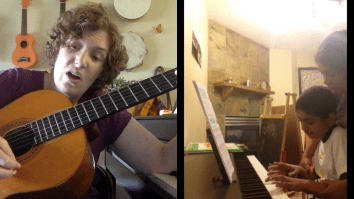
  • Mother providing hand-over-hand support to nonverbal autistic piano student with dyspraxia

    Dogs and pets are welcome, if that’s what the student likes. I even teach turtles, cockatoos and Darth Vader.

  • It is important that the room be arranged with everything comforting. All efforts should be made to turn the piano lesson room into a safe space.
  • Some students require upper core support, so experimenting with lumbar-support chair or office chair may be helpful.
  • Arms should be like the capital letter L extending to the piano. However, many students spend the first year with elbow and shoulder support, rendering their hands in the T-Rex position. The awkward posture helps build proprioception in the fingers, which are the farthest point to receive motor signals. As the fine motor skills become reliable, the hands lower into the L posture and support is faded.
  • Some students sit with pretzel legs, one knee up to the chin, or on swiveling chairs. All postural adjustments are encouraged and discussed to enhance accuracy of the finger movement.
  • If the child utilizes larger sensory tools, keep (for example) their trampoline and bouncing balls nearby. The student may utilize anything they need to redirect their body to the piano during the lesson.
  • If the student runs off or rolls on the floor, I don’t consider that a “behavior problem”. Parents should never drag the child back to the piano, bribe them, or threaten with a punishment. Rather, I encourage the student to return to the piano using a variety of tools that I have taught them.

Visual

  • From my observation, almost every student so far has displayed a photographic memory. They will take a quick peripheral glance of the material and almost never refer back to the page for visual prompts. Instead, they are ‘reading’ from their heads.
  • The student is not required to “look” at me. This means that the device is set off to the side where I can see their profile while seated at the piano. I do not allow parents to prompt “look at the book!” or “look at Miss Henny!”
  • If I require the student to use their eyes in any way, I will instruct them on the best strategies to accommodate their visual depletion rates and perceptual differences.  
  • Students with visual impairment, cortical, TBI, or congenital, are encouraged to consider learning to play from written music. Accommodations are made to enlarge the music, use clamp-on magnifiers, colored overlay filters, and a referral to an Irlen diagnostician. At this time, I am not skilled to teach braille note-reading.

Auditory

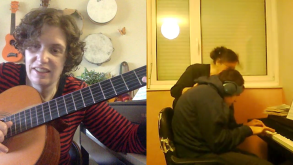
  • Piano student wearing noise-cancelling headphones during lesson

    It’s quite alright if the student covers their ears or wears noise-cancelling headphones. These devices are designed to silence the disrupting surround sound and filter only the dominant sound they wish to hear, which is the piano.

  • Students may appear to be bothered by the sound distortions to my voice on the iPad. The volume may be lowered, we can try to call again with a better connection, or complete the lesson using a smaller device (cellphone).
  • I almost never play on my piano together with the student because our pianos are very likely in different tuning. I use the classical guitar to accompany the student. I slide my fingers to adjust to your tuning, rather than making the student adjust to mine. With the nylon strings, it is a warm and pleasing non-metal sound which is quickly an instant favorite for many.
  • You will notice that I NEVER repeat any instructions and speak in age appropriate language. I don’t require that the student appear to be actively listening in a manner that has been determined as appropriate by others. Rather, I keep teaching knowing that he can hear me from any point in the house.

Accommodation
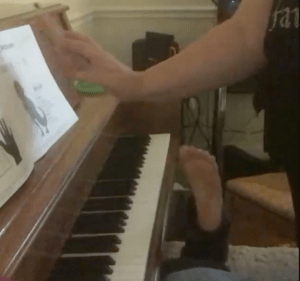
  • student foot on pianoSome students are bothered by seeing themselves on the screen. For the first few weeks, they find it helpful to cover my face onscreen with a post-it note.
  • A post-it note can also be used to hide the notification bar and charge percentage, which distracts many students.
  • Sensory stim toys are encouraged, so please do keep your string and straw collection nearby! I’ll show the student my collection and encourage the use of all available tools to organize the physical body.
  • When there is a siren or airplane on my end, I will press mute on my computer.
  • Students who wear hearing aids or cochlear implants may remove them if the sound is distorted or overwhelming. We learn to feel our way around the instrument and listen for vibrations to correct the notes when playing.
  • Vocal stimming and all stimming is ignored. It doesn’t bother me and I continue to teach.
  • Crying or screaming is a non-issue for me, but it is discussed to learn more about the triggers. These triggers are resolved with an agreed upon accommodation, and the lesson continues.
  • Students may be dressed, in their underwear, or wearing anything that is comforting to them. I am not perturbed by students who suddenly strip.

Literacy

  • Parents sometimes insist that their child “can’t” or “doesn’t” read yet. A student does not have to prove that he can read in order to be able to read. Many students are hyperlexic and have an early ability to read without ever being taught. I presume competence until otherwise proven.
  • During the lesson, I will sing the lyrics of the song rather than the note names. This encourages the student’s eyes to hunt for the next note to play based on where he’s up to in the song. The parent may observe that he is reading and finding his way through the book.
  • I also ask students to sing the lyrics of a song. I prompt by speaking the lyrics first, and then have them play and sing. This offers the learning opportunity for pre-readers to learn phonetic skills on the fly, and piece reading concepts together almost instantly. Within 3-4 weeks, students are often literate above their age level.

Communication

  • Student is spelling on a RPM laminated letterboard to communicate during the lesson

    All types of communication is welcome. However, I have a strong preference for families to already be experienced in the Rapid Prompting Method (RPM) and/or Facilitated Communication (FC).

  • Please have the AAC device on hand for communication during the lesson.  
  • I never ask a question and demand an answer, spelled, spoken, or signed. I presume competence and ask instead: “Which one is that starting note? Show me on piano”.
  • The piano becomes the instrument to demonstrate knowledge much like the letterboard is a tool to spell a response.
  • I am knowledgeable in basic American Sign Language and do try to sign while I speak to build fluency.

Social

  • Parent often request an assignment to play for grandma, or family Thanksgiving party, or for a school talent show. These requests are challenging to the student’s progress. They are a tease to what the student may want to do but may not be technically ready to do at that point in time. Playing piano publicly as a form of socialization is truly the highest compliment to your child’s training. However, please allow me to direct the pace and type of socialization.
  • Oftentimes during the second year of instruction, I will recommend that a family visit their local church and obtain permission to sit in the back while the choir rehearses. At that point, the student is ready to not only follow along on the sheet music, but they are skilled in solfege and sight-singing. It is delightful when the perfect pitch musician from the back of the room begins to sing without a pitch prompt, while most choristers are waiting for the note from the pianist.
  • Other socialization options are offered as time goes by and connections are made in your local and broader musical community.
  • The student and their family are informed when they are ready to join a band, orchestra, choir, or audition for colleges.

Learning

  • Your child’s learning style will be actively assessed in the first year. How they take in information, how they process and produce may be very different.
  • After the assessment, I will ask the student to rearrange their learning and productivity around their strengths. Sometimes a parent will insist “but my child needs a visual aid” or “can you just play it for them so they know what it sounds like?” I don’t teach in the traditional manner where supplemental supports are offered. Rather, the student is encouraged to use strengths from within to flourish.
  • It is my goal to build an independent musician who can demonstrate their talents on any piano from anyone’s music, without colored stickers, highlighters, and adaptive tools.

Emotional

  • I no longer teach students who have been exposed to Applied Behavior Analysis (ABA) interventions. The forced compliance and normalization takes a heavy toll on the child’s psyche. They become prompt dependent and wait for instructions to complete a task. I don’t offer ABA styled instruction in the lesson, nor do I allow parents to use ABA language during the lesson, such as “After piano, you will get MineCraft time”.
  • The lessons will be most successful if a healthy student-teacher relationship has occurred in the past. If every student-teacher encounter has resulted in trauma, I will be perceived as a threat. This would require the lessons to be hijacked by the emotional needs and relationship building, and little learning will take place.
  • Students who are homeschooled or unschooled may not consider me to have anything to offer to them, as they are accustomed to pace their learning based on their strengths rather than a class schedule. This is a positive and I work to build that learning relationship, but there may be lots of resistance at first.
  • Sometimes a student is having a rough day. We pause the learning and discuss it. It is not conducive for anyone to be forced to learn when there are other things going on. Sometimes a mere acknowledgement of their disposition is enough to get back on track without derailing the entire lesson.

Music Teachers — Learn the evidence-based method and teach piano to autistic students. Qualified piano teachers and senior-year music majors are eligible to enroll in the Doogri Institute training program. Click to learn more and inquire about your own professional training, and how to become a licensed Developmental Music Educator™ (LDME).

Please read: Why Piano Lessons for My Autistic Child? Top 10 Questions Answered by Autistic Piano Teacher.

“Congratulations, you have a disease!” MCAD Diagnosis today

“Congratulations, you have a disease! Or an explanation for what is going on, and meeting published peer-reviewed diagnostic criteria for a mast cell activation syndrome.” I never thought I’d hear these words. Today is the day that my MCAD was formally diagnosed by Dr. Lawrence Afrin, hematologist and MCAS expert in New York.

Every single one of my labs came back normal, both blood and urine. There were elevated von willebrand factor, which only speaks to inflammation in my system, which I already knew. Otherwise, nothing would’ve been able to get me the clinical diagnosis. And then, the motherload: My scope from 2015 was restained and the mast cells were more than 4 times the normal range for at least 2 tissue samples, which is the clinical requirement for a diagnosis. I want to add that after that scope, the GI declared histological remission for my crohn’s!

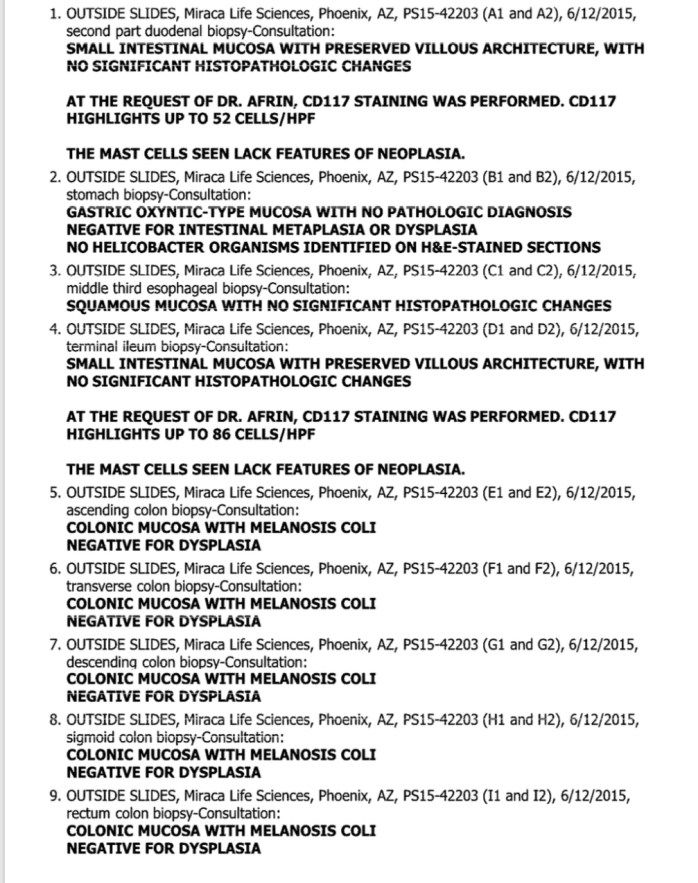
Pictured is the pathology report from the 2015 tissue samples, with Dr. Afrin’s words:

  • Tissue sample one is the second part of the duodenum of the small intestines. Originally ‘Normal’, Afrin staining: up to 52 mast cells per high power field. Upper limit of normal is 20 (results more than double). Two mast cells seen lacks neoplasia “nothing suggestive of mastocytosis” abnormal based on the numbers, but consistent with mast cell activation.
  • Tissue sample Two & Three, stomach and esophagus all normal. Didn’t even do the standing, but that’s okay. Because slide 4:
  • Four – terminal ileum, the farthest up that the colonoscope can reach in the small intestines where it joins the large intestines. Original normal. More than 4x upper limit for normal, and not a single sign of mastocytosis.
  • 6-7-8-9, did not do staining, but there are 2 biopsies that show substantial increases in mast cells “I’m looking for two pieces of evidence for the diagnosis”.

Congratulations, you have a disease!

What does this mean? Find an h1/h2 antihistamine protocol that works for you. If one drug triggers a flare, don’t give up. Ask your pharmacist to help you with formulations until you know which excipedent causes you to flare. on the bright side, prognosis is normal lifespan, except the quality of life can be chronically miserable until relief is obtained. As a final note, Dr. Afrin noted that 85% of MCAD patients do not have elevated tryptase levels, as that is only a marker for mastocytosis, a very rare variation of MCAD.

Facts:

  • Children with mastocytosis have a tenfold autism prevalence. That single study has not replicated yet in MCAD because no pediatricians are  aware of MCAS or recognize or diagnosis.
  • Nearly 80% of patients with Ehlers Danlos Syndrome (EDS) have an MCAS comorbidity.
  • 85% of MCAd patients do not have elevated tryptase levels, the only test allergist know to use today.
Link for sharing publicly for awareness:

Doogri 2018 Holiday Music Piano Competition – $500 Grand Prize

PLACE PRIZES

  • $500 Grand Prize
  • $150 Novelty Bonus

First place winners will receive a $500 cash prize from the Doogri Institute and web recognition on the HennyK.com website. A $150 cash prize is awarded for a novelty bonus, to submissions that demonstrate exemplary creativity, such as singing while playing, or added instrumentals. One participant may receive both prizes. All participants will receive a permanent video listing for showcasing their work and public comments.

DEADLINES

Submissions begin October 11, 2018 and are accepted through November 29, 2018. Winners will be announced on December 1st, 2018 and prizes will be paid by the end of that business day.

REQUIREMENTS

You are required to submit a video recording of yourself playing the specified piece. This year’s selection is the Interfaith Holiday Medley for Intermediate Piano – Holiday favorites in piano medley fusion: Rock of Ages, Maoz Tzur, Angels We Have Heard On High, Little Dreydel, Jingle Bells, Deck The Halls.

Your performance does not need to be memorized. All applicants will be showcased online for the public to “like” and judge with comments. Auditions are virtual and the video submission on the contest page with the most social media votes wins.

Age requirements do not apply to applicant’s age. This competition is open to residents of any location in the world. Students may submit their video with credit to their piano teacher. All submissions automatically authorize our right to use these video submissions for marketing purposes.  

APPLY TODAY

Applicants must request the score for the assigned piece. Please send an email to henny@hennyk.com and specify your intent to enter the 2018 competition. Please make sure to include your name, location, age, and contact information for prize payout. The copyrighted score will be sent to you free of charge, and for your use toward this competition only. The score is otherwise available for purchase.

Generalizing Standards for Autism Sensory Rooms

Not all sensory rooms are alike. When autistic people think of sensory rooms, they imagine a room designed for sensory deprivation for calming effects. When designers imagine sensory rooms, they try to cram in as much sensory information to satisfy all assumed criteria. Autistic people have preferences that vary so much, that sensory integration disorder was removed from the DSM-5. The reasoning was that if a there is no way to standardize an assessment for these differences, then there is no way to make a diagnosis, and then treat it.

Autistic people still have these sensory issues, even if the DSM no longer recognizes it. Sensory issues are prevalent in every type of neurodevelopmental disorder, such as ADHD, Angelman syndrome, Fragile X syndrome, Down syndrome, traumatic brain injury (TBI), and Cerebral Palsy. All around the world, schools, retail chains, and airport, are all trying hard to accommodate these sensory issues. The most important thing for these designers to know is that even when they consult with one or two autistic people, they still are probably lacking on specific fundamentals based on a generalized whole.

Sensory “issues” stem from a neurological processing difference. Some autistics have heightened sensory perceptions, where the world is more vivid and noisy than to a neurotypical person. Other autistics have low perceptions, and can seem indifferent to the world around them. Professionals working with autistics must know about sensory variations.

There can be hyper-responsive (sensory seeking), hypo-responsive (avoiding), and rapid cycling between both variations. It’s critical to know that these exist, because otherwise, autistics might find themselves being led to a sensory room with blaring lava lamps and strobe lights in the name of accommodation, and find themselves triggered to the point of subclinical seizures. Yet again, some autistics will find such arrangements delightful, and it may be hard to wrestle them away from these stimuli.

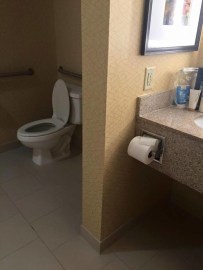
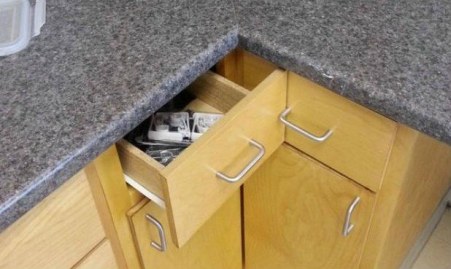
It is imperative that designs should incorporate the actual need of autistics, and not per the idea of the funders of the project. When designs are ill-fitted to the need, we have industrial faux pas where toilet paper rolls are hung inside a shower door, or a 5-point harness is designed for a carseat by someone who has never had to put a child into a vehicle. These lived experiences are essential for avoiding awkward and injurious innovations that are counterintuitive and termed “design fails”.


When evaluating a sensory profile of an autistic person, check for the following:

  1. Look at their food choices. Do they prefer crispy-crunchy, or mushy-smooth? Do they prefer their foods to touch, or be strictly separated?
  2. Check their sleeping quarters. Do they like to have a popup tent, pillow fort, and weighted blankets? Do they sleep with their feet exposed, or undressed? Do they have trouble sleeping and toss/turn all night and wake up tired?
  3. Do they cover their ears to shield themselves from all sounds, some sounds, or human language sounds?
  4. Do they enjoy events in large venues, such as concerts? Do they take great effort to avoid gatherings of any kind?
  5. Can their eyes track on a screen when watching a movie or playing a video game? Are they using peripheral vision and muscle memory when writing, typing, or watching a ballgame?

The first is a sensory profile built on olfactory and tactile systems, since the mouth may feel assaulted by food stimuli which are not amenable to its schema. The second is an indication of arousal state, and how the individual prefers to wind down. The third is how the individual interacts with sound—less/silence is enough, or louder is heard better? The fourth is how the multisensory stimuli of sight and sound create a vortex around the person based on the acoustics of an outside space. Much like a room gets warmer when there are more people, the sound and lights will amplify in amplitude toward the autistic in the room. The fifth is how visual information is perceived with the least amount of fragmentation, as the central vision may take on too much information, or in bits, in conflict with a figure-ground extraction from a gestalt.

Once the sensory profile of the individual is identified, a sensory room can be planned to serve a particular set of needs. No single room should be organized to meet all types of sensory profiles, and rather, areas should be cordoned off for different needs. There may be a dark roo, with sound-reduction panels, and weighted items to use while adjusting the glow and color of the recessed lighting through remote control. There may be a lava lamp garden with customizable colors, since neon colors may cause a strobe effect on those who are sensitive to fluorescent rays. There might be a tactile room with nubby textured toys, stimmy balls, plastic grass mats, and rock or string collections. There should certainly be a room with acoustic music instruments, and an invitation to interact with others using this artistic medium. Start speaking to #actuallyautistic people, so your efforts don’t get lost in translation. All humans have a right to sensory safety and to prevent sensory violations.


Evaluating Behaviorists’ Claims of ABA as Evidence-Based and Best for your Autistic Child

Hi, I’m Henny Kupferstein, and this video is a short response to the self-confirmatory tactics employed by behaviorists, to justify their practice. In my recent paper (PDF), it is discussed that (1) an autism diagnosis comes from a parent who fills out a questionnaire about their child’s behavior and (2) the evidence for effectiveness of ABA comes from the behaviorists themselves. So—if the parent can purchase or create an autism diagnosis, (and I know this as a parent myself) and the behaviorist can fabricate an effectiveness, then I can use the survey as instrument to check for symptoms and to check for effectiveness, and to check for parent satisfaction. Behaviorists use the exact same instruments to prove their worthiness, but they are challenging my use of the same instruments to test for ineffectiveness.

It is well documented that the tobacco industry funded and used scientific studies to undermine evidence linking secondhand smoke to cardiovascular disease. Tobacco-company-funded studies have been conducted specifically to support the development of so-called “reduced-harm” cigarettes. Back in 1971, president Nixon appointed a special committee to push the increase for corn farming to sustain an income to farmers who were influential in the voting and representing their dying industry. Burgers became bigger, fries were cooked in corn oil, and corn syrup was used to sweeten cereals and 90% of foods eaten by Americans. The government initiative sponsored research to insist that corn does not contribute to obesity and to refute the effectiveness of low-carb high fat diets. Some studies even suggested that such diets were directly linked to the increase of heart disease!

Autistic people and autistic parents should be advised to keep the faith alive. You are not going to be hurt for much longer. Trust your intuition, follow your heart, and do right by your child. When you stand up to a so-called professional who says you must listen to them to prevent lifelong disability and dependency, check with yourself if those are outcomes that you are aligned with. Do you wish for your child to be normalized and be made “indistinguishable from his peers” by subjecting him to an intervention that was used for conversion therapy, and to support the practice of pray the gay away?

Behaviorism is no longer allowed for animals and it is unethical to train animals with rewards and punishment for scientific exploration. Know the facts, and stick to your guns. It’s your life. You should be in the driver’s seat when deciding on what your needs are. How you coexist in the world is of nobody’s concern except yours. YOU MATTER!

To all other ethical researchers out there—here is a call for you to propose research to demonstrate effectiveness of your work. However, when using the voice of the people you claim to help, you need to justify why you are excluding the voice of the people who you regard as incapable of providing informed consent or owning their narrative, in whichever way they relay it.

As an autistic researcher, mother of autistic children, and practitioner to nonspeaking autistics who rely on radically different means for communicating, a counterstudy must be able to account for the bias that is glaringly obvious. Thank you for sharing. Please subscribe to my channel to stay up-to-date on my research.