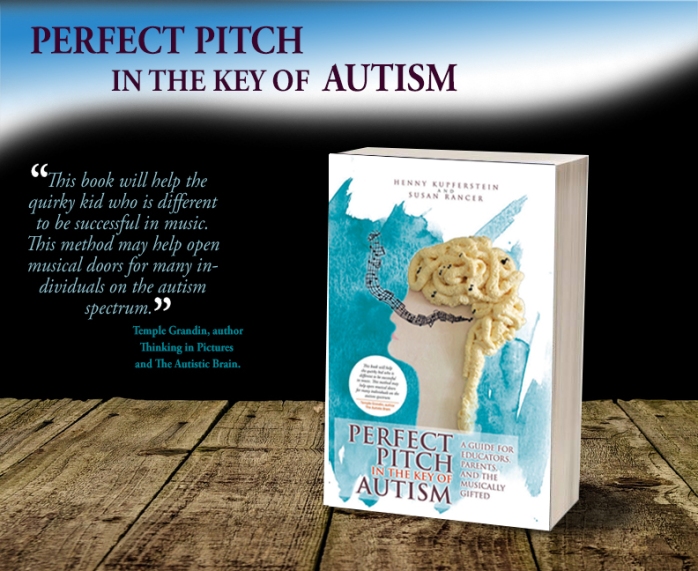
Autistic people and musical individuals often have perfect pitch, a gift they were born with. The musical gift may be accompanied with learning differences such as reading comprehension problems, trouble with mathematics, and significant difficulties in learning how to read music. This book was written by a music therapist and an autistic researcher, and is endorsed by leading experts in the field of autism and special-needs education. The Rancer Method is presented as page-by-page instructions to be implemented with readily-available method books so that every piano teacher can follow it and do well by their students.
“This book will help the quirky kid who is different to be successful in music. This method may help open musical doors for many individuals on the autism spectrum.”
Temple Grandin, author Thinking in Pictures and The Autistic Brain.
Why do we care about absolute pitch? The original focus of our research was to explain the seeming connection between absolute pitch and learning disabilities. What we discovered was that there are no learning disabilities. There are learning differences and brilliant tactics that enable coping with each of those differences, tools that lead to success in academics and all areas of functioning.
This book bridges three worlds together for your understanding. Among the authors, we have autism, sensory integration issues and absolute pitch. By combining our experiences, we can learn much more about what occurs due to the autism, due to the sensory issues, or due to the absolute pitch. The common thread is absolute pitch. Exploring it as a trait segues into understanding the rest of the autism and sensory issues. By peeling those apart, we can then assign the traits to the autism and/or absolute pitch.
Stephen M. Shore, Ed.D. Internationally known professor, consultant, speaker, and author on issues related to the autism spectrum and special education. Person on the autism spectrum
“By focusing on the abilities rather than the deficits of people with learning, perceptual, motor, and other differences, Kupferstein and Rancer have developed a revolutionary piano pedagogy that will empower individuals with autism and other differences by unleashing the power of what can be done.”
He’s got perfect pitch. He is 22, and sings with a rasp and vibrato through that last high note. Kodi’s piano accompaniment shows off technical precision that stole my heart.
Kodi Lee won the 2019 America’s Got Talent competition
Henny Kupferstein with Kodi Lee’s piano teacher YiYi Ku, at America’s Got Talent finals
Autistic people have talent, and nearly all autistic people have perfect pitch (read my research study). Autistic musical savants like myself want to be recognized for musical talent, the practice time we devote to showcasing perfection, and the music theory training that helps us fit in to a group of quality musicians, because we are usually the strongest one in the room.
Kodi’s win made parents and teachers think about autistic talent, and now everyone wants piano lessons for their autistic child.
All my piano students are autistic. Every autistic piano student should have equal access to the arts, whether they are nonverbal, blind, or poor motor skills. We can all do it, because we have the gift. But do all piano teachers have the gift to teach?
Current research is critical to work with a demographic that is misunderstood by mainstream education. Those who put together homegrown curriculum and color-basedprograms are truly demonstrating incompetent teaching skills. Teaching down to the diagnosis is a form of discrimination, and parents need to learn how to recognize a poor teacher-student relationship.
How to Know if Your Autistic Child’s Piano Teacher Is Trained for the Job
The teacher will begin the lessons even if the student does not have an appropriate instrument in their home
The teacher plays all assignments for the student, and then teaches by rote
The teacher assigns scales and flashcard work for home practice
The teacher does not hold a 4-year music degree from a nationally accredited institution.
The teacher focuses on correcting posture and finger shape more times than the student is playing during the lesson.
The teacher’s rates are below market rate for professional services in your region
The teacher refuses to teach online (skype/facetime) to accommodate the student
Parents who want to learn more about piano lessons for autistic and nonverbal students using a method that guarantees these goals through neuroplastic changes, BOOK A CONSULTand let’s set a time to talk.
Kaegan (21) is able to demonstrate perfect pitch during his 3rd piano lesson, thanks to the piano matching test. Did you know that 97% of autistic people have perfect pitch? (Kupferstein & Walsh, 2015). One obvious clue that it was time to test him came when Kaegan was singing the notes just from reading it, even before he heard it played from the piano. Please read about the nonverbal paradigm research study and the Rancer Method book for teaching music to gifted students, titled Perfect Pitch in the Key of Autism.
Source:
Kupferstein, H., & Walsh, B. J. (2015). Non-Verbal Paradigm for Assessing Individuals for Absolute Pitch. World Futures, 72(7-8), 390-405.
In this interview with Dima Tahboub of DoReMeStudio.com, we discuss how the Rancer Method builds neurological pathways to have magnify the gift of perfect pitch. Instead of the gift being a problem, there are surprising byproducts of the neuroplastic changes and visual motor cohesion, changes in eye tracking, and explosions in speech and vocalization.
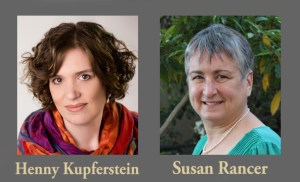
Henny Kupferstein is the co-author of Perfect Pitch in the Key of Autism, the book on the Rancer Method designed to teach note-reading for gifted students.
First, captivate the ear-based learner who craves sound. Keep pushing the ear a bit more. Now, reinforce the sound with the note clusters on the page. You must validate the fact that V7 inversions are missing a note, because their ear will ‘go crazy’ and point out the value of chord inversions. Once you have integrated the eyes with the ears, tie it all up as ‘visual shapes’ and ‘sound shapes’. Finally, wrap up with theory work (chord labeling, etc.). Always give constant reminders of their gift, each week.
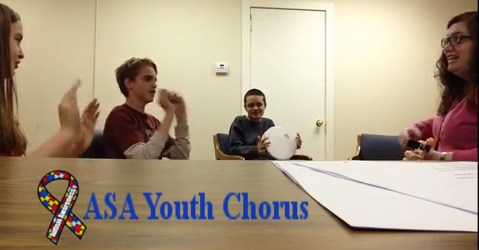
The Autism Society’s Youth Chorus pilot program was started in Winter 2013 under the direction of Henny Kupferstein. The following videos can give you some insight into our work together.
Strength-based abilities system: What comes before “D”? If you answered “C”, then you are ready to learn sight-reading for piano. Beginners and all level of abilities and special needs are welcome. My specialized method is designed to empower all individuals through piano mastery. Non-verbal and autistic homeschooled students with special needs and/or perfect pitch thrive from piano lessons.
Scientific-based methodology – The neurobiology of auditory learning accessed during music instruction stimulates language-based skills necessary for educability. All humans are capable of benefiting from this specific methodology, especially non-verbal and autistic clients with enhanced musicality.
Why Piano? Teaching sight-reading for piano in the classical tradition empowers non-verbal autistic individuals to demonstrate intellect through music. Because most autistic people have perfect pitch, this process rapidly enriches their daily lives, and carries over to all areas of academia. The moment this can be observed by others, such individuals are recognized as worthy of regular education.
Can I get smarter by listening to Mozart music every day? “Nobody ever got fit watching spectator sports.” Making the music, rather than listening to recordings, “transforms your nervous system” and makes you a better learner” (DR. NINA KRAUS (2013) Neurobiologist , Northwestern University, California).
In my music sessions, I address the following goals:
Tobi (5), Non-Verbal Autistic, vocalizing for the first time with the help of the music
SEE VIDEO “There is so much to tell you, really. How I found this awesome, incredible teacher. How she recognizes his strengths and teaches to them. How she effortlessly assumes his competency even when I’m still not sure! How she totally gets how he processes information. How I always leave a lesson thinking: Well, this next step is going to be hard! And then how it totally isn’t even a fraction as hard as I imagined! Just thinking about it makes me want to explode with happiness. Happiness for Oliver in his achievement and happiness that I could finally help him do something he has wanted for so long.” ~ Oliver’s Mom, on All About the Music blog
“By the third week of her lessons, Molly was a changed person. Empowered by recognition of her creativity, she was able to deal with the bullying at school”.
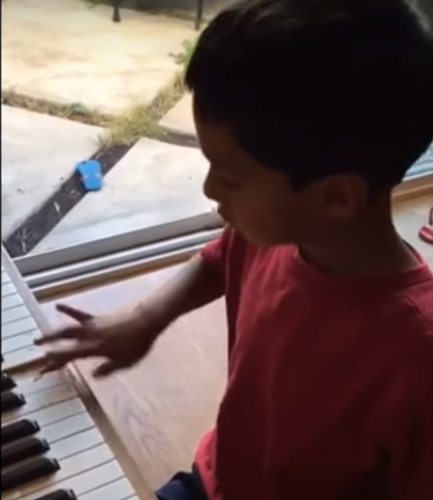
One autistic boy’s progress: From screaming, to playing, to note-reading in 3 weeks


![Join-us-on-Facebook-button[1]](https://hennyk.com/wp-content/uploads/2016/08/join-us-on-facebook-button1.png?w=150)






 Henny Kupferstein