Have you ever seen a post where someone is asking you to participate in a survey? Those casual data collections are illegal in the United States. Let’s say that you get an email from the vet you just took your pet to. They are asking for you to complete a survey about the quality of their service. If they are using it for internal purposes to better their practice, then you have a choice whether you want to donate your intellectual property to a business that has all the resources to learn from formal avenues. You also cannot guarantee that your responses would be held confidentially. For that reason, I advise people to let businesses police themselves without taking advantage of people.
Suppose you see a post in an Autistic adult facebook group. Somebody is sharing that they are doing a ‘project’ for their college thesis. Be aware: Undergraduate students do not conduct research. Graduate students sometimes have research ‘projects’ but rarely is published research required in their degree program. In doctoral programs, students are subject matter experts who will go through rigorous training in ethics of research with human participants, laws pertaining to confidentiality, the current rules about the use of deception, and the requirement to provide information about their approval to conduct research.
Institutional Review Boards (IRBs) are committees that ensure research involving human subjects is ethical and safe. They review research plans to protect participants and ensure compliance with regulations. IRBs can approve, modify, or disapprove studies based on these criteria. Every university that requires students to conduct -AND- publish research also has an IRB onsite. The IRB is typically a group of professors who are trained in the most recent laws and regulations about human participants. Even if your research does not collect data from human subjects, you as a researcher will still need to apply and receive IRB “exemption”. You cannot use the IRB approval to conduct more than one study, and the data collection and study must match the purpose of your application.
After the IRB processes your application, you will get an approval certificate which will have an internal tracking number. That is to ensure there is no fraud, and also to have a reference if people contact your university with complaints about your conduct. The certification and/or the IRB contact information ABSOLUTELY MUST be a part of the post, or recruitment landing page or recruitment material. Do not even click on anything that is lacking IRB information, because even your clickthrough might be used for research, possibly to test how many people click to participate depending on the nature of the graphics and wording. Horrifying, right?
My goal in writing this for my readers is to help them choose to participate in a project that is not IRB approved. Those are unethical and legal in many countries. On this page published by the NIH, you can read about the history of how human subjects came to be protected from experimentation, and identify three population groups that are considered vulnerable, and forbidden from researching: pregnant people, prisoners, and developmentally disabled people. This stems from the terribly dark history with what happened at Willowbrook, a state institution exposed 50 years ago. You may wonder about this if you are Autistic. Since the DSM-5 changed the diagnostic criteria for an Autism Spectrum Disorder in 2013, Autism no longer requires an intellectual disability to be considered. For that reason, Autistic people are no longer excluded from participating in research and are considered capable of proving informed consent. Still, as an Autistic autism researcher, I maintain a rigorous schedule of renewing my certification about ethics with human participants every four years as required. I hope this article helps you identify red flags.
Be a Part of Change: Autism Study Database for Autistic-Led Research
We no longer want to study medical autism. Autistic-led research is about the quality of life and out lived experience. We are compiling a database of people who want to be notified when an Autistic researcher is looking for participants. All we need is your email address, which we will keep private.
Help us advance autism research by joining our Autism Study Database! By contributing your unique experiences, you’ll play a vital role in improving understanding, shaping future care, and driving meaningful change in the autism community. In large numbers we can make a lasting impact.
Who can Subscribe: You must either be Autistic yourself or have an Autistic loved one, or be a professional working with Autistic people. You may choose multiple.
Benefits:
Your privacy is our priority—your information will remain confidential. You’ll receive occasional emails about research studies, with the option to opt out at any time. While there is no financial compensation, you will be informed when important research findings are published.
“Call me maybe…” If you have questions pertaining to the way this information will be used, don’t hesitate to contact henny@hennyk.com. This call to action is on every social media platform. Look for #doogridatabase or #autisticautismresearch to find and share.
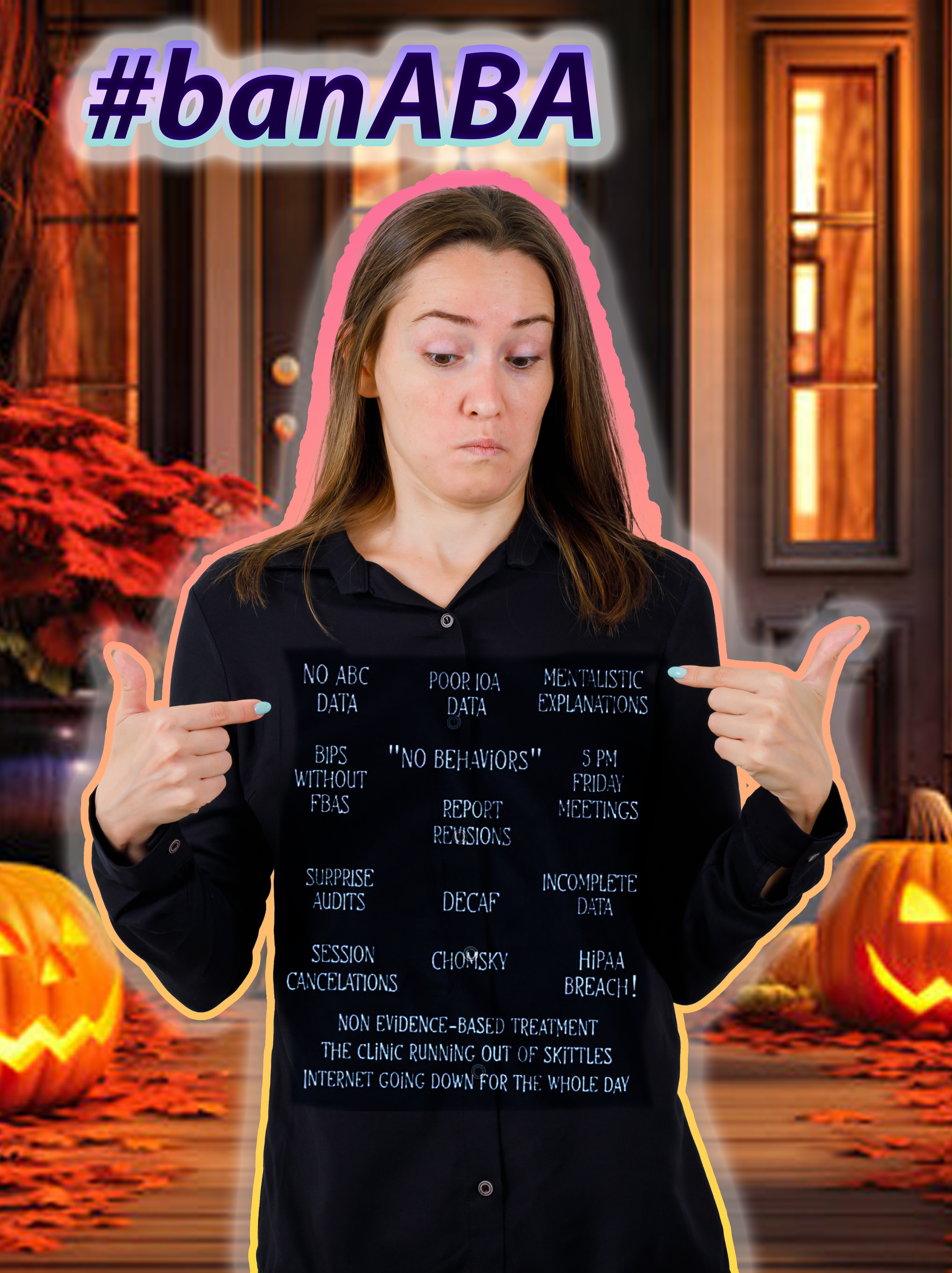
It was a typical Tuesday when Miss Casey, our behaviorist, showed up wearing a Halloween T-shirt. Little did she know how true that statement was for our family. As I took in the shirt, I felt a surge of frustration mixed with disbelief. This was a woman responsible for guiding my autistic child, yet her care had been nothing short of a nightmare.
A Parent’s Narrative
Let me walk you through the countless ways she failed our family. Miss Casey’s incompetence has not only wasted our time and money but has actually set my child back. I’m done. We’re done. This is malpractice, plain and simple, and she needs to be held accountable. For the sake of my child, I have to ask that she be let go. I also must consider the families she might see next.
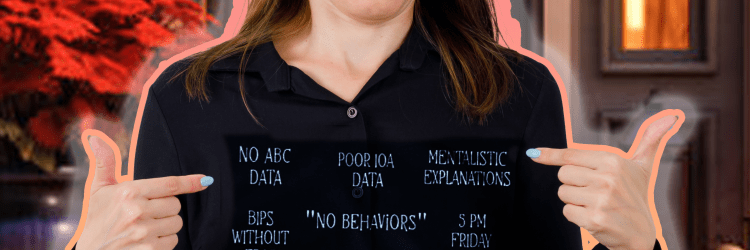
First, there was no ABC data. Miss Casey seemed to be guessing about my child’s behavior. We’d sit in session after session, yet she never tracked what was causing meltdowns or why they were happening. How can you possibly help when you don’t even know the basics of the behavior? It was like she was shooting in the dark, and my child was the one paying the price.
Then there was the poor IOA data. I’d see one thing, Miss Casey would see another, and we could never agree on what was actually happening. Her observations didn’t match mine or even her assistants’. It got to a point where I couldn’t trust any of her data, and honestly, it felt like she didn’t know enough to get it right.
Miss Casey became horrified whenever I suggested I knew what else might be affecting my child. Any mention of my insights felt like a threat to her expertise, and she grew defensive when I shared how my child had been feeling that week, even accusing me of providing mentalist explanations. Instead of collaborating, it turned into a constant philosophical battle over emotional nuances. This is ABA, not therapy, and her frustration was palpable as I tried to express my perspective, leaving me feeling dismissed and unheard.
Behavior Support Plans (BSPs) need to be based on a Functional Behavior Assessment (FBA) to ensure interventions target the function of the behavior. She even had the nerve to put together a Behavior Support Plan without doing an FBA! That’s right—she made a plan without even assessing what was really going on. Writing BSPs without conducting FBAs is like shooting in the dark—interventions are likely ineffective or even harmful.
Miss Casey constantly claimed there were all these “behaviors” we needed to work on. The problem? No one outside of her sessions—none of the teachers, the IEP team, or anyone else—ever saw these behaviors. I asked around, and not a single person could confirm what she was documenting. It felt like she was fabricating problems just to justify her time with my child. How am I supposed to trust a professional who seems to be making things up just to keep getting paid? It was like she needed there to be an issue so she could keep her sessions going, regardless of whether my child was actually struggling with those behaviors.
It got to the point where she would schedule these last-minute 5 pm Friday meetings, completely disregarding my family’s need for downtime. By the end of the week, my nerves were already shot, and here she was, expecting me to be fresh for these late meetings after a long, stressful week.
And the report revisions? They were nothing short of a scam. Miss Casey wasn’t writing these reports to accurately reflect my child’s needs—she was doing it to hit the specific keywords required for insurance reimbursement. Every time a report came back, it had less to do with my child’s actual progress and more to do with what the insurance wanted to see. It felt like she was fabricating details to make sure they got paid, not to summarize my child’s real challenges or progress. These reports weren’t about helping my child; they were about securing payment, plain and simple.
Then there were the surprise audits, which I could tell terrified Miss Casey. Every time an audit came up—whether from insurance or a regulatory body—she was in complete panic mode. Auditors would scrutinize every tiny detail of her work, from her data collection to whether her treatment plans were solid and ethical. The pressure was intense, and you could see the fear in her eyes, knowing that even one missing document or a small record-keeping error could cost her big time. She was constantly second-guessing herself, anxious about being caught with mistakes. It wasn’t just about checking her work—it felt like a looming threat that could destroy her career. Every audit felt like a ticking time bomb, and the stress bled into the care she provided for my child.
One day, Miss Casey forgot to bring her Stanley cup filled with coffee and asked if I could make her a cup. The problem? We only had decaf. You should’ve seen how mentally incapacitated she became without her caffeine fix. It was like watching someone unravel right in front of me. She couldn’t focus, couldn’t keep up with my child’s needs, and honestly, it was embarrassing. I get it—coffee is a lifeline for people dealing with long hours and stressful work. But to see her completely fall apart over a cup of decaf made me question whether she was really cut out for this job. It was as if she needed her “drugs” just to function, and my child ended up paying the price for it.
Then there was the issue of incomplete data, which made me increasingly suspicious of Miss Casey’s work. Data collection is the foundation of ABA, and yet, time and again, she couldn’t provide concrete written evidence of my child’s progress. It was alarming. If she was truly helping, where was the documentation to prove it? It felt like they were unable to articulate the impact of their interventions, no matter how small. Without that data, I started to wonder if the sessions were even effective at all. I found myself questioning whether Miss Casey was really making a difference or just going through the motions. The lack of clear evidence left me uneasy, and I couldn’t shake the feeling that something was fundamentally off with her practice.
Then there were the session cancellations, which I began to see as a direct result of the reimbursement system. Every time Miss Casey’s paperwork didn’t meet the strict reimbursement requirements, she’d be suspended until she “fixed” it. But what really struck me was how they had no problem forcing their way into our schedule during our COVID quarantine, insisting that we needed to maintain a routine to reinforce the therapy. It felt hypocritical—while they were sidelined by paperwork, they expected us to prioritize their needs over our family’s health. This inconsistency disrupted my child’s progress and left us feeling like just another cog in their profit-driven machine.
Then there was the incident with Chomsky, which was truly eye-opening. Noam Chomsky, a renowned linguist and cognitive scientist who rose to prominence in the 1950s and 1960s, revolutionized the study of language with his theory of generative grammar. He argued that language acquisition cannot be fully explained by behavioral principles, challenging the foundations of behaviorism. When I tried to discuss his theories with Miss Casey, she completely shut down, revealing her struggle to engage with such fundamental concepts of her own practice. Her inability to defend the philosophy of ABA, especially in the face of such a significant challenge, left me questioning her professional training and understanding of the approach she was meant to apply with my child. It was alarming to see a behavior analyst so unprepared for critical discussions about the theories that challenge her field.
Then there was the HIPAA breach, which was deeply concerning. ABA practitioners handle sensitive client information, and a breach of this data is a serious violation of the Health Insurance Portability and Accountability Act (HIPAA). Miss Casey had everyone’s case notes flying around in plain sight, leaving other people’s files in our house without a second thought. Most upsetting of all, she even talked about my child on her social media, completely disregarding privacy and confidentiality. This was not just unprofessional; it was a glaring violation of trust. The potential consequences of a HIPAA breach are severe—legal repercussions, loss of professional credentials, and significant damage to her reputation. The fear of such an event created constant stress for me, knowing that my child’s sensitive information was at risk due to her negligence.
Then there was the issue of non-evidence-based treatments, which really highlighted Miss Casey’s aggression. When I excitedly mentioned that my child had a major milestone yesterday—spelling a whole sentence on his iPad to communicate—she pounced, yelling about how we couldn’t use any non-evidence-based treatments. It was baffling; using a device for communication isn’t a treatment—it’s simply a means of expressing thoughts. Her reaction made it clear how terrified she was that something as generic as using an iPad might work better for my child than her heavily reimbursed methods. Instead of celebrating my child’s progress, she was more concerned about her own practices being overshadowed, and that was incredibly unsettling.
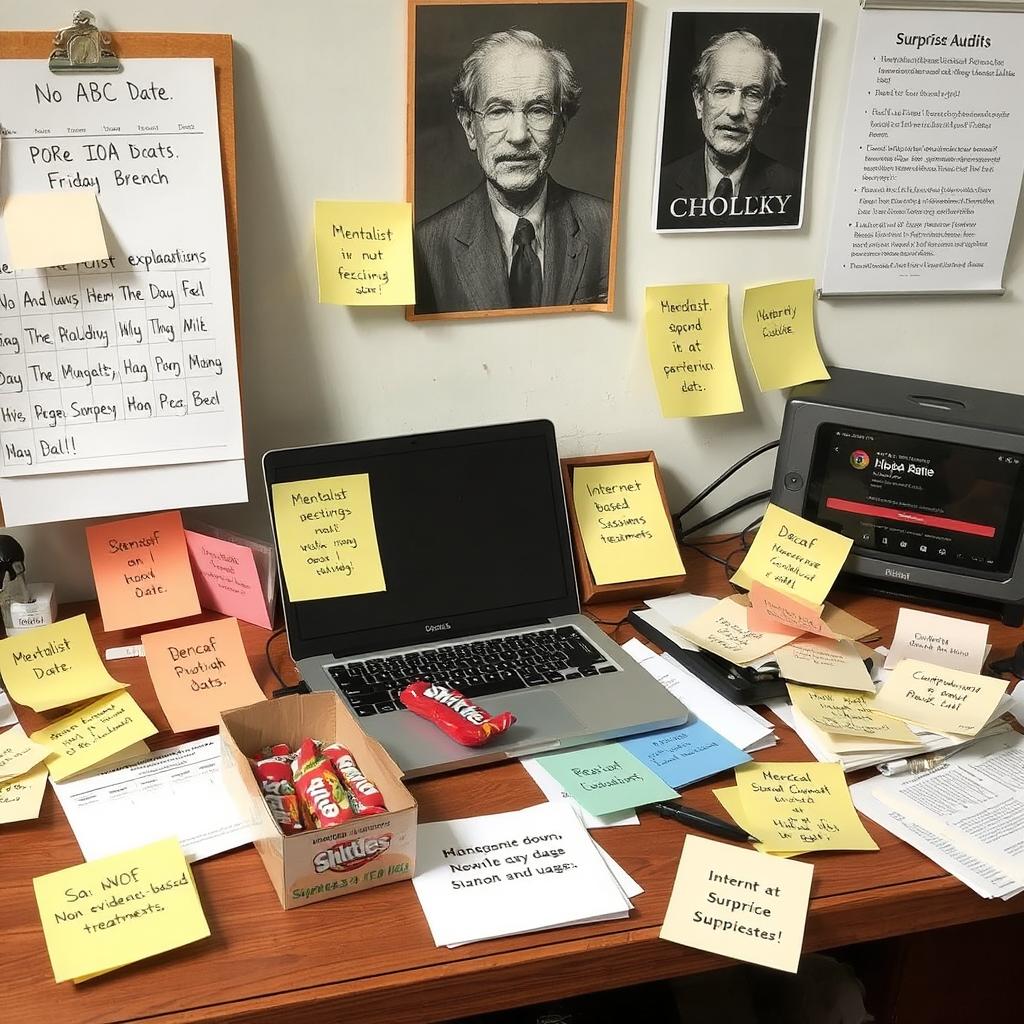
Then there was the issue of Skittles, which highlighted Miss Casey’s misplaced priorities. Reinforcement is a core concept in ABA, and Skittles are often used as tangible reinforcers. When we told her we didn’t allow her to bring them into our house because we don’t eat sugar and don’t condone using food as a reward, she had a complete meltdown. Her reaction made it clear she believed that without Skittles, her sessions would be ineffective. Running out of reinforcers like that could lead to frustration and regression in behavior. More importantly, I worried about my child, who might think he only gets to eat when he sits perfectly still. This situation wasn’t just about Skittles; it showed how focused she was on her methods rather than truly understanding our family’s values and my child’s needs.
Then there was the issue with the internet, which revealed how dependent Miss Casey was on her tools. When we had an entire day without internet, it disrupted data collection, session planning, and telehealth, resulting in chaos and potential loss of progress. Yet, while she couldn’t function without her digital tools, she had no problem taking away my son’s iPad for perceived misbehavior. To make matters worse, she demanded to connect to our Wi-Fi, which made us very uncomfortable and highlighted her reliance on technology at the expense of our family’s values.
The challenges we faced with Miss Casey ultimately led to her quitting, and it was a relief tinged with frustration. She simply couldn’t handle being challenged; every time I raised concerns about her methods or asked for a discussion on her practices, she would shut down. Her inability to engage in professional dialogue was glaring, and it became clear that maintaining factual data was a constant struggle for her—one that threatened her pay and made her defensive.
Even more troubling was her failure to prove that my child’s behavior issues stemmed from autism rather than her insistence that he sit still without his iPad. The pressure she placed on him only heightened his anxiety and frustration, leaving us in a state of turmoil. In the aftermath, we found ourselves deeply scarred by the experience, needing to rebuild from the trauma we endured. Now, the help we seek is for the PTSD we developed during this ordeal, rather than the autism we initially sought support for.
I don’t wish nightmares on anyone, but it’s hard to deny that alterations in mood and sleep are clear indicators of PTSD. Miss Casey’s approach and the chaos she brought into our lives left us haunted by what we experienced. The anxiety and stress she caused turned into restless nights filled with troubling thoughts and a constant sense of unease. While I hoped for support, what we got instead were nightmares—memories of a time when our trust was betrayed and our well-being compromised. The scars of that experience linger, reminding us of the toll it took on our family.
Professional burnout and autism overwhelm are both types of burnout that can have negative consequences on a person’s life, but they have different causes and symptoms.
Emily sat at her desk, staring blankly at her computer screen. The demands of her job had piled up, and with each passing day, she felt more detached and exhausted. Long hours and constant pressure left her feeling cynical and drained, a classic case of professional burnout. Friends noticed her irritability, and she struggled to find motivation, often waking with headaches from the stress.
Meanwhile, Sam, an Autistic man, found himself in a bustling café, overwhelmed by the bright lights and loud chatter. The noise and social interactions became too much, sending him into a state of panic. His heart raced, and he felt trapped, unable to articulate his distress. In moments like this, he often experienced shutdowns, withdrawing completely to regain his composure.
Emily’s burnout had built over months, requiring her to set boundaries and seek support from her colleagues and friends. She learned the importance of self-care and even considered a job change to reclaim her sense of purpose. On the other hand, Sam’s overwhelm struck suddenly; a few deep breaths and a quick retreat to a quiet space helped him regain his balance. He often relied on fidget toys and structured routines to manage his sensory needs.
Both Emily and Sam faced unique challenges, each impacting their daily lives and relationships. Emily’s burnout affected her job performance and personal life, while Sam’s overwhelm made social situations daunting. Recognizing their experiences as distinct yet valid allowed them to seek the right support and coping strategies, paving the way for healthier, more fulfilling lives.
Research about burnout separates burnout from overwhelm. Professionals will burn out from challenges at the workplace, such as an unrealistic workload, uninspiring work, or lack of support. Autistic burnout is caused by the long-term stress of living and working in a neurotypical world, which can include sensory overload, social stressors, and life stress.
Professional burnout can cause chronic fatigue, insomnia, headaches, stomachaches, anger, isolation, irritability, and depression. Autistic burnout can cause sensory overload and sensitivity, which can lead to feelings of overwhelm, discomfort, and even physical pain.
Professional burnout can lead to increased sick days, loss of productivity, and strain on mental, emotional, physical, and spiritual health. Autistic burnout can affect various aspects of a person’s life, including work, relationships, and overall well-being.
Autistic burnout can lead to loss of previously acquired skills and greater difficulties in social interactions, which require specific strategies for management and recovery.




 Henny Kupferstein