Say the word AUTISTIC: Stop calling me a self-advocate. 

Autistic people who are aging have little guiding research on how a developmental disability persists across the lifespan. As our lives span out, our support options narrow to a grinding halt. Gone are the sensory gyms, the horse therapy, the tutoring, and the grooming assistance. 

Many autistic people experience an existential emergency after the age 30. Mental health concerns skyrocketed from age 30-40. Persistent suicidality is a byproduct of masking; spending decades conforming to society to access their care and community. 

Image represents a group of like-dressed people who help each other up a mountain because even a lavish rainbow fails to help them as a group.

In your 40s, you may realize that you, the autistic is spending every waking hour patheticalizing their situation to a generic social services worker, who has no autism page in their manual. Essentially, the autistic has to find the definitions that are substantiated on a federal level and to chronically educate and thank people for accommodating us, despite their poor human behavior or mocking our requests. 

We spend weeks waiting for poor-person’s medicaid systems to authorize referrals. We get denied speech therapy to help with social communication, because the national standard (CMS rule) is to approve speech therapy only after an acquired injury such as a stroke, and only for 6 sessions over 12 weeks.

As we move over the hill, we are generally a collective of unemployed overeducated people who may live alone and be the weirdo of their family who is neglected to be included (because he hates when we sing happy birthday). We might find ourselves overweight and sickly with connective tissue disorders, mast cell disease, and everything the trifecta has to offer. With that comes the ultimate existential emergency, when your mind starts overworking in preemptive self defense; will they treat me as my symptoms present, or will I again be forced to explain to a special specialist that autistic people also have normal people problems, except we have more of them at the same time? 

Stop calling me a self-advocate. If you are managing the social media accounts for a publicly funded program, or you are sending out email for your mailing list subscribers, we will catch you. We will educate you until your brain expands by a single molecule. You are no longer ignorant by 2024, and you can no longer claim this is the correct way to refer to DD/ID people, the demographic your agency serves. 

We are the autistics you serve, and we need your services because of the mandate for us to get the services, without being forced into advocating for ourselves. If I was an effective self advocate, I would never be diagnosed autistic in the first place, as communication impairment is the first functional impairment of the autism diagnostic criteria. 
Tabloid Sensationalism as Barrier to Autism Acceptance

Tabloid Sensationalism as Barrier to Autism Acceptance

Tabloid Sensationalism as Barrier to Autism Acceptance

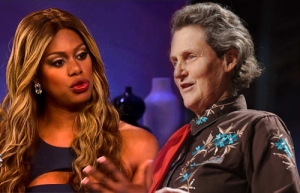
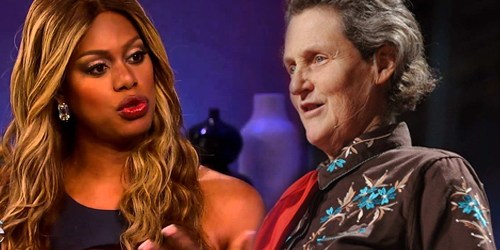
There are two primary ways that the autistic community is able to attract the attention of the public. Most preferred is the inspiration porn videos and articles that sensationalize a task only because the person doing it is disabled. The second is the sensationalism of accomplished autistic people who appear in the media as public figures in positions of power.

A general feature of the autism diagnosis is a discomfort with adapting to unpredictable social expectations associated with the spotlight. Thus the opportunity to be a public representative of the autistic community produces a circumstance laden with difficulty. The advocate in the public spotlight becomes consumed with simply navigating the unscripted interaction at hand. In that predicament, the advocate is in no place to speak on behalf of all autistic people.

The movement towards autism acceptance is painfully slow, very unlike the significant attitude shifts and changes effected by transgender advocacy. Both movements are fraught with controversy and outright shaming; significant harm stems from a societal discomfort with the concept of neurological and physiological differences. In the case of the transgender movement, when the cultural conversation is fixated on the bodies that trans people have, it causes the challenges that trans people face to go unaddressed. Like trans people, autistic public figures rarely get to share the complexity of their authentic life experience. In the public eye, the fixation on the behaviors that make them different, takes center stage.

An ordinary autistic person’s difficulty with navigating the grocery store or the classroom is not regarded as newsworthy and is thus silenced by the focus on an overarching pathology. Topics that are not inspiration porny enough are sidelined because the protagonists fails to magnify their atypicalities and make them the sole focus their message.  The public interest in intriguing differences augments the deviance which directly contributes to how the difference becomes highly vilified in the media.

Transgender activist Laverne Cox has said, “by focusing on bodies, we don’t focus on the lived realities of that oppression and discrimination.” Societal objectification contributes to further disempowerment of some already-vulnerable groups in society. In any population, lack of acceptance leads to sadness, isolation, devastation, and pennilessness. This mistreatment creates a learned helplessness, and the despondent person become consumed with getting through their day rather than burdening themselves with public advocacy.  

When the unaccepted differences take center stage, the focus shifts away from the collective harms imposed by society onto a given group. After all, the only disabling condition is the human one. We need to embrace a more relevant neurodiversity-friendly and fully inclusive, non-spoken paradigm for demonstrating autistic pride.  This will involve paying attention to different forms of media that make heard the voices of autistic people who would not otherwise be comfortable with the demands of public-figure sensationalism.