
 | Doogri Institute 501(c)(3) non-profit |
| California Specialized Sex Education for DD/ID Youth and Adults Legislative Proposal for 2024 | Prepared for Senator Catherine Blakespear [D] Henny Kupferstein, Ph.D. Principal Investigator |
Click here to download the PDF proposal, January 4, 2024
California special education law about sex education for DD/ID students and those with an IEP.
New legislation must mandate that all sex education must include medical and scientific explanations about the ‘birds and the bees’; This is currently not adopted by 96% of schools teaching sex education. Typically, parents of special needs children will avoid the topic and rely on special educators to adhere to the curriculum design in place. My research and advocacy led me to this initiative to eradicate the exclusion of life facts education for autistic (and DD/ID) people.
As an autistic person who did not receive sex education, I researched the odds of sexual violence in my peers, and it is supported in the literature that we are at a tenfold increased risk, when compared to aged-matched non-disabled minority groups. Autistic students also generate repulsion in school staff and supportive therapists when they are classified as engaging in inappropriate behaviors. Autistic people who do not learn about sexual health are disproportionately committing illegal acts to engage sexually, which is their biological and existential right.
The Initiative
This research report is written to propose expanding the current California laws to include adaptive education for special ed, as well as developmentally and intellectually (DD/ID) students with disabilities. The current mandate only vaguely implies “culture sensitive” education laws. This initiative is meant to prevent unfair indictments, prevent sex abuse survivors seeking due process from resorting to school shootings, and to promote an inclusive agenda to endorse the fundamental rights of appropriate education for all students. These issues are plaguing the 1 million autistic people in the state of California.
Another reason to support this initiative is based on the research that autistic people are left to discover facts about intercourse through p0rn0graphy, and a disproportionate amount of indictments for seeking out information in an age-level that is intellectually comprehensible, such as child p0rnography. Lastly, the initiative is designed to tame retaliation shootings targeting sex abusers by survivors who seek due process after an uninformed violation.
Legislative Initiatives in Place
California Assembly Bill 452: Childhood sexual assault: statute of limitations, passed on October 10, 2023, first introduced by Assemblymember Addis. AB 452 may significantly reduce retaliatory school shootings by DD/ID people who have been sexually violated. AB 329 requires that students in grades seven through twelve receive comprehensive sexual health education and HIV prevention education at least once in middle school and once in high school. The law does not make specific the evidence-based curriculum, and fails to eradicate faith-based doctrines in the teaching of sex education.
Colorado requires sex education to be culturally sensitive to people with intellectual and physical disabilities, stating that the resources, references, and information included in sex education curriculum must be meaningful to Youth With Disabilities (YWD). California’s Healthy Youth Act requires instruction to be appropriate and accessible for YWD. The loose definition of “accessible” is not inclusive of Neurodivergent people who need culture-fair instruction that is adaptive to their learning style.
California Education Code 51933, Article 2 mandates Comprehensive Sexual Health and HIV Prevention Education. Although 96% of California school districts provide comprehensive sexual health education, there exists no standardized curriculum that is pedagogically sound. The California Healthy Youth Act, Education Code (EC) sections 51930-51939, has five primary purposes:
- To provide pupils with the knowledge and skills necessary to protect their sexual and reproductive health from HIV and other sexually transmitted infections and from unintended pregnancy;
- To provide pupils with the knowledge and skills they need to develop healthy attitudes concerning adolescent growth and development, body image, gender, sexual orientation, relationships, marriage, and family;
- To promote understanding of sexuality as a normal part of human development;
- To ensure that all pupils receive integrated, comprehensible, accurate, and unbiased sexual health and HIV prevention instruction and to provide educators with clear tools and guidance to accomplish that end;
- To provide pupils with the knowledge and skills necessary to have healthy, positive, and safe relationships and behaviors
Comprehensive Sex Education for Youth with Disabilities
Za’akah, a New York-based organization, maintains a proven legislative agenda that aims to expand current laws in the United States. We salute the work of SIECUS to bring national attention to the disparities that these youth face and offer concrete recommendations to create a healthier world for all.
With the passing of the California Healthy Youth Act in 2016, school systems across the state embarked on a search for a curriculum adoption that would meet the needs of all their learners. Materials that were created with people with disabilities in mind from the outset are factually watered down versions of general education programs with only minor tips for adaptation, leaving individual teachers responsible for creating their own pacing, scope, sequence, and materials for a subject that most had barely taught.
Students with the most challenges deserve a curriculum with the most focus on their needs—instrumental needs to improve their learning and content needs that recognize their lived experiences of sexuality. People with intellectual disability experience sexual assault at a rate more than seven times that of those of people without disabilities in the United States. Teachers have no guidance to prepare their students for life without educational programs that recognize their realities.

In a shocking exposé, “You’re Teaching My Child What?” Dr. Miriam Grossman rips back the curtain on sex education today, exposing a sordid truth. Today’s sex ed programs aren’t based on science; they’re based on liberal lies and politically correct propaganda that promote the illusion that children can be sexually free without risk. Such dogma misleads students that abstinence is the way to prevent getting an STD, and that the fundamental ‘birds and the bees’ is excluded in health education.
According to the California Teachers’ Association Magazine (California Educator) in the article “Embracing the Gender Spectrum” (March 2017, Vol 21, Issue 6, p. 21), gender can fall in multiple categories which must be included in a Gender Expansive curriculum. “Education is a fundamental right that belongs to all, not some of California students.” (Vergara v. California). Similarly, the protection of our youth must include mandated reporting for “all adults” who work with children, and to rescind the right for Privileged Communications as a doctrine of some faiths where clergy withhold mandated reporting of sexual violations.
Modeled on Existing Legislation that Works
In New Jersey, any person having reasonable cause to believe that a child has been subjected to abuse or acts of abuse should immediately report this information to the State Central Registry (SCR). In New York. Senate Bill S1399 Enacts the child abuse reporting expansion act by amending section 413 of the social services law to add clergy members as mandated reporters of suspected child abuse and maltreatment.
California’s EC 51930 mandates that (i) Instruction and materials may not teach or promote religious doctrine. Abstinence is a common core of faith-based religious teachings, and not a scientifically supported notion. It is a scientific fact that “You were born as a result of a sexual encounter.” We must urgently expand the rights of DD/ID youth to fairly access the education necessary for sexual safety, crime prevention, gender expression, and body autonomy.

A legislated curriculum must endorse the following intentional list of items:
Proposed Action
- Prevention of sexual violence, by educating about the nature and due process of violation in this population.
- Consent of Touch — to include all adults who have a right to place hands on a child under the guise of special education and supportive therapies’ standards of practice.
- Published resources and information about where to obtain Plan B, condoms, pregnancy tests, diaphragm contraception, and spermicide, as part of the mandated curriculum, as these are readily sold with FDA approval over the counter.
- Vulnerability — recognizing predatory behaviors in others who prey on people with disabilities, and how to ‘speak to an adult’ about it, when there is nonspeaking communication impairments. To date, nonspeakers who spell to communicate are still considered to have no capacity to testify in legal cases, whether as a victim, a witness, or in an abusive conservatorship forced into congregate living.
- Grooming, especially with Applied Behavior Analysis (ABA) interventions, where ABA technicians engage in predatory practices, invasion of personal space, and manhandling with restraints. The ABA industry engages in deception in making parent recommendations, by encouraging the family to allow all activities of daily living (ADLs) instruction to the adult therapist. The definition of who can provide ABA in California was most recently implemented with the passage of SB 805, where the standards of who can provide ABA services has been lowered to anyone with high-school education, and to allow unfettered ABA therapy to occur without the nationally recognized standards of practice or CMS rule for medicaid reimbursement.
- Bodily autonomy, especially for students receiving therapies that include hands-on, notwithstanding restraints. Students must learn how to interpret all bodily touching, and how to assign communication categories to these violations when communicating with a mandated reporter on the topic, to facilitate due process.
- Any sex educator who withholds information about Sexually Transmitted Disease STD “status” should be referred to the attorney general, under the right to educate and help minors make informed decisions with disease-free sexual partners, and with the same zealous protection of COVID status.
- LGBTQIA+ protection – to facilitate the “coming out” process, which strongly correlates with family conflict, and to prevent ostracization, senseless crimes, and youth homelessness.
- Kosher facilities and funded centers that endorse a faith-based doctrine that is not scientifically endorsed to ‘pray the gay’ away should be outlawed. As they are generally exempt organizations that fund their own agenda staffed by clergy and faith leaders, they shall still be mandated for compliance with Governor Charlie Baker’s 2019 legislation that prohibits licensed health care providers from practicing conversion therapy on minors within the state.
- Nonsectarian ongoing training of mandated reports must be legislated and enforced, as well as ongoing inspection of privileged communication by Child Welfare.

As an autistic person who has been violated because my parents opted out of state requirements, I wish strongly that Parents who opt out of sex education or have opposition to these laws should consider moving to Florida where drag queens have been outlawed ‘to protect the children’. Any U.S. state may interpret civil rights to benefit its constituents, and I stand in support of California lawmakers who insist on compassionate allyship with autistic constituents and culture-specific autistic scientists.
Communication impairments are part of the diagnostic criterion for an Autism Spectrum Disorder. New York 2015 A.5141. Legislation Communication Support service definition explicates:
18 (i) initiating and exiting communication of intent;
19 (ii) topic maintenance;
1 (iii) defusing hostile situations that result from ineffective
2 attempts at independent communication;
3 (iv) preparing, strategizing, and organizing information for written
4 or electronic correspondence; and
5 (v) preparing for upcoming interpersonal communication situations.
I anticipate an empathic response from your office, as the prevalence and impact of this initiative is bipartisan friendly, has no fiscal implications, and replicates existing laws to support an introduction of a Special Sex Education Act.
Sincerely,
Dr. Henny Kupferstein
San Diego, California
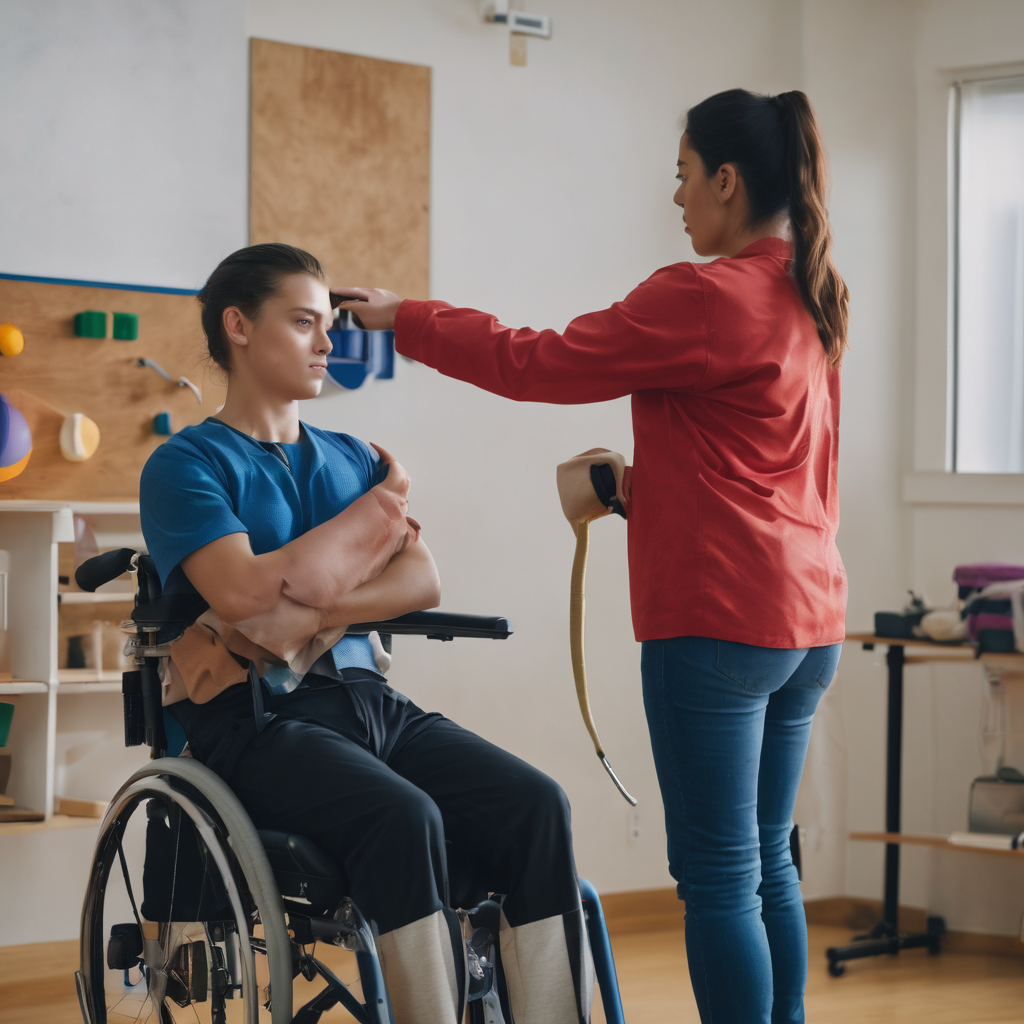
* All images were obtained from generative Ai to protect the privacy of minors depicted in compromising situations
 Henny Kupferstein