Surprise! If your tweets were scored as out of compliance with behaviorism metrics, you are now assigned to the negative category and put into the corner without skittles.
In a recent publication dated April 1, 2024, five behaviorism faculty members from Western University in Ontario, Canada, analyzed around 11,000 tweets about Applied Behavior Analysis (ABA). They categorized these tweets into neutral, positive, or negative sentiments and concluded that a small but vocal minority expresses negative sentiments toward ABA. However, the sentiment analysis conducted by manually coding tweets is inherently subjective and biased, with a lack of detailed validation measures that severely undermine the credibility of their findings. The hashtag #banABA scored a 4 on the negative sentiment weight table. The study does not make possible the auxiliary information necessary to comprehend what “4” means in the context of their review.
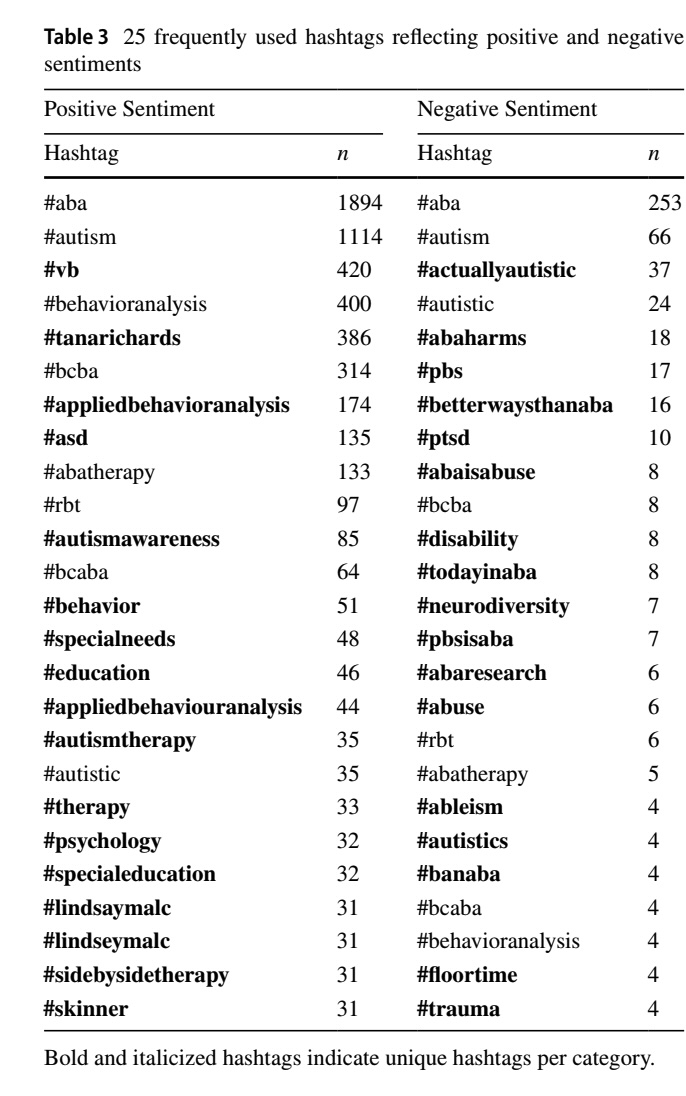
Despite the study’s ambition to provide insights into public perceptions of ABA, a closer examination reveals significant methodological flaws, biased interpretations, and a disturbing disregard for the lived experiences of the autistic community. The study operationalizes human sentiment through an internal scoring system used for both patient populations and strangers on the internet. Tweets that didn’t align with their sentiment ratings were classified as negative and dismissed, reflecting a troubling tendency to ignore critical voices rather than engage with them constructively.
The study emphasizes the distress behaviorists feel when their work is equated with harm but fails to address the root causes of these perceptions. Focusing on the professional discomfort of behaviorists rather than the reported experiences of harm from autistic individuals reveals a prioritization of professional reputation over patient welfare. Moreover, the authors’ equating of tweets with verbal socialization demonstrates a fundamental misunderstanding of how autistic individuals and the general public use written communication on social media. This diminishes the validity of their analysis and reflects a lack of understanding of digital communication dynamics.
The authors conclude with strategies for behaviorists to counter negative sentiments on social media, including how to tweet and use hashtags effectively. This approach trivializes the concerns raised by critics of ABA, reducing a complex, multifaceted issue to a mere public relations problem. Instead of addressing substantive criticisms of ABA practices, the authors focus on managing perceptions, indicating a profound disconnect from the ethical implications of their work. This misguided recommendation exploits the scientific method to silence critical voices on the internet rather than foster an open and honest dialogue.
Hashtags scored: aba, #autism, #vb, #actuallyautistic, #behavioranalysis, #autistic, #tanarichards, #abaharms, #bcba, #pbs, #appliedbehavioranalysis, #betterwaysthanaba, #asd, #ptsd, #abatherapy, #abaisabuse, #rbt, #autismawareness, #disability, #bcaba, #todayinaba, #behavior, #neurodiversity, #specialneeds, #education, #appliedbehaviouranalysis, #abuse, #autismtherapy, #therapy, #ableism, #psychology, #specialeducation, #banaba, #lindsaymalc, #lindseymalc, #sidebysidetherapy, #foortime, #skinner, #trauma, #pbsisaba, #abaresearch
 Henny Kupferstein